This website uses cookies to ensure you get the best experience on our website. Read more

Errors in Spiritual Fatherhood (Part 4)
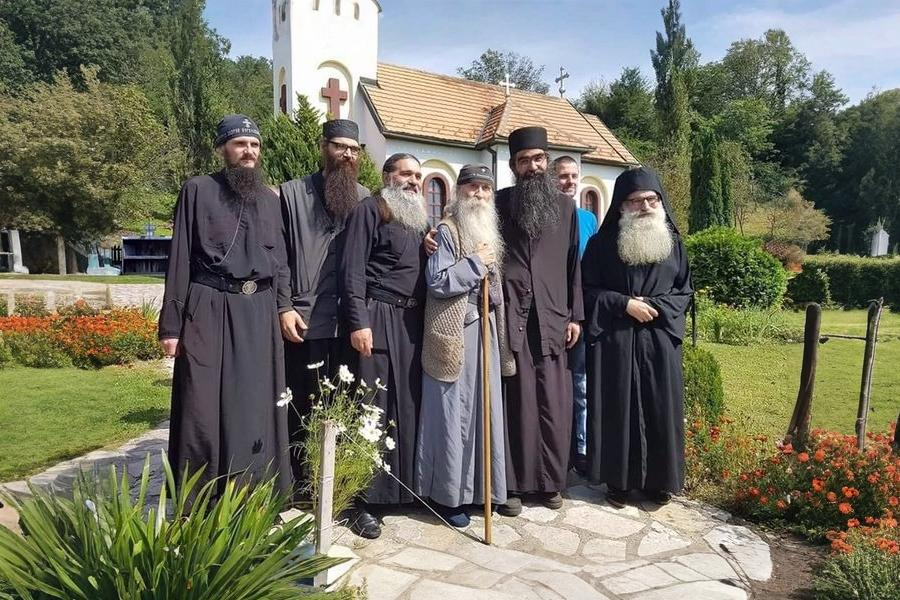 20Jan
20JanIn today's issue, we continue our translation of the book "Notes on Pastoral Ministry" by Archpriest Konstantin Ostrovsky.
We will carry on with the topic of spiritual guidance, presenting Part 4.
On the Irrational Zeal of Spiritual Children
The excessive attachment of spiritual children to their mentors is by no means a novelty in Church life. Already in the time of the Apostle Paul, we hear him addressing this problem with pastoral clarity: “Each of you says, ‘I am of Paul,’ or ‘I am of Apollos,’ or ‘I am of Cephas,’ or ‘I am of Christ.’ Is Christ divided? Was Paul crucified for you? Or were you baptized in the name of Paul?” (1 Cor. 1:12–13).
And he returns to the same theme in chapter three of the same epistle: “For where there are envy, strife, and divisions among you, are you not carnal and behaving like mere men? For when one says, ‘I am of Paul,’ and another, ‘I am of Apollos,’ are you not carnal? Who then is Paul, and who is Apollos, but ministers through whom you believed, as the Lord gave to each one? I planted, Apollos watered, but God gave the increase. So then neither he who plants is anything, nor he who waters, but God who gives the increase” (1 Cor. 3:3–7).
Here the Apostle offers us a vital example of pastoral sobriety. He does not indulge the delusions of his spiritual children, nor does he seek to be the object of their reverence. Rather, he rebukes them gently, redirecting their attention toward God, thereby helping them return to the true spiritual path.
Can One Hide Something from One’s Spiritual Father?
Some people are troubled by the question: is it ever acceptable to conceal something from one’s spiritual father? It happens sometimes that a particular sin is so shameful that one hesitates to confess it to someone close. Would it not be better, they wonder, to bring it instead to another priest?
The answer to this depends entirely on the nature and depth of the relationship. If the connection with one’s spiritual father is primarily emotional—sharing personal joys and sorrows, seeking consolation in moments of distress—then such hesitation is understandable.
A person may fear: “If Father finds out what I’ve done, he’ll think less of me, give me less attention, offer less warmth.” In such a case, it may indeed be wiser not to jeopardize a pleasant, familiar rapport. Just as we do not share everything with our acquaintances or expose family troubles to outsiders, so too we might withhold certain confessions.
But then we must admit honestly: there was nothing truly spiritual in that relationship to begin with—and therefore, nothing spiritual is lost.
However, if a person approaches their spiritual father in earnest—seeking to discern the will of God through his counsel and to fulfil it regardless of how painful or humbling that may be—then this kind of concealment is fatal. Such hesitation prevents the relationship from ever becoming truly spiritual. And if it had already begun, it will collapse under the weight of this duplicity.
St. John of the Ladder writes: “He who discloses every snake to his guide shows his faith in him; but he who hides anything remains in the path of error” (Ladder, Step 4:46).
If the relationship is indeed one of real trust and spiritual depth, and yet a person—stumbling into false shame—conceals some wrongdoing and confesses it instead to another priest, the bond is broken, and the person has veered off course.
That, too, can be healed. One may return in repentance and say, “Forgive me, Father—I was dishonest.” And the relationship can be restored. But if there never was such a bond in the first place, then there is no need to pretend otherwise, nor to burden oneself with imagined guilt.
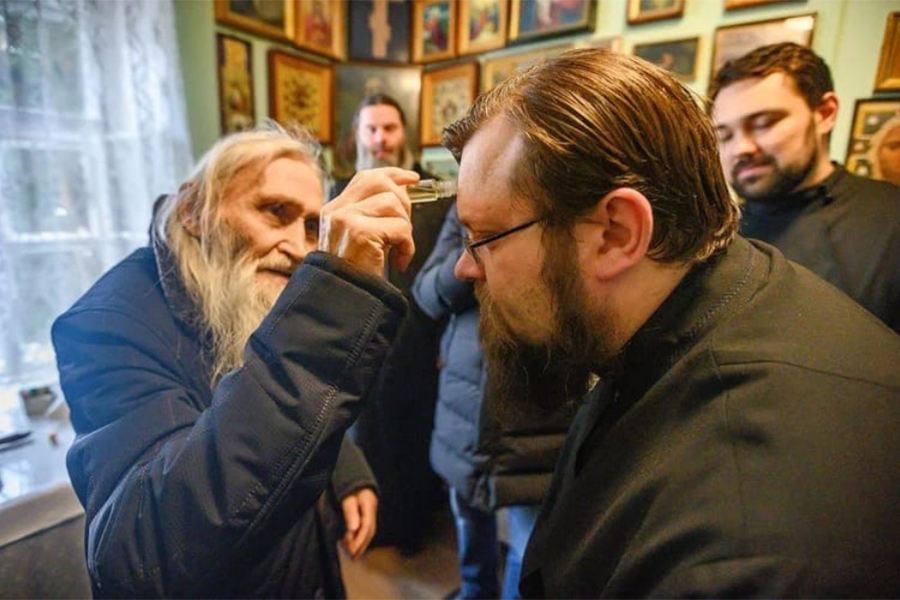
Sincere Affection
That said, sincere and transparent affection should not be disdained. People form bonds. They become friends. They support and help one another.
Take, for example, a kindly elderly parishioner. She may not reach for the stars in spiritual understanding and may have no real concept of obedience in the spiritual sense. But she sews Father’s cassocks, and on feast days, she bakes pies for his family. In return, the priest commemorates her during the Proskomedia, and she, in her heart, considers him her spiritual father. And why not? Glory be to God for such a relationship.
Playing at Spirituality
Far more dangerous than such plainhearted sincerity is the temptation to play at spiritual life. And both pastors and their flock may become actors in this game.
It is tempting, after reading the lives of the ancient ascetics or the more recent Optina elders, to imagine oneself as their spiritual heir. And when the faithful begin to show respect or admiration, this illusion only deepens. “Thank you for your prayers, Father,” someone says, “I’ve recovered.” Is this not the gift of healing?..
Another parishioner says, “Father, your sermon today felt as though you were speaking directly to me.” Could this be the gift of discernment? And then one reads that Righteous Alexis Mechev was called “the elder of the city” and thinks: “Well then, perhaps I too am a city elder.”
And the spiritual children, knowingly or not, encourage the game: “Whatever you bless, Father, I will do,” they say—but they mean: “I will do it, provided your blessing aligns with my will.” One parishioner joked—rightly and insightfully—“When it comes to obedience, I’ll drink anything you give me.”
Therein lies the danger: the spiritual father begins to confuse affection, trust, and admiration with signs of spiritual authority—or even sanctity.
But such signs are no proof of anything. This temptation, commonly called young elder syndrome, is not the exclusive disease of a few “spiritual impostors.” It can afflict many of us—young or seasoned—when we begin to believe that we are genuinely leading others to salvation.
Even a sensible and pious priest, speaking of a long-time penitent, once said with pride, “That one is a vegetable from my garden.” The phrase may sound harmless, but it betrays the same subtle presumption. To call someone “mine,” to view them as one’s spiritual product—this already borders on delusion.
Yes, it is a blessing that today the lives of saints—St. Seraphim of Sarov, the elders of Optina, and many others—are widely published and readily available. But we so often fail to imitate their humility, their patience, their radical self-denial for the sake of God’s will.
Instead, what many spiritual children seek is a “moment”—Father enters the room, and it grows warm inside; they pour out their hearts and weep. And the priest? He, too, finds it comforting to play the part of the elder from the book: to chuckle kindly, tap someone twice on the head, and say, “Oh, my dear, don’t cry—everything will be all right. Go in peace.”
You can act the part. But it has nothing to do with spiritual fatherhood.
St. Seraphim of Sarov was not made a true elder by his soft-spoken voice, his radiant countenance, or even his beloved greeting, “My joy, Christ is Risen!” What made him a father to countless souls was not even his great experience—but the presence of the Holy Spirit, Who filled his heart, freed of passion and pride, and spoke through him.
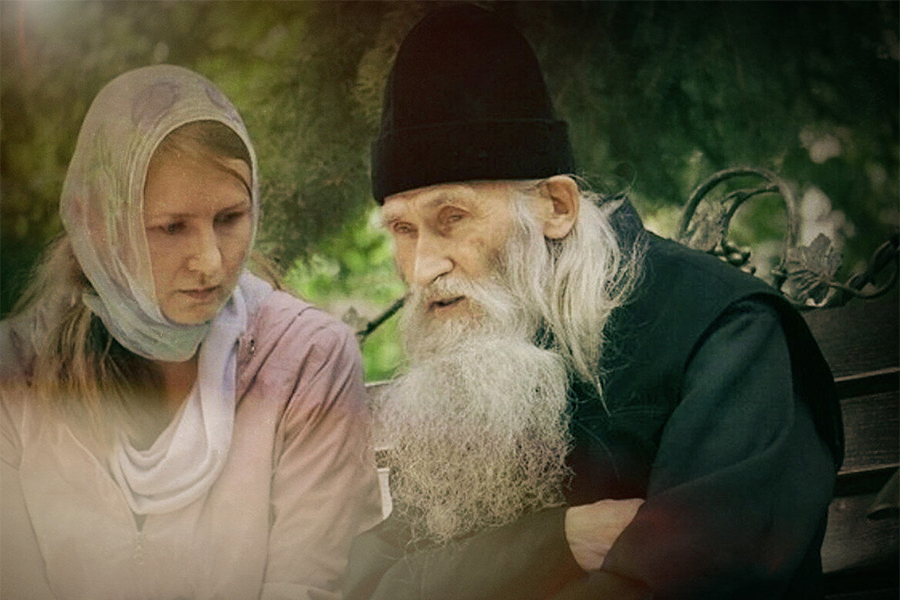
The Limits of Obedience: Sacred Hierarchy and True Eldership
Obedience to a spiritual father is a great aid to the Christian in the struggle against the passions. But the will of God is revealed in the Church not only through spiritual fathers. It has already been revealed—through the commandments of the Lord, through the divine dogmas, and through the ongoing guidance of the Church’s sacred hierarchy.
Some believers set the visible, God-established hierarchy of the Church in opposition to the rare and precious gift of spirit-bearing eldership. Yet there is no contradiction between the two. All true elders throughout Church history have shown due honour and heartfelt obedience to the hierarchy—so long as bishops and pastors acted within the bounds of their God-given authority. And this authority is determined not by a person’s sanctity or sinfulness, but by the office he holds within the Church.
There are two common extremes when it comes to clergy.
One is the cynical suspicion that says, “We know what these priests are like.” The other is naïve idealism: “All priests are good, and all bishops are holy.”
Both are falsehoods.
The history of the Church bears witness to many worthy—and even saintly—bishops and priests. But it also records, to our sorrow, unworthy ones. Being called by God to serve does not, in itself, guarantee salvation—nor does it doom one to perdition. Eternal destiny is determined by whether a person aligns his will with God’s, whether he humbles himself before the Lord, and whether he strives to fulfil the divine commandments. And this is possible under any conditions. It depends on the person, not the position.
Of course, when a bishop or priest lives righteously, it is easy and even joyful to obey him. But if, God forbid, he falls into serious sin, this becomes a source of scandal for the weak and breeds distrust toward his words. Yet the Apostle Paul writes plainly: “Let every soul be subject to the governing authorities. For there is no authority except from God, and the authorities that exist are appointed by God” (Rom. 13:1).
We must remember: when God so wills, He speaks through a saint; when He wills, He speaks through the weak. But in both cases, it is the will of God that is being revealed.
If a bishop—or a rector—acts not for the good of the Church, but out of personal passion, he sins. But the Christian who obeys him in the line of duty acts rightly. However, if someone—even one invested with legitimate authority—commands what contradicts the commandments of God, then obedience to that command is not only unnecessary, but impermissible. For no one has the authority to nullify the Lord’s commandments.
There are indeed complex cases in which certain directives from Church or civil authorities may seem unacceptable on moral or spiritual grounds. In such instances, it is entirely natural to seek counsel from one’s spiritual father. But if that spiritual father advises disobedience to lawful authority, and we decide to follow his counsel, our justification must rest solely on the Word of God—not on the blessing of the spiritual father. For spiritual fatherhood, in itself, confers no governing authority in the Church.
Obedience to the sacred hierarchy is rooted in this reality: that through the hierarchy, and within it, the Holy Spirit acts in the Church. And it is of great importance that the priestly rank and the pastoral office are clearly defined and publicly recognised—unlike spiritual gifts such as prayer or continence, which are hidden.
Obedience to a spirit-bearing elder, by contrast, rests on entirely different grounds. An elder is one who, by God’s grace, has been given the ability to perceive the human heart and to proclaim God’s will for others. St. John of the Ladder says: “A true teacher is he who has received from God the book of spiritual knowledge, inscribed in his mind by the finger of divine illumination, and who has no need of other books” (Ladder, “To the Shepherd,” ch. 1.4).
But spirit-bearing eldership is not an office. It is not a rank bestowed openly in the Church. The obedience offered to an elder arises from the personal trust of the disciple, often through some interior conviction or divine confirmation. Such obedience is a gift to the one who receives it—not a duty imposed upon others.
Obedience to the hierarchy, on the other hand, is precisely a sacred duty. All the holy elders knew this, and they instructed their spiritual children accordingly. No spirit-bearing father ever rebelled against the sacred hierarchy. Even when they were mistreated by a bishop or abbot, the elders still submitted themselves with sincerity, recognising in such commands the will of God for their salvation.
Therefore, if a spiritual father—however respected—encourages disobedience to the commandments of God, contradicts Orthodox teaching, or urges rejection of the directives of Church authority, we must not seek counsel from him any further.
To be continued…
We invite you to explore our church supplies.
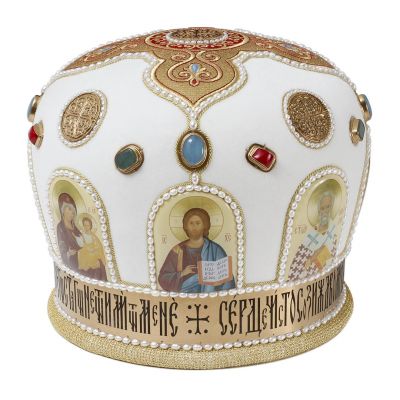
We’ve gathered quality items to support your Orthodox service. Check out our mitres section for unique, well-crafted pieces.
May the Lord grant us discernment, and may the Most Holy Theotokos shelter us beneath Her precious omophorion.
With prayerful love,
Your OCC Team
Related Articles
Related Products
"Grapevine" Mitre for Bishop or Archpriest ZSH-M-6
As low as $622.00As low as $717.00As low as $1,385.00As low as $1,177.00Comment(s)




Close
- Someone purchased a
Lestovka Prayer Rope 50 Segments
7 hours ago from Oceanside, USAs low as $23.00 - Someone purchased a
Horologion (The Book of Hours) in Church Slavonic
8 hours ago from New Egypt, US$17.00 - Someone purchased a
Small Gold-Plated Pectoral Cross w/Chain
1 hour ago from Saint Joseph, US$250.00 - Someone purchased a
Medium Triptych with Our Lady of Kazan Icon
7 hours ago from Oceanside, US$16.00