This website uses cookies to ensure you get the best experience on our website. Read more

Funeral for a Drug Addict? A Pastoral Dilemma
 10Jan
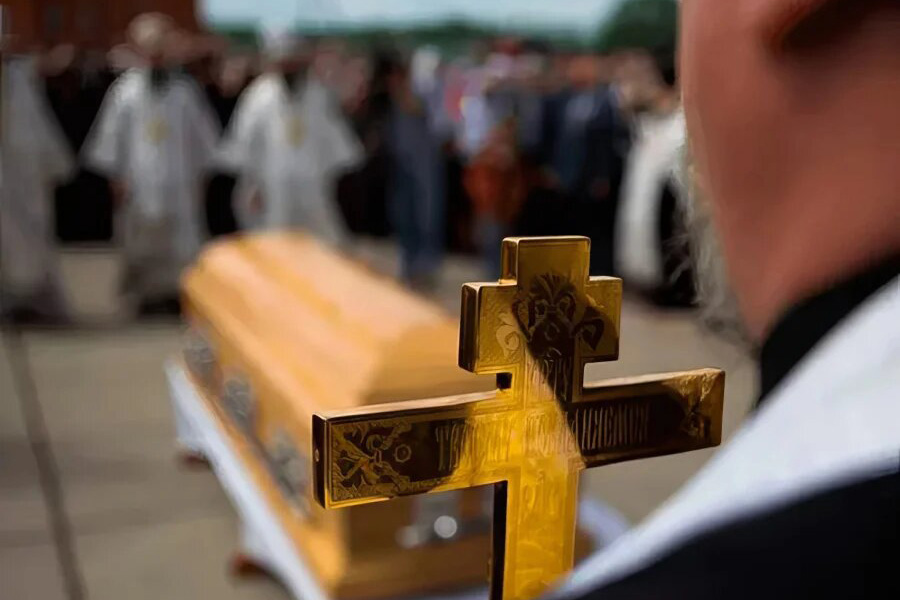
10JanContinuing the discussion we began earlier, we now turn to a closely related and pastorally urgent question that many priests encounter in real life. It is both broad in scope and morally complex:
How should we proceed when asked to perform the funeral service for someone who died from drug use—or others whose death was similarly the result of risky or self-destructive behavior?
Fr. Dionysius D.:
“I’ve often heard of cases where the family of a drug addict is denied a funeral service on the grounds that the person knowingly endangered their life and thus is regarded as a suicide.
But I believe such people can be buried with Church rites—just like those who die from foolish risk-taking: subway surfers, thrill-seekers, rooftoppers, and so on. Yes, they understood that such actions could eventually lead to death—but they didn’t intend to kill themselves. So how should we approach this?"
A Case for Compassion: Yes, His Funeral Should Be Performed
Experienced pastors are largely in agreement: such individuals should not be denied a Church funeral.
Protopresbyter Theodore Borodin (Moscow):
“I believe a funeral should be conducted. First of all, we have every reason to think that the person did not start using drugs with the goal of ending their life. On the contrary, we hope—and in many cases are certain—that they resisted this death-dealing path and did not want to die.
In all the cases I’ve encountered—those involving drug addicts or substance abusers who came to confession—the people involved saw their condition as a personal tragedy, a misfortune, a disease. Most tried to fight it, though often only after coming to the brink.
If I have no clear evidence that a person deliberately took a fatal dose in order to end their life, then I must follow the path of economia, extending mercy.
I would perform the funeral service—and take that opportunity to speak to the grieving family about God, eternal life, and the power of prayer, in hopes of leading them closer to the Church.
The funeral service might be the only moment when their hearts are open to hearing something about Christ.”
Historical Guidance: A Precedent for Mercy
A strong precedent for showing compassion in such cases can be found in the Handbook for Church Clergy by Sergey V. Bulgakov (pp. 1351–1352), a widely respected reference work in pre-revolutionary Russian ecclesiastical life.
Citing a decision of the Ruling Senate dated July 10, 1881—based on the opinion of the Holy Synod—it states:
“Those who die as a result of a drinking binge—that is, by drinking themselves to death—cannot be considered suicides, and therefore ought to receive burial according to the rites of the Orthodox Church.”
What is especially noteworthy is the reasoning behind this ruling:
“At first glance, one might assume that someone who drank themselves to death should be classified as a suicide, especially in cases where it is clearly established that the person drank with the intention of ending their life, and that this thought arose and took shape while they were still sober.
But in such instances, the guilt of a person who dies from alcohol-induced self-harm differs fundamentally from that of one who dies by deliberate suicide.
Death by alcohol is typically preceded by a clouding of the mind, which does not occur with more conscious means of suicide—such as by firearm, blade, or similar methods. If a person is not in a state of awareness at the moment of death, then even if they had previously contemplated suicide, the absence of mental clarity at the time removes the full moral responsibility.
And if the thought of suicide arose only after the onset of intoxication, under its influence, such a person must be regarded—according to Canon 14 of Timothy of Alexandria—as one who ‘raised their hand against themselves while not in their right mind,’ in a state of temporary insanity (cf. article 1472 of the Russian Criminal Code).
If a suicide is committed during an episode of madness or mental illness, then the person’s body is to be brought into the church, and the full Orthodox funeral rites and commemorations are to be observed.”
Liturgical Dissonance: When the Funeral Words No Longer Fit
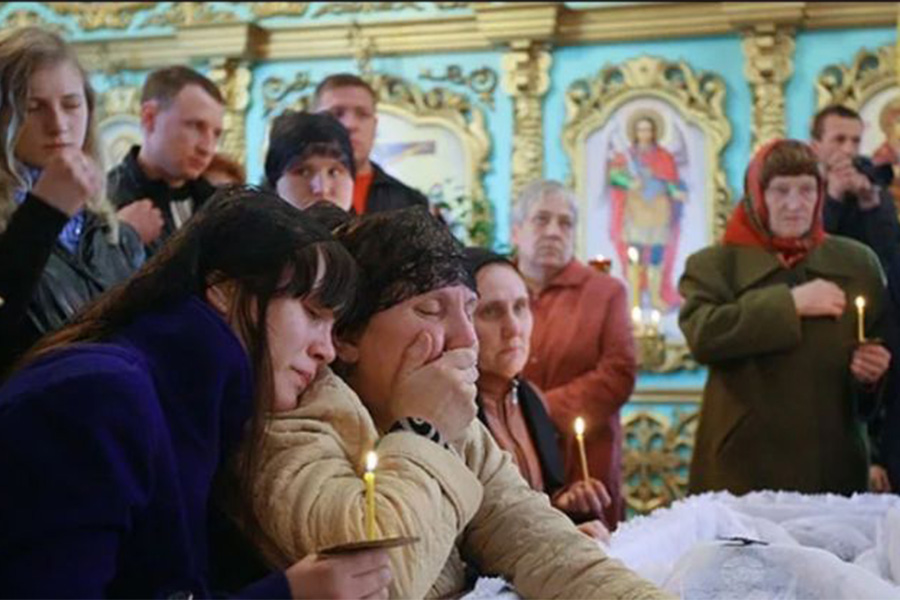
While the historical precedent supports offering a Church funeral in such cases, a new concern has arisen over the past century—a period marked by a dramatic decline in church attendance and religious awareness. This pastoral shift often raises a different kind of question: not whether a person may be buried by the Church, but whether the existing text of the funeral service is truly fitting for someone only nominally Orthodox.
Protopresbyter Theodore Borodin shares a candid reflection:
“That’s another matter entirely—the current funeral rite itself. It often bears little correspondence to the life of such a person. How can we sincerely say: ‘In Thee, O Lord, have we placed our hope,’ or ‘With the saints give rest,’ or speak of a ‘blessed repose’ for someone who died from an overdose?
Or pray: ‘Give rest to Thy faithful servant.’ If we are referring to someone baptized yet completely unchurched, these words ring painfully hollow. I find myself saying them with a deep sense of inner dissonance. Because in truth, I’m standing there and lying before God.”
Yet others respond with a broader view of what the funeral service means.
Fr. Valery Z. offers this pastoral insight:
“The words of the funeral service do have meaning. They are not abstract poetry. The one who is being buried is called ‘faithful’—not because he was sinless, but because he repented and desired to be with Christ.
The entire rite is built on that: it is both a farewell to the one who has finished his earthly journey, and a prayer to the Lord to receive him into His Kingdom, because the departed had expressed that desire during his life.
In that case, it doesn’t matter whether he was an addict or an alcoholic. Addicts are not all the same. Some are acutely aware of their sin and their enslavement, and even confess it. Others live as if the Church does not exist. But both may be baptized.
And so, what are we to do with those latter cases—offering them the same rite and thereby turning its words into vague generalities? We must remember: the funeral service is not a verdict. It does not determine a person’s fate after death. It is, rather, a testimony—and a prayer.”
Some clergy who struggle with this pastoral dilemma see a possible way forward in the creation of alternative forms of the funeral rite—much like the “Order of Prayerful Consolation for the Relatives of One Who Has Taken Their Own Life,” approved by the Holy Synod of the Russian Orthodox Church in 2011. Of course, such decisions belong to the Church as a whole and must be made through proper ecclesiastical channels.
Leave Judgment to God
Yet for some hierarchs, the very act of asking who is worthy of a Church funeral is itself a mistaken starting pointю
Metropolitan Konstantin (Ostrovsky) of Johannesburg offers a firm and compassionate perspective:
“I am strongly opposed to any discussion about who may or may not receive a Church funeral—except in the rare and very specific case of a clear, deliberate suicide, where a person has knowingly and consciously rejected the gift of life, thereby blaspheming God.
In all other difficult cases, we should instead pray to God for mercy—mercy on ourselves first and foremost—that He grant us a Christian end, one that is peaceful and unashamed. For if we are honest, we must confess: none of us—bishops, priests, deacons, or laity—is worthy of the Kingdom of Heaven, or of being numbered among the saints.
That is why, with all compassion and love for those mourning the loss of a loved one, we must pray for each departed soul as for a beloved child of God, no matter how tragic their life may have been. And if we know that their life was marked by great suffering or sinful habits, then we must pray all the more fervently.
But to hold a kind of premature Last Judgment here on earth... by what standard? What about other passions? What about those who were not addicts but died enslaved to some other vice?”
He continues with a pastoral warning against introducing moral ranking into funeral practices:
“Some have proposed creating multiple funeral rites, adjusted to the moral ‘level’ of the deceased. But who would determine that level? Who will pass that judgment?
And what happens when a priest believes the deceased deserves the ‘lower’ rite, but a governor insists on the highest honor, and the bishop is waiting for a ‘reasonable’ decision from the clergy?
Even worse is when I, as a priest, find myself standing over the coffin of someone—a drug addict or otherwise—and wondering whether they are ‘worthy’ of being buried with Church rites. Is that not the prayer of a certain Gospel figure: ‘God, I thank Thee that I am not like other men… or even like this publican’?
If, while praying at the grave, I happen to use words in the funeral service that don’t precisely fit the person’s spiritual condition, that is simply a sign of my own human limitation. But if, instead of praying, I stand there swinging the censer while entertaining self-righteous thoughts—even ones that seem pious—then that itself becomes a reason for repentance.
It is far safer, as the Holy Fathers teach, to regard all others as better than oneself. And never forget the words of our Lord: ‘Judge not, and you will not be judged; condemn not, and you will not be condemned.’”
In Closing
We hope this issue has offered meaningful food for thought and pastoral reflection. As always, we welcome your questions, feedback, and contributions to the discussion.
With prayerful wishes for the help of God and the intercession of all the saints,
Translated by OCC Team
Related Articles


Related Products
- $575.00As low as $435.00Comment(s)




Close
- Someone purchased a
100-Segment Lestovka Prayer Rope
1 hour ago from Toms River, USAs low as $30.00 - Someone purchased a
Lestovka Prayer Bracelet 25 segments
1 hour ago from Northville, USAs low as $18.00 - Someone purchased a
Horologion (The Book of Hours) in Church Slavonic
1 hour ago from New Egypt, US$17.00 - Someone purchased a
Russian-Style Priest Vestment with an Icon of Christ and embroidery
7 hours ago from Denver, US$1,515.00 - Someone purchased a
Greek-Style Priest Vestment with Embroidery and Medallion
6 hours ago from Washington, US$744.00 - Someone purchased a
Chalice Covers and Veil with Embroidery sh-10-71-7
7 hours ago from Denver, US$315.00