This website uses cookies to ensure you get the best experience on our website. Read more

Handling Intoxicated Confessions: Insights from Clergy
 10Jul
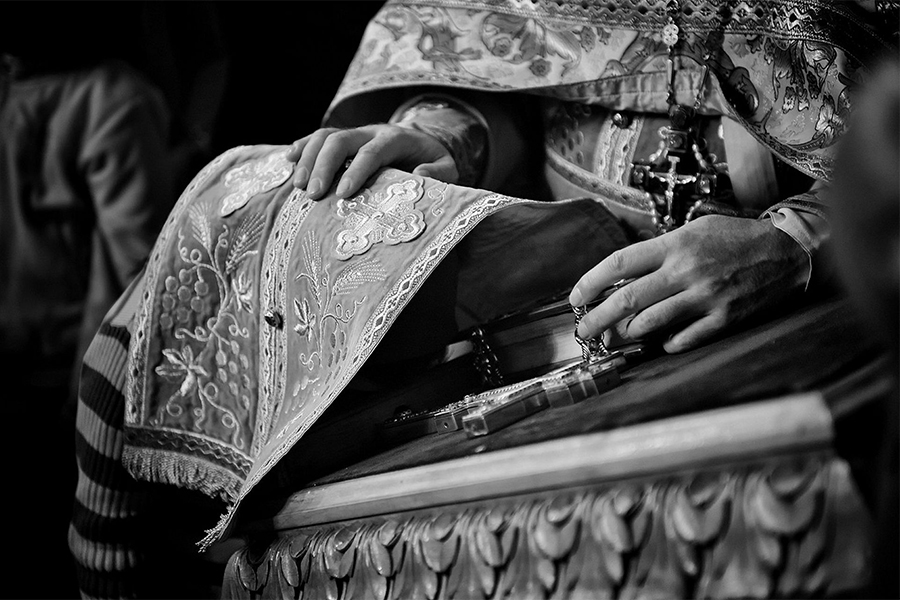
10JulSooner or later, every priest will encounter a visitor who has been drinking. These situations are often challenging. In today’s issue, we bring together reflections from experienced clergy (thanks to priest.today) to shed light on the different approaches to this sensitive matter.
N.B. The discussion above touches primarily on alcohol intoxication, but other substances also affect consciousness. Setting aside the most severe and illegal drugs, many substances, such as psychiatric medications, present similar challenges.
To Hear or Not to Hear: Varying Perspectives
Hegumen Jonah (Zaimovsky)
“I personally see no point in offering the Sacrament of Repentance to someone in an altered state of consciousness. In my opinion, engaging in such a situation is unlikely to benefit either the person or the priest. I would encourage them to approach the sacrament once they’ve sobered up.”
Archpriest Andrew
“Unfortunately, I cannot recall a single instance where hearing the confession of someone visibly intoxicated led to a positive outcome. One priest once remarked that when such a person can't come to repentance while sober, it's almost as though a demon pushes them into the church while drunk. Sadly, this often seems to be the case when people under the influence appear in church.”
The Importance of Assessing Each Situation
Every case is unique, and it’s important to take the time to understand the person’s individual circumstances before making a decision.
Archpriest George Breyev [†2020]
“A drunk man's words are a sober man's thoughts. Perhaps this person has been thinking about coming to confession for a long time but never dared—until he drank. Of course, you can’t push someone like this away or kick them out, but you must establish boundaries.
Once, a young man reeking of wine came to me. I said to him: ‘I’m always ready to talk to you, but right now you can’t even step into the church. Find a more suitable time.’
We must distinguish between someone who has had a drink and someone who is intoxicated. If the person is distressed, perhaps from the death of a loved one, confession may be appropriate. But if they are driven by intoxication alone, it's better to ask them to return when they are sober, and explain that one should never approach the church in that state.”
Handling the Situation with Care
Bishop Panteleimon (Shatov)
“If the person is somewhat coherent, I believe it’s acceptable to listen to them, but I wouldn’t read the prayer of absolution. It isn’t fitting for someone in an inebriated state to partake in a sacrament, unless their life is at risk. It’s crucial to explain that absolution can’t be granted at this time because confession is a sacred act of reconciling with God, and it must be approached with reverence.
If someone is severely intoxicated, the best course is to pacify them and quietly guide them out of the church. You’re unlikely to reach them, and listening to ramblings in that state is pointless.
In both cases, it’s vital to speak calmly and kindly. Being confrontational or aggressive could provoke an emotional outburst and lead to conflict.”
Bishop Methodius (Kondratiev)
“It depends on the degree of intoxication. In some instances, I believe confession can be considered, but only with caution.
There are cases where someone comes to confession after drinking, but the act of confessing helps them sober up. Each situation is different. A person who has had a little to drink isn’t necessarily out of their mind, and they might still be able to repent. While this is certainly not part of Church tradition, exceptions can be made.”
Experience and Charisma Play a Key Role
Archpriest Konstantin Ostrovsky
“The life of Righteous Alexei Mechev recounts a story where he heard the confession of a drunken man who, afterward, gave up drinking and embarked on a spiritual journey.”
Indeed, there is a phrase attributed to St. Alexei: ‘One must come to God in any state.’ However, not every priest may be able to guide someone toward this path."
Confession Is Not Always Necessary
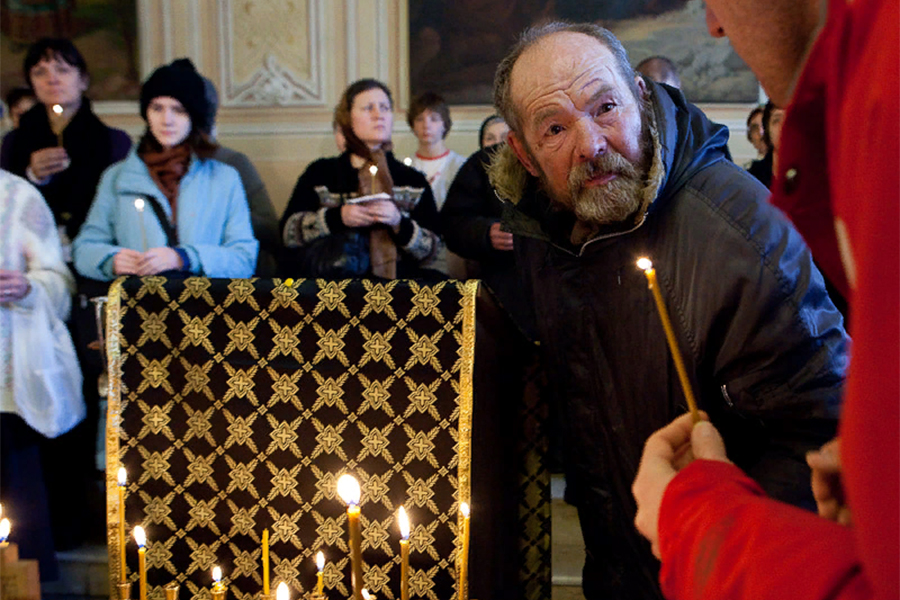
Sometimes, a person may simply need someone to listen to them and to pour out their soul. In these cases, it is important to show personal involvement, listen attentively, and offer comfort. A prayer, such as one for the sick, may help. However (again) it’s important to set boundaries.
Archpriest Sergius
“Experience shows that when a drunk person talks endlessly, repeating themselves like a broken record and begging for sympathy, it’s often a case of hysteria—they simply need an audience. There’s usually nothing religious about it, even if they’re talking about God. In some cases, it could be a direct attempt by a demon to infiltrate the priest’s heart and draw him into unnecessary communication. In such situations, it’s better to end the conversation.”
Exceptional Cases
Bishop Methodius (Kondratiev)
“If someone is deeply intoxicated, a priest should not accept their confession. But what if they are near death? For example, a man driving drunk crashes and is dying. Do we hear his confession? Of course, we do.
Sometimes, a person in deep grief may need to speak out before God. You have to sense it. And what if this person is on the verge of committing suicide? Taking their confession, even if they aren’t fully aware of everything, is a much lesser sin than leaving them in despair. In such cases, there is no universal rule—discernment is key.”
Archpriest Dimitri Smirnov [†2020]
“A priest I know, 15 years my senior, once asked if I would baptise a drunken person. I said I wouldn’t. He replied, ‘Well, yesterday I baptised one, and today he died.’ Apparently, God wanted that man to go to him and not to me.”
Archpriest Kirill
“Once, I was asked to hear the confession of a person who had been drinking. The man said he couldn’t enter the church sober—he lacked the courage. The confession was a bit unusual, and soon after, he died. It turned out to be his last—or perhaps only—confession. I must note that his mind was nearly sober; he had been drinking but wasn’t drunk. This might not fit perfectly into the category of exceptions, but there are exceptions.”
How Should a Priest Decide?
Archpriest Konstantin Ostrovsky
“It’s important to treat every person with love and to act in a way that reflects God’s will.”
Bishop Methodius (Kondratiev)
“There are situations where it’s best not to apply a strict rule. You need to act from the heart. Pray: ‘Lord, should I accept this person’s confession? What should I do with him?’”
In conclusion, the success of handling such situations depends largely on the priest’s experience and, more importantly, on his personal qualities—empathy, warmth, and inner spiritual strength.
We pray that all priests may follow the example of the holy righteous Alexei Mechev and other spirit-bearing fathers, so that their light may shine upon all whom the Lord sends their way.

Related Articles

Related Products
- $2,575.00$2,725.00As low as $1,475.00Comment(s)









Close
- Someone purchased a
Lestovka Prayer Rope 50 Segments
7 hours ago from Oceanside, USAs low as $23.00 - Someone purchased a
Horologion (The Book of Hours) in Church Slavonic
8 hours ago from New Egypt, US$17.00 - Someone purchased a
Small Gold-Plated Pectoral Cross w/Chain
1 hour ago from Saint Joseph, US$250.00 - Someone purchased a
Medium Triptych with Our Lady of Kazan Icon
7 hours ago from Oceanside, US$16.00