This website uses cookies to ensure you get the best experience on our website. Read more

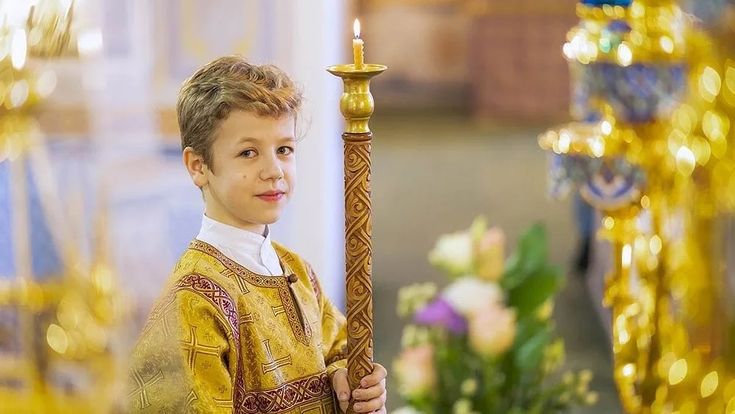
When should children serve at the altar?
 30Jun
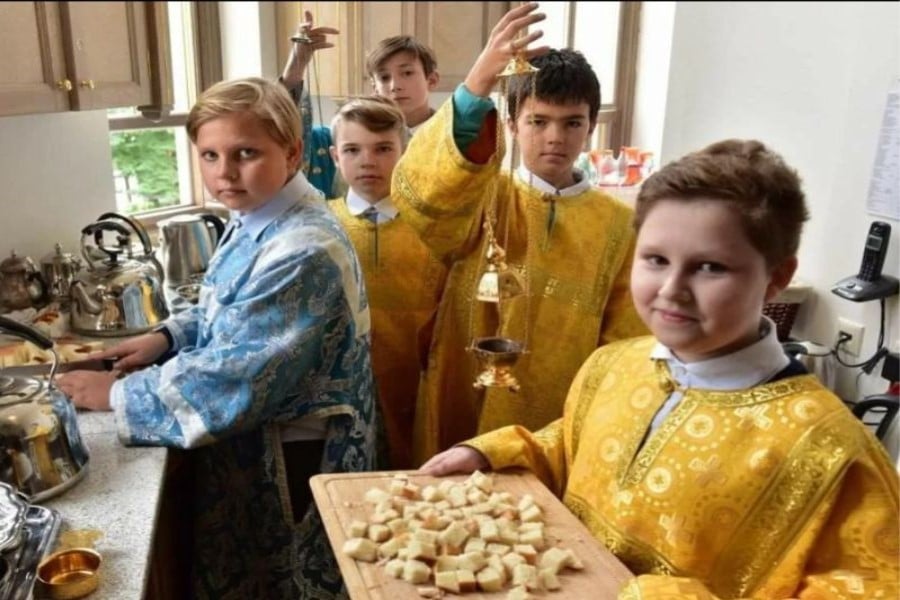
30JunFor this issue, we turn to a discussion published on priest.today, in which experienced pastors* of the Russian Orthodox church reflect on admitting children and teenagers to serve in the sanctuary and on the patient formation of altar servers.
Their counsel is practical, sober, and pastorally tested. It speaks to a question familiar to many priests:
❓ how to welcome the young into church life in a way that truly forms them, rather than merely keeps them occupied.
As the discussion makes clear, one can serve without altar servers, though not without difficulty. Yet where young helpers are formed well, their service can beautify the worship, ease the priest’s labours, and help prepare future clergy and church servants.
At the same time, bringing the young into such nearness to holy things places a serious responsibility on all who serve at the altar.
WHOM TO ADMIT - AND WHEN
The first principle is simple: there can be no single rule for everyone. Questions of church formation are deeply personal, and the admission of children to the sanctuary is no exception.
A boy’s desire to serve should not be dismissed lightly. Where there is a sincere attraction to church life, it should be met with care and encouragement. But desire alone is not enough. Readiness must be discerned, not presumed. As several contributors make clear, some children are helped by early responsibility, while for others the same step would be premature.
Age, then, is only one consideration. One priest remarks that before the age of eleven or twelve it is often better not to bring a child into the sanctuary, even if he is eager. Let him first help in simpler ways: holding a candle, carrying something when needed, assisting at a moleben, learning to be useful in the church without yet entering the altar.
This is not a refusal, but part of his preparation. Children require much reminding, much steadying, much quiet correction; and any priest serving with them must be ready, if necessary, to do everything himself rather than rely on them fully.
More important than age, however, is the child’s inward disposition. One especially searching observation in the discussion is that the boys to invite are those who already love to stand at prayer in church.
If someone is delighted to be in the altar but has no patience for standing through the services in the church, then something is wrong at the root. But if he stands willingly in prayer, and receives the invitation to serve with modesty rather than eagerness for privilege, that is usually a healthier sign.
❗️ Service in the sanctuary should grow out of prayer; it must never become a substitute for it.
Another contributor adds that a child should already have some real experience of standing through the services in prayer, measured not in weeks, but over time. That observation is worth bearing in mind.
The sanctuary is not a shortcut to church life, nor a way of holding the attention of those who are otherwise disengaged. It is better given to those in whom patience in worship, love for the services, and some capacity for reverent presence have already begun to take root.
So the guiding thought here is not severity, but pastoral discernment. Not every willing boy is yet ready. But where readiness is beginning to show itself, it should be welcomed, supported, and carefully guided.
THE SPIRIT OF THE SANCTUARY BEGINS WITH THE PRIEST
Before admitting even one child into the sanctuary, a priest must ask himself a more fundamental question:
❓ what kind of atmosphere already reigns there?
In one altar there may be stillness, discipline, recollection, and the quiet fulfilment of each one’s appointed task. In another there may be chatter, joking, casual behaviour, and a loss of fear before holy things.
Children will not correct that atmosphere. They will absorb it.
What becomes normal in the sanctuary will soon seem normal to them. If those who serve at the altar pray, keep silence, and attend soberly to what they are doing, that spirit will be communicated. If they speak idly or behave carelessly, the same habits will take root in those who stand beside them.
As one priest puts it plainly, altar servers in time become a reflection of the priest who forms them. Much depends on upbringing and temperament, but the habits they see are the habits they learn.
This also means that there are times when the right pastoral decision is to wait. Not because children are unwelcome, but because the sanctuary itself must first be set in better order.
If the atmosphere is not yet sound, the first task is not recruitment but correction: less talking, less informality, more prayer, more discipline, and a clearer awareness that one stands before the holy. Only then can the altar become a place where the young are not merely occupied, but formed.
TRAINING YOUNG SERVERS IN REVERENCE, RESPONSIBILITY, AND RESTRAINT
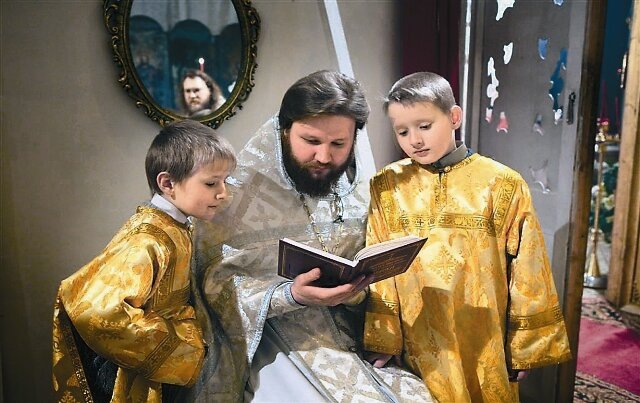
Once boys begin to serve, the real work has only just begun. Good altar servers are not produced by vesting a child and assigning him a task. They must be formed over time.
One contributor observes that it is good if a server, whether adult or adolescent, learns to regard his place in the altar as a gift rather than an entitlement. That spirit of reverence must then be upheld by the priest’s own example and by clear pastoral instruction.
This is why admission cannot be indiscriminate. Nearness to holy things is a blessing, but it is also spiritually weighty.
One contributor uses a vivid image here, comparing life in the altar to standing near a fire: it can warm and illumine, but it can also harm those who approach it without steadiness.
Put more plainly, some children and young people are not yet ready for such closeness to the holy. In them, altar service may feed vanity, over-familiarity, or spiritual self-importance rather than humility.
That is why those admitted must be chosen with care, and then taken under genuine pastoral guidance.
The practical signs of a good server are described in concrete terms. A boy should not wish to serve merely in order to wear a vestment or to appear important in front of others.
He should be willing to come early, prepare what is needed, remain attentive during the service, and stay afterwards to help set things in order. He must learn to love not only the visible part of serving, but also the hidden work that makes it possible. In other words, he must be formed to serve, not simply to take part.
Several of the clergy also stress the need for watchfulness and limits. Children should often be admitted on a restricted basis at first, almost as a time of testing. Their behaviour should then be observed.
Does the first brightness endure❓
Does eagerness deepen into attentiveness and humility❓
Or does familiarity begin to harden into carelessness, vanity, or an over-free manner in the sanctuary❓
If a child’s time in the altar is becoming spiritually unhelpful, then the priest should not be afraid or embarrassed to say, gently and simply, “Today, pray in the church.” That is not a humiliation. It is a reminder that standing in prayer with the faithful is the norm, and that service in the sanctuary must remain subordinate to that deeper calling.
A bishop offers the same counsel in a more measured way. Reverence, attentiveness, and responsibility must be taught. Outer slovenliness should not be tolerated, because the outward bearing of the young should correspond to the holiness of the place.
Above all, children and teenagers in the altar require particular pastoral oversight. If their presence there ceases to be beneficial, then for a time it may be better for them simply to pray in the nave.
So the task is not merely to find helpers, but to raise them. Young servers need encouragement, but also boundaries; responsibility, but also supervision; nearness to the altar, but never at the expense of humility.
THE RIGHT NUMBER IS THE ONE THAT PRESERVES PRAYER
On the practical question of numbers, the discussion is notably sober. It offers no universal formula. Some priests prefer the smallest number possible, or even none at all, because they find that boys in the sanctuary can easily become a distraction, drawing the mind away from prayer and from the service itself.
One priest says this very plainly: instead of praying, he finds himself thinking whether the censer will be handed to him on time, or whether something will be done correctly. Another remarks that when only one boy serves, he often does everything more clearly and with very little prompting. From that point of view, fewer can indeed be better.
And yet the discussion does not turn this into a rigid rule. Another priest speaks of serving with as many as twelve altar servers, assigning them various tasks throughout the Liturgy and finding that their participation enriches the service.
Even then, however, the principle does not change. A larger number is only good if discipline is present, each one knows his place, and their involvement truly serves the worship rather than disturbing it.
That is why one contributor recommends a rota where there are several servers: each boy knows his turn, waits for it, and prepares for it. Such order is useful not only in practice, but spiritually.
It helps prevent idle lingering in the altar and guards against the temptation of becoming too accustomed to what ought never to become ordinary. The principle that emerges is clear enough: the right number of altar servers is the number at which order, discipline, and a prayerful spirit can actually be maintained.
So there is no need to ask in the abstract whether many servers are better than few. The real question is whether their presence helps or hinders prayer.
If more boys, well guided and well disciplined, enrich the service and root them more deeply in church life, that may be a blessing. But if their number multiplies distraction, confusion, or casualness, then reduction is not harshness but wisdom.
A FINAL THOUGHT
Taken together, the counsel gathered in this discussion is demanding, but deeply practical. It does not offer a single outward system to be applied everywhere.
Rather, it calls the priest to discernment: to look at each child personally, to examine honestly the atmosphere of the sanctuary, to teach and supervise patiently, and to admit only as many as can be formed without harm.
Well-formed altar servers can be an immense help to the priest and a real blessing to the Church. But such fruit does not come quickly. It requires labour, vigilance, and pastoral wisdom.
Where that labour is accepted, the reward may indeed be lasting: not only smoother services, but young lives quietly shaped by reverence, responsibility, and love for the holy things of God.
With prayerful wishes for the Lord’s help
and the protection of the Most Holy Theotokos,
Yours OCC
Related Articles



Close
- Someone purchased a
100-Segment Lestovka Prayer Rope
1 hour ago from Toms River, USAs low as $30.00 - Someone purchased a
Lestovka Prayer Bracelet 25 segments
1 hour ago from Northville, USAs low as $18.00 - Someone purchased a
Horologion (The Book of Hours) in Church Slavonic
1 hour ago from New Egypt, US$17.00 - Someone purchased a
Russian-Style Priest Vestment with an Icon of Christ and embroidery
7 hours ago from Denver, US$1,515.00 - Someone purchased a
Greek-Style Priest Vestment with Embroidery and Medallion
6 hours ago from Washington, US$744.00 - Someone purchased a
Chalice Covers and Veil with Embroidery sh-10-71-7
7 hours ago from Denver, US$315.00