This website uses cookies to ensure you get the best experience on our website. Read more

Confessions and emotions
 20Jun
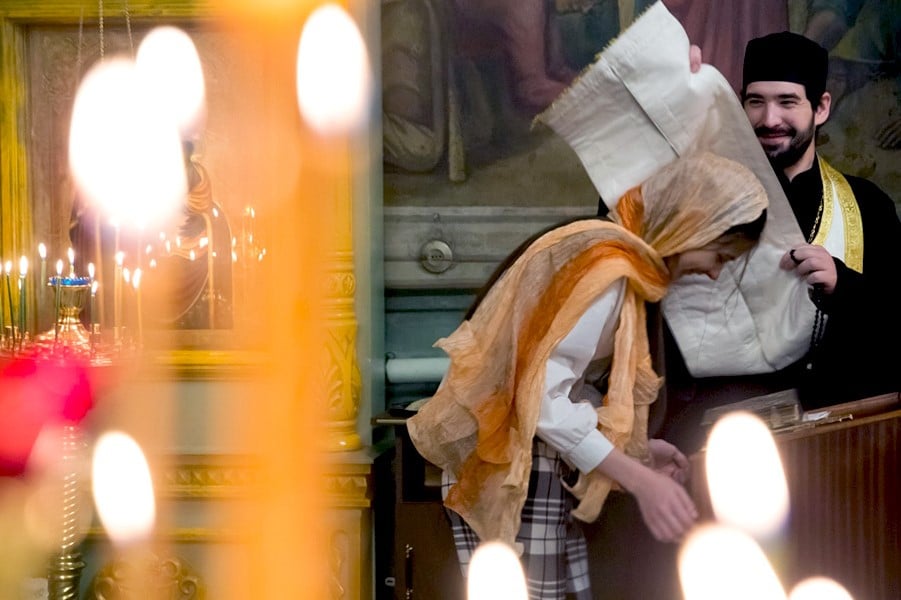
20JunAfter reflecting on the outward structure of confession, Fr Konstantin Ostrovsky now turns inward—to the texture of repentance itself.
❓ What are we to make of so-called “everyday sins”?
❓ When do small failings require sacramental confession, and when do they call simply for continual repentance before God?
❓ Why do the passions remain even in those who confess regularly?
❓ And how are we to understand dryness, repetition, and the seeming lack of change in our spiritual lives?
In this chapter of Notes on Pastoral Ministry, he speaks with pastoral sobriety about the ordinary yet decisive elements of the confessional life. The struggle, he reminds us, is rarely dramatic. More often it unfolds quietly—in small choices, habitual weaknesses, and in our response to the trials God permits.
Here again, the concern is not with methods, but with the patient shaping of the heart.
“ORDINARY EVERYDAY SINS”
A nineteenth-century Russian ascetic, Archimandrite Theophan (Sokolov), once wrote to a spiritual daughter:
“Some sins are everyday, others are mortal. Mortal sin requires deeper repentance. But if you happen to laugh thoughtlessly, say at once: ‘I have sinned, Lord, forgive me.’ If an evil thought comes, say: ‘Lord, take from me every wicked thought of this passing life.’ If you lie, say: ‘Lord, forgive my sin.’”
In other words, small daily—even momentary—sins call for constant repentance before God, without despair or despondency.
If boys mock us in the street, it would be foolish to stop and argue with them. We simply continue on our way. But if something serious happens—if we are attacked—then we cry for help, defend ourselves, or flee.
The spiritual life follows the same pattern.
Serious temptations, even if they occur only once, and persistent intrusive thoughts, even if they seem minor, demand particular attention. These should be confessed to one’s spiritual father, and his prayerful support should be sought. At times it is also necessary to discern why the struggle has intensified.
The ordinary, almost constant movements of thoughts and impulses of the heart, however, do not always require sacramental confession. They call rather for steady self-reproach and continual repentance before God.
What counts as “ordinary” depends on a person’s moral measure. A weakness that has become habitual for one person may be a serious fall for another. For most practising Christians, these daily sins include idle talk, judging one’s neighbour, overeating, distraction in prayer, mindless television, aimless wandering online, and the like.
All of this is indeed sinful. Yet in itself it does not necessarily prevent one from receiving Communion. If, for a particular person, such failings are not sins against his inner disposition, they do not always require sacramental confession.
Everyday sins are simply the recurring expressions of our passions. We must struggle against the passions with all our strength. Yet the presence of passions in the heart—when a person is fighting them—does not cut him off from the Chalice.
What is needed above all is ongoing repentance. The sacrament of confession assists us in the struggle, but it does not eliminate the passions at once.
WHY THE PASSIONS ARE PERMITTED TO REMAIN
Let each of us imagine being suddenly stripped of every attachment. Would that be holy dispassion? By no means. Divine love in us is scarce. What would remain would not be a purified soul, but an empty one—and emptiness is quickly filled.
When Moses instructed the chosen people about entering the Promised Land, he said:
“The Lord your God will drive out those nations before you little by little; you cannot destroy them at once, lest the wild beasts grow too numerous for you” (Deut. 7:22).
So it is in the spiritual life. God does not purify us in a single surge. He leads us gradually into the “Promised Land” of the heart. Through long labour we are cleansed of passions, and in that labour we gain experience and humility.
God permits the passions to remain for a time so that the energy of love is not extinguished but gradually redirected—from what is vain and sinful toward what is true and holy: toward God and our neighbour.
Let us recall the Lord’s parable of the unclean spirit who left a man and later returned, only to find the house “empty, swept, and put in order.” He returned with seven spirits worse than himself, and the man’s last state was worse than the first (cf. Matt. 12:43–45).
St John of the Ladder writes:
“We should not be surprised if, even after confession, we are still attacked; for it is better to struggle with defilement than with pride.” (Ladder, 4:67)
THE DANGER OF SMALL THINGS
When assessing our sins—whether everyday or serious—we must remember the warning of St Ignatius (Brianchaninov).
Satan rarely tempts a faithful Christian with blatant wickedness. Out of fear of God, we resist what is openly evil. Far more effective are minor faults.
He entices us with small transgressions that seem insignificant. Left unrepented, they destroy a person just as surely as grave sins. The danger lies in how lightly we treat them. We feel secure so long as there are no dramatic falls. And the enemy is content.
At confession one often hears: “I do not know what to repent of; I have not sinned.”
Nothing remarkable happened. One lingered in bed, entertained a tempting thought, ate too much, judged someone inwardly. These were small faults—nothing extraordinary.
Yet at the Last Judgement, it may become clear that there was nothing extraordinary in us altogether—neither in our actions, nor in our spiritual state. Only what is earthly and fleshly remains—a soul bound up with attachments.
Not all attachments are obviously bad. We love many good things.
But will there be anything in us that truly resembles Christ?
According to St Symeon the New Theologian, that likeness—or its absence—will determine our lot at the Judgement.
A person may not need frequent recourse to the sacrament of confession. But repentance itself must be constant.
I REPENT, BUT I DON NOT CHANGE - WHAT IS TO BE DONE?
Many faithful Christians grow troubled by the fact that they confess the same sins repeatedly. They pray, they confess, yet their lives seem unchanged.
This experience can be salutary—if we do not fall into despair.
Instead of losing heart, we should draw the sober conclusion: “I cannot correct myself, even with God’s help as I have received it. Then I will ask Him to intervene in my life more directly.”
And He does.
He helps. He reshapes us.
Often He does so through sorrows or illness.
If a person thanks God for these trials—or at least refrains from murmuring—then gradually the Lord transforms him.
A simple example. A man loved pickled mushrooms and would eat them in large quantities. One day he broke out in painful sores that lasted for weeks. When it happened again, he stopped eating anything pickled.
He could have sought medical remedies. Instead he said, “Glory to You, Lord, for delivering me from this.” And rightly so.
The question “Why has this happened to me?” should not even be entertained.
The real difficulty is that we rarely want to be freed from our passions. From confession to confession we admit—figuratively—that we are still overeating mushrooms. Yet when the Lord sends a remedy, we hesitate to accept it.
EMOTIONS AT CONFESSION
Emotions during confession are not decisive.
They may be intense, even overwhelming. Yet they belong to the realm of the psyche, not eternity. Compared with true spiritual life, they are like frost beside a diamond. Frost may sparkle more brightly—but it melts.
Excessive self-torment over sinful impulses does not necessarily indicate deep repentance. More often, it shows that we have not yet grasped the depth of our own fallenness.
A humble struggler expects nothing good from himself. A fall does not shock him. He reproaches himself, but without sinking into gloomy brooding. Instead, he turns to God in repentance.
The measure of sincerity is not emotional fervour, but how one endures sorrows.
As St Mark the Ascetic says:
“A wise man who has come to know the truth confesses to God not by recalling what he has done, but by patiently enduring the troubles that befall him.” (2:155)
If someone sheds tears at confession yet murmurs at the first misfortune, repentance is still lacking—unless he repents of that murmuring.
Spiritual tears are a great gift. If we ever receive them, we often defile them quickly with wandering thoughts. They are not the same as sentimentality, nor are they granted to those who seek spiritual “experiences.”
If, on the other hand, the heart feels dry and cold during confession, yet the person gives thanks to God for all He sends, repentance is genuine.
DO NOT REHEARSE SLANDER OR FORNICATION
It can be useful to recall sins in some detail, since this fosters humility. Even here, however, discretion is required.
There are two sins that should not be revisited in detail: slander and fornication.
We must acknowledge that such sins were committed and reproach ourselves for them. But we should not dwell on particulars.
The memory of fornication carries a certain unclean sweetness. To linger over it in imagination is already to reopen the passion.
Likewise with slander. To rehearse it inwardly is, in effect, to repeat it.
These sins should therefore be confessed plainly and without elaboration.
HOW MUCH DETAILS INDEED IN CONFESSION?
Details are necessary only insofar as the sin must be clearly named. What must be avoided are evasive substitutions—for example, saying “I offended my wife” instead of admitting adultery.
At the same time, unnecessary descriptions should be avoided unless there is a specific pastoral reason.
Sometimes a person confesses that he “defended God’s truth” but regrets that the one he rebuked was upset. In reality, he was insulted and insulted the other in return, justifying himself by claiming he was defending the image of God.
In such cases, clarification helps. The image of God in us is not damaged by another’s insult, but by our own disobedience—especially when we repay evil with evil.
Lengthy life narratives are usually unnecessary. Confession is not a chronicle: “I went to the shop, bought milk…”—only at the end does the actual sin emerge.
At the same time, we must be patient with elderly parishioners who, in simplicity, recount their stories without knowing what may be omitted. There is no need to wound them.
With prayerful wishes for the Lord’s help
and the protection of the Most Holy Theotokos,
Yours OCC
Related Articles

Related Products






Close
- Someone purchased a
100-Segment Lestovka Prayer Rope
1 hour ago from Toms River, USAs low as $30.00 - Someone purchased a
Lestovka Prayer Bracelet 25 segments
1 hour ago from Northville, USAs low as $18.00 - Someone purchased a
Horologion (The Book of Hours) in Church Slavonic
1 hour ago from New Egypt, US$17.00 - Someone purchased a
Russian-Style Priest Vestment with an Icon of Christ and embroidery
7 hours ago from Denver, US$1,515.00 - Someone purchased a
Greek-Style Priest Vestment with Embroidery and Medallion
6 hours ago from Washington, US$744.00 - Someone purchased a
Chalice Covers and Veil with Embroidery sh-10-71-7
7 hours ago from Denver, US$315.00