This website uses cookies to ensure you get the best experience on our website. Read more

Consuming the Holy Gifts Without a Phelonion?
 30Jun
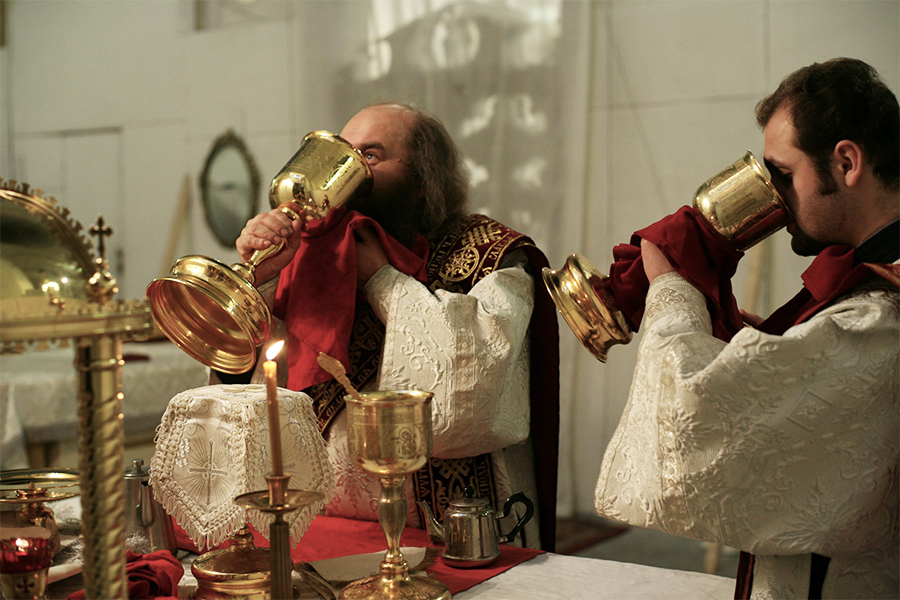
30JunToday’s topic is directed specifically toward clergy and, although it may seem like a simple question, it brings with it certain nuances. A cleric on priest.today shared the following experience: "I have seen clergy consume the Holy Gifts without a phelonion, but one priest mentioned that this is not allowed. The service book doesn't provide specific instructions on this." We can also recall encountering this situation two or three times ourselves.
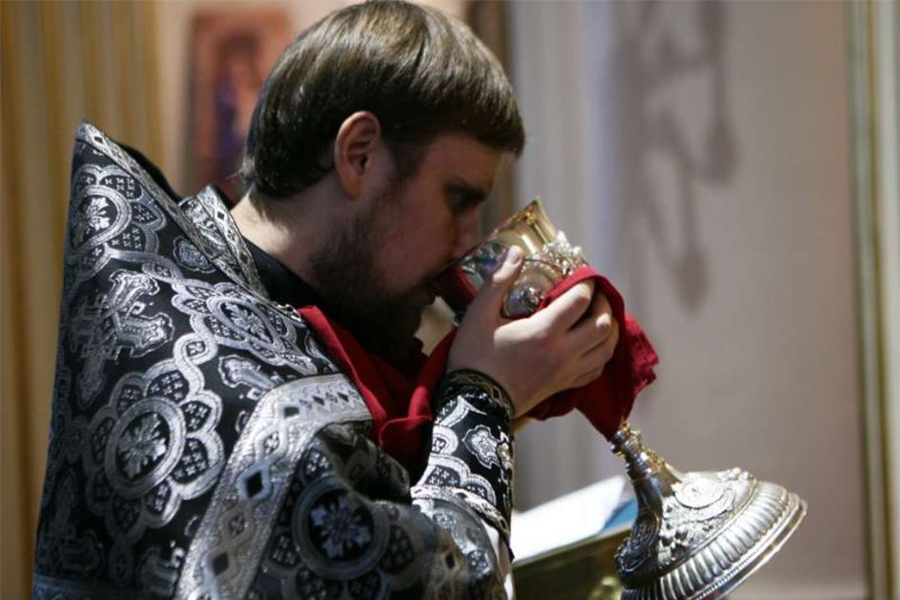
Indeed, the older editions of the service books only contain instructions regarding the deacon’s role in consuming the Gifts, as they primarily outline services in which a priest is assisted by a deacon: "The deacon, having entered through the northern door, consumes the Holy Sacrifice with all reverence and awe." However, in practice, the Holy Gifts are sometimes consumed not only by deacons and celebrating priests but also by non-serving priests, especially in cases where multiple Chalices are used during festive services or if the celebrating priest has health issues.
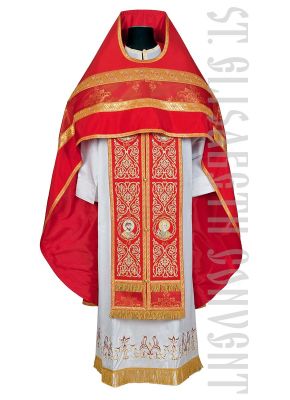
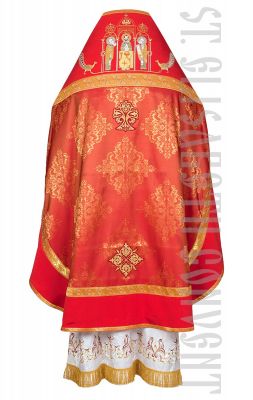
Traditionally, the Chalice is consumed by the celebrating priest in full vestments, while a non-serving priest wears a phelonion. While some reasons for deviating from this practice, such as extreme heat or fatigue, seem to be personal accommodations, what exactly are the arguments in favour of maintaining this tradition?
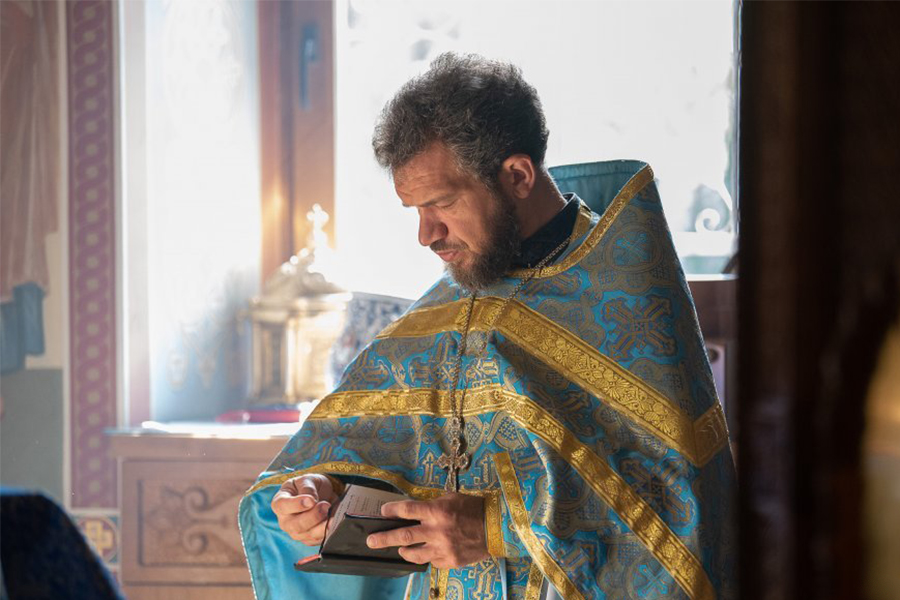
Archpriest Andrey Krivonis shares: "... If we delve into the logic of the Liturgy itself, we can draw certain conclusions that may help to resolve this perplexity.
To do so, it is essential to connect several points addressed in works on practical liturgics at the turn of the 19th and 20th centuries—sources that are, unfortunately, little known today.
1. The Consumption of the Holy Gifts as Part of the Liturgy.
The consumption of the Holy Gifts is considered an integral part of the Liturgy and, therefore, should be performed immediately after the dismissal.
‘According to the service book, when a deacon serves alongside the priest, the Holy Gifts are to be consumed following the prayer before the ambo. When serving without a deacon, the consumption should take place immediately after the otpust’ (Church Herald 1895, No. 7).
‘The consumption of the Holy Gifts must be completed as part of the actions within the Liturgy. It should not be delayed beyond the dismissal, and certainly never—under any circumstances—after services that follow the Liturgy, such as prayer services, requiems, or akathists. Regrettably, this last point is violated by many in our time. This is a diminishment of the Holy Mysteries and a degradation of the Liturgy's meaning.
In extreme cases, and only as a rare exception, the consumption may be allowed immediately after the dismissal, before proceeding to other services.
The Holy Gifts are consumed during the recitation of Psalm 33, which should be read without haste’ (Archimandrite Spiridon (Lukich), Proskomidia or Practical Guide to the Divine Liturgy).
2. Priestly Vestments and the Liturgy.
According to the Service Book, the priest celebrates the Liturgy in full vestments, including the phelonion, from the Proskomidia to the dismissal after the Thanksgiving Prayers following Communion. Only after this does the priest "make the otpust and remove the sacred vestments."
S. V. Bulgakov’s Handbook for Priests and Church Ministers reiterates this: "Priests unvest after the consumption of the Holy Gifts and the dismissal, during the reading of the prescribed prayers."
"Therefore," Fr. Andrey continues, "if the celebration of the Liturgy, including the Proskomidia, is not permitted without the phelonion—and nearly all Sacramental rites, prayer services, funeral services, and daily church services require the phelonion—why should there be any disregard for wearing it during the consumption of the Holy Gifts?"
Moreover, the literature from this period contains a recommendation for priests who are not serving the Liturgy but are assisting in giving communion to the laity. It states that "it is more proper and in keeping with the importance of the action they are performing to put on full vestments" (Church Herald, 1899, No. 12). However, this recommendation dates back to a much older decree from a local council and, as we can see, was not widely adopted by Church tradition, either at the time of publication or later.
Thus, a non-serving priest, when receiving Communion, administering it to the laity, and consuming the Holy Gifts, should be clothed in the epitrachelion, cuffs, and phelonion. Exceptions may be made in certain cases: according to the Handbook for Priests and Church Ministers, it is permissible for an infirm priest (due to illness or age) to receive Holy Communion wearing only an epitrachelion, "as a testimony to their ministry." However, such a priest is not expected to take part in the consumption of the Holy Gifts. Additionally, in some churches attached to educational institutions (e.g., the Moscow Orthodox Theological Academy) and monasteries, where multiple priests serve the Liturgy, non-celebrating clerics may not have a blessing to participate in the consumption at all.
Another indirect argument in favor of maintaining the established tradition is that there is no question about the deacon’s role in consumption, where a deacon is absolutely not allowed to remove his sticharion.
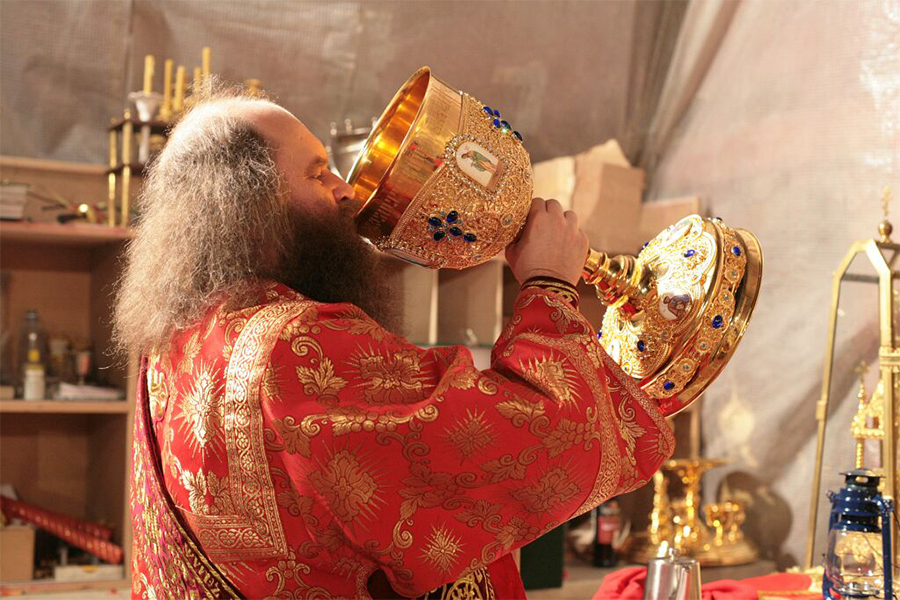
"Of course, one might argue in favor of relaxing this practice," Fr. Andrey adds, "due to the difficulties of staying in a phelonion during the heat of summer. However, as I serve in the very south of our country and consume the Holy Gifts myself at almost every Liturgy, I can testify that removing the phelonion does not significantly improve the situation in terms of comfort. Additionally, I always strive to consume the Holy Gifts during the singing of Psalm 33 or, in extreme cases (if I am giving Communion to latecomers), immediately after the absolution and the kissing of the cross. In any case, as Archimandrite Spyridon (Lukich) suggests, I still wear the phelonion due to the upcoming dismissal and the conclusion of the Liturgy."
We hope that with the help of priest.today we have addressed all concerns and clarified this issue for those interested. We wish everyone strength, wisdom, and God's blessing in your parish labors.
Related Articles

Related Products
Comment(s)
Close
- Someone purchased a
Lestovka Prayer Rope 50 Segments
7 hours ago from Oceanside, USAs low as $23.00 - Someone purchased a
Horologion (The Book of Hours) in Church Slavonic
8 hours ago from New Egypt, US$17.00 - Someone purchased a
Small Gold-Plated Pectoral Cross w/Chain
1 hour ago from Saint Joseph, US$250.00 - Someone purchased a
Medium Triptych with Our Lady of Kazan Icon
7 hours ago from Oceanside, US$16.00