This website uses cookies to ensure you get the best experience on our website. Read more

The Hidden Dangers of Printed Icons
 20Jun
20JunThe topic of this issue was inspired by a message from one of our readers:
"Thank you for your insightful emails. I wanted to suggest a future topic for discussion.
In the USA, and especially in the West since the invention of the printing press, we have developed a habit of printing icons. Today, it has become common in many parishes to print sacred images and distribute them as handouts on Sundays, along with the day’s announcements.
Unfortunately, these handouts often end up in the trash. As a result, images of Christ and the Mother of God are frequently discarded in the trash bins of many of our churches here. I wonder if you or your team could address this issue. Thank you.”
Frankly, it took us some time to come up with a response, other than to share the writer's concerns and to acknowledge that when our actions cause scandal, we must take steps to correct them. However, while it is easy to suggest change, altering established practices can be quite challenging. Some are driven to distribute printed icons due to external pressures — such as a local bishop's directives — while others do so out of parish tradition or simply without considering the implications.
Yet, thanks be to God, there are those who reflect on these practices and bring attention to concerning trends.
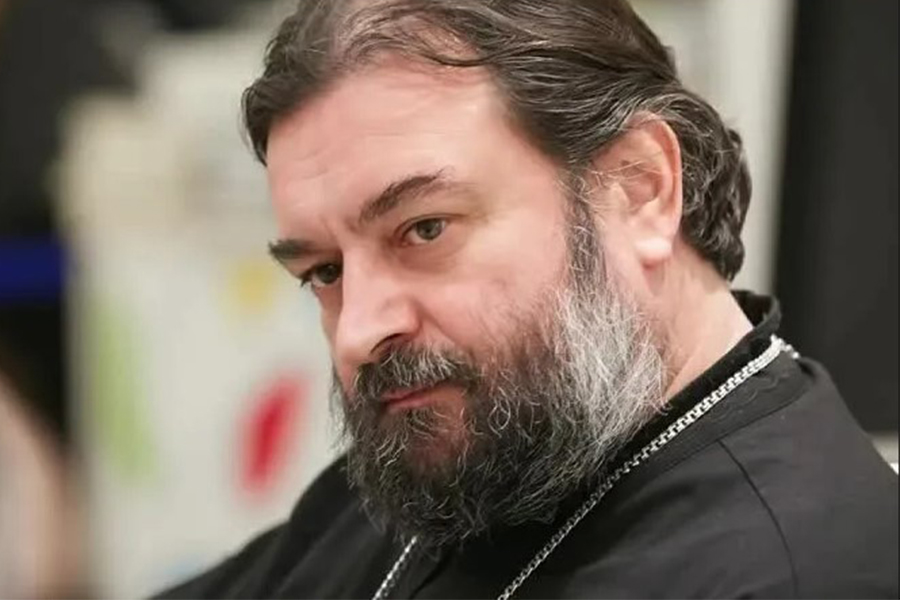
Here is a summary of thoughts from an article by the well-known preacher and publicist Archpriest Andrew Tkachev:
Today, it is common to see a large number of cheaply printed icons on paper, as well as sacred images in newspapers, magazines, calendars, and other media. Is this really appropriate? The modern practice of mass-producing icons would likely shock our pious ancestors and, even more so, the holy fathers. In the past, an iconoclast would have had to forcibly take an icon, stab it with a spear, burn it, or break it to pieces. Today, a simple act of negligence or inattention can turn someone into an iconoclast.
Burning printed materials that quickly become outdated has become a routine task in many parishes. Pious individuals often cut out holy images from various publications, but these images accumulate in large quantities, leading to a few issues. These images are often stored away, not serving their intended purpose. Alternatively, people may try to add them to their home iconostasis, but the variety and abundance of these images can create disorder and make it difficult to maintain the prayer corner.
This does not foster reverence; instead, it creates confusion.
By taking away the exclusivity of the iconographer's craft, mass printing has introduced a new reality that not only contradicts the dogma of icon veneration defined by the Seventh Ecumenical Council but also diminishes our sense of reverence and responsibility.
Does the icon, now reproduced on lightweight and short-lived material by a printing press, reflect the weakening of modern faith? Could this be an indication that our faith is becoming utilitarian, superficial, and unlikely to endure through the ages? After all, Rublev's frescoes continue to inspire us through the centuries, while outdated calendars with sacred images are burned every year because they are no longer useful. Is this not a concerning reflection of our modern times?
Sadly, this is just one aspect of what is often called modern iconoclasm. Instead of destroying holy images, we see their devaluation through mass reproduction for various reasons, sometimes purely commercial. These images appear on items where their presence is not appropriate, such as packaging, jewellery, tableware, clothing, and household items. The problem is widespread and multifaceted.
Several years ago, the website pravoslavie.ru (known in English as orthochristian.com) posted a series of articles (in Russian) about modern violations of the dogma of icon veneration, written by priests Alexei Knutov and Vladimir Nemychenkov.
These articles were not translated into English, likely because they addressed local realities within the canonical territory of the Russian Orthodox Church. However, those who are interested may still appreciate the powerful illustrations included. Below, we summarise the key points of the authors’ well-founded theoretical conclusions, which provide a fundamental understanding of the issue under discussion.
According to the doctrinal definition given by the Seventh Ecumenical Council in 787 (*as cited at the end of this letter), the following principles apply:
1️⃣ Icons should be placed in dignified locations where they are properly honoured and venerated.
2️⃣ Icons should be made of durable materials, such as being painted on walls and boards, created with mosaics, or made from other appropriate substances.
3️⃣ Icons should not be kept in disuse or serve merely as decoration. They are intended for prayer and worship on par with the Cross and the Gospel. As St. Theodore the Studite (+826) stated, "He who worships an icon worships the hypostasis of the person depicted on it. And vice versa, whoever humiliates the image, humiliates the very likeness." This means that any intentionally offensive or even careless actions towards sacred images reflect directly upon the persons (hypostases) depicted, including Christ, the Theotokos, angels, and saints. Such actions are considered disrespectful and are subject to condemnation.
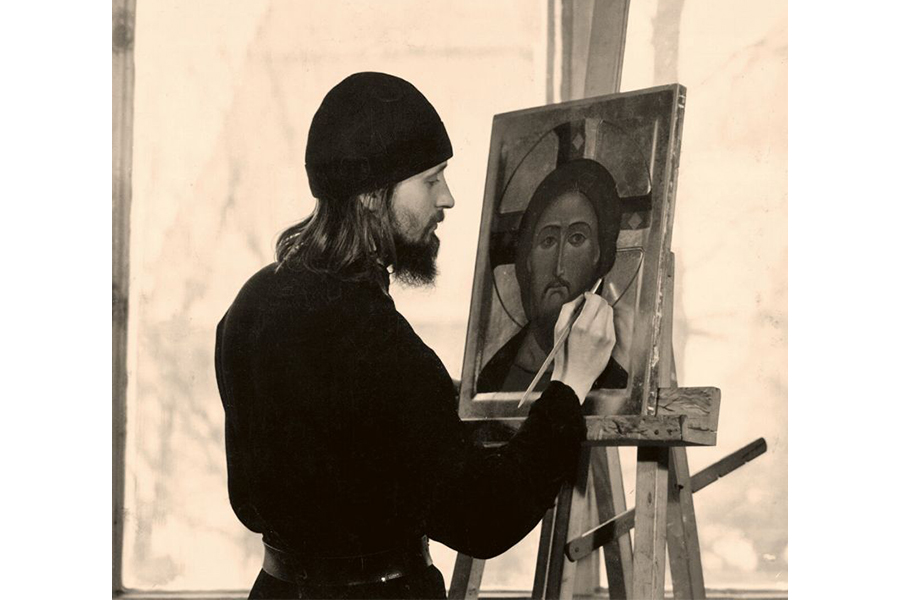
Based on this dogma, we can formulate the norm for icon veneration itself:
A sacred image should be used according to its intended purpose, which is:
☑️ Prayer, turning the mind from the image to the preimage.
☑️ Communion of a person with the sacred through the contemplation of a holy image.
☑️ Veneration of sacred images, which includes giving due honour and reverence to the original person depicted through the icon, such as by kissing it, using incense, and lighting candles and lamps.
☑️ Sanctification of the profane space of human dwellings.
These practices should be maintained, provided that:
☑️ Sacred images remain free from obscuration and mixing with profane (ordinary) objects.
☑️ Sacred images are made from durable materials for long-term pious use.
☑️ Sacred images are kept in dignified places or formats to prevent neglect or defacement, whether intentional or unintentional.
By comparing modern practices with the traditional norms of venerating icons, anyone can discern whether these practices align with the dogma of icon veneration and the tradition of the Church. This allows one to conclude whether it is appropriate to engage in certain actions with sacred images or to buy or produce certain goods featuring sacred images. Here, "sacred images" refer to any depictions of the holy, including icons (even those painted in a realistic style), the Cross, and Orthodox churches and chapels.
Returning to the original message: when it comes to distributing printed sacred images that, due to their format, material, or quality, are unlikely to be used for their intended purpose (or may be abused), and experience confirms these concerns, it may be best to refrain from creating temptations for those who may lack sufficient reverence.
Instead, consider finding alternative ways to engage with the congregation. If something must be handed out, perhaps home-baked goods might be a better option—they may be more labor-intensive, but they pose no risk in the context of the concerns mentioned above.
Catalog.obitel-minsk.com is our online store, and we invite you to visit and explore our wide selection of items - from cassocks to hand-painted icons and Gospel covers.
✅ All of our products are crafted in the workshops of our monastery. We deliver worldwide!
We hope you found this issue informative. We would appreciate it if you could share your parish experiences and practices with the OCC community.
We prayerfully wish you all of God’s blessings.
Related Articles
Related Products
- As low as $750.00Comment(s)


Close
- Someone purchased a15 hours ago from Minneapolis, US$18.00
- Someone purchased a
Lestovka Prayer Rope 50 Segments
12 hours ago from Maple Falls, USAs low as $23.00 - Someone purchased a6 hours ago from North Vancouver, CA$20.00