This website uses cookies to ensure you get the best experience on our website. Read more

The Gentle Art of Hearing Confession
 10Jul
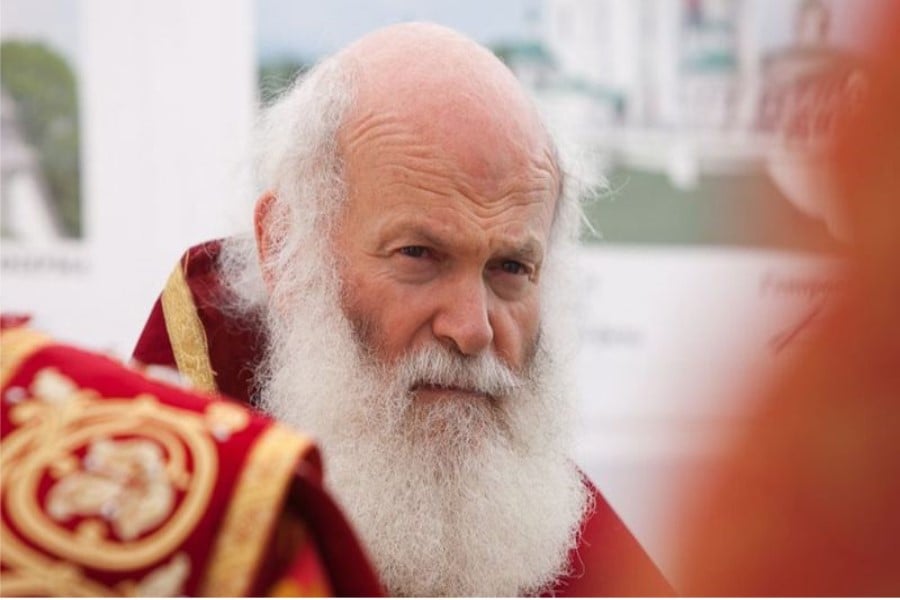
10JulContinuing his reflection on confession, Fr. Konstantin Ostrovsky now turns to several practical and often delicate aspects of pastoral care: how far one should examine the depths of the soul, how to understand shame before confession, and how to guard the sacred trust entrusted to the priest.
Where is the line between helpful self-examination and harmful introspection❓
Why do we conceal what troubles our conscience, and what stands behind this reluctance❓
How should a confessor act when he is aware of a sin that remains unspoken❓
And what place do outward forms—whether spoken or written—have in the mystery of repentance❓
In this chapter of Notes on Pastoral Ministry, Fr. Konstantin speaks with sobriety and discernment about the limits as well as the responsibilities of pastoral guidance. He reminds us that confession is not an investigation nor a psychological analysis, but a meeting of the soul with God—one that requires both truthfulness and care.
Here again, the work of the priest lies not in uncovering everything at once, but in helping the penitent walk the steady path of repentance.
PROBING THE "HIDDEN DEPTHS"
A person should not attempt to dig artificially into the dark depths of his soul.
The heart of a sinner may be compared to a pit filled with every kind of impurity. One may, if one wishes, draw things out of it, examine them, even show them to others. But this does not cleanse the pit.
The heart is not purified by analysing its impurities, but by prayer, the patient endurance of sorrows, and the grace of God.
SHAME BEFORE CONFESSION
Everything of which my conscience accuses me must be brought to confession, in the hope that the merciful God will forgive and help me to amend my life.
Why is it so difficult to acknowledge certain passions even to ourselves? For one reason only: pride. We like to think well of ourselves—as though we were already righteous. But it was just as pleasing for the king in Andersen’s tale to imagine himself splendidly dressed, when in fact he was naked.
Better to know ourselves as we are than to live in illusion.
We feel ashamed before the confessor for a similar reason—vanity. We imagine that if we present ourselves well, he will think better of us and treat us more favourably. But we cannot deceive God—and how we stand before Him matters far more than how we appear to the priest.
And an experienced confessor will not be misled by a guarded confession; he will only grieve at our spiritual blindness—or worse, at our hypocrisy.
ON THE SEAL OF CONFESSION
“You have heard a word—let it die with you; do not be afraid, it will not tear you apart. A fool suffers over a word as a woman in labour over a child”
(Sir. 19:10–11).
These words of Jesus, son of Sirach, may rightly be applied to the seal of confession.
Elsewhere he writes:
“Whoever reveals secrets destroys trust and will never find a close friend. Love your friend and be faithful to him; but if you reveal his secrets, do not pursue him any more… A wound may be bound up, and after quarrelling there may be reconciliation; but whoever has revealed secrets has lost all hope of reconciliation.”
(Sir. 27:16–23)
How much more, then, does this apply to confession.
St John Climacus writes:
“Nowhere do we see that God, having received a confession, makes known the sins of the penitent; for if He did so, He would drive sinners away from confession and leave their wounds incurable.”
(The Ladder of Divine Ascent 13:14)
In our time, there is even less excuse for violating the seal of confession, since civil law in many countries recognises it and protects the priest’s right to remain silent. Yet even when secular authorities demanded disclosure, faithful pastors preserved the seal without compromise—even under persecution.
CONFESSION IN ONE CHURCH, COMMUNION IN ANOTHER?
Is it permissible to confess in one church in the evening and receive Communion in another the following morning?
There is no principled objection.
In the Russian Orthodox Church (unlike in some other Local Churches), parish priests are generally entrusted with hearing confessions in preparation for Communion, except in particular cases of ecclesiastical discipline. This trust belongs to the priesthood as such.
For a priest to suppose that he—or the clergy of his parish—are somehow more spiritual, and therefore better able to exercise the authority given by God to bind and loose (cf. Matt. 18:18), is a sign of pride, or of a misunderstanding of the matter.
There are therefore no grounds for insisting that someone who has confessed in one church must receive Communion in the same place. Nor is there any reason to require a second confession from one who has already received a blessing to commune from a priest in another parish.
IN DEFENCE OF WRITTEN CONFESSIONS
Is it acceptable to confess using written notes—on paper or even in electronic form?
In itself, this makes no essential difference. What matters is the confession.
If a confessor places too much emphasis on outward signs—the penitent’s expression, tone of voice, or manner of speaking—there is a danger that attention will shift from repentance to pleasing the priest. The fabric of the soul is delicate: press too hard, and it tears.
It is better for a person to confess in whatever way allows him to do so honestly—whether from memory, from notes, or even from a phone. What we must learn is not a particular manner of speaking, but repentance itself.
St John Climacus gives this example:
“Watching closely the steward in the refectory, I saw that he carried a small notebook at his belt… He wrote down his thoughts each day and recounted them to his pastor. And many of the brethren did the same, following the instruction of that great shepherd.”
(The Ladder, 4:39)
If it helps someone to keep such notes, let him do so. If at some point it becomes unnecessary, he should not be constrained.
What matters is sincerity: that a person names his sin without false shame or self-justification, desires to amend his life, and bears without complaint what God permits.
CATALOGUES OF SINS
When someone is just beginning a church life, it can be helpful to read books that list sins, in order to recognise them. But here discernment is needed.
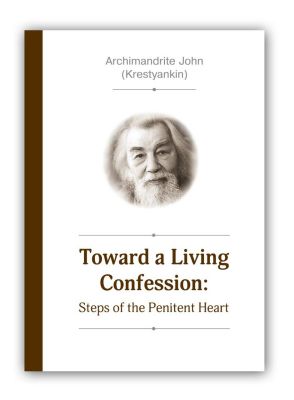
It is one thing to use a sound guide—such as Fr John Krestiankin’s Experience in Preparing for Confession according to the Ten Commandments. It is quite another to rely on dubious pamphlets in which references to sins and passions are mixed with superstition and, at times, unhealthy imaginings.
Even good lists, however, should not detain us for long. The spiritual life is not contained in catalogues.
One learns far more about repentance from the Fathers: Abba Dorotheus, St. John Climacus, and, closer to our time, St. Ignatius (Brianchaninov), St. Theophan the Recluse, and others. Yet even the best books cannot replace living contact with a spiritual father, if God grants one.
SHOULD A PRIEST POINT OUT A HIDDEN SIN?
It sometimes happens that a person does not mention in confession a sin known to the priest. Should it be pointed out? And how?
There can be no fixed rule.
St John Climacus writes:
“Disturb the sick man for a time, lest he become hardened in his sickness… Many have taken the silence of the helmsman for a sign of safety—until they struck upon the rocks.”
(Special Instruction to the Shepherd, 6:2)
At times, holy elders revealed forgotten sins and brought people to repentance. At times, bishops refused Communion to those who openly sinned and would not repent.
In one case, reproof is like a surgeon’s scalpel; in another, like a sword cutting off what is dead.
But we must be cautious. Taking up such instruments, a pastor must take care not to become, instead of a healer, a destroyer.
Let the penitent speak freely.
If necessary, one may ask careful, indirect questions—for example, whether there has been a serious fall. But confession must not become an interrogation.
We must also remember: each of us carries a depth of sinfulness we do not fully see. God does not reveal it all at once, lest we fall into despair. He leads us gradually.
We ourselves need gentle handling. Let us show the same care to others.
And again St John Climacus:
“Even if we had discernment, we should not anticipate the sinner by declaring his sins, but lead him to confession by indirect words; for even the act of confessing brings him no small forgiveness.”
(Special Instruction to the Shepherd, 13:14)
With prayerful wishes for the Lord’s help
and the protection of the Most Holy Theotokos,
Yours OCC
Related Articles
Related Products

Comment(s)
Close
- Someone purchased a
100-Segment Lestovka Prayer Rope
1 hour ago from Toms River, USAs low as $30.00 - Someone purchased a
Lestovka Prayer Bracelet 25 segments
1 hour ago from Northville, USAs low as $18.00 - Someone purchased a
Horologion (The Book of Hours) in Church Slavonic
1 hour ago from New Egypt, US$17.00 - Someone purchased a
Russian-Style Priest Vestment with an Icon of Christ and embroidery
7 hours ago from Denver, US$1,515.00 - Someone purchased a
Greek-Style Priest Vestment with Embroidery and Medallion
6 hours ago from Washington, US$744.00 - Someone purchased a
Chalice Covers and Veil with Embroidery sh-10-71-7
7 hours ago from Denver, US$315.00