This website uses cookies to ensure you get the best experience on our website. Read more

Baptisms in Hospital: What Every Priest Should Know
 10Jun
10JunWe are pleased to connect with you once again within the virtual walls of the OCC.
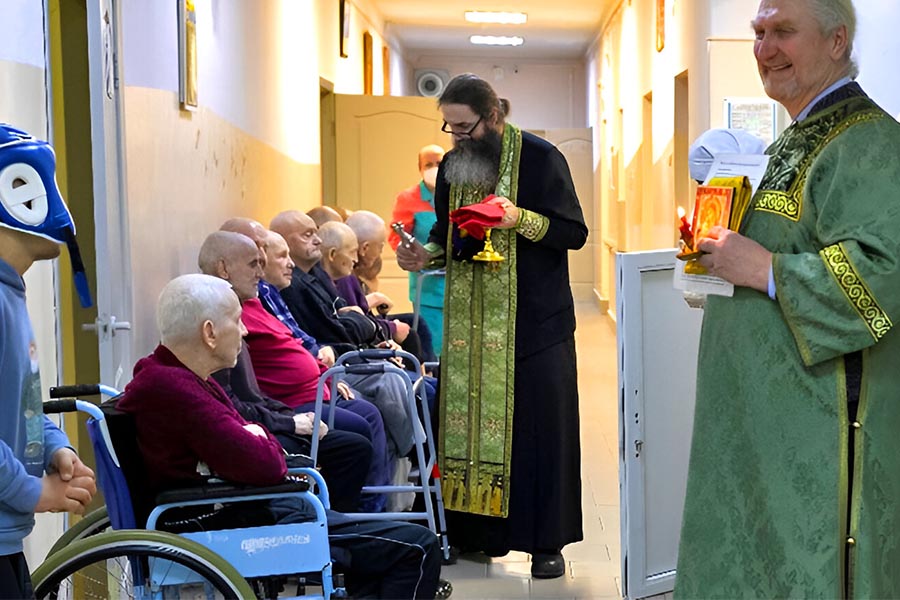
At some point, a priest may be called upon to perform the baptism of a vulnerable newborn or a seriously ill infant or adult in a hospital setting.
In today's issue, we've compiled a selection of details and recommendations for administering the sacrament in a medical facility. For those who have not yet had such an experience, this newsletter can serve as a reference guide for when the need arises.

Preparation
✅ If there is a serious threat to the life of the person who is ill, their loved ones should be instructed on how an Orthodox layperson can administer baptism in case of dangerous complications while the priest is on the way.
They should take ordinary water and sprinkle or anoint the person three times, saying: "The servant of God (name) is baptised in the name of the Father (sprinkle water). Amen. And the Son (sprinkle water). Amen. And the Holy Spirit (sprinkle water). Amen." An adult may be baptised according to this simplified rite only if they believe in God and have consciously expressed a desire to be baptised.
✅ Before you leave, check the contents of your briefcase to ensure you have all the necessary items. You will need an epitrachelion with cuffs, a book of needs, a baptismal box, a small vessel to consecrate the water, a jar with a wide neck to pour out the remaining water, and a baptismal cross just in case. It's wise to have a fully equipped and self-contained bag, so as not to require additional assistance and to avoid any delays.
See here an example of priest's briefcase content.
✅ If the situation allows, bring the Holy Gifts, considering the age and condition of the person being baptised. Infants and those who cannot swallow should only partake of the Holy Blood.
Hospital Administration
☑️ The manner in which the baptism takes place will largely depend on the attitude of the hospital administration and the condition of the person being baptised. This includes how much time will be allowed, how many people can be present in the ward, and what activities may be restricted.
☑️ Some details, such as the lighting of candles, may need to be arranged in advance with the hospital staff.
☑️ Experienced priests recommend maintaining a modest and gentle demeanor to avoid conflicts with the medical staff, and being as flexible as possible, prioritizing the needs of others over personal principles and ego. At the same time, be bold in your faith — the Lord will help open doors and persuade those who need to be persuaded.
Nuances of the Baptismal Rite
✔️ Depending on the situation, the time available, and the condition of the patient, the priest may choose to perform either a short rite (about 10 minutes) or a full rite (around 40 minutes).
✔️ In most cases, when responding to an urgent call at a hospital, the short rite is typically practiced due to the fear of death. Its brevity reduces the likelihood of interruption by medical procedures or actions by the nursing staff. However, if circumstances allow, the full rite can also be performed.
✔️ In a hospital setting, baptism is usually administered by sprinkling or pouring water, followed by anointing and Holy Communion. Full immersion is more commonly reserved for baptisms performed in hospital chapels.
✔️ If only the short rite is performed, it is recommended that the omitted prayers, anointing (if not already done), and chrismation be completed later when possible.
✔️ Catechesis for adults should be tailored to the situation. A minimum level of instruction should be provided, but depending on the circumstances, it may be expanded or omitted entirely.
✔️ The involvement of godparents in the baptism of a child will also depend on the circumstances. They may or may not be allowed into the NICU or intensive care unit. For a short baptism, their presence is not required, but devout godparents can pray nearby. If the outcome is favorable, the remainder of the rite can be completed with the godparents' participation. Alternatively, the baptism may proceed without them, in which case the priest himself becomes the godparent.
The Short Rite in the Book of Needs
❗️ Please note that some editions of the Book of Needs contain an unfortunate error.
The prayer within the rite, whose first part is recited during the consecration of the water and whose second part is offered for the person being baptised, is abruptly cut short at the words: “terrible to adversaries,” ending without any particular significance.
After these words, it is recommended to turn to the full rite, according to which the priest "signs the water thrice, dipping his fingers therein, and, breathing upon it, says: 'Let all the hostile powers be crushed beneath the sign of the image of Thy cross.' [Thrice]."
After this, the priest continues with a prayer for the baptised person from the full rite of Baptism: "We pray Thee, O Lord, let every airy and invisible spectre withdraw itself from us..." Then follows the imposition of oil into the water. (The anointing of the baptised person with oil is at the discretion of the priest, as there is no unanimity of opinion on this matter.) Finally, the baptism with water and anointing with myrrh are completed.

Baptism of Adults
☑️ Typically, it is the relatives of the sick person who inform the priest of their loved one's desire to be baptised. While there is usually no reason to doubt their sincerity, it's important to ensure that this wish genuinely belongs to the sick person, as it sometimes reflects the hopes of the relatives more than the individual themselves. Therefore, it is crucial to confirm the will of the person to be baptised, which may not always be straightforward.
☑️ If a person has previously expressed a desire to be baptised but is unable to confirm it when the priest arrives (due to unconsciousness or an inability to speak), there are three possible steps to take:
1️⃣ respectfully inquire with the relatives for more details about the sick person and the circumstances surrounding their decision;
2️⃣ attempt to establish communication with the sick person;
3️⃣ pray with the relatives at the bedside (e.g., a prayer service, a canon for the sick, Psalms, anointing with consecrated oil, sprinkling with holy water).
Based on these actions, a decision can then be made. Often, the patient's consciousness may return during these prayers. Strictly speaking, sacraments that require the conscious expression of will should not be administered if the person is unconscious.
☑️ Sometimes, even if a patient appears unconscious, they may still hear what is being said and react in some way — perhaps by opening their eyes or squeezing a hand. If this happens, it’s important to ensure that the person is responding coherently and understands what is being asked.
To verify this, ask a simple question that you expect will receive a negative response. For instance, if the patient’s name is Andrew, you might ask, "Is your name Ivan?" If the patient responds affirmatively, this indicates a lack of understanding. Keep these verification questions as straightforward as possible, given the patient's condition.
☑️ In cases where the evidence is not clear-cut, but there are indications that point toward a favorable decision, experienced pastors advise showing more love than strictness, relying on the faith and responsibility of the relatives.
☑️ There may also be instances where a patient who previously expressed a desire for baptism shows clear resistance when the priest arrives—perhaps shouting, resisting, or showing other signs of distress. This could be due to the patient’s altered mental state or a misunderstanding with the relatives. In such cases, it’s important to pause and wait until the patient's consciousness clears and their condition stabilizes.
☑️ If the situation allows, the hospital ministry handbook recommends providing a brief catechesis. This could include a simple explanation of core doctrinal truths: belief in God as Trinity; belief that Christ is true God who became man for our salvation, died on the Cross, and rose from the dead; belief in life after death and the resurrection to come.
☑️ If the baptism of an adult is performed under life-threatening conditions, it is advisable, if possible, to administer Holy Communion immediately, regardless of whether the person has recently eaten or drunk.

After Baptism
It’s essential to discuss the newly baptised person's subsequent spiritual life with them and their relatives, emphasizing the importance of prayer and the sacraments.
After the baptism, the water from the font should be poured back into a jar and then disposed of in a clean well; if this is not accessible, it should be poured into a river or another clean place.
It’s important to note that precise recommendations for every situation cannot be given, as much will depend on the specifics of each case and how the Lord moves the heart of the priest. Experienced pastors advise evaluating each situation individually and, in challenging cases, acting according to pastoral conscience, personal experience, or the counsel of a more experienced priest.
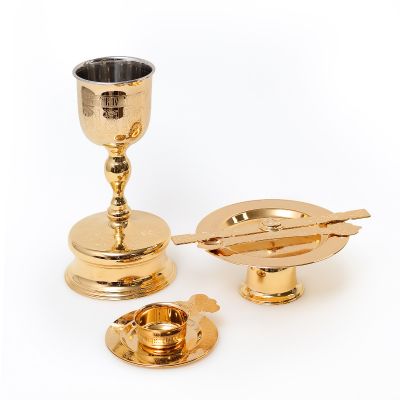
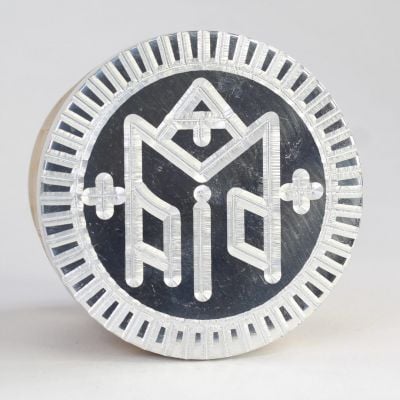
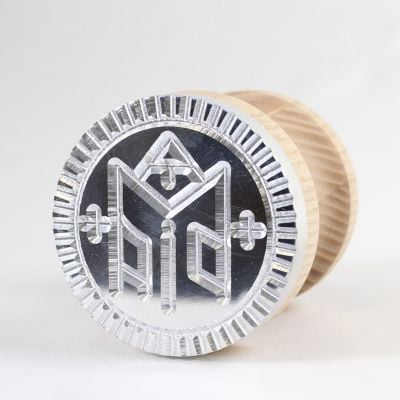
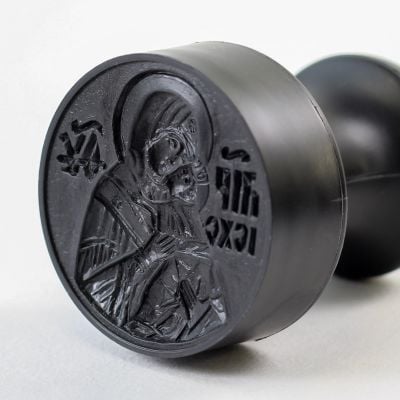
Our catalog offers a great variety of liturgical items. You can find everything from complete Eucharist sets to prosphora seals and other small but necessary parish supplies. Whatever your church needs, we aim to be a reliable source.
We hope our esteemed readers have found this information useful and we prayerfully wish God’s blessing upon all of you.
Related Articles

Related Products
- $2,145.00






Close
- Someone purchased a
100-Segment Lestovka Prayer Rope
1 hour ago from Toms River, USAs low as $30.00 - Someone purchased a
Lestovka Prayer Bracelet 25 segments
1 hour ago from Northville, USAs low as $18.00 - Someone purchased a
Horologion (The Book of Hours) in Church Slavonic
1 hour ago from New Egypt, US$17.00 - Someone purchased a
Russian-Style Priest Vestment with an Icon of Christ and embroidery
7 hours ago from Denver, US$1,515.00 - Someone purchased a
Greek-Style Priest Vestment with Embroidery and Medallion
6 hours ago from Washington, US$744.00 - Someone purchased a
Chalice Covers and Veil with Embroidery sh-10-71-7
7 hours ago from Denver, US$315.00