This website uses cookies to ensure you get the best experience on our website. Read more

Veteran Clergy Advice for New Priests
 20Jul
20JulAs our readership continues to grow, today's issue is dedicated primarily to those who have recently entered the priestly ministry or are seriously discerning this vocation.
However, our ‘veteran’ clergy readers may also find it worthwhile to reflect on this formative period of their own lives—to revisit their early aspirations and experiences, to refresh their perspectives, or perhaps to offer their own guidance for those following in their footsteps.
The formation of a future clergyman, to equip him for the core responsibilities of worship, teaching, and spiritual guidance, is a complex and nuanced journey. This makes the insights of seasoned clergy especially valuable, as they have had years to discern what aspects are truly essential in a pastoral calling.
Preparing with a Balanced Foundation
One contributor to the discussion highlighted two essential aspects of ordination preparation both of which require equal focus:
1️⃣ “technical” readiness
2️⃣ spiritual readiness
Most Fathers agree that a sound knowledge of theology and practical disciplines is essential, as the priest’s role includes teaching and guiding the people of God. This foundational learning cannot be overemphasised.
Metropolitan Konstantin (Ostrovsky) advises: “Candidates for the priesthood should read literature, understand the order of the Liturgy, and the sacraments, particularly those that require the priest’s full readiness: communion of the dying, anointing of the sick, and confession.”
Divine Service as a Cornerstone
While certain spiritual roles, such as teaching or spiritual counseling, may be carried out by laypersons or monastics, the Divine Service, and particularly the celebration of the Divine Liturgy, is uniquely entrusted to the priesthood. For the priest himself, the rhythm of the Divine Service is the central axis of his spiritual life.
Archimandrite Seraphim (Krechetov) shares: “The most important thing a future priest must learn and dedicate himself to is service—Divine Service... When monasteries like Optina Pustyn began to be rebuilt, everything gradually fell into place (I am a witness to this) once regular services were resumed. The divine service itself rebuilds both the clergy and the whole parish.
“The entire rhythm of one’s life, the very essence, must align with the Church calendar. For example, Bishop Stephan (Nikitin) gave us a rule: never go anywhere on Saturday evening or on feast days, neither visiting nor inviting guests, so that socialising doesn’t take the place of the divine service.“
Archimandrite Dorofei (Ryabinkin) advised: ‘During Lent, avoid going out altogether, so that there are no temptations or distractions.’ It is crucial to deeply experience the divine service.”
Embracing Prayer as a Constant Companion
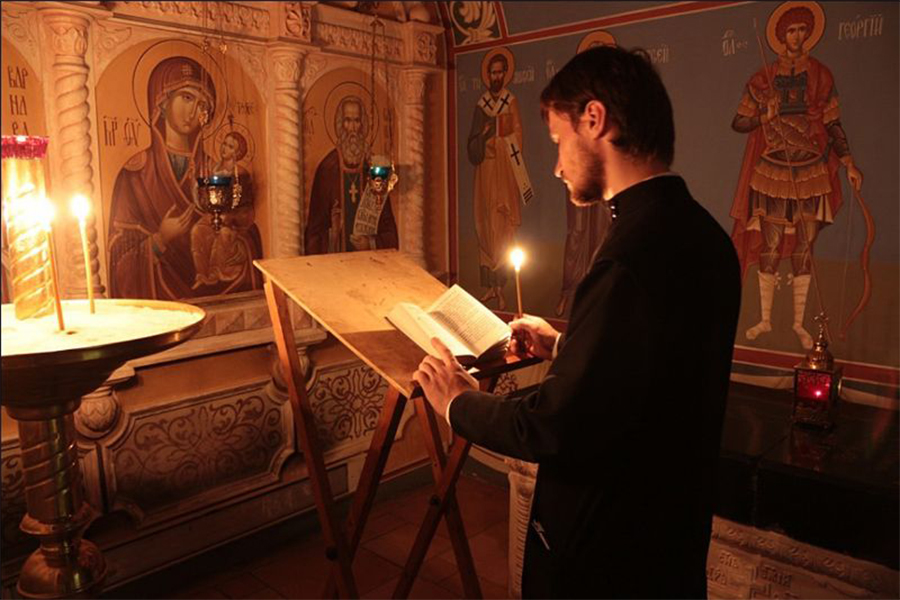
The Divine Liturgy can be seen as the highest form of prayer. The gift of communion with God is cultivated through trials and labours that begin well before ordination and continue throughout the priesthood, requiring dedicated effort to safeguard this grace.
Metropolitan Konstantin (Ostrovsky) advises: “If a person knows he is chosen for the priesthood, it is crucial to remain in prayer: to ask God for guidance, to seek His blessing on this path, to live in repentance, seek forgiveness for sins, and reconcile with everyone. Fasting is also beneficial, helping to bring oneself to a spiritually alert state.”
Archpriest Vladimir Vorobyev echoes this focus: “The primary skill a priest must develop is the ability to pray, for he serves as a conduit through which God imparts grace to His people. Prayer must be learnt, nurtured, acquired, and kept within the heart. Without prayer, a priest risks becoming merely a functionary—someone who may conduct the service outwardly well but lacks the inner grace necessary for his ministry. In order for God’s grace to come alive in one’s heart, moral and Gospel-driven purity, love, and self-denial are essential.”
The True Meaning of Pastoral Love
Archimandrite Platon (Igumnov) reflects on pastoral authority: “A pastor’s true authority is founded on love, not on control or dominance. It is the strength of love that lends authority to pastoral care.”
Archpriest Vladimir Vorobyev adds, “True pastoral love is sacrificial. A priest must be willing to give of himself—not only in extraordinary moments, but every day—to dedicate his strength and time in service to God and his flock. This calling resembles that of a doctor who performs an operation despite his own ailments because he knows his patient depends on him.”
Bishop Panteleimon (Shatov) highlights the compassionate aspect of pastoral love: “A priest must cultivate a merciful and compassionate heart. This, I believe, is central to a priest’s calling. As part of their preparation, candidates might consider volunteering in hospitals, helping the disabled, or assisting the homeless. Such experiences foster a heart of compassion.”
Metropolitan Longin (Korchagin) recalls the guidance of the esteemed pastor Archpriest Vasily Yermakov, who advised young priests:
“Many assume that priests hold some unique privilege or grace above the laity, and sadly, many clergy believe this themselves. But truly, a priest’s only privilege is to serve every person he meets, 24 hours a day, for the rest of his life. God doesn’t grant us weekends or holidays. If you’re weary, if your health falters, or if you face family difficulties, you still go and serve. That’s what the Lord and the Gospel require. Without a whole-hearted commitment to serve others, don’t take on the yoke of Christ.”
Staying Attentive to Your Own Soul
Archpriest George Breyev [†2020] reflects on the guidance of the Apostles: “Right after the first Apostolic Council, when the Apostles began ordaining ministers, these new priests asked for guidance in their pastoral work. The first apostolic command was to take heed to yourself. Attending to our inner state is essential; it is the key to the Kingdom of God within us, allowing the powers every Christian possesses through our likeness to the Holy Trinity to flourish. When pastors focus on their own spiritual health, they’re better able to fulfil their high calling.”
Hieromonk Neil (Grigoriev) [†2024] adds, “My advice for future priests is to stay constantly vigilant over your soul. Cultivating attentiveness helps one recognise the origins of passions, thoughts, and inclinations, allowing for discernment. Everything must be questioned critically. Only in this way can we learn to distinguish the spirits and practice true self-awareness.”
Bishop Alexis (Polikarpov) echoes this approach: “If a priest begins to revel in his own importance and authority, grace will likely be slow to reach such a heart. From the outset of our journey, we each have a chance to see that when pride takes over, mistakes soon follow. Inaccuracy in the divine service or personal failings remind us to always be mindful of the state of our souls.”
Discretion and Humility in Guiding Others
Metropolitan Konstantin (Ostrovsky) advises, “For new priests especially, it’s important to exercise great caution in offering advice, setting rules, or assigning penances. At first, it’s better to respond to only the most general and straightforward questions, consulting elders or deferring to their counsel on issues that require more pastoral experience. As a saying in healthcare goes, ‘every surgeon has their own cemetery,’ a phrase that holds true for priests as well.
“Winston Churchill once wrote, ‘It takes great courage to stand up and speak, but it takes even greater courage to sit down and be silent.’ Often, a priest’s greatest courage lies in restraint—remaining silent, praying, and letting experience guide them. Young priests should use words conservatively, allowing time to hone discernment in each situation.”
Archimandrite Platon (Igumnov) expands on this need for humility: “To guide others spiritually, a priest must be knowledgeable in matters of the Christian life and spiritual struggle, from combating sin to cultivating virtues like humility, meekness, and an understanding of God. Who among us can truly claim mastery over these? With this in mind, a priest should refer to the authority of Holy Scripture and the writings of the holy fathers rather than rely solely on personal judgment.”
Metropolitan Longin (Korchagin) stresses the need for continual self-examination: “A priest must be deeply aware of his own vulnerabilities to sin and temptation, perhaps even more so than a layperson. Recognising the ‘arrows of the enemy’ and knowing how to defend oneself is crucial. Having an experienced confessor and making frequent confession helps a priest grow spiritually. This regular self-examination strengthens him, enabling him to better support those who come to him for guidance and absolution.”
Selflessness
Archpriest Vladimir Vorobyev emphasizes, “The Lord says: ‘Freely you have received, freely give’ (Mt 10:8). You have received God’s grace freely, and you must offer it freely in return. When a priest seeks to gain something worldly from his ministry—money, influence, career advancement, or any other pragmatic benefit—it goes against the spirit of the priesthood. Such intentions are usually detected quickly by others and lead to a natural distrust of the priest’s integrity.”
Family
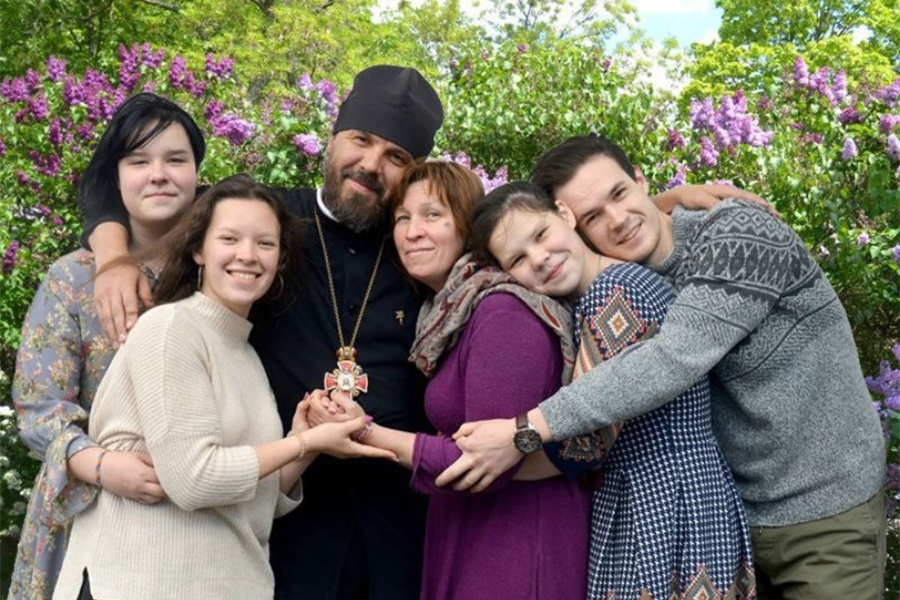
Metropolitan Longin shares, “Sadly, I find myself discussing issues in clergy family life year after year. There is a reason the family is called a ‘domestic Church’—the relationships within both the Church and the family share many parallels. Family life nurtures the core Christian virtues: love, faithfulness, patience, understanding, and the ability to care for the well-being of others. Yet, we live in an age when the values of marriage are eroding, and these disruptive influences increasingly touch even the families of believers.
“I would like to encourage both those who are married and those preparing for marriage to establish their family lives on the solid foundation of faith. May the wives of priests be true partners in bearing the pastoral cross, and may priests fully understand their responsibilities both to the Church and to their families.”
The path of a priest is indeed challenging; it can only be traversed, so to speak, by holding firmly to the mantle of God. Fortunately, we have many inspiring examples among both our predecessors and contemporaries. To offer some light and optimism for those who are on, or preparing for, this path, here is another inspiring reflection shared by a contributor:
“We live surrounded by continual miracles: new people, often from difficult backgrounds, continually find their way to God in so many different ways. This alone shows that God has not lost hope in our redemption. So, let us neither lose hope in God, nor yield to despair. If God believes in us—and He surely does—then we should all the more place our trust in Him, seeking to live and serve honourably within the circumstances He has set for us.”
Facing Temptations
Metropolitan Dionysius (Porubai) reflects, “When a young priest encounters the real challenges of parish life, the enemy is often there, whispering doubts: ‘Perhaps I made a mistake; maybe I am not truly called to the priesthood. How can someone as unworthy as I dare to serve at the altar?’
“If a young priest, especially one without mentorship, begins to mistake these temptations for his own thoughts, anything can happen. The enemy uses such doubts to push the priest into sin or deepen his despondency. I faced similar doubts shortly after my ordination as a deacon and went to confess them to Father Abel. He told me bluntly, ‘You are being a fool, Dionysius! This is the enemy’s whisper. Almost everyone faces this temptation. You are a soldier of Christ—you knew you were stepping into a spiritual battle. Why lose heart now that the enemy has started to strike? Stand firm and resist!’”
Bishop Anthony (Azizov) adds, “In the ordination prayer for deacons, we invoke the Protomartyr and Archdeacon Stephen twice. He was not only the first called to the diaconate but also the first martyr, stoned to death. This reveals something fundamental about pastoral ministry—it’s a life of ‘constant stoning.’ Stones are often cast by others, sometimes even by those close to us or fellow believers, but always by the enemy of souls and our own inner passions. To endure as a shepherd, we must emulate St. Stephen’s spirit, praying, ‘Forgive them, Lord, for they do not know what they are doing.’”
Wishing each of you strength and spiritual joy!
Related Articles
Related Products


Comment(s)
Close
- Someone purchased a
Lestovka Prayer Rope 50 Segments
7 hours ago from Oceanside, USAs low as $23.00 - Someone purchased a
Horologion (The Book of Hours) in Church Slavonic
8 hours ago from New Egypt, US$17.00 - Someone purchased a
Small Gold-Plated Pectoral Cross w/Chain
1 hour ago from Saint Joseph, US$250.00 - Someone purchased a
Medium Triptych with Our Lady of Kazan Icon
7 hours ago from Oceanside, US$16.00