This website uses cookies to ensure you get the best experience on our website. Read more

Advice on Prayer, Preaching, and Pastoral Vocation
 30Jul
30JulWe are pleased to welcome you once again to the OCC.
You may have become accustomed to our releases on topical issues in clergy life and ministry, based on materials shared on priest.today. Today, however, we depart slightly from our usual format. Recently, we came across Notes on Pastoral Ministry, a thought-provoking book by Archpriest Konstantin Ostrovsky, a regular contributor to discussions on priest.today. This book’s themes seem especially relevant to our OCC readership, and we hope to gradually introduce you to some of its most insightful passages.
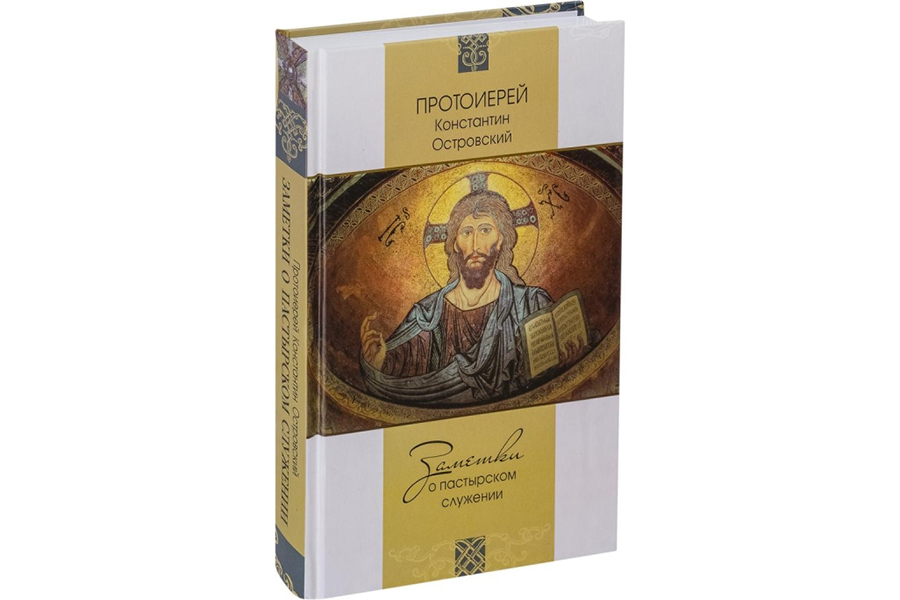
Notes on Pastoral Ministry is based on lecture notes Archpriest Konstantin prepared for his students of pastoral theology. Covering topics such as the pastoral calling, clergy prayer, parish life, family, and more, the book offers guidance not only to future priests but also to parish clergy, church staff, and laypeople who, together, embark on what the author calls "a difficult and dangerous mountain journey: descending from the ruinous peak of pride to the valley of humility, and then, remaining humble, ascending toward the Sun of Righteousness—Christ." While some challenges in the book reflect local issues, we have carefully selected points of universal significance to share with you.
The Call to Priesthood
To serve as a shepherd of the Orthodox flock is a high calling, and anyone aspiring to the sacred ministry must ask: Is this God’s will and blessing? A person may be virtuous and live a profound spiritual life yet still not be called to the priesthood. The absence of a priestly calling is no shortcoming, as the Church offers many paths of service. In fact, if God has not called someone to the priesthood—even someone saintly—it’s wise to refrain from taking up this ministry.
I knew a deeply pious man, someone steeped in prayer and spiritually respected by others, who nonetheless found the outward responsibilities of church service overwhelming. As he began attracting attention from the bishop and others around him, ordination seemed inevitable—until canonical issues arose, delaying his ordination indefinitely. Looking back, I believe that God was sparing him from the burdens of priestly service, to which he was simply not suited.
Recognising the Call
How can one recognise a true calling to the priesthood? While there is no fixed formula, there should be an inner desire to serve—to stand at the altar and lift up prayers on behalf of the people. This desire isn’t rooted in proud visions of how one might look in the sanctuary, but in the genuine longing to conduct the holy services. Without this desire, one shouldn’t think of pursuing priesthood.
Sometimes, out of humility or timidity, a person feels unworthy of becoming a priest, wondering how he could possibly fulfil such a role. If God intends for him to serve, He will call him in due time; if not, there is no need to force it.
There are cases when a person is, in a sense, "ushered" into the priesthood. He begins attending church regularly, immerses himself in church life, and may have the appearance or mannerisms that suggest he would make a good priest. Friends and acquaintances may encourage him, saying, “Why don’t you attend seminary?” He thinks, “Why not become a priest?” The outcome can be favourable if a true calling unfolds over time. But if this decision was made with little reflection, the priestly burden may prove overwhelming.
In such cases, we see a person whose soul grows cold toward prayer, communion, and other spiritual matters. They may start neglecting the sacred, sometimes falling into serious sins. If this person ultimately comes to a place of true repentance, the way forward is restored. But without repentance, even basic faith can wither away.

Hold on to the Altar
Sometimes conscientious priests face an inner struggle, feeling weighed down by thoughts like, “I am weak, sinful, and everything I do seems wrong; perhaps I am only harming my soul by serving so unworthily.” Such thoughts may come, but we must recognise that while hesitation and self-examination are natural before ordination, once ordained, one should remember Christ’s words: “No one who puts his hand to the plough and looks back is fit for the kingdom of God” (Luke 9:62).
For a priest, the only signs that one’s presence at the altar may not be pleasing to God are either a grave sin that disqualifies him from the priesthood or a ban from the diocesan bishop. In all other cases, let us rise from our weaknesses and continue in service, refraining from adding to our burdens by abandoning the sacred task entrusted to us. Instead, we should repent and strive continually to improve.
I recall a conversation between a seasoned priest and a young cleric who was struggling deeply with challenges in his ministry. The experienced priest advised him, “Hold on to the altar, and the rest will work out.” Indeed, it is in prayer, in the divine services, in the Eucharist, and in Communion of the Holy Mysteries that a priest finds the foundation he needs when it feels as though the “ground is slipping from beneath his feet.” By holding fast to these, he remains grounded, and with God’s help, all challenges will eventually be overcome.

In for a Penny, in for a Pound
Sometimes a young priest may feel embarrassed by his age, wondering if the congregation might feel similarly. In such cases, it is helpful to remember the saying: “If you call yourself a mushroom, then get into the basket.”
Naturally, a priest’s age does matter in some ways. An older priest often has more life experience, while a younger one has more energy. This is true on average, yet each person is unique. As for spiritual experience, it generally comes with time and may be revealed more to one’s spiritual father than even to oneself.
Overthinking one’s age or lack thereof can be counterproductive. A priest is like an officer in the army: if you are made a major, you lead your battalion—so, do the work before you. Serving at the altar and praying are essential and absolutely necessary; engaging with parishioners fulfills the pastoral duty, not in imitation of the holy elders, but with sincerity. If you are the rector, then lead the parish. For all other parish activities, handle them according to the situation and your particular gifts. Whether young or old, this is our calling and our duty.
If You Can’t Preach, Preach the Best You Can!
Another common concern is, “I don’t know how to preach.” Don’t be discouraged. Preaching, especially during the Divine Liturgy, is an essential responsibility for every priest, meaning that everyone can do it. Not all of us have the same oratorical abilities, just as mothers sing lullabies to their children in different ways: some with remarkable creativity, others with familiar tunes, or even a simple hum. But in every case, they sing with love.
Similarly, preachers each have different abilities, but all must hold a genuine love for their parishioners. If a priest has the gift to speak the Word of God on any topic, moved by the Holy Spirit, he should do so without pride. Yet most of us need to prepare: first, by praying that the Lord grants us the words to benefit our listeners; second, by thoughtfully considering the topic of the sermon; third, by drafting a plan, or in some cases, the entire text. While it’s true that a sermon spoken directly from the heart may have a special impact, what truly matters is the preacher’s sincere desire to benefit his parishioners. Congregations can always sense this intention and appreciate it deeply.
Preaching from a book may sometimes be seen as less inspired. But this is true only if it is done indifferently or out of laziness. If a priest has genuinely found a sermon that moved him, and he wishes to share this treasure with his congregation, it can be a very good thing. Moreover, some priests read their prepared text yet find moments to diverge, adding spontaneous thoughts and feelings for their spiritual children. This approach enriches the sermon both in spirit and delivery.
Related Articles


Related Products
- As low as $435.00





Close
- Someone purchased a
Lestovka Prayer Rope 50 Segments
7 hours ago from Oceanside, USAs low as $23.00 - Someone purchased a
Horologion (The Book of Hours) in Church Slavonic
8 hours ago from New Egypt, US$17.00 - Someone purchased a
Small Gold-Plated Pectoral Cross w/Chain
1 hour ago from Saint Joseph, US$250.00 - Someone purchased a
Medium Triptych with Our Lady of Kazan Icon
7 hours ago from Oceanside, US$16.00