This website uses cookies to ensure you get the best experience on our website. Read more

Trusting God, Not Ourselves: Reflections on Spiritual Fatherhood
 20Nov
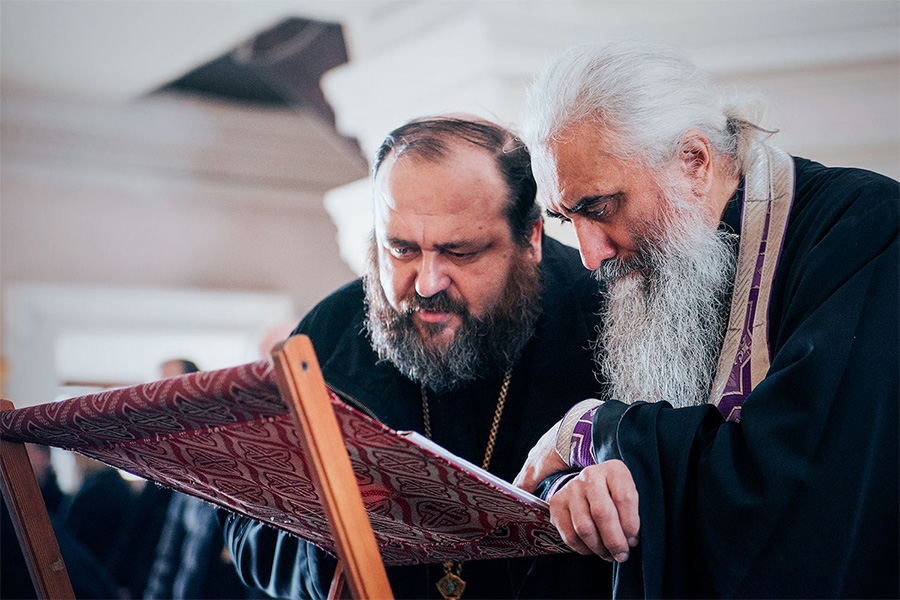
20Nov“A spiritual father is a harbor for those storm-tossed by passions,” writes St. John Climacus. Yet how do we, as shepherds, navigate the paradox of guiding others when we ourselves are still learners on the path?
In this installment of the Orthodox Clergy Club, we delve into Archpriest Konstantin Ostrovsky’s Notes on Pastoral Ministry. Today’s chapter explores the profound yet practical realities of spiritual fatherhood, offering wisdom for priests at every stage of ministry.
Here, Fr. Konstantin, a seasoned confessor of the Moscow Diocese, confronts a dilemma familiar to every priest: How do we lead souls to Christ when we struggle to discern His will ourselves?
This is no theoretical manual. With the candor of a brother who has walked the same narrow path, Fr. Konstantin exposes the pitfalls of pride, the illusions of false humility, and the devil’s crafty use of “good intentions.” He wrestles with questions that haunt every pastor:
- Can an inexperienced priest truly guide others?
- Is it safer to rely on our own minds—or risk trusting a flawed spiritual father?
- When does “helping” become a stumbling block?
Drawing from Scripture, the Optina elders, and sobering parables, this text does not offer easy answers. Instead, it invites us to confront our limits, repent of our delusions, and rediscover spiritual fatherhood not as a title, but as a cross-shaped service—one that demands both courage and trembling humility.
Whether you are a newly ordained priest grappling with your first confession or a veteran shepherd weary of spiritual warfare, these pages will challenge you to ask: Do I seek to replace God in the lives of my flock—or to point them to Him?
As St. Silouan of Athos reminds us: “The soul that has come to know God will not dare to teach others on its own.” May this reflection rekindle in us all the grace to lead not by our wisdom, but by our dependence on the True Physician of souls.
With fraternal love,
The OCC Team
To Desire What God Desires
The Perfect Paths (Inner Revelation and Elder Guidance)
The path to salvation is succinctly outlined in Scripture: “You shall love the Lord your God with all your heart, with all your soul, and with all your mind” (Matt. 22:37). Clear and concise—but what does it mean to love? We love our mothers, our wives, strawberries with cream, and even watching movies. But what does it mean to love God?
Antoine de Saint-Exupéry writes in The Little Prince: “Love does not consist in gazing at each other, but in looking outward together in the same direction.” We must learn to look in the same direction as God—to desire what He desires, to eagerly fulfill His will. If God sees this thirst within a person, He will arrange their path to salvation.
For those who have truly advanced in spiritual life, prayer, and humility, God often reveals His will through inner revelation. Yet such spiritual maturity, it must be said, is exceedingly rare.
Those who renounce their own will in obedience to a spirit-bearing elder also walk a straight and royal path. This too is rare. As the Old Testament teaches: “Let those who are at peace with you be many, but let your advisors be one in a thousand” (Sir. 6:6). If God grants someone a true spiritual father and instills trust in him, this is a great gift to be guarded—preserved through complete obedience.
But how does one bear this gift? Do I truly desire God’s will, or my own? Divine will often opposes human will. To accept God’s will wholly and forever is the swiftest path to holiness, as seen in the life of St. Dositheus. For us—pastors and spiritual children alike—this remains a distant ideal.
Is It Enough to Live by the Commandments?
What then remains for Orthodox Christians who lack inner revelation or a spirit-bearing elder? Is it enough to simply follow God’s commandments, since they are openly revealed?
The commandments are indeed known to all, but their application in concrete situations is far from obvious. For example, would a police officer be justified in “turning the left cheek” to a hooligan who struck his right (cf. Matt. 5:39)? Discerning God’s will is no simple task, for even with sincere resolve, our passions cloud spiritual judgment.
Do Not Trust the Proud Mind
True spiritual discernment requires a mind not whirling in thoughts, but united with the heart in standing before God. Such a mind may be trusted. Yet our minds—whether pastors or flock—rarely, if ever, abide in this state. Puffed with pride, the mind seeks not to stand before God, but to replace Him. For this, it is exiled from the heart, as Adam was from Paradise. Clearly, such a mind deserves no trust—only caution.
Moreover, our minds are fragmented and teeming with thoughts. Even if truth dwells among them, we cannot discern it unaided.
Could God not openly declare His will to us? But would we obey? Consider the parable of the rich man and Lazarus. The tormented rich man begged Abraham to send Lazarus to warn his brothers, claiming, “If one goes to them from the dead, they will repent.” Abraham replied: “If they do not hear Moses and the prophets, neither will they be persuaded though one rise from the dead” (Lk. 16:30–31).
So it is with us. It is God’s mercy that He revealed His will in the commandments but does not announce it every moment directly—for worse would follow.
Untimely Goodness Is Evil
Here lies a greater peril: the devil, skilled in spiritual warfare, rarely tempts Christians with overtly evil desires. Instead, he deceives through seemingly virtuous thoughts. A young, charismatic but inexperienced priest might be lured into multiplying “spiritual children” beyond his calling or readiness.
Conversely, an elderly priest, capable of aiding many but sluggish by nature, might withdraw from pastoral care under the guise of false humility. Thus, one is pushed into the mire of premature spiritual authority, while the other is hindered from laboring for God’s glory.
The devil’s tactics are innumerable. Hence, it is vital—nearly imperative—to seek counsel from the experienced in spiritual matters. This applies to both pastors and parishioners. Though finding such advisors may prove difficult, take comfort: the humble recognition of one’s need for guidance attracts God’s mercy, transforming hopelessness into grace-filled aid.
An Experienced Spiritual Father
At times, the Lord grants a person not a perfect saint, but a spiritual father experienced in prayer and the struggle against passions—one whom the person trusts, consults on spiritual matters, and obeys, praying that God might guide them through this confessor. The priest, aware of his own weakness, does not refuse counsel, prays for the parishioner as he is able, yet does not presume every word he speaks to be divine edicts demanding immediate obedience.
Such guidance is less rare than spirit-bearing eldership, yet still “not found lying on the roadside.” If God grants a spiritual father, trust in him must be preserved at all costs. To safeguard this gift, avoid overly emotional attachments, sentimental admiration, or excessive sharing of personal struggles. Instead, practice sincere confession, heed the elder’s counsel, and strive to follow it.
How often should one seek guidance? Frequency matters less than substance. If a question is truly vital, ask it. Scripture advises: “If you see a prudent man, visit him early; let your foot wear out his doorstep” (Sir. 6:36). But questions born of idle curiosity or passing whims are better left unasked.
An Inexperienced Yet Still a Father
Even if God has not granted a true spiritual father, it is still a blessing for a Christian—aware of his frailty—to obey a sensible, pious parish priest. Such a priest may lack extraordinary spiritual gifts but is sober (physically and spiritually), well-read in the Fathers, faithful to Church tradition, and able to explain liturgical practices, prayer rules, and their meaning. He will neither abolish fasts nor impose extreme asceticism.
Even if such a priest errs within the bounds of tradition, so long as he earnestly seeks to lead souls to Christ—not to himself—regular communion with him benefits spiritual beginners. Every parish priest, in fact, ought to be capable of this humble yet vital pastoral work.
Life under an inexperienced spiritual father resembles a three-year-old child cared for by an unskilled mother. She might accidentally give the wrong medicine, yet it is better for the child to have her than to be orphaned. But if the mother is malicious or swayed by inhumane ideas, the child faces mortal danger—just as a Christian risks grave harm under a deluded spiritual father or relying solely on his own mind. Both extremes are perilous.
However, if an inexperienced confessor, conscious of his weakness, acts prudently and seeks advice from seasoned mentors when needed, it is far better to have such a guide than none at all.
Let Us Help at Least as We Can
In our Church [ROC – ed. OCC], the spiritual guidance of parishioners falls to all parish priests, including the young and inexperienced. This tradition, rooted in centuries of Russian Orthodoxy and enduring even persecution, must be accepted as a duty—flawed yet irreplaceable. The key is to avoid posing as an elder.
Our widespread unpreparedness for spiritual leadership is cause for repentance and humility. Yet even a young priest cannot wholly evade this duty, for refusing to answer parishioners’ questions only wounds them.
To hear confession, acknowledge one’s limits, refrain from unsought advice, and simply pray—this requires no heroic asceticism, much less clairvoyance. Advising, “Be patient, pray, God is merciful,” seldom leads astray. To administer sacraments, listen compassionately, and intercede for others—these are no small things. They are the duty of every parish priest, and God aids us in this.
But to offer spiritual counsel, one must possess spiritual experience. Yet the very thought, “I have a gift for guidance,” is perilous. We must ask: Why do I believe this? Who plants such thoughts? For possessing a gift and imagining one does are distinct. The gift is from God; the delusion, from human weakness or the devil. True spiritual experience includes distrusting one’s own thoughts.
If a spiritually mature pastor is accessible, send complex questions to him. But if not? Every priest must therefore understand what it means to guide souls toward salvation.
To be continued…
Translated by OCC Team
Related Articles

Related Products
- Comment(s)


Close
- Someone purchased a
Lestovka Prayer Rope 50 Segments
7 hours ago from Oceanside, USAs low as $23.00 - Someone purchased a
Horologion (The Book of Hours) in Church Slavonic
8 hours ago from New Egypt, US$17.00 - Someone purchased a
Small Gold-Plated Pectoral Cross w/Chain
1 hour ago from Saint Joseph, US$250.00 - Someone purchased a
Medium Triptych with Our Lady of Kazan Icon
7 hours ago from Oceanside, US$16.00