This website uses cookies to ensure you get the best experience on our website. Read more

PASTORAL CARE. PSYCHIATRY. PSYCHOLOGY
 20Feb
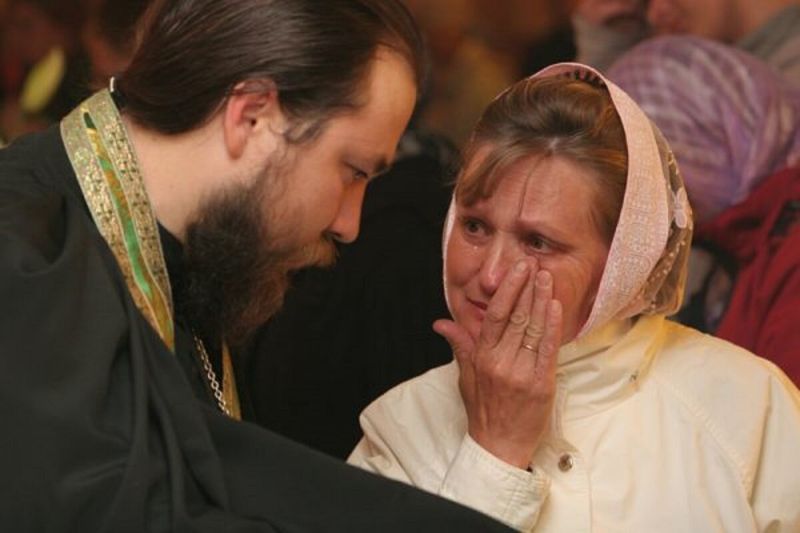
20FebIn the concluding chapter of On Spiritual Fatherhood from Notes on Pastoral Ministry, Father Konstantin Ostrovsky addresses a common challenge: where pastoral care intersects with psychiatry and psychology.
He writes with clarity and fraternal care about discerning spiritual struggles, passions, demonic influence, or genuine mental illness. The goal isn’t to turn pastors into diagnosticians, but to guide us in recognizing when to encourage clinical help while remaining a steadfast spiritual presence.
Many believers mistakenly hold that mental illness does not exist, and that what passes for it is always either the passions or demonic possession.
In fact, all three realities exist: the passions, demonic possession, and mental illness.
Telling them apart is not always simple, but it is vital at least to remember that each is real and to act with caution.
There have been cases when even experienced confessors advised mentally ill people to abandon the treatment prescribed by physicians, sometimes with terrible consequences. I knew a man who for years was under psychiatric care and registered as disabled with a diagnosis of schizophrenia. His pious relatives and spiritual father persuaded him to stop his medication, assuring him that he was healthy and needed only repentance, frequent Holy Communion and more prayer. He gradually reduced his medication to zero; his loved ones took this as proof of their rightness. Soon after, he took his own life.
This happened in an era when access to trustworthy information was limited, and to some extent that explains the mistakes that were made. Today, however, Orthodox psychiatrists and psychologists have published much on the relationship between spiritual and mental states, and every parish priest can and therefore should be acquainted with at least the basics.
CHOOSING RESOURCES AND KNOWING WHEN TO SEEK HELP
Particularly valuable are the works of Dmitry E. Melekhov (1899–1979), a psychiatrist, Doctor of Medical Sciences, professor, and author of more than 170 scientific works. He was also the son of a priest, deeply faithful, and well-versed in the Holy Fathers.
His concise, accessible booklet Psychiatry and the Problems of Spiritual Life has been republished multiple times and is easy to find. There he lists mental phenomena that warrant referral to a psychiatrist, including:
1️⃣ Psychogenic (non-epileptic) seizures, epileptic seizures, mixed presentations, and autonomic (vasovagal) episodes.
2️⃣ Progressive drop in work capacity, fatigue, declining memory and cognitive impairment.
3️⃣ Sharp, progressive personality changes: unprovoked irritability, coldness, aggression, cruelty, anxiety, emotional instability.
4️⃣ Recurrent sensory deceptions: visual, auditory, olfactory; tactile illusions (pathological skin sensations); feelings of being shocked by electricity, and so on.
5️⃣ Deep, persistent or frequently recurring depression and despondency with hopelessness, especially with suicidal thoughts; or, conversely, causeless euphoria with disorganised hyperactivity, racing thoughts, and grandiose self-appraisal.
6️⃣ Uncontrolled, compulsive, or obsessive thoughts; chaotic floods of ideas; involuntary breaks in logic; the sense of alien or “made” thoughts allegedly induced by electricity, hypnosis, radio waves or “possession.”
7️⃣ Bright, repeated states of “illumination” and “insight”; visions and voices unrelated to prior experience and foreign to the person’s overall personality structure.
8️⃣ Overmastering biological drives; intrusive blasphemous thoughts alien to one’s core self; a sense of losing grace, being forsaken by God, with despair and suicidal ideation.
9️⃣ Extreme pride and unshakeable conviction in demonstrably false judgments despite obvious reality and others’ objective views (delusional jealousy, “inventor’s” or “reformer’s” fixations in civic or church life); or, in reverse, an inferiority complex and self-abasement as forms of hidden pride and egocentrism.
???? Parish clergy should have at least a minimal grasp of modern psychiatry and psychology.
A brief survey course in our theological schools would be useful—not to make us diagnosticians (which is difficult even for professionals), but so we recognise when to advise someone to see a doctor.
A skilled, believing psychiatrist can do great good. And while no one enjoys being on medication, many remain able to work and keep their families precisely because they are treated.
If a person refuses to see a doctor yet remains stable and manages their inner difficulties while living a full life, thanks be to God, but if he is unable to manage on his own, then medical assistance is the wiser course..
At times, a conversation with an experienced Orthodox psychologist is also helpful to uncover deep-seated mistakes, examine true motives, and improve relationships. Even so, psychology belongs closer to medicine than to spiritual fatherhood. In its own way, the psychiatrist also helps a person order his relations with others.
THE PRIEST'S TASK AND ITS GOAL
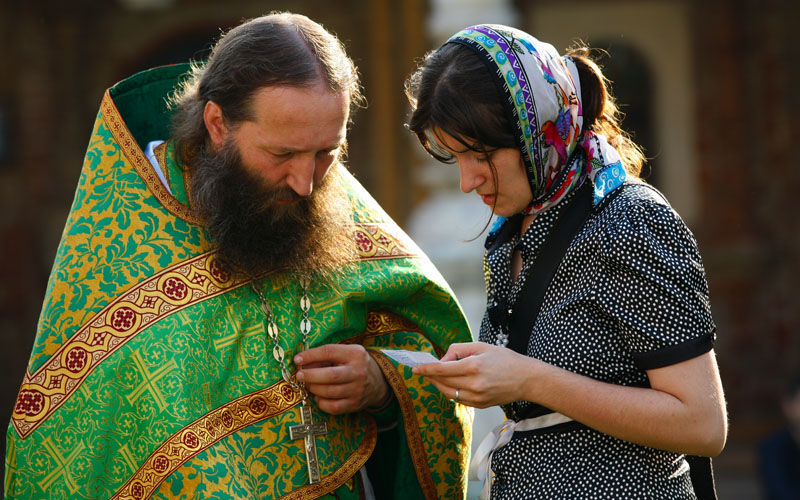
A priest’s task is not primarily to “fix” someone’s earthly life, though that often happens. Some pastors are trained psychiatrists or psychologists; some are “natural psychologists” with considerable life and spiritual experience. These gifts may help in pastoral care, but resolving worldly problems is a by-product.
The goal is to help a person become a living member of the Church, the Body of Christ. This is our own goal as well; for it we pray and urge one another to pray.
I recall a psychiatrist’s account of two patients with persecution mania. Neither was actually being pursued. One wanted to kill his imagined persecutor; the other forgave him. Here the difference between the psychic and spiritual spheres stands out clearly.
Psychically, both were bound by the same illness; yet this did not deprive them of the freedom proper to the image of God, and each used that freedom differently.
Psychology and psychiatry do not bear a direct relation to salvation. Still, psychologists and psychiatrists do good earthly work by helping our neighbours and are therefore worthy of respect. If they do it mindful of God and with thanksgiving to Him, He will remember their good deeds in eternity.
With prayerful love,
Your OCC Team
Related Articles

Related Products
- Comment(s)

Close
- Someone purchased a
Lestovka Prayer Rope 50 Segments
7 hours ago from Oceanside, USAs low as $23.00 - Someone purchased a
Horologion (The Book of Hours) in Church Slavonic
8 hours ago from New Egypt, US$17.00 - Someone purchased a
Small Gold-Plated Pectoral Cross w/Chain
1 hour ago from Saint Joseph, US$250.00 - Someone purchased a
Medium Triptych with Our Lady of Kazan Icon
7 hours ago from Oceanside, US$16.00