This website uses cookies to ensure you get the best experience on our website. Read more

When Someone Confesses Blasphemous Thoughts
 20Oct
Welcome to the hundredth issue of the Orthodox Clergy Club. Thank you for sharing in these conversations about our pastoral ministry.
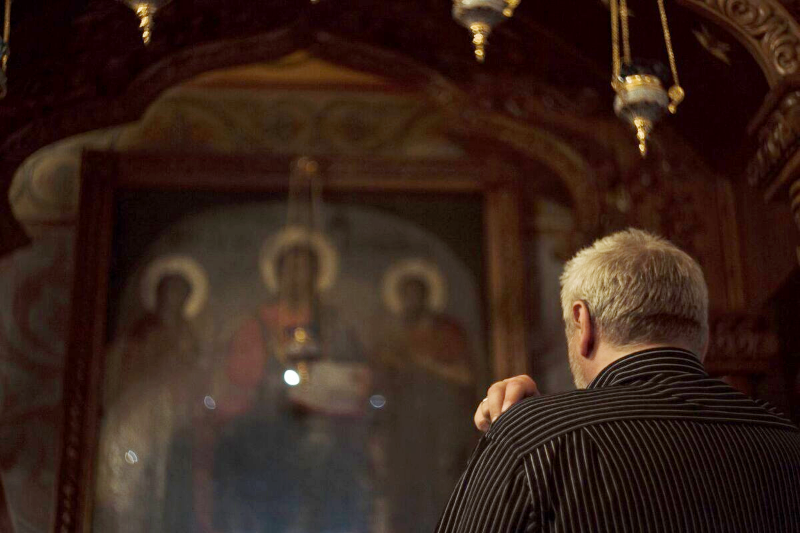
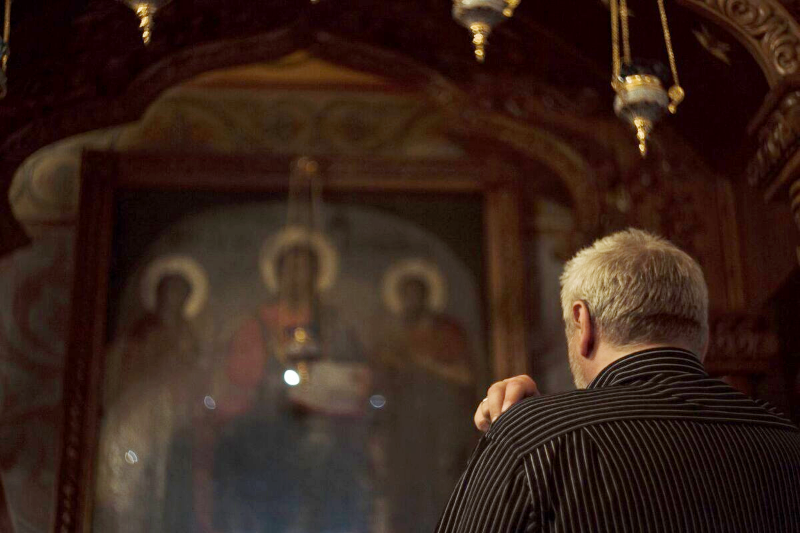
This week, we consider a painful experience that parishioners sometimes bring to confession: unwanted blasphemous thoughts and indecent images, even during prayer or before holy icons.
❓ How can we help someone distressed by thoughts they neither welcome nor wish to entertain❓
We offer three responses from a discussion on the Russian clergy forum priest.today.
A question from Fr John
“From time to time, people who have been active in the Church for many years tell me at confession that they are troubled by blasphemous thoughts and indecent images. These may arise in church or at home, when they look at icons of the Mother of God or the Saviour, or at the Cross.
They receive the Holy Mysteries regularly, avoid television and take care over what they allow into their lives. Yet these temptations persist. Perhaps past sexual sins have left their mark: the person repented long ago, but the memories remain.
How can we help? These people are suffering greatly.”
Bishop Methodius (Zinkovsky) of Yegoryevsk
When I think about the impure thoughts that torment people today, including those firmly established in the life of the Church, I am reminded of an appearance of the Most Holy Mother of God to St Seraphim of Sarov on the Feast of the Annunciation in 1831.
The account is recorded in the Chronicle of the Seraphim-Diveyevo Monastery by St Seraphim (Chichagov). The Mother of God appeared with twelve holy virgins, among them St Catherine and St Marina. She spoke of the sufferings of the martyrs of earlier times and of those who suffer inwardly, through sorrows of the heart.
I believe this also speaks to our struggle with thoughts. Such inward suffering can become part of our Christian endurance, and we need patience in bearing it.
A man used to come to me who was deeply wounded by every unwelcome thought. At confession, he would ask God to put an end to this inner warfare, with what I would describe as a certain impatience. I encouraged him to persevere.
St Paisios the Athonite used the image of aircraft: we cannot prevent thoughts from flying overhead, but we need not provide them with a place to land.
In other words, we should not dwell on these thoughts or enter into conversation with them. We can turn our attention instead to the Jesus Prayer or another short invocation. Some people use words from Scripture: “O God, come to my aid”, or “God, be merciful to me, a sinner”. Others use a longer or shorter form of the Jesus Prayer.
On Mount Athos, for example, a common form is: “Lord Jesus Christ, have mercy on me.” Its brevity recalls St Paul’s preference for five words spoken with understanding over ten thousand in a tongue (1 Corinthians 14:19). In the Russian tradition, the fuller form is more usual: “Lord Jesus Christ, Son of God, have mercy on me, a sinner.”
There are other forms too. St Seraphim’s prayer rule includes: “Lord Jesus Christ, through the prayers of the Mother of God, have mercy on me, a sinner.”
The shortest form I have encountered comes from the Romanian elder St Sofian (Boghiu), recently glorified by the Romanian Orthodox Church and almost our contemporary: “Jesus, have mercy on me.”
During a day filled with conversations, meetings and telephone calls, such a short prayer can be especially helpful. There is no need to become rigidly attached to one wording. Use a familiar form without constantly changing it. You might use one during part of the day and another later on.
Some priests worry that those who practise the Jesus Prayer may fall into spiritual delusion. We should teach our parishioners to pray humbly, without seeking unusual experiences or spiritual states: simply to turn to God.
Neglecting prayer does not protect us from delusion either. We may slip into complacency or forgetfulness of God, leaving ourselves more vulnerable to troubling thoughts. The Apostle’s exhortation remains: “Pray without ceasing” (1 Thessalonians 5:17).
Another story comes to mind, which I believe I also encountered in accounts of St Paisios. A monk wanted to rid himself of troubling thoughts altogether. Impatient to be free of them and to attain dispassion, he began trying to drive them away by spitting. He had taken his cue from the words in the baptismal service: “Breathe and spit upon him”, referring to the evil one.
In the end, he was spitting continually in every direction, and his behaviour became deeply disturbed. As I understand it, the story warns us against impatience: against expecting some quick technique to release us from a trial that calls for patient endurance.
We need to recognise this struggle as part of our spiritual labour.
The mere appearance of a thought does not defile us. At the same time, we should remember that we are engaged in warfare—not against flesh and blood, but against the spiritual powers of evil (cf. Ephesians 6:12). In a battle, the enemy fires at us.
These attacks call for watchfulness and humility. Our task is to avoid becoming absorbed in them, following them or arguing with them. The Fathers offer many illustrations of this.
St Ambrose of Optina described a man driving his horse through a busy market. The stallholders are calling out on every side: pies here, watermelons there; someone offers him a bargain. But the man knows where he is going. What he needs is at the far end of the market, so he gently urges his horse forward and continues on his way.
Let them call. They have their business, and he has his.
St Paisios made a similar point: the devil goes about his work, making a racket; we should go about ours.
Silencing the devil is God’s work. In time, we may be granted a measure of stillness, or periods of relief. At other times, the struggle may continue. Yet we can keep our hope in God and trust in His strength, patiently guiding our little horse towards Christ.
Archpriest Leonid Tsarevsky
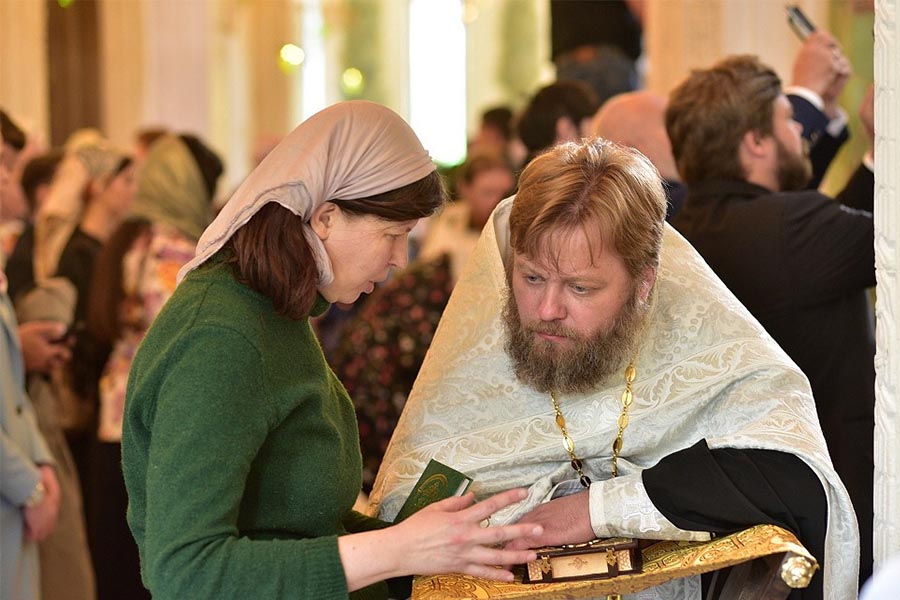
I usually begin by reassuring the person and helping them put the thought into perspective.
I might say: “Unwelcome thoughts take many forms. Some tempt us to judge others, some flatter our vanity, and some are blasphemous. The fact that this particular thought horrifies you does not mean you have consented to it. You reject it, don’t you? Then you need not treat it as an expression of your faith or your desires.
Recognise it as a temptation, say, ‘Lord, have mercy’, and carry on. You can brush it aside as you would a fly.”
Sometimes someone says, “I have a doubt” about a particular point of doctrine. Here, too, it helps to distinguish between two different experiences.
If there is something you genuinely do not understand, seek an answer and work it through. But sometimes there is no question to resolve—just an unwanted suggestion that keeps returning. You do not have to reopen the whole argument every time it appears.
Should we advise someone troubled in this way to seek professional help? That depends on the person’s condition and on how seriously the thoughts are affecting their life. An unwelcome thought does not, by itself, establish that someone is unwell. I would begin with pastoral reassurance, while remaining attentive to distress that may require additional help.
There is a difference, for example, between someone saying, “This terrible thought keeps coming into my mind, although I know I reject it”, and someone insisting: “Father, everyone has turned against me. Look how all the evidence fits together!”
In the latter situation, the person may be unable to question their interpretation of events. Simply telling them not to dwell on it is unlikely to help: “How can I not think about it? This is serious!”
Here I need to recognise the limits of what I can offer as a priest and encourage the person to seek psychiatric assessment. But we should not wait for fears of persecution before considering professional help: persistent, overwhelming distress may also call for it.
People sometimes resist such a suggestion or feel hurt by it. We need to explain gently that seeking help does not mean they have failed spiritually, and that we will continue to support them.
Archpriest Evgeny Yaganov
Sometimes a prolonged struggle with blasphemous thoughts is made harder by a hidden reliance on ourselves. An outwardly orderly Christian life may leave us with the impression that we have overcome sin.
Unwanted thoughts can then become a bitter lesson in how vulnerable the human mind remains without the help of God’s grace.
Our distress may deepen when we mistake an intrusive thought for an expression of our own will. Frightening images can lead us to condemn ourselves for something we have never chosen. We need to distinguish clearly between the arrival of a thought and our consent to it.
Spiritual healing calls for an active response. Years of church attendance do not make repentance unnecessary. We are called to respond to God’s mercy with sincere effort, repentance and an honest recognition of our limitations.
It helps to reconsider how we approach this struggle. Trying to force a thought out of the mind can leave us even more preoccupied with it. Similarly, painstakingly searching out and recounting every disturbing image at confession can keep our attention fixed upon it and give it undue importance.
We can describe the nature of this involuntary struggle in general terms, while directing our repentance towards what we have willingly embraced in our deeds, words and the dispositions of our hearts.
Our attention can gradually shift from an anxious struggle with each thought to a peaceful acknowledgement of our weakness. We turn to Christ because we know how completely we depend upon Him. Fear of an impure thought need not govern our prayer.
Fear can tighten the hold these thoughts have on our attention. A contrite heart, turned towards God, helps us loosen that hold. Giving up the need to justify ourselves opens a path towards freedom.
Dear Fathers and Friends, we hope these reflections offer something useful for your ministry. May the Lord bless and strengthen you, and may the Mother of God shelter you beneath Her protection.
Translated by OCC Team


Close
- Someone purchased a
Акафист Божией Матери в честь иконы Ея "Всецарица" (in Russian)
12 minutes ago from Danbury, US$2.00 - Someone purchased a
Келейная книжица. Покаянные молитвы и размышления, архимандрит Иоанн (Крестьянкин) (in Russian)
12 minutes ago from Danbury, US$2.00 - Someone purchased a
Православный молитвослов: Правило ко Причащению (in Russian)
12 minutes ago from Danbury, US$3.00 - Someone purchased a
Сокровенный разговор об исповеди (in Russian)
12 minutes ago from Danbury, US$1.00 - Someone purchased a
Collection of Akathists to the Most Holy Theotokos
12 minutes ago from Danbury, US$7.00 - Someone purchased a
Holy Gospel in Church Slavonic with Translation in Russian
12 minutes ago from Danbury, US$25.00 - Someone purchased a
Daily Orthodox Calendar with Scripture Readings for the 2027 Year
12 minutes ago from Danbury, US$14.00