This website uses cookies to ensure you get the best experience on our website. Read more

Parish Relationships: Love Without Naivety
 10Oct
In the previous instalment of Notes on Pastoral Ministry, Fr Konstantin Ostrovsky considered what it means to call a parish a family. Neither personal friendship nor busy parish life can create the unity that comes from life in Christ; nor can formal procedures take the place of repentance, prayer, and a rightly ordered life within the Church.
The present instalment brings this principle into the daily relationships of those who serve together in a parish. Love must be their foundation—but love does not require the same response from everyone.
❓ What does it ask of a rector, an assistant priest, or a parish worker when opinions differ and a decision must be made?
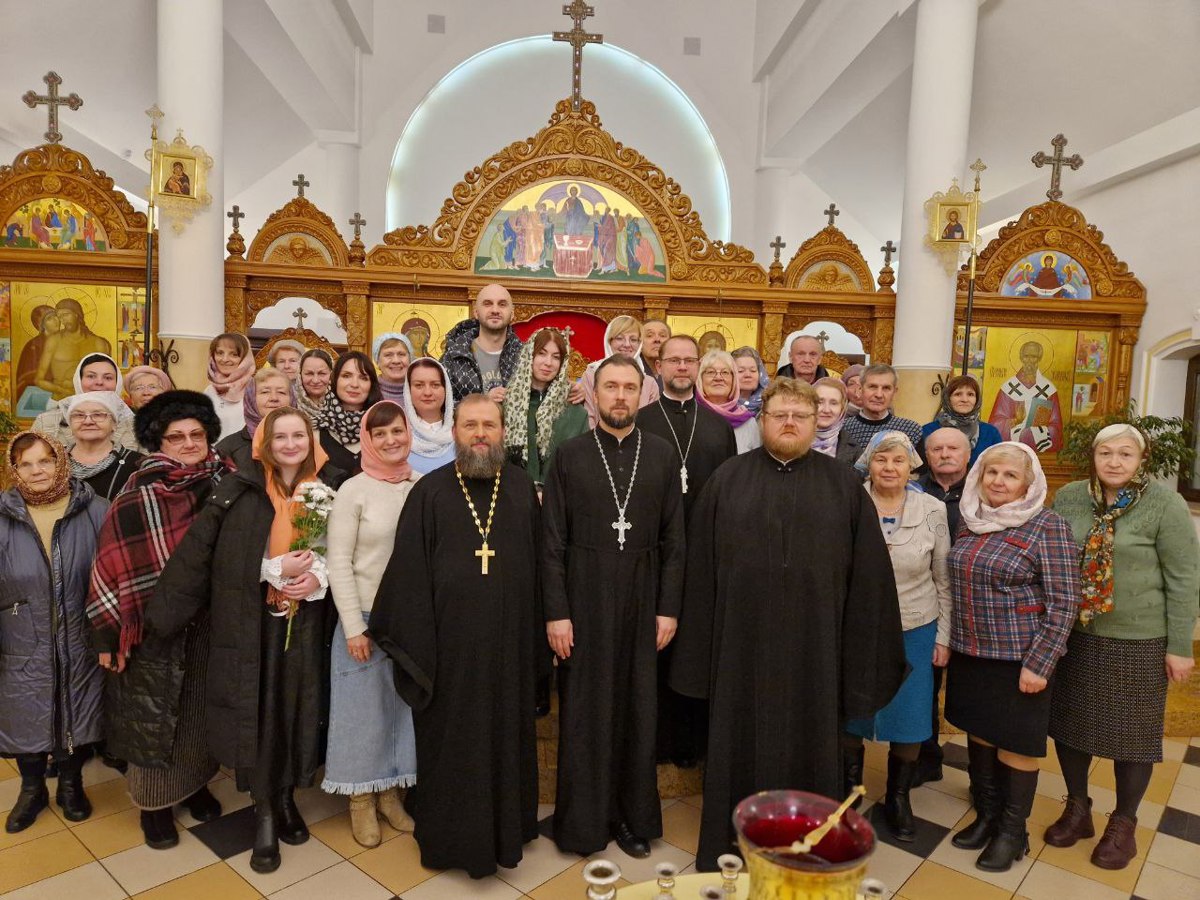
LOVE TAKKES DIFFERENT FORMS
Of course, love must lie at the foundation of relationships among those who serve the Church. At first glance, it might therefore seem enough simply to keep God’s commandments: why discuss relationships at all?
Yet in particular situations, it is not always obvious what love requires. When should we stand our ground, for example, and when should we carry out a superior’s instruction without objection—even if it appears mistaken?
The commandment to love is given to everyone. Yet there is fatherly love and motherly love, brotherly love and filial love. It is therefore important to understand what kind of relationship we have with those around us and how, within that particular relationship, love according to God’s commandment should be expressed.
The difference may even amount to opposite courses of action. Scripture tells us: “He who spares his rod hates his son, but he who loves him disciplines him promptly” (Prov. 13:24).
Elsewhere we read: “He who strikes his father or his mother shall surely be put to death” (Exod. 21:15). It is therefore no small matter to know one’s place.
HE SELF-DENIAL REQUIRED OF EACH
True love always involves renouncing our own will for the sake of God’s will.
Both those in authority and those under authority must strive to do this, though each needs to pay particular attention to a different danger.
✅ The subordinate should remember that, when a superior acts within the proper bounds of his responsibility, God’s will may be made known and carried out through his direction.
✅ The superior, meanwhile, must take particular care not to impose his own will, requiring from others not what serves his personal preferences, but what their duty genuinely demands.
Suppose a priest has returned home after a service and has only just lain down to rest when the parish rector telephones and asks him to come back immediately: an urgent funeral has unexpectedly been arranged. The priest will do well to obey without murmuring—not only outwardly, but inwardly as well—humbly remembering his priestly duty to serve his neighbour.
He may also remind himself that it is not merely the rector who is calling him, but the Lord Who, through the duty placed before him, summons him to pastoral service. It is far more profitable for the soul to conduct the funeral joyfully, conscious that one is fulfilling God’s good will, than to do exactly the same thing while grumbling and taking offence at what one perceives as the heartlessness of those in authority.
The rector, for his part, should remember that the priests under his authority are not his servants, but his brothers in the priesthood and fellow celebrants. He should first consider whether the matter can be resolved without calling an exhausted priest back from home.
Perhaps another priest is due to arrive at the church in five minutes and could conduct the funeral more readily. Perhaps the rector himself has the time and strength to undertake this unexpected service.
If it is nevertheless necessary to call the priest back, the rector should not address him in the tone of one issuing an order, but appeal to him as a brother priest—and, only if truly necessary, remind him of his pastoral duty.
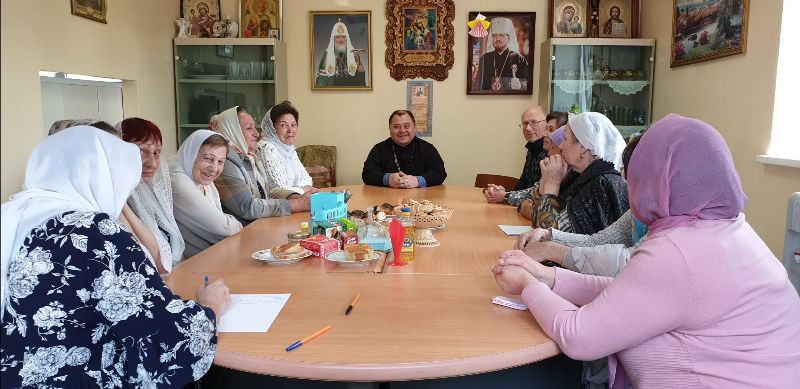
LOVE IS NOT NAIVETY
Failure to respect hierarchy and an inability to act properly in the conflicts that sometimes arise within a parish inevitably damage relationships. At times these conflicts become like chronic illnesses, with periodic flare-ups in the form of open quarrels and scandals.
Experience of such difficulties—and even reports of them—can make priests fearful of serving in a parish with several clergy. As one late archpriest and dean once remarked ruefully, “I would rather serve in a parish alone than even with my own brother.”
Nothing, of course, can compensate for a lack of love. Yet not every difficulty arises directly from lovelessness. Some are caused by misunderstanding or inexperience, and we can at least try to prevent or remedy these. Naïvety is not a virtue, but a weakness.
We may recall that the Apostle Paul sometimes acted with complete openness, accepting danger and ultimately laying down his life when this was pleasing to God. Yet in other circumstances, when God’s will required a different course, he drew upon his human experience and presence of mind.
When brought before the Sanhedrin, Paul recognised the division between the Pharisees and Sadducees and appealed to the hope of the resurrection. In doing so, he brought the Pharisees to his defence—at least for the moment (see Acts 23:6–9).
ST JOHN CHRYSOSTOM ON PRUDENCE AND TACT
Guile is ordinarily regarded as a vice, and rightly so. Yet not every indirect course of action is dishonest. In the first book of On the Priesthood, St John Chrysostom speaks provocatively of “deceit”, only to explain that an action undertaken without malicious intent deserves a different name:
➖ “An opportune use of deceit, undertaken with a good intention, brings such benefit that many have often suffered punishment because they would not employ it.
➖ “Saul’s daughter could not have rescued her husband from her father’s hands except by deceiving him; and her brother, wishing to save once more the man whom she had rescued, employed the same means as David’s wife” (see 1 Kingdoms [1 Samuel] 19–20).
➖ The Apostle Paul “circumcised Timothy, notwithstanding that he instructed the Galatians that Christ should not profit those who submitted to circumcision” (see Acts 16:3; Gal. 5:2). He submitted to the Law, although after receiving faith in Christ he counted righteousness through the Law as loss (see Phil. 3:7–9).
➖ “For great is the value of deceit, provided it be not introduced with a mischievous intention. In fact, action of this kind ought not to be called deceit, but rather a kind of good management, cleverness and skill, capable of finding ways where resources fail and making up for the defects of the mind.
➖ “The man who makes wrongful use of this art should properly be called a deceiver, not the one who employs it with a sound purpose. It is often necessary to use such skill in order to secure the greatest benefit; whereas one who insists on acting with complete directness may cause great harm to the person from whom he has concealed nothing of his intention.”
St John is not defending falsehood or manipulation. He distinguishes malicious deception from prudence: the ability to choose the right means and the right moment for another person’s good. Candour is not the same as blurting out everything indiscriminately, just as Christian simplicity should not be confused with clumsiness or lack of judgement.
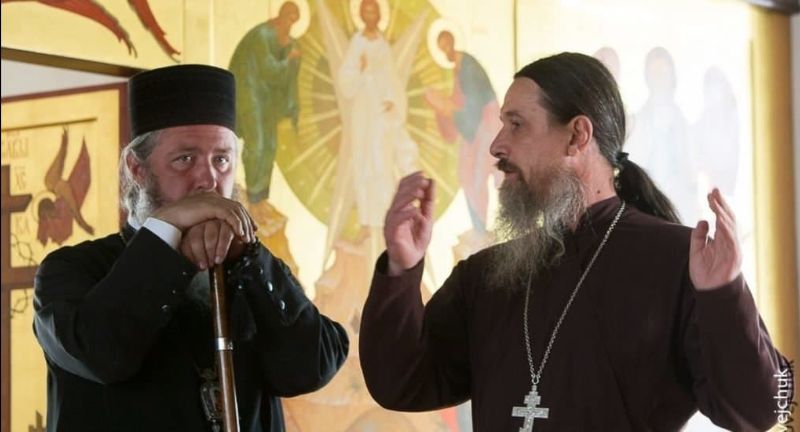
DO NOT MAKE PARISH CONFLICTS A CAUSE OF SCANDAL
The Saviour said to His apostles: “Behold, I send you out as sheep in the midst of wolves. Therefore be wise as serpents and harmless as doves” (Matt. 10:16).
Although these words were addressed directly to the apostles, they apply fully to parish rectors as well. A pastor needs both simplicity and wisdom if his handling of relationships with brother clergy, parish staff, and parishioners is not to become a cause of needless scandal.
For the Orthodox faithful, the priesthood has, in a certain sense, an iconic character. Priests celebrate the Holy Mysteries, lead the Church’s worship, preach the Word of God, minister to the dying, bless homes, and bless the faithful.
For this reason, people reverently kiss the priest’s hand, while the very vestments he wears inspire respect for the sacred ministry entrusted to him. When a parishioner learns of serious difficulties between clergy or parish workers, he may be deeply saddened and spiritually unsettled.
Yet such difficulties should not cause anyone to lose heart. Even a wonderworking icon may be affected by woodworm. There is nothing secret about it: the woodworm must be removed and the damage treated. But neither is there any need to whisper about it to every pilgrim praying before the holy image.
Because of human weakness, temptations have arisen even between great saints. We may recall St Epiphanius of Cyprus and St John Chrysostom, or St Joseph and St Barsanuphius of Optina; many other examples could be given.
Yet their conflicts are not the central truth of their lives, just as human weakness is not the central truth of the Church’s life. Such things should not be hypocritically concealed—but neither should they be brought needlessly into the foreground.
Related Articles



Related Products


Close
- Someone purchased a
Акафист Божией Матери в честь иконы Ея "Всецарица" (in Russian)
12 minutes ago from Danbury, US$2.00 - Someone purchased a
Келейная книжица. Покаянные молитвы и размышления, архимандрит Иоанн (Крестьянкин) (in Russian)
12 minutes ago from Danbury, US$2.00 - Someone purchased a
Православный молитвослов: Правило ко Причащению (in Russian)
12 minutes ago from Danbury, US$3.00 - Someone purchased a
Сокровенный разговор об исповеди (in Russian)
12 minutes ago from Danbury, US$1.00 - Someone purchased a
Collection of Akathists to the Most Holy Theotokos
12 minutes ago from Danbury, US$7.00 - Someone purchased a
Holy Gospel in Church Slavonic with Translation in Russian
12 minutes ago from Danbury, US$25.00 - Someone purchased a
Daily Orthodox Calendar with Scripture Readings for the 2027 Year
12 minutes ago from Danbury, US$14.00