This website uses cookies to ensure you get the best experience on our website. Read more

Parish Life Without Illusion (PART 1)
 30Aug
30AugWe continue our journey through Notes on Pastoral Ministry by Archpriest Konstantin Ostrovsky, turning now to a subject especially familiar to every parish priest: the nature of parish community life.
In the Orthodox world, the word community often carries warm and hopeful associations. We naturally long for a parish where people know one another, pray together, help one another, and feel united not merely by attendance at services, but by a shared life in Christ. Yet alongside this healthy longing there can also arise confusion, unhealthy dependency, spiritual illusion, or even subtle forms of pride disguised as pastoral zeal.
In this chapter, Fr. Konstantin reflects soberly on the different meanings hidden behind the word community, reminding us that genuine parish life cannot be manufactured through charisma, organisation, or emotional closeness alone. Warmth, friendship, and mutual support are good and necessary—but they are not yet the fullness of Christian love, nor are they a substitute for repentance and life in the Holy Spirit.
May these reflections help all of us examine not only the outward structure of our parishes, but also the spirit by which they are truly united.
THE PARISH AS FAMILY
When someone begins living a church life, it is only natural for him gradually to become acquainted with other parishioners, to form friendships, and sometimes even for entire families to grow close to one another. Not everyone is equally inclined toward this kind of fellowship, but many are—and in itself this is good and healthy. Over time, parishioners may also develop personal relationships with the rector or other clergy. This too is entirely natural.
Sometimes such relationships form quietly and organically, without anyone attempting to organise or define them. But in other cases questions begin to arise, and sooner or later one hears the word: community.
What exactly do we mean by it?
This question concerns not only recent converts. At times even priests who have served for many years find themselves wrestling with it. What is the purpose of parish community life? What should it look like? And what spirit truly lies at its centre?

ONE WORD, SEVERAL MEANINGS
The expression parish community is often used to describe several quite different realities within Church life. Unless we distinguish between them carefully, confusion easily follows.
First of all, according to the Statute of the Russian Orthodox Church, a parish is itself defined as a community of Orthodox Christians—clergy and laity united around a church and placed under the guidance of a rector appointed by the bishop. In this formal sense, every parish is already a community by definition.
But the same word is also used in another sense: to describe a spiritual father together with his spiritual children. In such a setting, the priest knows his people personally, guides them spiritually, and sometimes becomes closely involved in the practical concerns of their lives as well. Around him relationships naturally form: parishioners become acquainted with one another, undertake charitable or parish labours together with his blessing, and seek his help in resolving difficulties or conflicts.
If such a priest also happens to be the rector, this circle may outwardly resemble the parish itself. Yet it is still something different from the parish community in the administrative sense. History shows that such spiritual communities can vary enormously in character—from genuinely holy examples to deeply unhealthy and distorted ones.
A community gathered around a spiritual father is always united by a certain spirit. One can sense this, for example, when a priest speaks in a sermon not merely from study or habit, but from something he himself is inwardly living through, and his flock receives his words openly and attentively. Such unity may also reveal itself in common attitudes toward Church life and social issues, in shared habits of behaviour, or even outward styles and customs.
In this sense, one can meaningfully speak of “the spirit” of a community.
But spirits differ.
And so the question becomes unavoidable: what spirit truly unites our own community? Is it the Holy Spirit? Or something mixed with human vanity, emotionalism, or attachment? Or, God forbid, something darker still?
Every member of a parish should ask this honestly of himself. A priest, especially, has no right to avoid the question.
A “REPENTANT FAMILY”
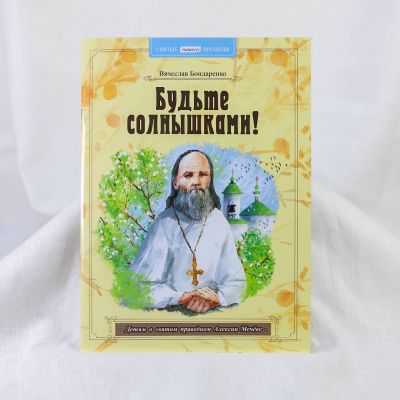
One of the most remarkable examples in Russian Church life was the community gathered around the righteous St Alexei Mechev, who called it a “repentant family.” Yet this was something deeply exceptional, inseparable from the saint’s own rare spiritual gifts.

St Alexei was a true elder, a man of profound inward prayer who possessed an extraordinary gift for understanding the human soul. At the same time, he was marked by genuine warmth and fatherly love, and people were naturally drawn to him.
Around such a shepherd there gradually formed a living spiritual family. There was mutual help, fellowship, charitable work, gatherings, and shared labour—but all this remained secondary. At the centre stood the inner spiritual life: prayer, repentance, and the struggle against the passions under the guidance of a holy pastor.
Such communities have always been rare.
There may be many good and conscientious priests, just as there are many fine musicians, but spiritual fathers of this stature are as uncommon as true geniuses. To set oneself the deliberate goal of creating a “repentant family” like the one that formed around Fr. Alexei would be, at best, spiritual inexperience and, at worst, a dangerous form of pride.
Significantly, Fr. Alexei himself never set out to create such a community. For the first eight years of his ministry he served in an almost empty church. Only later did people gradually begin gathering around him.
And perhaps this is precisely the lesson most important for us.

The rector’s first task is not to “build a community,” but to establish a genuinely prayerful life in the parish: the divine services, the sacraments, the ordinary pastoral care of souls. Even the so-called treby—house blessings, visiting the sick, Communion and unction in homes—are sometimes treated dismissively, though they consist precisely of prayer and sacred ministry.
Moreover, such visits often allow a priest to encounter parishioners in a far more personal and natural setting than is possible in church. For some people, conversation arises much more easily around an ordinary table than in the formal setting of confession.
For this reason, if parishioners invite the priest to remain for a simple meal after such a visit, it is often better not to refuse without need. One should not naïvely imagine that blessing a flat and sharing tea will instantly transform someone spiritually. Yet neither should we despise these small opportunities for human closeness and pastoral conversation.
BEYOND ADMINISTRATIVE FORMALITY
Still, we should be careful not to reduce parish life to a merely formal or administrative understanding of community.
After all, even a parish where the rector arrives twice a week, performs the required services, hears brief confessions, and leaves immediately afterward would technically satisfy the official definition. The clergy might barely know their parishioners outside the services; parish workers may have little real fellowship among themselves; people may stand side by side in church for years without ever truly knowing one another.
Something essential is missing in such a situation.
We naturally desire more than this: that relationships within the parish be sincere rather than merely functional; that clergy, parish workers, and parishioners relate to one another not mechanically, but personally and warmly. It is precisely this kind of living fellowship that many people have in mind when they speak of a true parish community.
Yet even here a priest must exercise sobriety and self-examination.
“I WANT TO BUILD A COMMUNITY.” WHY?
If I say to myself, I want to build a community, it is worth pausing to ask: why?
Perhaps it truly springs from a desire to fulfil God’s will.
But perhaps other motives are mixed in as well.
A priest may unconsciously long to create around himself something visibly successful and spiritually impressive: Here, at last, is a real community. Or perhaps he simply dislikes loneliness and naturally enjoys being surrounded by people. Sometimes there is also sincere compassion—a wish to help lonely or troubled people spend their time in a wholesome and Christian way.
None of this is entirely foreign to human nature. But each of us must honestly examine the foundation upon which he is building.
There is another danger as well.
When a priest begins striving to gather people around himself and direct every aspect of their lives, one must ask whether something subtly distorted has entered into the picture. Christ alone says: “Come unto Me, all ye that labour and are heavy laden” (Matt. 11:28). If a pastor gradually begins placing himself inwardly at the centre in place of Christ, the resemblance becomes spiritually frightening.
Fr. Konstantin recalls the well-known lines from Tolkien about the ring that seeks “to gather them all and bind them.” Even good pastoral intentions can become distorted when unity in a parish slowly turns into attachment to a personality, a circle, or a particular atmosphere, rather than life in Christ.
THE WARMTH OF HUMAN FELLOWSHIP
Very often parish life develops along deeply human lines.
People often come to church burdened by loneliness—at work, at home, or simply from life without God. Naturally, they long for warmth, belonging, and understanding. Priests themselves are not immune to this longing. A pastor may also feel isolated, burdened, inwardly tired, and may unconsciously seek comfort in gathering around himself a close and like-minded circle.
And so a certain atmosphere forms: people feel united, emotionally close, mutually supportive. Around a kind, intelligent, and charismatic priest there arises a warm sense of belonging, and everyone feels comforted by it.
There is nothing inherently sinful in this.
Human warmth, friendship, affection, and mutual support are natural and necessary. Without them parish life becomes cold and lifeless. Yet we must not confuse emotional closeness with spiritual transformation.
Such warmth is not evil. Human affection, friendship, and mutual support are necessary in parish life, just as ordinary bread is necessary for earthly existence. Yet earthly bread alone cannot give eternal life. Man also needs the Heavenly Bread.
In the same way, natural human closeness, however sincere and comforting, should not be mistaken for the fullness of spiritual life in Christ.

HUMAN AFFECTION AND THE LOVE COMMANDED BY CHRIST
Of course, it is beautiful when a parish is marked by kindness, generosity, and mutual care. Christians should indeed help one another, bear one another’s burdens, and cultivate peace and goodwill.
But we deceive ourselves if we too quickly identify our pleasant emotional experiences with the fulfilment of Christ’s commandment of love.
True love of neighbour is impossible apart from love of God. And genuine love of God remains far beyond the measure most of us imagine we possess.
Our affection for one another—even when sincere, sacrificial, and deeply heartfelt—remains, until transformed by grace, largely natural human love. It may reflect the image of love, but it is not yet its divine fullness.
The measure of true love is Christ Himself upon the Cross.
Christ did not love humanity sentimentally. He was not emotionally dependent upon those around Him, nor attached to them in the way we often become attached to one another. Indeed, He received little gratitude in return. Yet precisely in this self-emptying sacrifice, undertaken for the salvation of those who rejected Him, the perfect fulfilment of love was revealed.
And so, when speaking of love within parish life, we should do so carefully and humbly. Warm fellowship is good. Human affection is good. Mutual support is good. But none of these should be hastily mistaken for the fullness of evangelical love, which is born only through communion with God and the grace of the Holy Spirit.
“NOT LIKE OTHER MEN”
A priest may abstain from drinking and smoking, keep the fasts carefully, commune frequently, read the holy fathers diligently, and even speak sincerely about his own weakness and sinfulness—and yet, somewhere deep within himself, quietly preserve the comforting certainty that he is nevertheless “not like other men.”
Not like those careless people who rarely come to church; not like those who appear only for baptisms, memorials, or feast days; not like those “occasional parishioners” who drift in and out of church life without seriousness or commitment.
In the twentieth century, among Russian church circles, there even arose ironic or dismissive labels for such people: “casual churchgoers” or “consumers of religious services.” The words themselves are understandable enough. Of course, a purely external church life is spiritually dangerous, and a priest should never reduce his ministry to the mechanical performance of rites.
But there is another danger—more subtle and perhaps even more deadly.
The moment we begin dividing the Church inwardly into “serious spiritual people” and “the rest,” we stand already at the edge of the Pharisee’s precipice. We may begin imagining that we ourselves, together with our “committed” parishioners, constitute the true Church, while everyone else is merely ballast attached to the ship of salvation.
Certainly, the Church is indeed the ark of salvation. Yet who among us truly knows who is aboard that ark in spirit and truth, and who merely appears to be?
Only the Last Judgment will reveal this fully.
A man may come rarely to church, know little theology, pray poorly, and yet preserve humility, repentance, and fear of God deep within his heart. Another may appear deeply immersed in church life while inwardly nourishing pride, judgement, vanity, and spiritual self-satisfaction.
This is why the Apostle warns us: “Let him who thinks he stands take heed lest he fall” (1 Cor. 10:12).

WHO IS A “RELIGIOUS FUNCTIONARY”?
Fr. Konstantin asks a painful but necessary question: who truly deserves to be called a mere “religious functionary”?
Is it the priest who serves mechanically, grows weary of the Liturgy, avoids prayer, looks upon parishioners as burdens, and longs only to complete the service quickly and collect payment?
Perhaps such priests do exist.
But before applying such words to anyone else, a pastor should first direct them toward himself. Only about ourselves can we make such judgments safely.
Every priest should certainly struggle against coldness, negligence, and routine in ministry. Whenever we discover such things within ourselves, they should become matter for repentance. Likewise, we should sincerely desire that those who enter the church—even casually, even rarely—might gradually become living members of the Body of Christ.
But this labour must be joined to humility.
A truly spiritual life does not begin with analysing the deficiencies of others, but with learning not to condemn them. The more seriously a man struggles for repentance himself, the less eager he becomes to classify and evaluate the spiritual condition of everyone around him.
DO NOT COUNT YOUR SUCCESSES
There are times when everything in parish life appears outwardly successful.
The church is full. More people continue arriving. Parishioners seem active, devoted, and united. Relationships are warm. The priest feels loved and respected. Projects flourish; parish life is energetic and visible.
In such moments a subtle temptation naturally arises: to begin inwardly counting one’s successes.
One may even feel moved to speak or write about the parish as an example of healthy church life. And even if outward boasting is avoided, the heart itself may quietly begin taking comfort in thoughts such as: Everything here is going well. Our parish is alive. We have built something beautiful.
But Scripture gives a sobering warning through the story of King David numbering Israel.
What seemed harmless—even reasonable—was revealed as spiritually dangerous precisely because it arose from reliance upon visible strength and measurable success. After numbering the people, David himself recognised his sin and repented before God.
Something similar can happen in parish life.
Whenever we begin inwardly “taking inventory” of our achievements—counting people, activities, successes, influence, or even the apparent spiritual quality of our flock—we enter dangerous territory. The soul subtly shifts its trust away from God and toward visible results.
SPIRITUAL LIFE IS NEVER STABLE
In spiritual matters, nothing earthly remains fixed or secure.
Today it may seem that a parish is flourishing spiritually and united deeply around its priest. Tomorrow temptations arrive, misunderstandings emerge, conflicts erupt, and what once appeared strong suddenly collapses.
Those whom the priest considered his closest spiritual children may drift away from him—or even from the Church altogether.
Yet even here one must be cautious in judgment.
Have they truly turned away from God? Or only from us? The two are not always the same.
Sometimes what feels to the pastor like betrayal may actually become salvation for the other person. God may permit someone to step away from an unhealthy dependence precisely in order to preserve his freedom and save his soul.
And so outward forms alone cannot determine spiritual reality.
A man who comes rarely, lights a candle quietly, submits names for commemoration, communes infrequently, and belongs to no organised circle may still stand closer to genuine repentance than someone fully immersed in visible parish activity.
It is tempting to imagine that outward integration into parish life automatically signifies genuine spiritual growth. But spiritual life is not so easily measured.
And perhaps this is one of the hardest lessons in pastoral ministry: not to mistake visible order, emotional warmth, or outward participation for the mystery of genuine life in Christ.
To be continued…
Related Articles
- Christmas in a Small Parish
 May 20
Related Products
- Comment(s)
Close
- Someone purchased a
100-Segment Lestovka Prayer Rope
1 hour ago from Toms River, USAs low as $30.00 - Someone purchased a
Lestovka Prayer Bracelet 25 segments
1 hour ago from Northville, USAs low as $18.00 - Someone purchased a
Horologion (The Book of Hours) in Church Slavonic
1 hour ago from New Egypt, US$17.00 - Someone purchased a
Russian-Style Priest Vestment with an Icon of Christ and embroidery
7 hours ago from Denver, US$1,515.00 - Someone purchased a
Greek-Style Priest Vestment with Embroidery and Medallion
6 hours ago from Washington, US$744.00 - Someone purchased a
Chalice Covers and Veil with Embroidery sh-10-71-7
7 hours ago from Denver, US$315.00