This website uses cookies to ensure you get the best experience on our website. Read more

Marriage outside the Church
 10Aug
10AugThis issue of the Orthodox Clergy Club is devoted to a subject that has become increasingly pressing in many of our parishes: the search for a spouse among young Orthodox Christians.
In many church communities, young women often outnumber young men, and even where faithful young people do meet within the Church, such cases are often less common as one might hope.
For those raised in the life of the Church, with its moral foundations and spiritual outlook, the search for marriage can prove unexpectedly difficult. The very values shaped by faith — which ought to be a blessing — may leave them feeling out of step with the world around them and complicate relationships with peers outside the Church.
❓ And yet life itself raises difficult questions. What happens when a young woman sincerely falls in love with someone who is outside the Church — perhaps even unbaptised or unbelieving.
❓ How should parents, pastors, and the couple themselves approach such a situation
What begins with love and goodwill can later expose deep differences in worldview, spiritual life, and expectations within marriage.
We offer below a selection of reflections by experienced priests of Russian Orthodox Church responding to the following question posed by one of their fellow clergymen:
Many girls raised in believing Orthodox families sincerely desire to build Christian families of their own. Some are able to marry young men from the Church, yet in practice this often proves more the exception than the rule.
Even when a young woman meets a kind and decent man outside the Church, difficult questions inevitably arise: what if he is unbaptised, or does not truly believe? In many cases, the simplest solution seems to be immediate catechism and baptism before marriage. Yet experience shows that outward agreement during courtship does not always lead to a living faith later on.
At first, the husband may willingly participate in church life for the sake of the relationship. But as time passes and the first excitement fades, tension can appear. Attempts by relatives or clergy to draw him more deeply into Church life may begin to feel burdensome to him, provoking not only resistance but sometimes even hostility toward faith itself. This can place enormous strain on the marriage and family.
How, then, should we approach such situations? What guidance can we offer young Orthodox Christians who sincerely desire marriage, yet find themselves loving someone ‘from outside the Church’?
If one were to answer briefly, perhaps it would be this: there is no simple answer. Such situations carry both joys and sorrows, hopes and risks. In every case, much love, wisdom, patience, and prayer are required.
 Archpriest Theodore Borodin, Moscow
“One must understand from the beginning that such a path may prove difficult. Even if the believing spouse is deeply sincere and faithful, no one can be brought into the Church purely through another person’s desire. Faith is always a free response of the human heart.
In our parish, I have seen marriages where before the wedding both spouses agreed peacefully that the children would be raised in the Orthodox faith. Yet once children were born, conflicts sometimes emerged. One spouse wished to speak to the children about God, while the other rejected faith entirely. Such divisions can become deeply painful for a family, and one must approach these realities soberly.
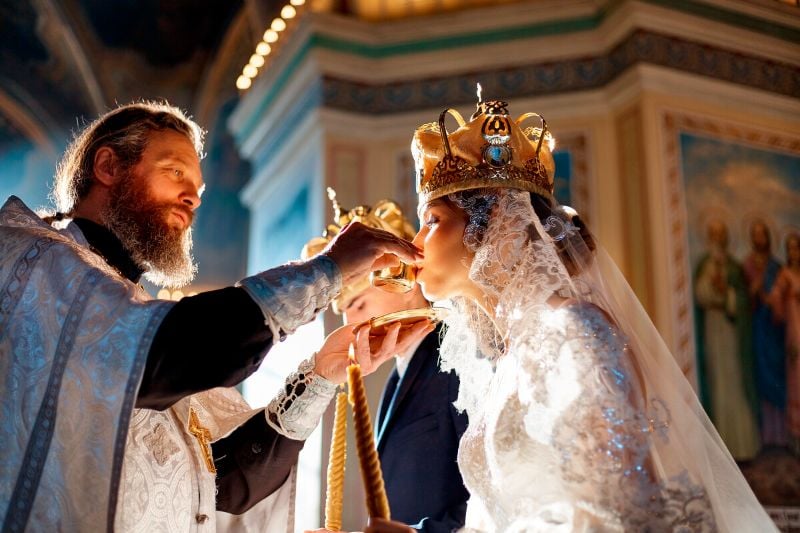
During the Orthodox wedding service, the priest leads the bride and groom around the Gospel book placed upon the analogion. This is a profound image of Christian marriage itself: the unity of husband and wife is meant to be founded upon the Gospel and upon a shared life in Christ. When faith is not shared, a certain inner division often remains. One spouse cannot fully share with the other what is most precious in life.
Fr Alexander Shargunov once remarked that in our time, a young person who preserves chastity before marriage often resembles a confessor or even a martyr. Contemporary culture frequently treats purity not with respect, but with incomprehension or ridicule. I still see this among young people today.
And yet the Church cannot cease to speak about chastity, faithfulness, and moral responsibility simply because the surrounding culture has changed. The commandments of God are not inventions of clergy, nor customs that may be adjusted according to convenience.
Of course, human life is never simple. Some people fall, repent, and return to the Church sincerely. God receives every person who turns back to Him with repentance. Yet the Church still bears witness that purity before marriage, mutual faithfulness, and spiritual integrity are not empty ideals. They matter deeply for the life of a family.
I can say from experience that marriages in which both husband and wife sincerely strive to preserve faithfulness to God and to one another often bear a special strength and peace within them. This does not mean they are spared suffering or trials. But one senses in such families a particular grace and protecting presence of God.
We live in a difficult and confused world, yet Christians are still called to remain faithful to Christ.”
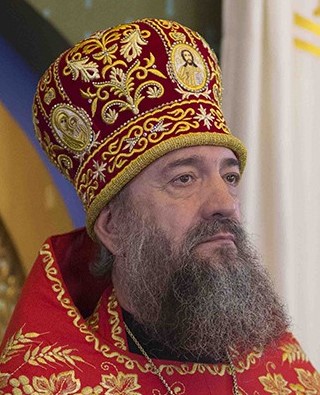 Archpriest Alexander Bely-Kruglyakov, Ust-Ilimsk
“A young woman has fallen in love with someone outside the Church? Well, thanks be to God that she has found love. Love is what moves human life forward.
I have five children, including two daughters. Both were raised in the Church, sang in the choir, confessed and received Communion regularly. Yet both eventually married men who, while baptised, were not churched people at all. My wife and I approached this calmly. I was simply grateful that each of my daughters had found someone whom she loved and who loved her in return.
Over time, both husbands gradually began attending church from time to time. They did not suddenly become model parishioners, but neither did church life become a source of hostility in their families. Most importantly, my daughters never tried to pressure them. I have always believed that forcing another person spiritually often produces the opposite result.
It seems to me that the most important thing in marriage — and even in the search for marriage — is prayer. The prayer of the spouses themselves, if they are believers; the prayer of parents; quiet, faithful prayer sustained over many years. Such prayer accomplishes far more than anxiety, endless searching, or attempts to control everything ourselves. ‘Cast thy burden upon the Lord, and He shall sustain thee’ (Ps. 54:23 LXX).
People must genuinely be drawn to one another. Shared convictions matter, of course, but marriage cannot be built only upon formal compatibility. If there is real love between two people, much else can gradually find its proper place through patience, prayer, and grace.
We should also remember that difficult marriages occur among churchgoing people as well. Sometimes believers place impossibly high expectations upon one another: ‘You are a Christian — how could you act this way?’ Such attitudes can wound family life very deeply.
I believe that where there is sincere love, one should not surrender to fear. Let the family come into being. A family is a little church, and in time the Holy Spirit Himself may enter and transform what needs to be transformed. God desires the salvation of every person.”
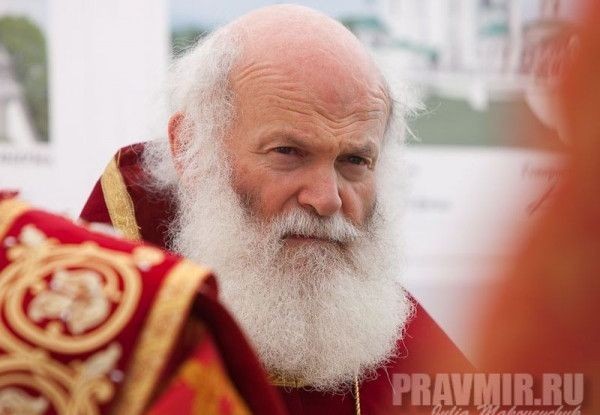 Archpriest Constantine Ostrovsky, Krasnogorsk
“In our time, preserving chastity before marriage is genuinely difficult, though I do know examples where young people have managed to do so faithfully. When both are living church lives, they usually understand one another and try to struggle together with temptation. Outside the Church, however, young people who value chastity are often treated not simply without respect, but even with mockery.
I remember one young woman from our parish many years ago — bright, lively, and very beautiful. Many young men pursued her, but once they discovered that she would not enter into relations before marriage, they began treating her as though something were wrong with her.
For some people, God sends a good spouse — glory to God. In our parish I know several such families. But for others, this path remains painfully unresolved. I know sincere and kind young women who long for marriage but still remain alone.
What is to be done then?
The path so commonly accepted by the modern world — building intimacy outside marriage — is not something they wish to embrace, thanks be to God. Some people meet through Orthodox dating websites; I know one parishioner who found his future wife that way, and now they are raising children together in the Church. Yet many, especially young women, feel shy or uncertain about such things.
As for monasticism, it cannot simply become an alternative to disappointment in marriage. It is a distinct calling from God.
And if an Orthodox Christian sincerely desires marriage, prays for it, behaves wisely and kindly toward others, yet still does not find a spouse, then perhaps this too must eventually be received with humility as part of one’s cross. Not with bitterness or envy, but with trust in God.
If the Lord does not grant something that appears good to us, it may be because He is preparing something greater than we presently understand. The Christian path is not always the path we imagined for ourselves. But even an unchosen cross, received with faith and gratitude, can become a path to salvation.”
Related Products
- $22.00$1,040.00$0.00Comment(s)


Close