This website uses cookies to ensure you get the best experience on our website. Read more

When There's No Hair To Tonsure In Baptism
 20Sep
20SepThis time we would like to share an interesting discussion originally published by the clergy resource Priest.Today.
It reminds us that even the most familiar parish services can present situations never covered in seminary lectures. No one can be prepared for every circumstance, but pastoral experience is gathered one case at a time—and perhaps the reflections below will find a place in that shared treasury.
❓ I have a practical question. It is not a major problem, but I would appreciate some guidance.
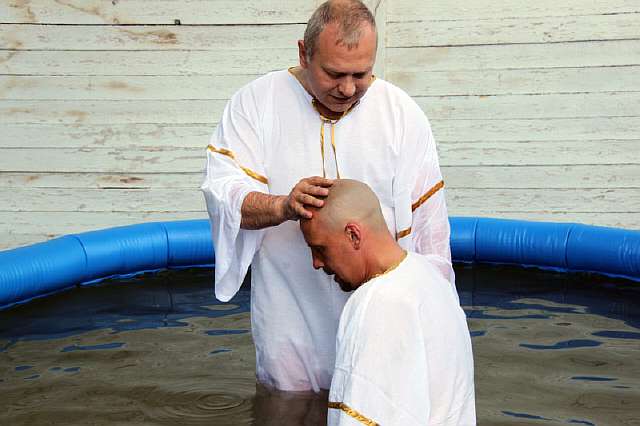
An adult is preparing for Baptism. As part of the rite we perform the tonsure of hair. The difficulty is that he is completely bald—he has no hair at all.
What should be done in such cases? Omitting the tonsure feels uncomfortable, yet there is nothing to cut. ❓
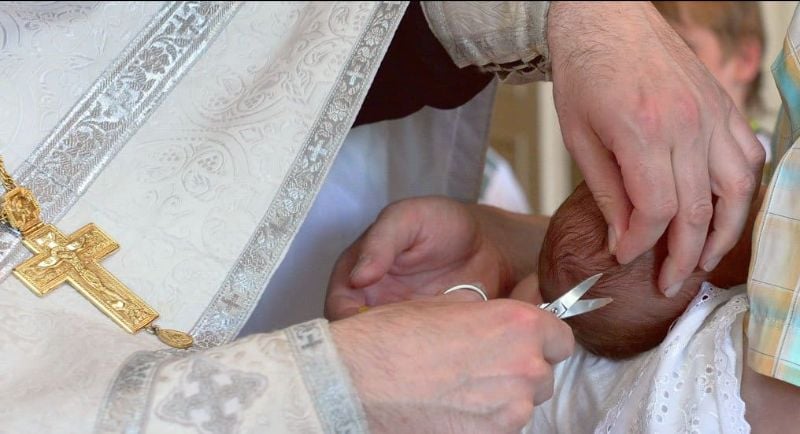
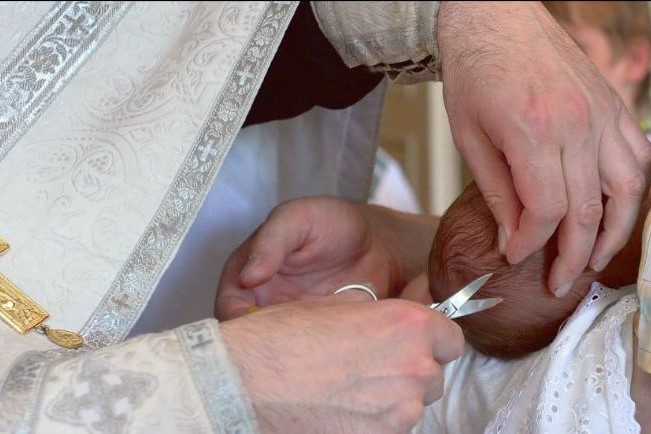
The rite of cutting the hair, accompanied by its appointed prayer, was not originally connected with Baptism and did not form part of the ancient order of the Mystery.
In the earliest manuscripts it appears as a separate rite for the tonsure of children, performed several years after Baptism, when the child had grown older and was brought again together with his or her sponsor. This is reflected in the prayer itself, which asks God to bless 'Your servant who has come to offer the first-fruits by the cutting of the hair of his head, together with his sponsor.'
This rite marked the child's transition from early childhood into adolescence. Some manuscripts of the Euchologion even preserve a corresponding rite for the cutting of a young man's beard upon reaching full maturity.
Only in the later Byzantine period was the rite incorporated into the washing away of the Holy Chrism and reinterpreted as the concluding act of Baptism itself. Saint Symeon of Thessalonica explains the cross-shaped cutting of the infant's hair as the first gift—the first-fruits—that the newly baptised Christian can offer to Christ, and as a sign of submitting oneself to His lordship.
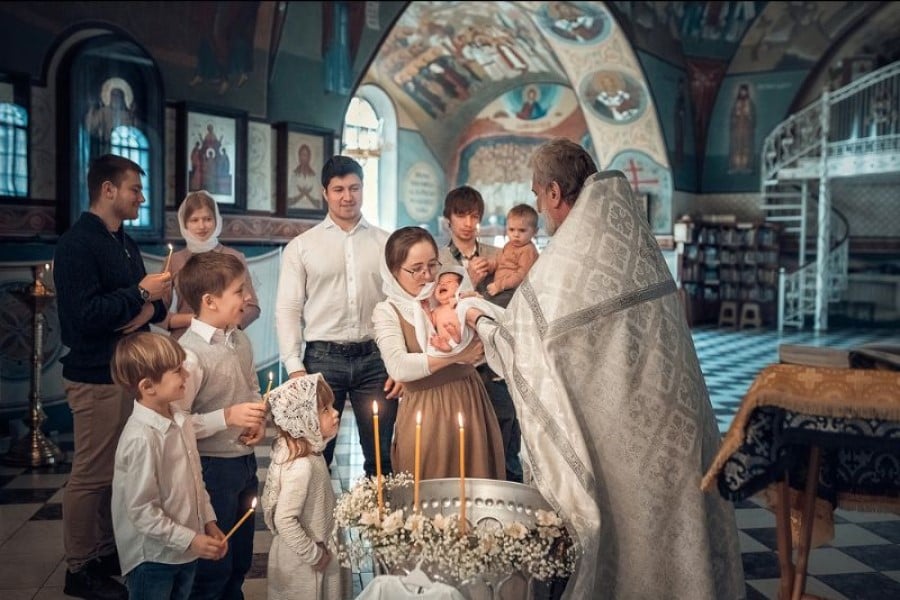
If there is no hair to cut—which can also be the case with infants—Fr Michael Zheltov recommends simply placing the hand upon the person's head while pronouncing the prescribed words.
'In this situation the rite of tonsure expresses the prayer for the descent of God's grace upon the head. The laying on of hands conveys precisely the same meaning.
If the person being baptised has no hair, it is entirely acceptable to perform the action symbolically by lightly touching the head with the scissors without making an actual tonsure.
This practice is well known and preserves the symbolism of the rite.
Perhaps you, too, have encountered unusual pastoral situations from which others might benefit. If so, we would be grateful if you shared them with your fellow readers.
May the All-Good Lord preserve and strengthen you in your ministry.
Related Articles


Related Products


Close