This website uses cookies to ensure you get the best experience on our website. Read more

Baptism Practices: Proper Attire for Clergy and Catechumens
 20Apr
20AprToday, we delve into practical aspects of Baptism. Although the Church's history might suggest all questions have been resolved, new and reasonable inquiries continue to arise, as seen on the widely recognized portal priest.today.
The answers to these questions may prove beneficial to a broad spectrum of clerics.
As the warmer season approaches, Baptisms are often organized in natural bodies of water, prompting the first question regarding this method of conducting the rite.
Is it necessary for the priest to be in the water during a baptism?
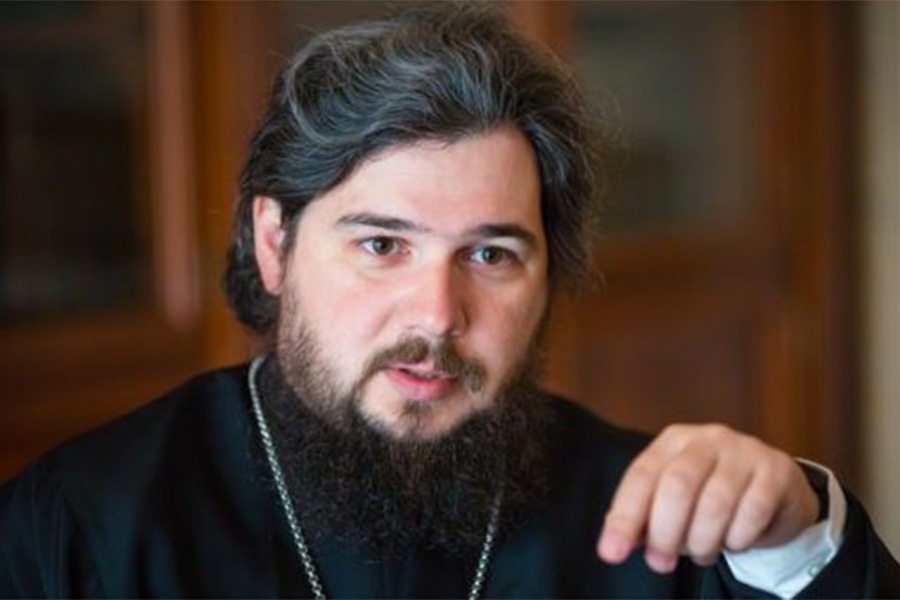
✅ Bishop Anthony (Azizov) of Volgodonsk responds:
"In our diocese, the practice of baptizing in rivers is popular, especially during the annual Feast of the Baptism of Russia, commemorating St. Prince Vladimir, with many seeking this traditional form of Baptism.
While it's not always feasible for a priest to remain on land during these ceremonies, the presence of the priest in the water alongside the catechumen is significant. This act symbolically shows that the priest, too, is human and shares in the need for spiritual cleansing, just as those he baptizes.
My own experiences with these ceremonies have shown that it's technically easier to perform the baptism when close to the person being baptized.
There might be concerns about the suitability of a priest's vestments getting wet during such rites. However, it's practical to have specific vestments designated for these occasions. I believe there is nothing inappropriate with the vestments being cleansed in the river during the baptismal process."
The Bishop's response acknowledges that certain conditions, such as the availability of engineering structures or watercraft at the baptism site, might allow the priest to perform the rite from land.
Comments from other clergy emphasize that each situation requires careful consideration of various factors: the priest’s faith, health, weather conditions, the number of people being baptized, the duration of time spent in water, and the possibility of changing clothes afterward.
Thus, a priest may choose not to enter the water, similar to baptisms conducted in a baptistery. Assistance from fellow clergy can be crucial during mass baptisms.

✅ Hegumen Vsevolod shares a personal experience:
"Once, during a pilgrimage in the Holy Land, a hieromonk—now a metropolitan—baptized a group of pilgrims in the Jordan River. He was immersed up to his chest and subsequently attended the Church of the Resurrection to conduct a night liturgy, without changing his wet clothes. Thankfully, he did not fall ill despite the air-conditioning."
✅ Priest Alexander from Siberia explains:
"In our region, mass baptisms in open water bodies were common during the summer. At times, thousands were baptized annually with several priests officiating simultaneously. They planned their roles in advance, allowing for quick changes of wet clothes and vestments. We even have a priest who, by mutual agreement with those being baptized, performs baptisms in the river during the chilly autumn months. He wears a rubber suit under his cassock to protect his health while fully immersing the baptized in the river."
Should Adults Be Baptized Naked?
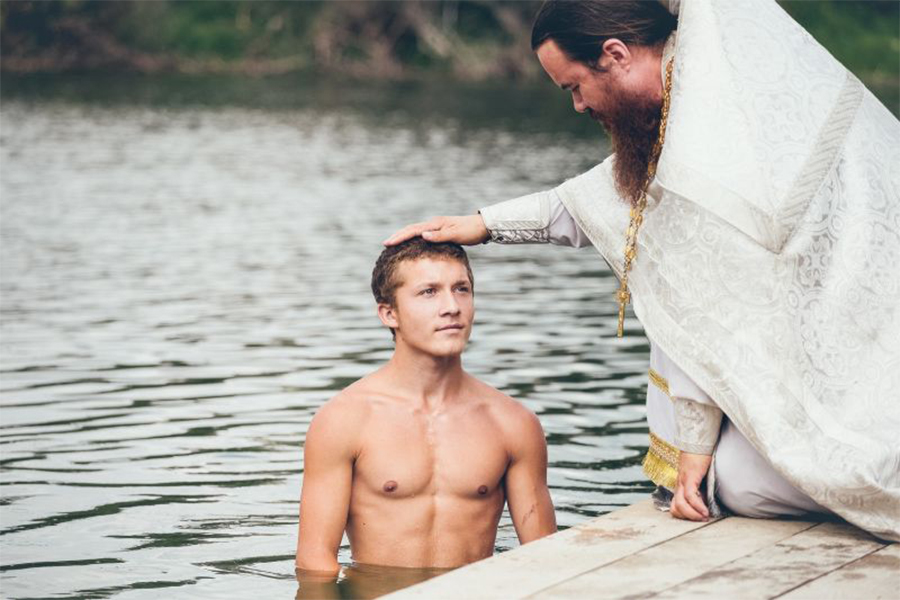
Diverse opinions exist among clergy regarding whether adults should be baptized naked, a practice that traces back to early Christianity and is depicted variably in icons of the Epiphany, showing Christ both clothed and unclothed.
✅ Archpriest Andrew Krivonis from Sevastopol explains:
"The Church statutes historically required the baptized person to enter the font completely naked. Symeon of Thessalonica notes, 'When the whole body, i.e., the specified parts, are anointed, the priest takes a naked baby (and similarly an adult being baptized) and, turning his face to the east, immerses him three times in the font." This directive, aiming to symbolize purity and renewal, likens the baptized to both Christ crucified and Adam.
The practice of baptism in nudity is corroborated by historical accounts. Everett Ferguson, in his book Baptism in the Early Church, mentions that "candidates disrobed completely before entering the water, as baptism was received in nakedness."
This tradition persisted until about the eighth century, with both men and women of all ages undergoing baptism in this manner. Church Fathers like Ambrosius of Mediolanum and Cyril of Alexandria argued that baptism, as a second birth, should reflect the natural state in which one is born—without shame and free from worldly trappings."
✅ Metropolitan Hilarion (Alfeyev) clarifies the current practice:
"While the Church Regulations traditionally require the baptismal candidate to enter the font completely naked, this is generally observed only with infants. Adult baptism typically does not follow this practice due to the contemporary and historical understanding of modesty and nakedness being quite different."
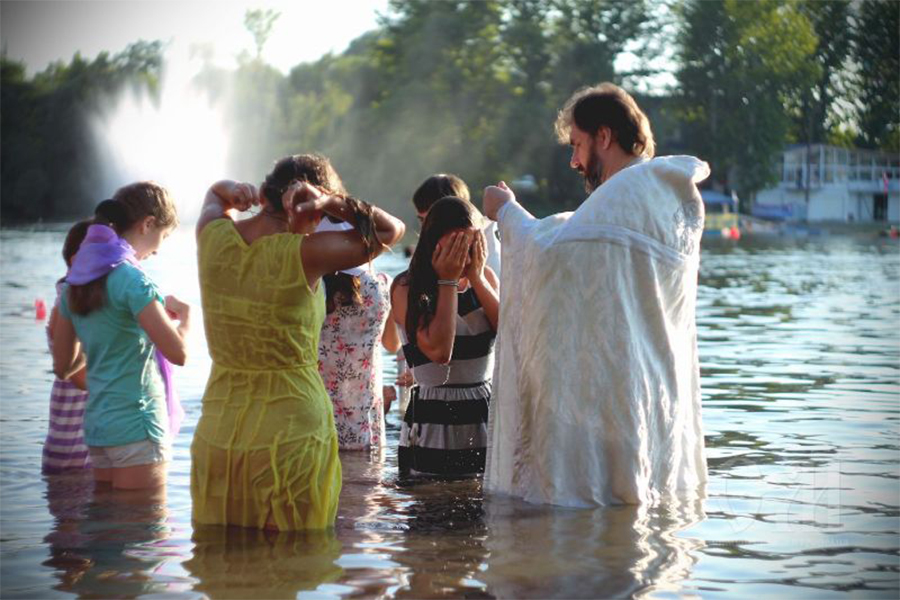
✅ Bishop Panteleimon (Shatov) of Moscow expresses concerns about modern sensibilities:
"In today’s society, where purity is not as prevalent, the sight of nakedness can lead to temptation and discomfort. Very few are indifferent to nudity. Therefore, it's preferable for adults to wear modest attire such as swimwear or be draped in a sheet during baptism to maintain decorum and ensure comfort for all involved."
✅ Metropolitan Tikhon (Shevkunov) of Simferopol reflects on his past practice:
"There was a time when I strictly adhered to the traditional method, even baptizing people naked, but always with modesty in mind for women. Today, I believe such practices aren't necessary and can be psychologically impactful, especially when involving mixed genders."
✅ Archpriest Victor shares his pragmatic approach:
"For older children, I use minimal clothing like underwear, and with adults, particularly women, I discuss and offer them a choice. I avoid complete nudity. The overarching goal is ensuring the individual receives baptism, as their spiritual welfare is paramount."

The consensus among today's clergy leans towards a more considerate and culturally sensitive approach to baptism. The primary focus remains on the sacramental act and its significance in initiating spiritual life, rather than strict adherence to ancient customs that may cause discomfort or misunderstanding in modern contexts. We welcome your thoughts and experiences on this subject to further enrich our community’s understanding.
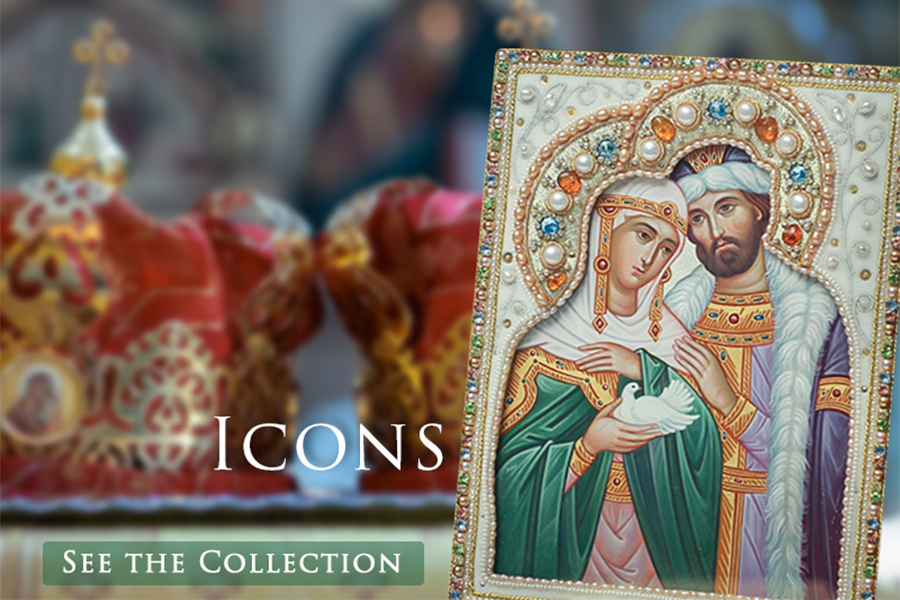
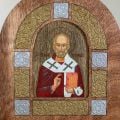
As we discussed the topic of baptism, I wanted to remind you about our workshop of hand-painted icons. We would be honored to create sacred images for your churches and homes. Our skilled iconographers follow the traditional Byzantine and ancient Russian techniques.
Please take a moment to view our icon gallery by clicking the image above.
We welcome inquiries and custom orders from Orthodox clergy all over the World.
We hope this discussion has been enlightening and invite your feedback and questions.
Related Articles
Related Products
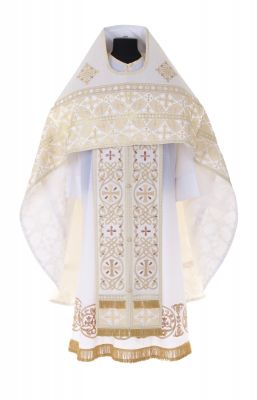
Russian-Style Priest Vestment with Deesis Embroidery
As low as $1,390.00
Comment(s)
Close
- Someone purchased a
Lestovka Prayer Rope 50 Segments
7 hours ago from Oceanside, USAs low as $23.00 - Someone purchased a
Horologion (The Book of Hours) in Church Slavonic
8 hours ago from New Egypt, US$17.00 - Someone purchased a
Small Gold-Plated Pectoral Cross w/Chain
1 hour ago from Saint Joseph, US$250.00 - Someone purchased a
Medium Triptych with Our Lady of Kazan Icon
7 hours ago from Oceanside, US$16.00