This website uses cookies to ensure you get the best experience on our website. Read more

The Funeral Service "IN-ABSENTIA"
 20Mar
20MarPicking up from Part One, where we revisited the rite’s solemn, Matins-like character and the pastoral reasons for serving the funeral in church, today we look more closely at a question many of us face in parish life:
the propriety and pastoral handling of “in-absentia” funerals
that is, when the body of the departed is not present at the service. Our aim is to keep fidelity to the Church’s order while exercising discernment that truly cares for souls.
THE PROPRIETY OF 'IN-ABSENTIA' FUNERALS
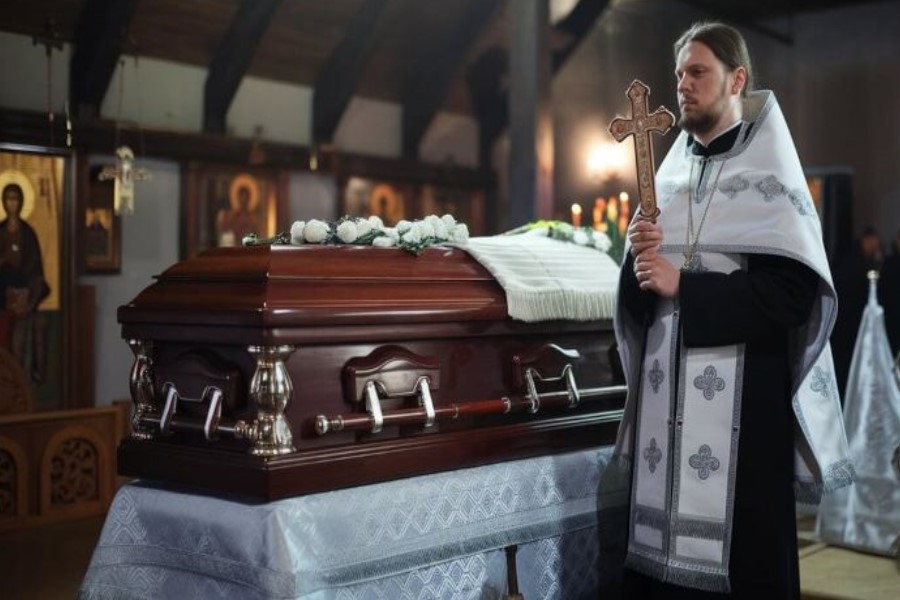
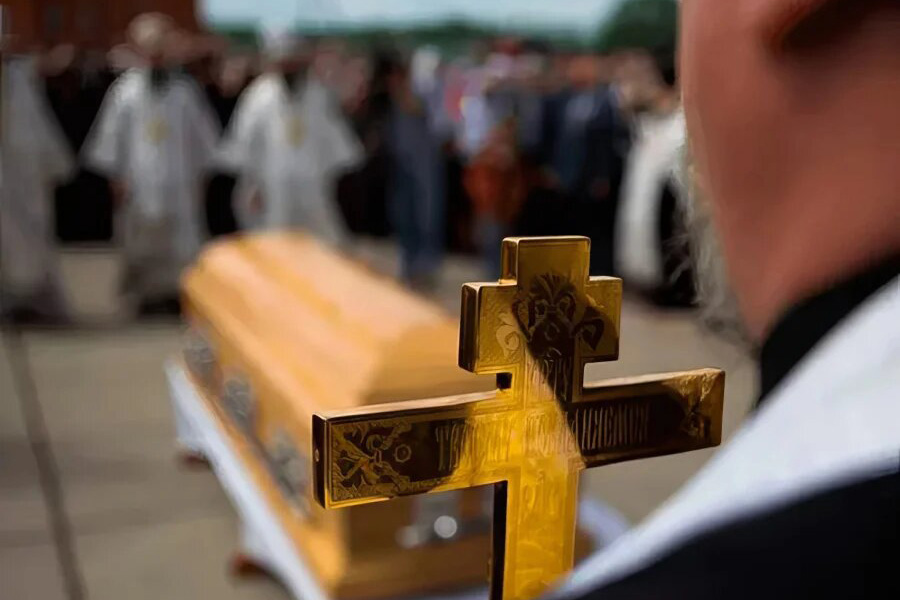
Formally, the Book of Needs (Trebnik) does not provide an “in-absentia funeral” as such. The Order of Burial is appointed to be served from the home, through the church, to the cemetery, in the presence of the body and the family.
At the same time, the life of the Church has always known exceptional cases—for example, when the body was not found or had to be buried in a remote place where a church funeral was objectively impossible.
In the Russian Church, “in-absentia” funerals became widespread during the Soviet period (though not invented by it) due to persecution, the closure of churches, the acute shortage of clergy, and sheer distance. Many of those factors have now receded, and it is natural to re-examine the present pastoral necessity of this form.
The Russian Church’s modern document “On the Christian Burial of the Departed” states clearly: that serving prayers without bringing the body to church (or, where necessary, inviting a priest to another place) can be justified in a number of cases:
✅ fallen in battle, lost at sea, deaths in air disasters or terrorist attacks
✅ other extraordinary circumstances
✅ long-term disappearance with a court’s declaration of death.
PASTORAL CASES AND DISCERNMENT
In current parish life, experienced pastors also meet other circumstances where they consider an “in-absentia” funeral pastorally admissible. For example, Protopresbyter Konstantin Ostrovsky remarks:
“Say a believing grandmother has died, but her children refuse to have her buried by the Church. A believing neighbor, however, requests an in-absentia funeral. What is wrong with that?”
Or again, newly churched people may desire to pray the Church’s funeral for relatives who never received a church burial. As Fr Konstantin adds:
“One could recall—or imagine—many such scenarios. But is that the point? For us priests, the task is to be sincere toward our flock and, in each concrete case, to do what will be truly helpful for the salvation of their souls.”
GUARDING AGAINST ABUSES
Returning to the document’s caution: there is a clearly harmful pattern when “in-absentia” funerals are ordered formally, with no participation of the family—an approach that shades into a quasi-magical treatment of the Church’s rites.
Pastors are urged to make every effort to involve the family and those close to the reposed in the prayer itself, so that all who love the departed may respond to his last need and offer fervent intercession to Christ our God.
Likewise, we should avoid preferring an “in-absentia” form for insufficient or mercantile reasons—mere convenience or cost-saving.
Remember: while the funeral is indeed the Church’s loving prayerful sending-forth and help to the departed, it is also—and very much—ordered for the consolation and spiritual profit of the living.
In that light, the Church’s tradition favors the funeral in church wherever reasonably possible.
With prayerful wishes for the Lord’s help
and the protection of the Most Holy Theotokos,
Yours OCC
Related Articles
Related Products

Close
- Someone purchased a
Lestovka Prayer Rope 50 Segments
7 hours ago from Oceanside, USAs low as $23.00 - Someone purchased a
Horologion (The Book of Hours) in Church Slavonic
8 hours ago from New Egypt, US$17.00 - Someone purchased a
Small Gold-Plated Pectoral Cross w/Chain
1 hour ago from Saint Joseph, US$250.00 - Someone purchased a
Medium Triptych with Our Lady of Kazan Icon
7 hours ago from Oceanside, US$16.00