This website uses cookies to ensure you get the best experience on our website. Read more

Serving Funerals Today: What the Church Teaches
 10Mar
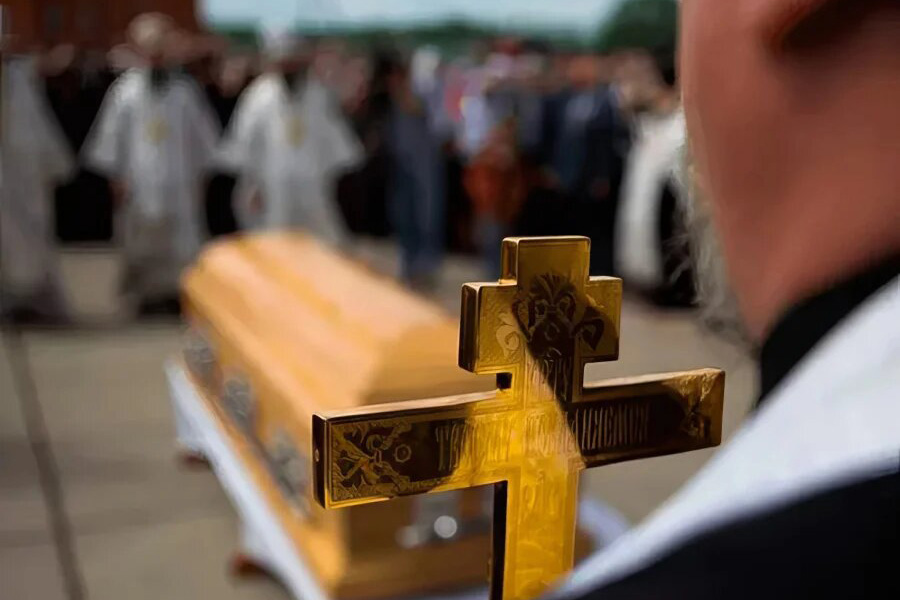
10MarToday we turn to a pastoral need that is anything but rare: the funeral service (Order of Burial) for those who have “gone the way of all the earth” (1 Kings 2:2; LXX/Slavonic: 3 Kings 2:2).
Though this rite is common and, in one sense, familiar, clergy often encounter practical questions—understandably so, since few of us can devote sustained time to the study of liturgics.
Below we offer answers and clarifications to some of the more frequent points that arise. ⬇️
A word about the rite
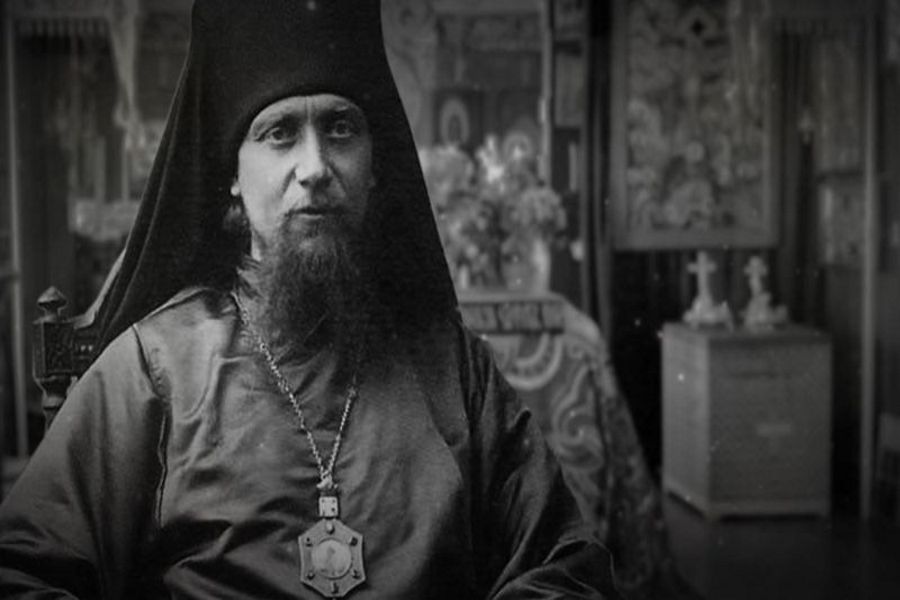
Hieroconfessor Athanasius (Sakharov) notes:
“The Order of Burial for a layperson is modeled on Matins—but on a solemn Matins, rarely performed except in particular cases. Besides the usual elements of Matins—the 50th Psalm and the Canon with its Sessional Hymns, Kontakion, and Ikos, which are also found at a Panikhida and a Moleben—the Order of Burial includes stichera, which the Panikhida does not have (and a Moleben usually has only one).
In addition, the Order of Burial contains the Blameless (Psalm 118), as at the Sunday and Holy Saturday Matins; the Beatitudes, as at the Matins of the Great Canon on Thursday and of Great Friday; and an Epistle and Gospel, as only at the Matins of Holy Saturday.
All this shows that the Order of Burial is an important, solemn service and therefore should be approached with particular care, and carried out as exactly and attentively as possible.”
Its solemn character is further underlined by rubrics that presume a conciliar celebration: “Whereas in many other rites—even Baptism and Marriage—one priest with a deacon suffices, the performance of the funeral ideally involves a whole choir of concelebrants, and, where possible, even a bishop presiding.” (From Commemoration of the Departed according to the Typikon of the Orthodox Church.)
Where the funeral should—and may—be served
1️⃣ Primarily, in church.
The Book of Needs (Trebnik) repeatedly directs this, reflecting both tradition and the dignity of the service, and also the desire to honor a departed member of the community.
“In conducting the Church’s last service before the coffin of a reposed Orthodox Christian, the Holy Church seeks not only to intercede for the remission of his sins, but also to honor our brother on this unique day for him … to gladden the departed one for the last time with a solemn and compunctionate service in the church where we had often gathered and sung together.”
2️⃣ Exceptions do exist.
There are circumstances that prevent bringing the departed to church; in such cases the rite may, by way of exception, be performed at home or at the cemetery. (Archpriest G. I. Shimansky, Liturgics: Sacraments and Rites.)
Church directives also mention exceptional cases, e.g., deaths from particularly contagious diseases, and certain non-contagious cases; even then, these are to be allowed only for weighty reasons and are not to become a general rule. Where conditions require repeated exceptions (e.g., grave distance from the church, lack of transport), this is to be done with diocesan blessing (see Tserkovnye Vedomosti 1898, no. 44; 1905, no. 15; 1895, no. 37).
3️⃣ Why should we prefer the church?
The main reason concerns the edification of the living whose earthly pilgrimage continues. The funeral rite is, in large measure, a ministry of consolation to the bereaved with whom we pray for the repose of the soul of the departed.
“The funeral according to the appointed rite is of great importance both for the departed and for the living: as the Church’s final prayerful sending-forth of her child, its touching and compunctionate hymns provide a fitting expression and direction for the grief of those who mourn their loved ones.” (S. V. Bulgakov, Handbook for Church Servers, vol. II.)
To this we must add a further consideration in our own day: “The common prayer at the burial of a loved one can become, for many of our contemporaries who have not received a Christian upbringing, a first experience of conscious participation in the Church’s life and an encounter with the realities of the age to come.” (Draft document “On the Christian Burial of the Departed”.)
Practically speaking, the church setting greatly serves the rite: a visiting priest is often alone; not all of us are gifted singers; external conditions (e.g., inclement weather at a cemetery) may be adverse. “As a result, the rite does not make the powerful impression on the faithful that is proper to it: the reading and singing suffer both in quality and in fullness.” (Bulgakov, Handbook for Church Servers, vol. II.) Attention in prayer—for all present—is likewise likely to be diminished.
4️⃣ Pastoral balance.
Wherever possible, we should encourage the family to bring the departed to the church. It is often easier for relatives not to do so, and here preaching and gentle persuasion are needed; we cannot constantly compromise and let the exception become the rule.
At the same time, a categorical refusal to serve at home is not always justified. Irregular situations may call for a prudent, economia-guided response. (In the Russian Church, because of recent decades of persecution and the realities facing elderly parishioners, attitudes have remained comparatively tolerant, especially among senior clergy.)
Two pastoral voices may help frame that balance:
Protopresbyter Dmitry Smirnov († 2020):
“It is not the place of the funeral that matters, but those who take part and how they pray to God for the soul of the departed during the rite. The rest is technical.”
Priest Maxim Yudakov (Berlin):
“The main thing is prayer; the rest is the formal side. The norm is to serve in church; in particular cases one may depart from it.”
May the Lord grant that, with time, everything falls into its proper place. Until then, let us act with pastoral care and discernment. We will continue this conversation in the next issue and would welcome your questions.
With prayerful wishes for the Lord’s help
and the protection of the Most Holy Theotokos,
Yours OCC
Related Articles
Related Products

Comment(s)
Close
- Someone purchased a8 hours ago from grand rapids , US$18.00
- Someone purchased a7 hours ago from West Valley City, US$2,725.00
- Someone purchased a
100-Segment Lestovka Prayer Rope
8 hours ago from grand rapids , USAs low as $30.00 - Someone purchased a
Hanger for Vestments (360 mm top, 390mm side, 820 mm bottom)
3 hours ago from Plano, US$40.00 - Someone purchased a
Chalice Covers and Veil with Byzantine Embroidery sh-10-86-4
7 hours ago from West Valley City, USAs low as $350.00