This website uses cookies to ensure you get the best experience on our website. Read more

Is It Valid to Serve Liturgy Without Communicants?
 20May
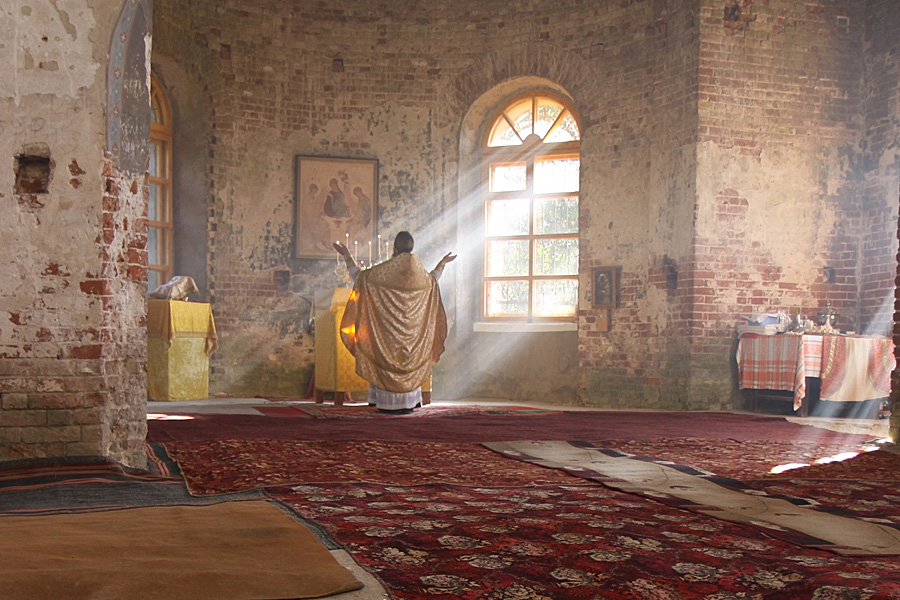
20MayToday's topic, by the grace of God, may not concern many parishes, but it remains relevant based on discussions observed online.
Celebrating the Liturgy with little or no communicants is a reality that some priests face, and it can be a source of discouragement and challenging questions.
For the author, the communion of the laity is a significant source of reinforcement and an antidote to the difficulties of office and life. Thankfully, I have rarely faced the absence of communicants. However, in some parishes, this situation occurs occasionally, leading to questions like:
❓ "Is it possible to serve the Liturgy without communicants?"
or
❓ "Is it justified to serve the Liturgy with only a reader and a priest present?"
or
❓ "Is it acceptable to serve the Liturgy for the sake of the Liturgy itself?"
With the help of webiste priest.today, we have compiled a collection of opinions and comments to address these questions, to encourage those who may be disheartened, and to reassure all ministers of the altar of the profound value of their dedicated service.
"An Exception, Not a Rule"
Bishop Panteleimon (Shatov), Moscow: "When St. Paisios of the Holy Mountain was asked whether there should always be communicants at the Liturgy, he replied:
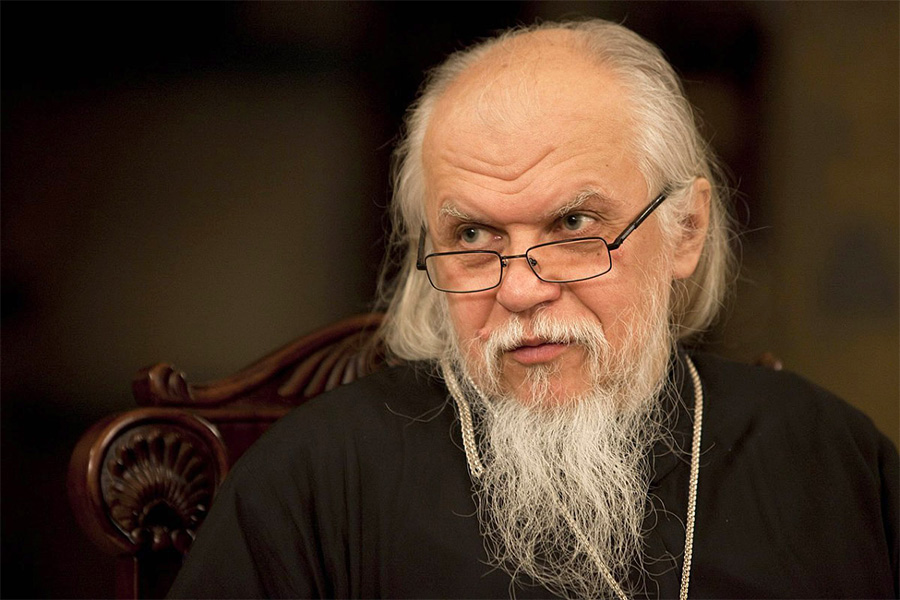
"Yes. Because the main purpose of the Divine Liturgy is that Christians, at least those few who are ready for it, receive communion. All the prayers of the Divine Liturgy speak of the faithful who will be taking communion. Therefore, there should be at least one communicant at the Liturgy.
Of course, sometimes it happens that none of those praying at the Divine Liturgy is ready for Communion. This is a different matter, but still it is good if at least one person receives Communion - some little child, infant. When there are no communicants, the liturgy is served only for the priest's communion and the prayerful commemoration of names. But this should not be the rule, but rather an exception."
Serving the liturgy alone is also an exception. This may be due to a special feat of life. Saint Theophan the Recluse regularly celebrated the Divine Liturgy, always alone, serving in silence, and sometimes reading and singing something. In secluded monastic hermitages, the liturgy can be celebrated by one hieromonk.
The Holy Righteous Alexei Mechev, at the beginning of his pastorate, often served without communicants. He later recounted that for eight years he had celebrated Liturgy every day in an empty church. One archpriest once said to him: ‘Whenever I pass by your church, I hear the bells ringing. But I look inside - and it's empty... This won't work for you Father, you are ringing in vain.’
But Father Alexis was not disheartened by this and continued to serve. We all know what fruit this service of the elder eventually bore. By the end of his life, this church was always filled with people. A vibrant community was established, which yielded many ascetics – both laymen, priests, and bishops.
Theological Considerations
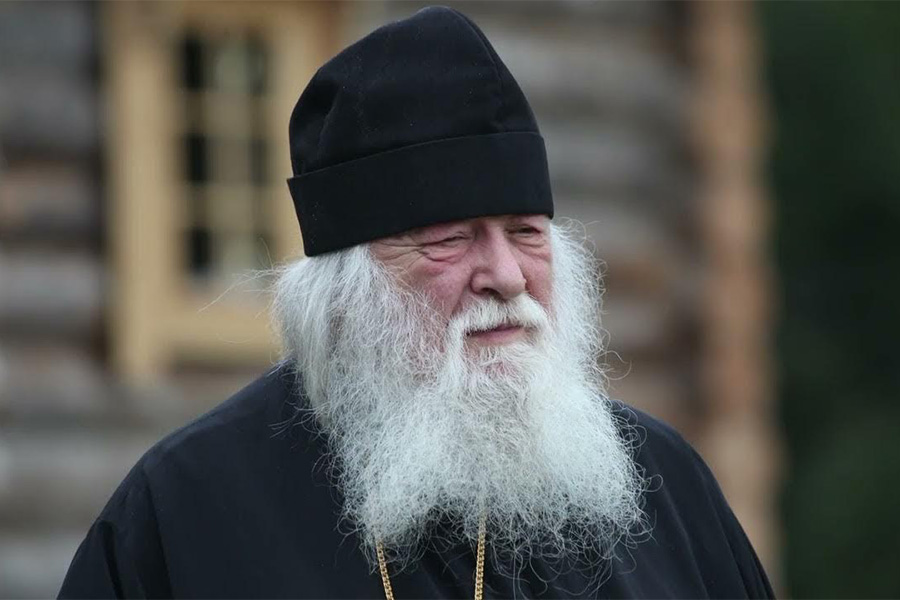
Archimandrite Seraphim (Krechetov):
"Liturgy is a mountain up to Heaven. Neither in heaven nor on earth is there anything higher than the Communion of the Body and Blood of the God-Man, the Son of God. Hieromartyr Bishop Arseny Zhadanovsky on the last day of the construction of the Chudov Monastery said: ‘It is worth building a church from scratch just to have one Liturgy served!’ Such is the height of this sacrament!"

Archpriest Vladimir Vorobyev, Moscow:
"A priest cannot serve the Liturgy without receiving Holy Communion. He must partake of Holy Communion without fail. Of course, it is very desirable that there should be other communicants as well. But even if there is only a reader, a deacon or whoever else - this is a gathering already, and the Lord said: ‘Where two or three are gathered in My name, there am I in the midst of them’ (Matthew 18:20)."
Priest Fedor, Dimitrovgrad:
"I see a certain shade of utilitarianism in the very question of whether it is worthwhile to serve the Liturgy if there are no or hardly any communicants. At the Last Supper the Lord said in the form of an imperative (!) 'Do this in memory of Me’. We celebrate the Eucharist for the sake of Him and His commandments, first and foremost. And secondly, for the sake of the ‘little flock’, who, according to the circumstances of life, may not be here today.
There is a well-known story about an Egyptian desert dweller, a presbyter, who often celebrated the Eucharist alone, or rather, only an angel served with him. In so doing, he ignorantly recited a heretical form of prayer. This was revealed when once a fellow priest visited him and during the Liturgy the visitor said, ‘Father, this is a heretical form of prayer’. The desert dweller turns to the angel and says, ‘Is it true?’ ‘Yes,’ the angel replies. ‘Why didn't you tell me about it?’ ‘Among us,’ replied the angel, ‘humans are supposed to be taught by their kin.’ Naturally, the elder began to use the Orthodox form from that time.
This story reminds us that the desert elders who had attained holiness did not worry in the least that there were few communicants. Otherwise, his guest would have mentioned this to the desert-dweller."
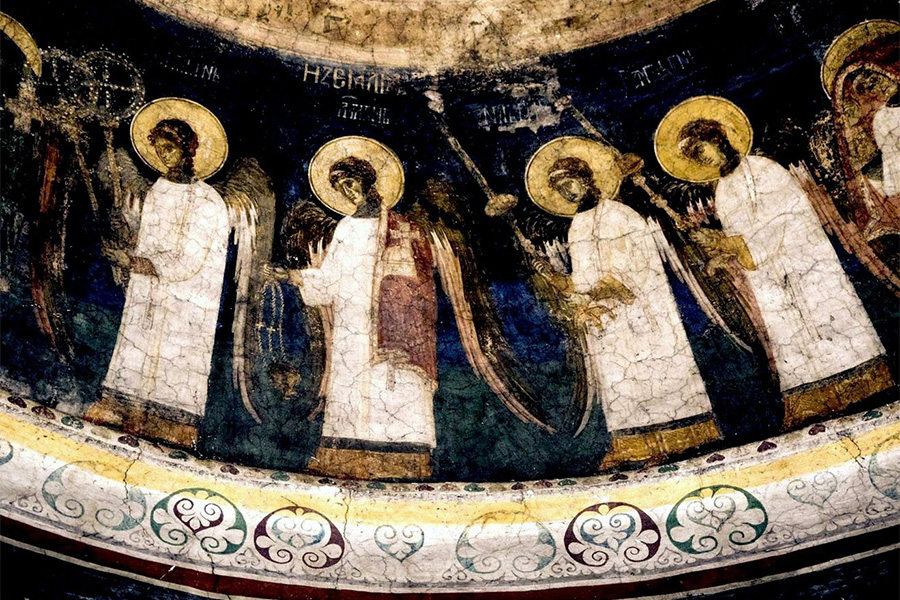 Christ and the Heavenly Liturgy. This fresco is from the Visoki Dečani Monastery, located in Kosovo, Serbia
Other Considerations: A Priest, Even in Solitude, Never Serves Alone
Archimandrite Seraphim (Krechetov):
“Once, an ascetic had a vision in which an angel said to him that those willing to participate in Liturgy, but unable to do so, still receive grace. Well, maybe in cases when there are no communicants, people desire to come but they can't. Should we deprive them of at least participating in Liturgy spiritually? I have heard that two centuries ago peasants used to plough until the bell rang, and as soon as they heard the strike on the Eucharistic Canon, they would stop their work. The horse would be idling, and a peasant would take off his hat and pray. And when the bell struck again, announcing the end of the Eucharistic Canon, he would continue plowing. In this way, people, even those not present at the Liturgy, received grace."
Bishop Panteleimon (Shatov), Moscow:
"Never does a priest celebrate a church service (much less a Liturgy) alone, even if he is in complete solitude. He is accompanied by the departed he commemorates. And his ‘peace to all,’ overcoming barriers, is communicated to his loved ones and spiritual children, living and deceased, whom he has in mind as he performs his solitary divine service."
Bishop Athanasius (Sakharov) (1887-1962) wrote:
"The belief that the departed, not only the saints, but all others who are remembered by those praying on earth, are co-present with them, serves to justify the possibility of the liturgy being celebrated by one clergyman without worshippers (as did St. Theophan the Recluse and as it is sometimes necessary to serve under the circumstances of the present time).” The saint writes of the time of persecution, but even in our own present time, in rural parishes, priests are sometimes forced to serve alone.
Practical Concerns
Bishop Panteleimon (Shatov):
"Celebrating the Liturgy is the first and foremost duty of a priest. If on a Sunday or a feast day there is no one in the church or no one is going to receive Communion, this is no reason to withhold the service."
Some priests justify the rare performance of services in their churches by the fact that no one attends. But if they do not serve, people will stop coming to church altogether! Perhaps it would be a good idea to consult with your confessor or an experienced colleague in dealing with this issue.
Liturgy Invites the Grace of God
Archimandrite Seraphim (Krechetov):
"Once they asked an elder, 'Pray that we may get sponsors'. He answered, 'You pray, and the sponsors will come in due time'. This is so true! Serve the Liturgy if you have the opportunity. What prayer could be higher?"
It has been observed many times that many problems begin to be solved as services begin to be celebrated in a congregation being formed or built.
How Often Should One Serve?
A priest, as the leader of a congregation, should maintain his Eucharistic life regardless of the presence of co-witnesses.
Archimandrite Seraphim (Krechetov):
"It is necessary to receive Communion as often as possible. St. Theophan the Recluse said: ‘I remind you more often to come to the sacrament of Communion with a feeling of complete unworthiness and having nothing to lean on.’ That is, approach with a sense of humility, but do so regularly!"
Bishop Panteleimon (Shatov):
"The frequency of celebrating the Liturgy by a priest is determined by the level of his spiritual life, the degree of his understanding of the importance of celebrating the Liturgy, and his need for the joy of Eucharistic communion with God. Of course, one must also take into account external circumstances and other responsibilities, including those to one's family and children.
It is essential to avoid extremes, such as a proud aspiration to serve every day at all costs in imitation of the saints, or, on the other hand, a lukewarm attitude to the main work of life."
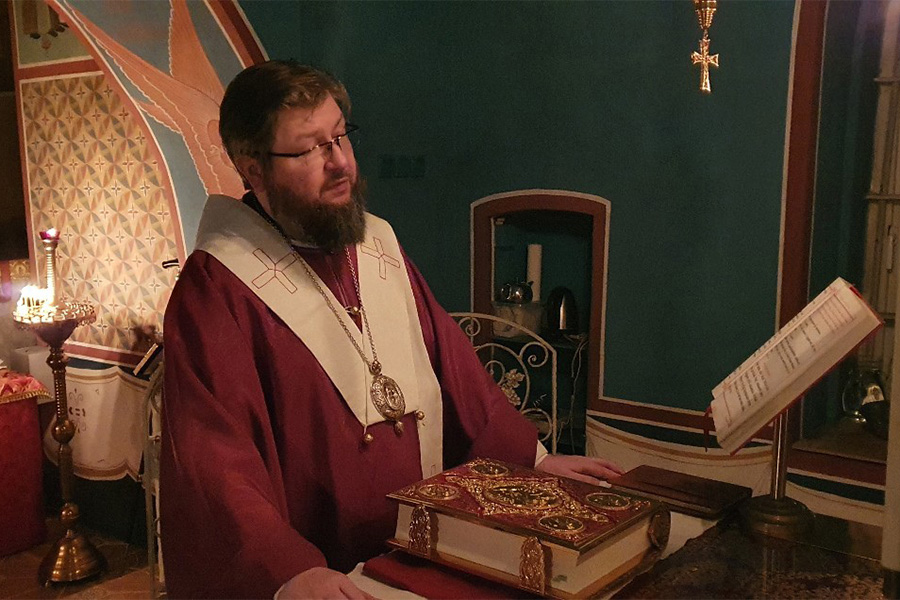
Bishop Meletius (Pavlyuchenkov), Roslavl:
"Is it necessary to celebrate the Liturgy at the proper time, regardless of whether there are communicants? Absolutely. A rector should make a schedule in advance so that the parishioners can plan ahead and always keep to this schedule.
Is it necessary for parishioners to receive Holy Communion? By all means. But the priest should explain to them the importance and necessity of it.
Serve the Liturgy regularly. There is a good rule of St. John Chrysostom: Wednesday, Friday, and Sunday. Eventually, people will come to worship and receive the Chalice.
Have patience and joy in the service, and there will always be fellow worshippers and communicants in the temple. Maybe in a year or more. The example of the Righteous Alexis Mechev has already been mentioned above. May his experience strengthen us. I have taken this experience as an example more than once, and the outcome came... after a while."
As it often happens, a journey of a thousand miles begins with a single step or, for that matter, a single communicant.
We hope that you have learned something useful from the above. We pray that your congregations are strengthened, and we would be grateful if you could share your experiences with the OCC.
Related Articles

Related Products


Close
- Someone purchased a
Lestovka Prayer Rope 50 Segments
7 hours ago from Oceanside, USAs low as $23.00 - Someone purchased a
Horologion (The Book of Hours) in Church Slavonic
8 hours ago from New Egypt, US$17.00 - Someone purchased a
Small Gold-Plated Pectoral Cross w/Chain
1 hour ago from Saint Joseph, US$250.00 - Someone purchased a
Medium Triptych with Our Lady of Kazan Icon
7 hours ago from Oceanside, US$16.00