This website uses cookies to ensure you get the best experience on our website. Read more

What's the Secret to Perfect Prosphora?
 10May
10MayMASTERING THE ART OF BAKING HOLY BREAD
We are sincerely glad to meet you again in the virtual space of the OCC. Today's issue is in response to several readers' inquiries, focusing on the process of baking Holy Bread, or prosphora.
We often receive inquiries from readers asking how to make their prosphora as visually appealing as the ones they see in pictures online.
Our monastery’s own recipe is geared towards mass production and may not suit home bakers or those without professional equipment. Furthermore, we find ourselves occasionally dissatisfied with the outcomes despite our setup. Additionally, any recipe will need adaptation based on individual circumstances: experience, local ingredients, available equipment, premises, and even climate.
With this in mind, rather than providing a specific recipe—which may not universally apply due to variations in scale, equipment, and local ingredients—we aim to share essential tips from experienced prosphora makers. While our advice may not be new to seasoned prosphora makers, we hope beginners will find it helpful.
The Spiritual Side
The preparation of prosphora, like any important task, must begin with prayer. In monastic prosphora bakeries, it is customary to start the process with a prayer to Saints Spyridon and Nicodemus, the prosphora makers of the Kiev Caves. Praying to Saint Sergius of Radonezh, who baked prosphora throughout his life, is also appropriate. The inner spiritual life of a prosphora baker is undoubtedly reflected in the quality of the bread.
In our monastery's prosphora bakery, bakers have the spiritual father's blessing to regularly go to confession and receive Communion. Additionally, the Akathist to Saint Nicholas the Wonderworker is read during every shift.
During their work, our prosphora bakers avoid idle conversations, instead listening to spiritual hymns, talks, and the Jesus Prayer. They strive to maintain a good spiritual state. Even when this proves difficult, they diligently follow the baking process, pray, and rely on God’s guidance.

Ingredients:
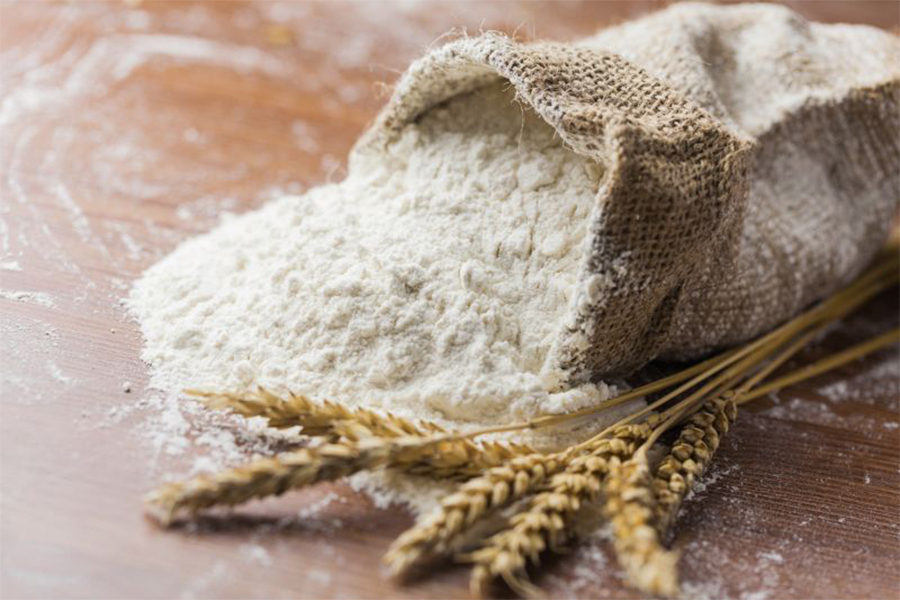
✅ Flour: wheat flour for prosphora should be of the highest grade and the finest grind, with a high gluten content, fresh and loose. Flour used for dumplings or pasta is an excellent choice. It is better to buy flour sold in paper packaging, as polythene can contribute to a musty odor. Check the date of manufacture, as old flour loses its quality.
It's common to taste the purchased flour: it should neither be bitter nor sour, have no other flavors or odors, and no sensation of sand on the teeth. It should also be visually clean, free of impurities, insects, and debris. When baking small amounts, flour is usually sifted.
✅ Water: the quality of the final product largely depends on the freshness, purity, and flavor of the water. Filtered water is often used for the dough. There is an old tradition of adding holy water to the dough, but it is not obligatory.
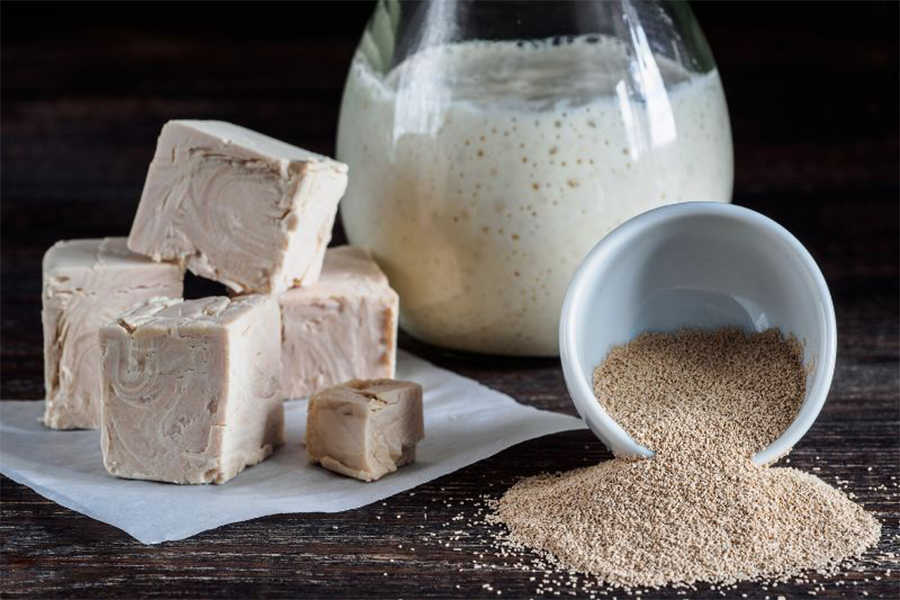
✅ Yeast: the potency of a particular brand plays a significant role and can affect the proportion of yeast in the recipe. The potency should also allow enough time to divide the risen dough (i.e., to form the prosphora) without it turning sour. If you have little or no experience, opt for moderately active yeast.
Recipe
Recipes differ in the proportions of the main ingredients (flour, water, salt, yeast) and the methods of preparing the dough. For example, some recipes involve adding boiling water to one-third of the flour, making the dough sweeter. Different localities and even parishes prefer softer or denser prosphora with varying amounts of salt. The recipe may also vary depending on the size of the congregation.
It would be very beneficial if someone could share a recipe tailored to local brands of products. If no such recipe is available, you may need to experiment. Once satisfied with the result, it's recommended to adhere to it, controlling the quantity by weights or measures, not "by eye." The exception is water, which can be adjusted according to atmospheric humidity.
However, it's often noted that dough is a very lively substance, and even under equal conditions, it can behave somewhat differently. There is an art to working with it and developing a feel for it.

Equipment: Dough Mixer, Dough Rolling Machine, Cut-Outs
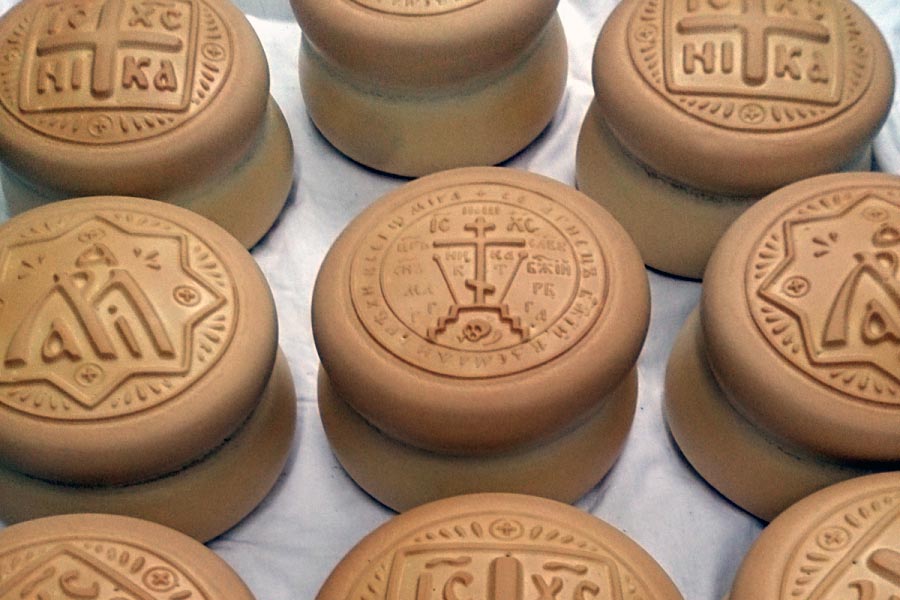
The quality of prosphora largely depends on the quality of dough preparation and processing. Achieving the desired level manually, even with strong hands, is very challenging. Therefore, a dough mixer for thorough kneading and a dough rolling machine for further manipulation of the dough become essential tools.
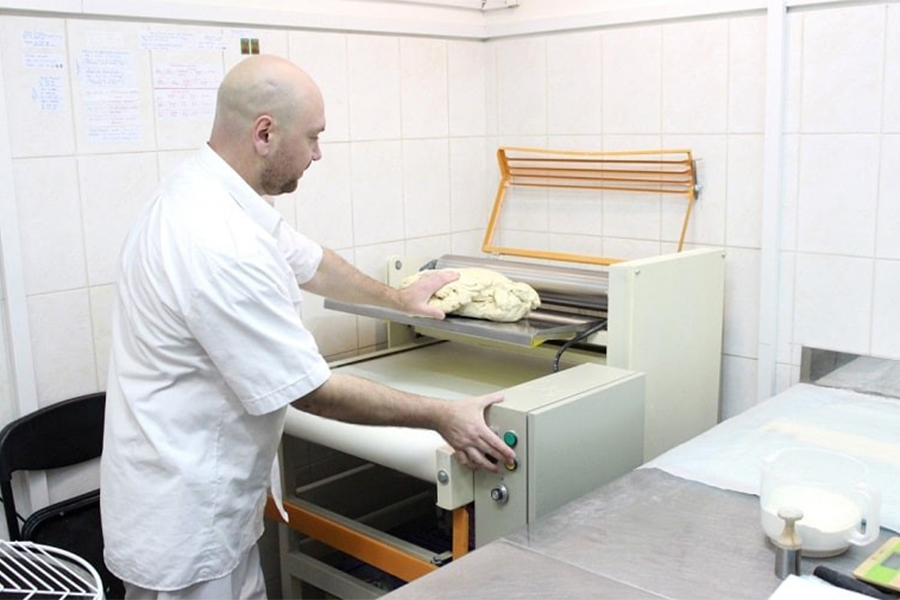
Passing the risen dough through the rolling machine several times helps mix the dough more thoroughly and remove excess air, resulting in an even layer for cutting out the lower and upper parts of the prosphora. Achieving this with a rolling pin is almost impossible. The rolled dough holds its shape better and has a denser texture. In the absence of a rolling machine, you can run the dough through a meat grinder several times.
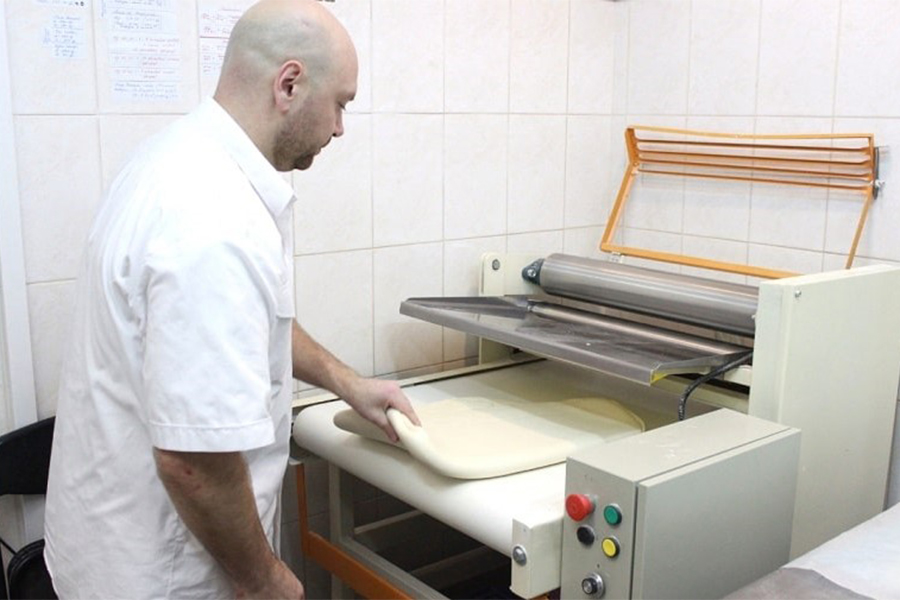
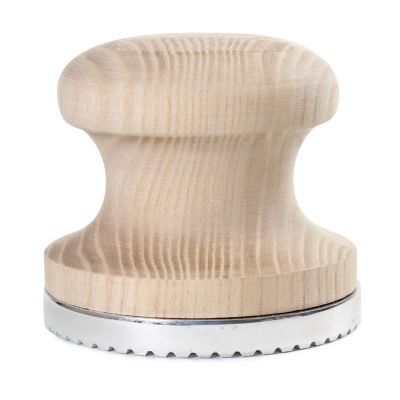
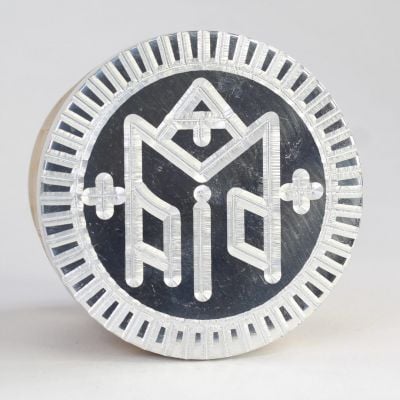
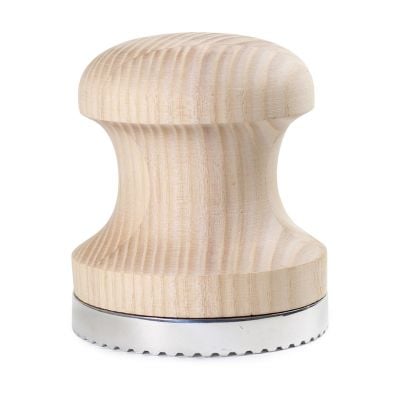
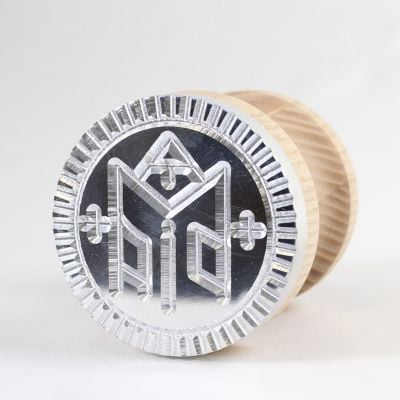
If cut-outs—special devices for creating identical circles of dough—are unavailable, and you want uniformly sized prosphora, control the weight of the dough pieces using a scale.
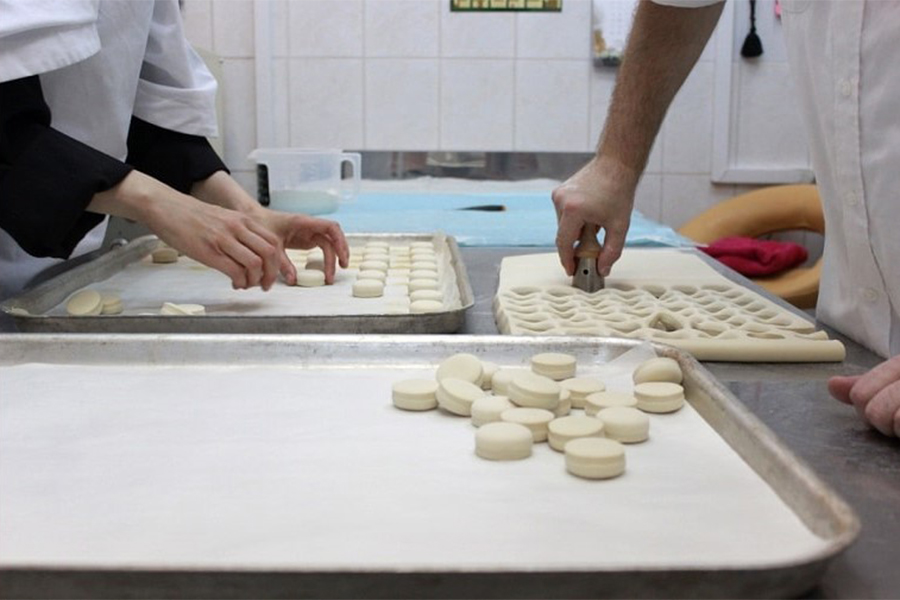
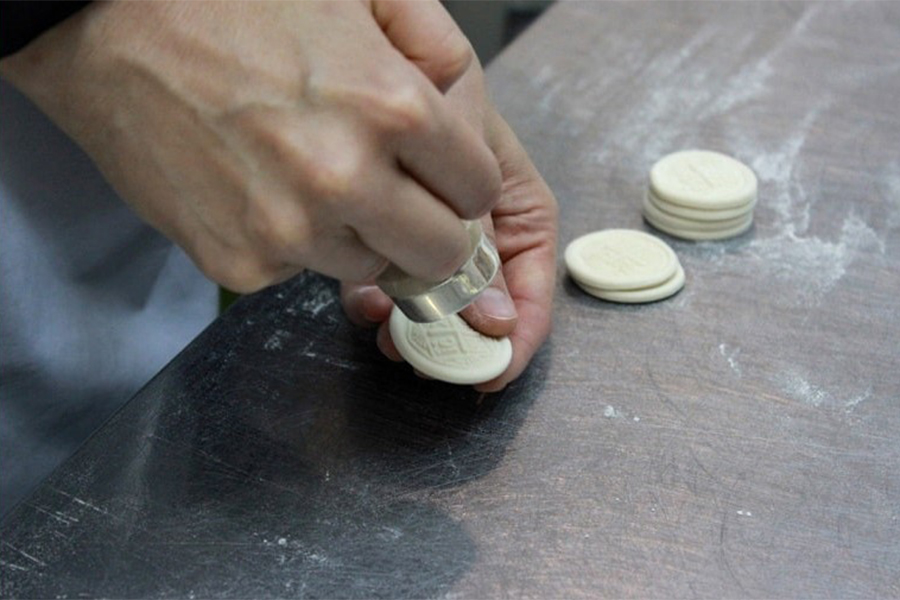
For example, for small prosphora: 19 grams for the bottom, 5 grams for the top. If you have the equipment, roll out the dough in two layers: about 18-20 mm and 11-12 mm thick, then cut the pieces quickly.
Nuances of Technology
✅ Room Temperature: The room should be at least 23 degrees Celsius (73.4F) and free from drafts.
✅ Water Temperature: Slightly heat the kneading water to facilitate the work of the yeast. The water temperature should be such that the dough is warm and pleasant to the touch after kneading, but never hot.
✅ Evaporation Control: Control the evaporation of water at all stages by covering the dough with polythene, oilcloth, or a towel after kneading (to help it rise), after rolling, and after shaping the prosphora before baking. This also applies to the finished product.
✅ Resting Dough: After rolling, let the dough rest for about 10 minutes under oilcloth to allow it to shrink and stabilize its shape. Otherwise, the finished prosphora may be oval.
✅ Piercing Prosphora: Pay special attention to piercing the bonded prosphora before and, if necessary, during baking. Pierce the prosphora several times from the print side almost to the bottom, in the center and around the perimeter. The punctures allow air to escape during the residual dough growth and baking process, preventing voids, cracks, and shape loss.
✅ Baking Tray: Preheat the baking tray and grease it with natural wax. According to church regulations, oil should not be used. Wax does not leave a greasy trace. If wax is unavailable, use a non-stick baking tray.
✅ Baking: Bake the prosphora until they are golden in color. The duration depends on their size. Monitor the baking process constantly to adjust the temperature as needed. If necessary, take the prosphora out of the oven, pierce them additionally, and carefully correct any deformations by hand.

Storing Prosphora
Before being used for the Liturgy, it is recommended that liturgical prosphora be stored for 3-5 days.
Fresh, cooled prosphora can be stored in the refrigerator for about three weeks. To do this, place them in a canvas bag and then in a plastic bag, which should be tightly sealed. Periodically check the inner bag, and if the fabric is wet, replace it with a dry one.
For long-term storage (up to three months), use deep freezing (-10 to -20°C). Wrap each prosphoron in a cloth and then in a plastic bag. Thawing should be done a day before the service, with half the time in the refrigerator and the other half in a dry cloth at room temperature. Do not refreeze.

The success of large prosphora workshops lies in a combination of experience, equipment, and a well-established workflow. Nevertheless, according to feedback, it is often possible to achieve quite acceptable results at home. Time, patience, and a desire to work for the glory of God will surely yield good fruit.
We would be very grateful if you could share with the OCC community your proven recipes using local ingredients for baking at home. If this topic is of interest to readers, we will also try to share experiences from popular publications on the internet.

Should you have specific questions, our Contact Form is available for your convenience: Contact Form.

Related Articles

Related Products
- $135.00
Close
- Someone purchased a
Lestovka Prayer Rope 50 Segments
7 hours ago from Oceanside, USAs low as $23.00 - Someone purchased a
Horologion (The Book of Hours) in Church Slavonic
8 hours ago from New Egypt, US$17.00 - Someone purchased a
Small Gold-Plated Pectoral Cross w/Chain
1 hour ago from Saint Joseph, US$250.00 - Someone purchased a
Medium Triptych with Our Lady of Kazan Icon
7 hours ago from Oceanside, US$16.00