This website uses cookies to ensure you get the best experience on our website. Read more

Choosing Between Family and Flock — One Priest's Story
 20Aug
20AugOne of the hidden trials of priestly ministry is the temptation to measure our service by visible results: the size of a parish, the number of parishioners, the opportunities that seem to lie elsewhere. Yet the Lord often entrusts a shepherd not to the places that appear most promising, but to those souls who simply cannot be abandoned.
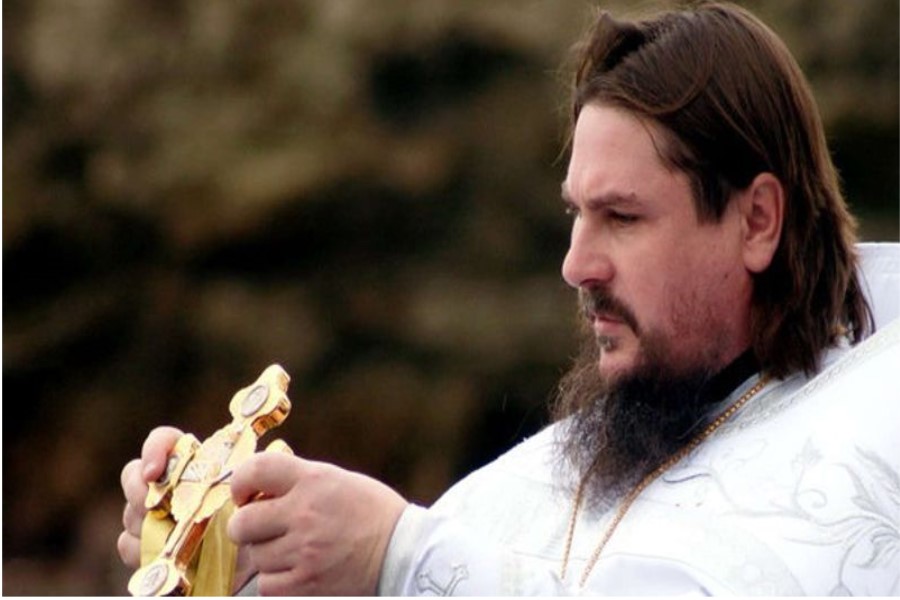
Today we would like to share the recollections of Archpriest Sergiy Khalyuta, who speaks with remarkable honesty about his first years of priestly service in post-Soviet Crimea: a poor and nearly forgotten parish, the struggles of a young family, discouragement, and the very real possibility of leaving for a more comfortable and successful ministry elsewhere.
What changed the course of his life was not an argument, but a single question:
“But do you not feel sorry for the people you would leave behind?”
At the heart of this account lies something every priest eventually encounters: the discovery that true pastoral ministry is often revealed precisely where sacrifice becomes personal, hidden, and difficult.
???? May this testimony strengthen and encourage all who labour faithfully in places known perhaps only to God and to their few devoted parishioners.
“I Became Deeply Discouraged and Did Not Know What to Do...”
The Story of a Priest
This happened in Crimea at the beginning of 1990. I was a young, newly ordained priest, waiting to learn which parish the diocesan authorities would assign to me. I was convinced it would be one of the cathedrals in Sevastopol or Yalta, since Bishop Basil of Simferopol and Crimea had mentioned them shortly before my ordination. But unexpectedly, the bishop decided otherwise:
“I am assigning you to Bakhchisarai.”
It should be remembered that Bakhchisarai in those years was nothing like the beautiful town it has become today — a recognised spiritual centre with ancient cave monasteries known throughout the Orthodox world. Back then, it was a poor and neglected place, and the Church of St Nicholas occupied a small house that had once belonged to the former director of the Bakhchisarai Museum Preserve.
That was where I was sent.
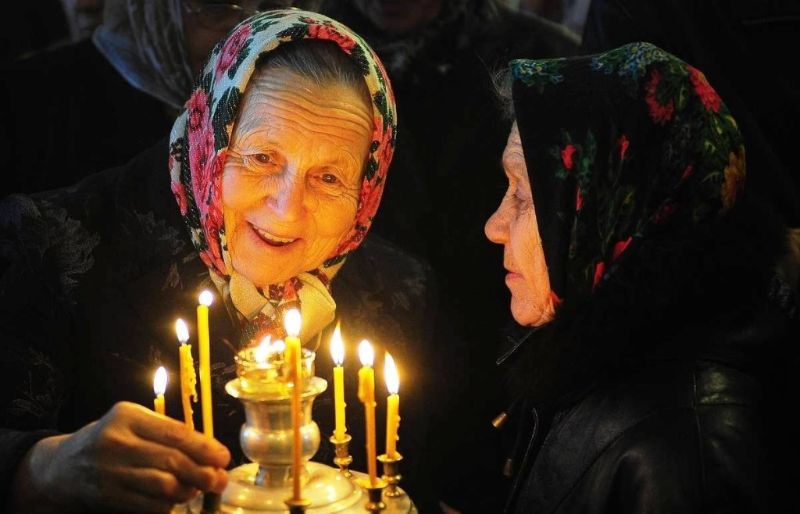
My parish consisted mostly of elderly women, the oldest of whom was 106 years old, along with a few old men. They were people of deep and selfless faith; it was by the prayers of such people that the land endured through those years. I count it a blessing that my priestly ministry began among them.
Naturally, the old women grew fond of me, but no younger people began coming to church. The only children approaching Communion were my own. All around us there was poverty, ruin, and neglect.
❓ How was a young priest with a family supposed to survive in the poorest and most difficult parish in the diocese?
The question gave me no peace.
After some time, I became deeply discouraged.
Still, there was nothing for it but to continue. I began repairing what I could, overseeing the construction of a new cathedral dedicated to the Feodorovskaya Icon of the Mother of God, and publishing books. Eventually I travelled to the Pskov Caves Monastery to seek counsel from Elder John (Krestiankin), under whose spiritual guidance I lived.
“Things have become very difficult,”
I told the elder.
And he replied:
“For a young married priest, it is no sin to ask for a more suitable parish.”
So I went to Moscow, to the Patriarchate, to request a transfer.
They received me warmly there, and the matter was nearly settled. But during one of the meetings, one of the most respected clergy present — Protopresbyter Matfey Stadnyuk, the Patriarch’s personal secretary and rector of the Epiphany Cathedral — stood up and quietly, almost tenderly, asked me:
“Of course, in Moscow you would advance quickly. You are gifted in preaching, and things would go very well for you here. But do you not feel sorry for the people in that little town where you serve?"
Sometimes a single simple question, spoken at the right moment, overturns all our carefully arranged plans.
At once I pictured those old women among whom I had already spent five years and whom I was now preparing to leave behind.
I remembered Vera Anastasyevna, our choir director. She was already more than a hundred years old. In her memorial notes for the departed, she always wrote first the names Nikolai and Nestor, and only afterwards the name of her own father, Anastasiy.
For a long time I wondered who these two men were, until one day I finally asked her.
“Nikolai” turned out to be Tsar Nicholas II. During the celebrations marking the three-hundredth anniversary of the House of Romanov in 1913, the young Vera, who had a beautiful soprano voice, performed a solo at a concert in Bakhchisarai and received a great bouquet of roses from the grateful Emperor himself.
She remembered that moment in the smallest detail for the rest of her life and, even during the Soviet years, continued to pray for the Royal Martyr.
And "Nestor" was Nestor Makhno himself — the famed anarchist leader of the Civil War years — who once rescued her from drunken soldiers, lifted her onto his horse, and brought her safely home.
These women had lived through revolution, famine, war, repression, occupation, and the destruction and closure of churches — yet they preserved the faith of Christ and remained faithful to the Orthodox Church. And they had accepted me, a young priest, as their spiritual father.
In the end, I decided not to leave Bakhchisarai and informed my bishop of my decision.
I returned to my parish.
For Moscow, my arrival or departure would have meant very little. But for the people of Bakhchisarai, the ministry of a young and energetic rector was bound up with the very survival of their church.
Years later, I would go on to serve in a cathedral with a great history. Yet it was that small and impoverished parish that taught me the most important lesson of all:
God’s providence often turns us away from the easy paths we naturally seek and binds us instead to those whom leaving behind would mean betraying.
It was in Bakhchisarai that I first understood what true priestly ministry really is.
Related Articles
Related Products
- $495.00$5,908.00$3,750.00Comment(s)
Close
- Someone purchased a7 hours ago from Boca Raton, USAs low as $9.00