

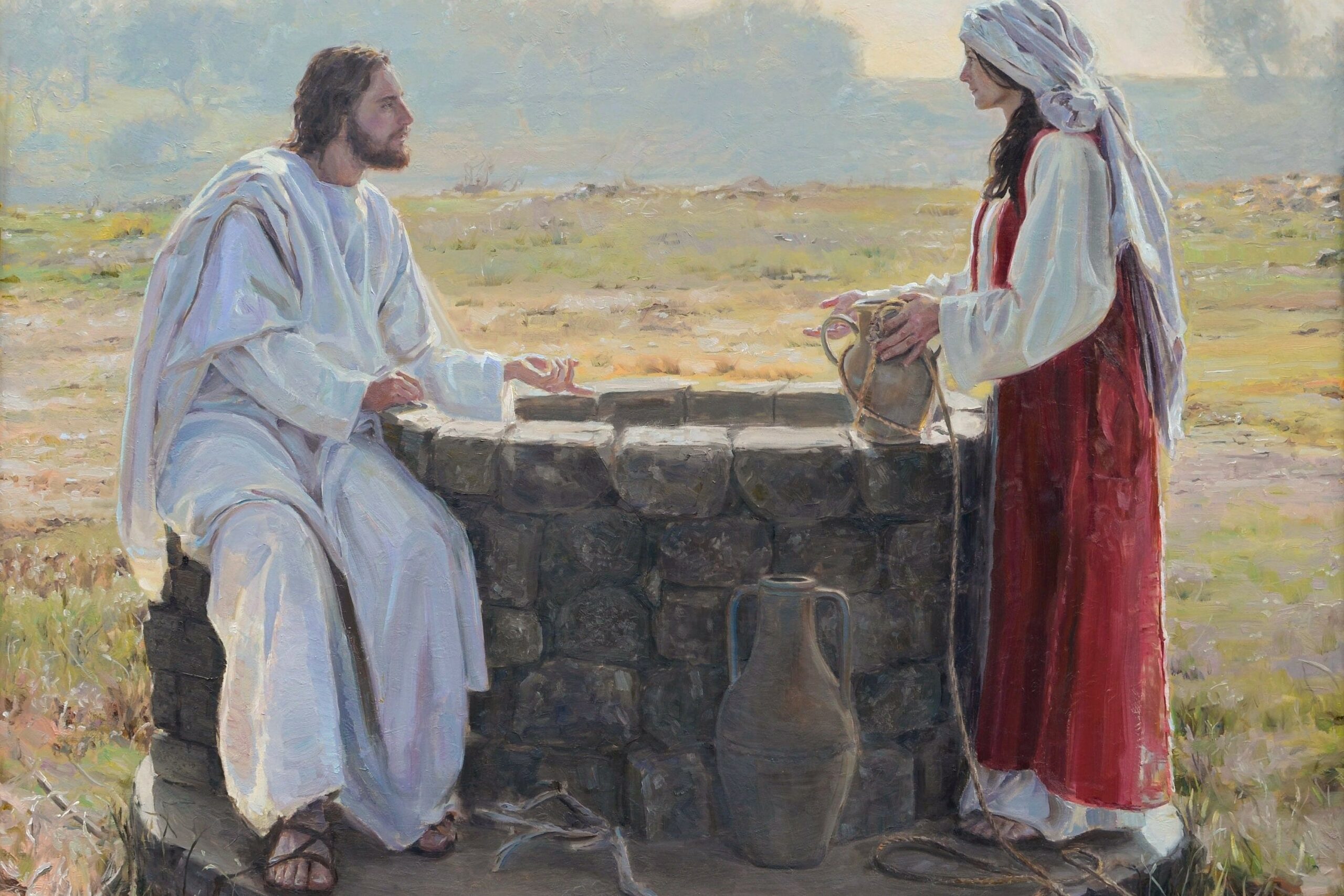
There is a scene in the Gospel that, at first glance, seems entirely ordinary. Weary from His journey, Jesus sits down beside a well and asks a woman who has come there for water to give Him a drink. A conversation begins. What could be unusual about that?
And yet, for Christ’s contemporaries, nearly every detail of this encounter would have seemed shocking. In the meeting between Christ and the Samaritan woman, several boundaries are crossed at once — boundaries so deeply rooted in the religious and social consciousness of the time that many would have considered them untouchable.
The first boundary was ethnoreligious
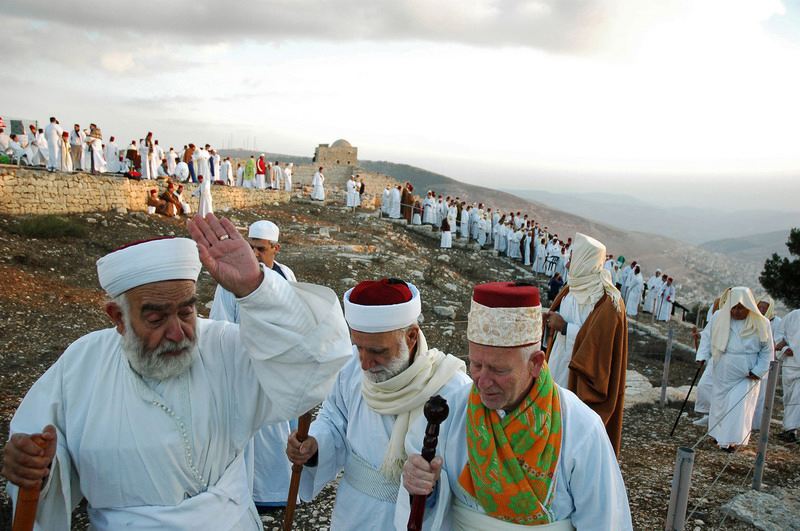 The Samaritans on Mount Grizim, photo by Edkaprov (Edward Kaprov)
Christ speaks with a Samaritan woman. That alone would already have scandalised many Jews of the period, for Jews and Samaritans avoided contact with one another. The origins of this hostility stretched back centuries. After the Assyrian conquest of the Northern Kingdom of Israel in 722 BC, part of the population was taken into captivity, while foreign peoples were resettled in the region. Over time, the inhabitants of that land came to be known as Samaritans, after the city of Samaria.
As cultures and peoples intermixed, the religious life of the region also changed. The Samaritans preserved only the Pentateuch, established their own centre of worship on Mount Gerizim, and developed a distinct religious identity separate from mainstream Judaism.
Relations between Jews and Samaritans grew increasingly bitter after the Jews returned from the Babylonian exile and began rebuilding the Temple in Jerusalem. When the Samaritans offered to take part in the work, they were firmly rejected. In time, association with Samaritans came to be viewed almost as a compromise with false worship itself, and even the word “Samaritan” acquired a contemptuous tone.
Yet Christ quietly steps across this boundary. He addresses the woman directly: “Give Me a drink” (John 4:7).
The second boundary concerned ritual purity
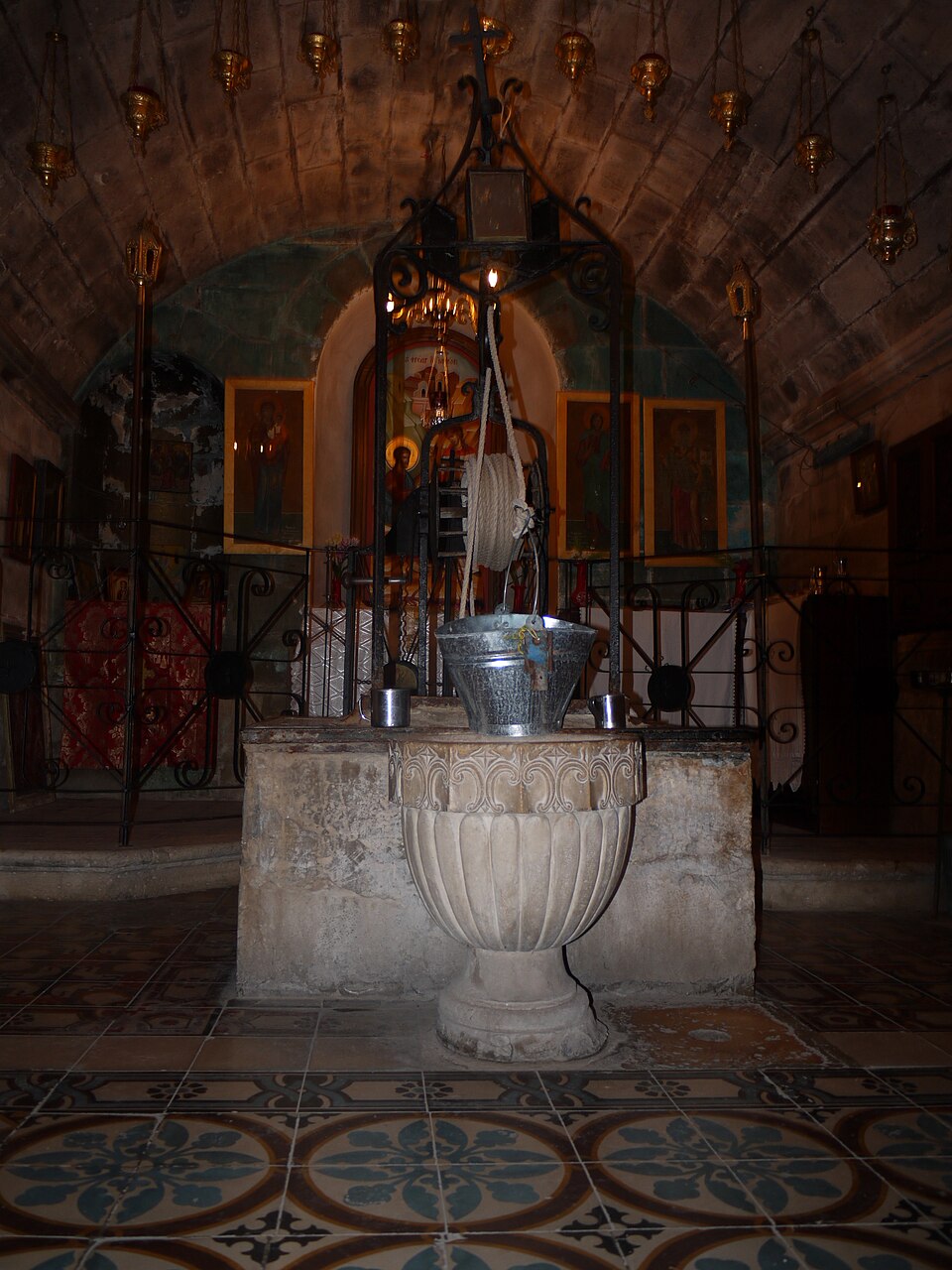 Jacob’s Well, photo by Jeremiah K Garrett
In Jewish religious life, food, water, vessels, and their use were all carefully regulated. Samaritans were considered ritually unclean, and therefore anything associated with them — including their utensils — was also regarded as defiled. Among the Jews there even circulated a saying: “He who eats the bread of a Samaritan is like one who eats swine’s flesh.”
To ask the Samaritan woman for water meant being willing to do precisely what strict religious custom discouraged.
Yet these practices did not arise arbitrarily. In the Old Testament, such boundaries often served a protective purpose: they helped preserve the people’s faithfulness to the worship of the One God amidst constant religious and cultural pressures. But with the coming of Christ, many things are reinterpreted and fulfilled in a new way.
By speaking with the Samaritan woman, the Saviour reveals that no external regulation can outweigh the value of the human person before God.
The third boundary was social and gender-related
A man — especially a teacher or rabbi — was not expected to converse privately with an unfamiliar woman. Numerous sayings reflected this attitude. “No one should speak with a woman on the road,” taught one tradition. Another went so far as to claim, “Better that the words of the Law be burned than taught to a woman.”
This makes the disciples’ reaction especially revealing. Returning to the well, they marvel that He was speaking with a woman (John 4:27). At that moment, they do not yet know she is a Samaritan. The mere fact that their Teacher is engaged in conversation with a woman is astonishing enough.
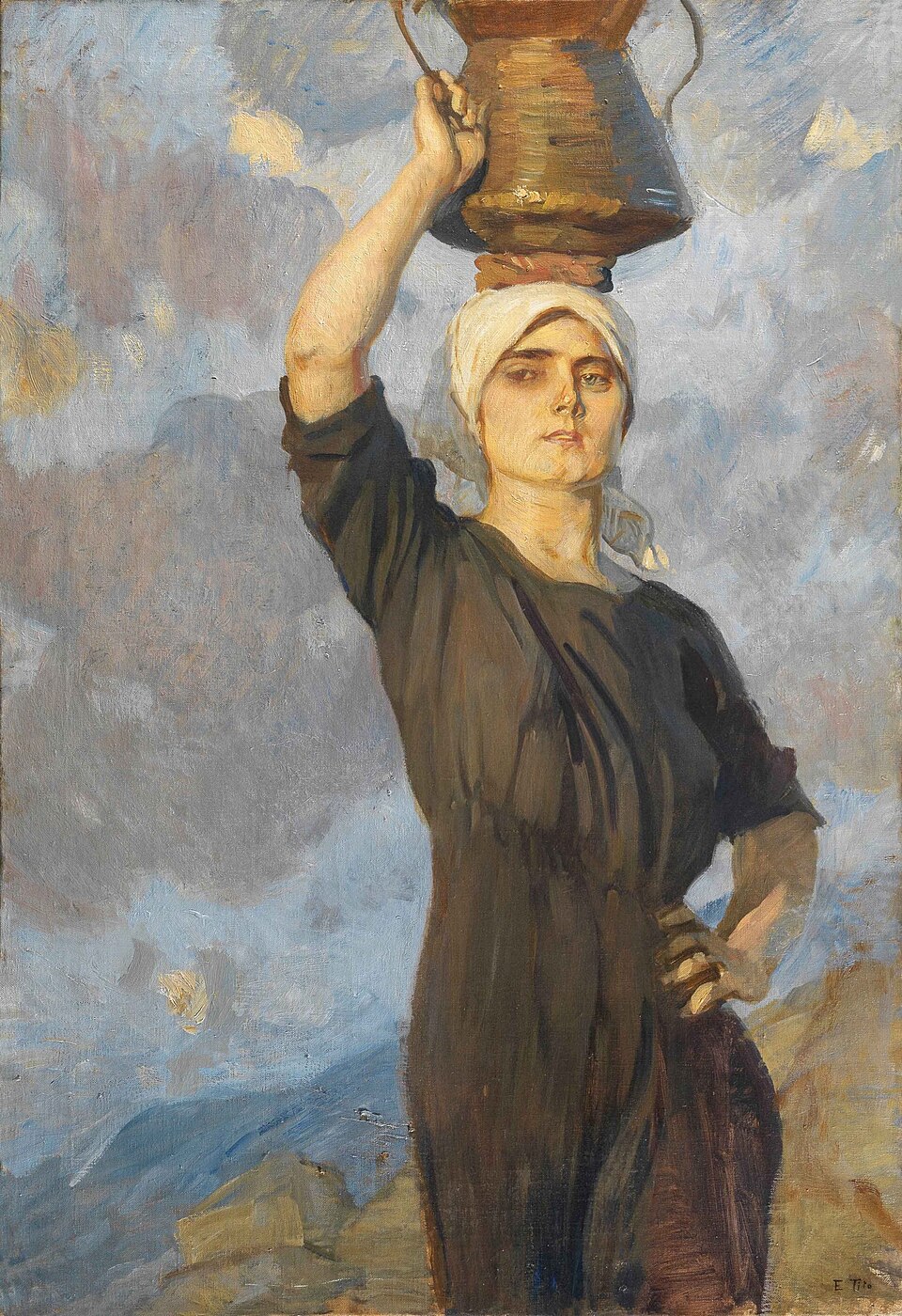 The Samaritan Woman by Ettore Tito, 1919
Christ, however, not only speaks with her — He treats her as a genuine interlocutor. He speaks to her of the deepest spiritual realities, listens to her questions, and answers them seriously and openly.
The fourth boundary was moral and social
Several details in the Gospel suggest that the Samaritan woman was looked down upon even within her own community. She comes to draw water alone, in the heat of midday, when others would normally avoid the blazing sun. Women usually came to the well together in the cool of the morning. Her solitude seems deliberate.
Christ Himself reveals the painful circumstances of her life: she has had five husbands, and the man she now lives with is not her husband. Yet it is precisely to such a person — wounded, isolated, burdened by sin — that Christ chooses to reveal Himself openly.
In doing so, He confirms His own words: “I came not to call the righteous, but sinners to repentance” (Matthew 9:13).
Why does Christ cross all these boundaries?
What unfolds in this passage would have appeared nearly unimaginable to many people of that time. A Jewish teacher speaks publicly with a woman; not merely a woman, but a Samaritan; and not merely a Samaritan, but one with a troubled reputation. More than that, He asks her for water without fear of ritual defilement.
Why?
Not simply to demonstrate freedom from convention, but to restore the proper order of things.
Boundaries and prohibitions do not emerge from nowhere. At their origin there is often a desire to preserve truth, protect spiritual life, and guard people from what is destructive. But over time, such boundaries can begin to exist for their own sake. Instead of serving man, they begin to dominate him.
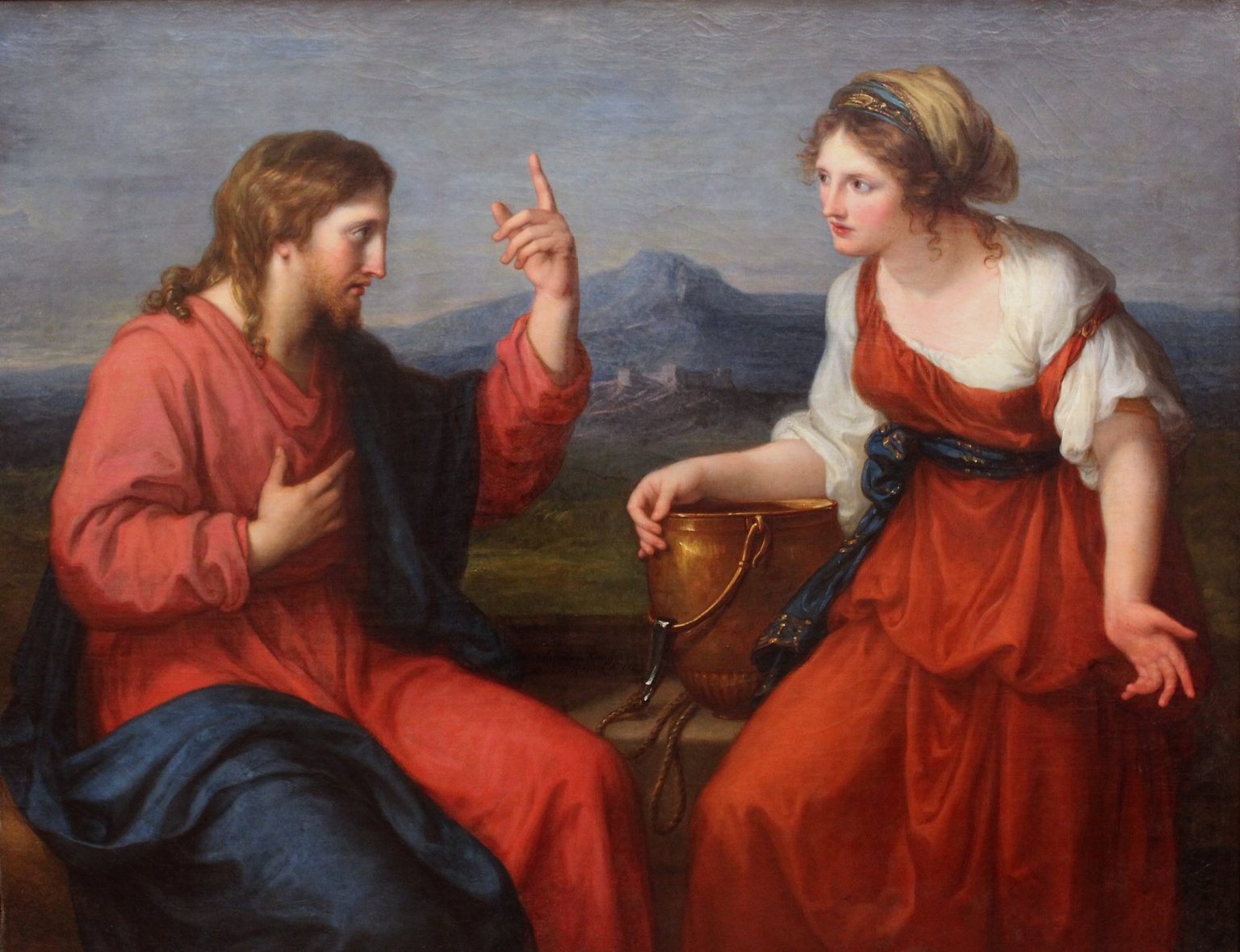 Christ and the Samaritan Woman at the Well
By crossing these divisions, Christ exposes this distortion. He reveals the point at which concern for religious purity hardens into an obstacle separating people from God and from one another. The preservation of truth can never justify the loss of love.
In Christ, ethnic, social, ritual, and even moral divisions cease to be absolute barriers. They do not disappear in the sense that human distinctions are erased, but they no longer determine a person’s nearness to God or worth before Him. All such walls yield before Divine love.
This is why the conversation with the Samaritan woman already contains, in seed form, one of the central proclamations of the New Testament — later expressed by the Apostle Paul:
“…put off all these: anger, wrath, malice, blasphemy, filthy language out of your mouth. Do not lie to one another, since you have put off the old man with his deeds, and have put on the new man who is renewed in knowledge according to the image of Him Who created him, where there is neither Greek nor Jew, circumcised nor uncircumcised, barbarian, Scythian, slave nor free, but Christ is all and in all” (Colossians 3:8–11).
Translated by the Catalogue of Good Deeds
Source:https://foma.ru/kakoe-vyskazyvanie-iz-poslaniya-apostola-pavla-zashifrovano-v-besede-hrista-s-samaryankoj.html