

What the bodies of the saints reveal about life, death and the resurrection
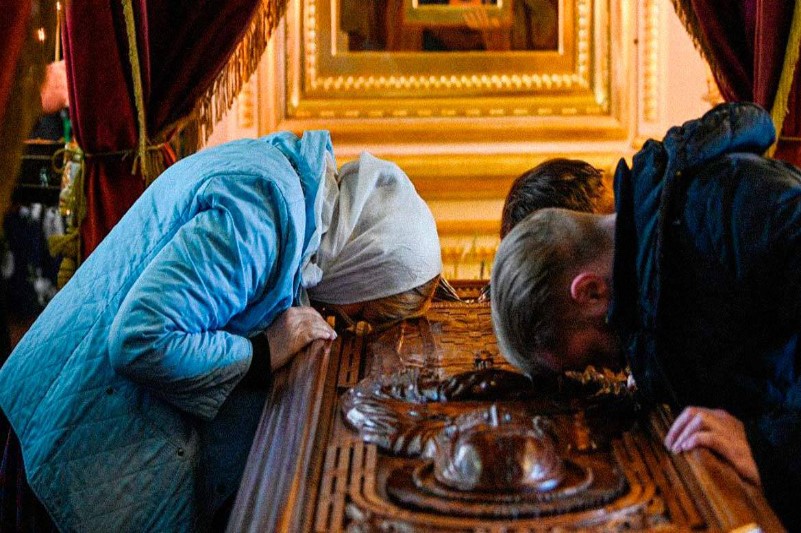
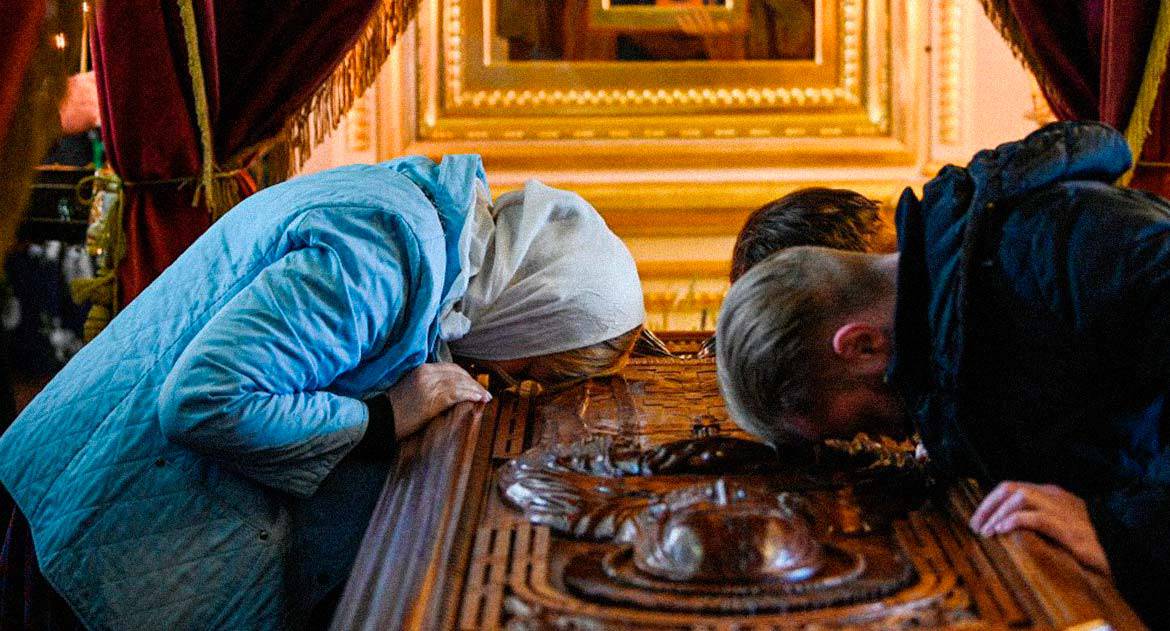
Why do Christians bow before the remains of the dead? For someone unfamiliar with the veneration of relics, the sight can be puzzling, perhaps even unsettling. Why such reverence for tombs, fragments of bone and pieces of cloth? What place do they have in a living faith?
Christianity has raised uncomfortable questions from the beginning. When Jesus spoke of eating His Flesh and drinking His Blood, even some of His followers found His words difficult to accept (John 6:60). When St Paul preached the resurrection of the dead in Athens, some of his listeners scoffed; others put him off until another day (Acts 17:32).
The answer begins with a distinction: Christians venerate relics—that is, they honour them with reverence. Worship belongs to God alone. Behind that reverence lies a conviction about the people whose remains they honour: death has not brought their life in God to an end.
To understand this reverence, we need to look at the convictions behind it. What do Christians believe about the body? What has Christ’s Resurrection changed? And what does it mean to be alive in God?
1. Relics belong at the heart of Orthodox worship
At first sight, the veneration of relics might seem a custom on the margins of Christian life. Their place in Orthodox worship reveals how closely they are connected with the substance of the faith.
Consider the Divine Liturgy, at which the Church celebrates the Eucharist. Its connection with the martyrs reaches back to the early centuries, when Christians gathered at their tombs to pray and offer the Eucharist. The bodies of those who had given their lives for Christ were held in profound reverence.
In 787, the Seventh Ecumenical Council, held at Nicaea, formally affirmed this tradition.
Its seventh canon required relics of martyrs to be placed in churches that had been consecrated without them, and forbade bishops to consecrate churches without relics.The connection remains visible today. Relics are placed in consecrated altars and are also customarily sewn into the antimension: a cloth bearing an image of Christ’s burial, authorized by the bishop, on which the Eucharist is celebrated. At the very place where the Eucharist is offered, the faithful are reminded of those who gave their lives for Christ.
To understand why their remains belong here, we must go back to the Christians who first treasured them.
2. A tradition rooted in the early Church
In the second century, St Polycarp, Bishop of Smyrna, suffered martyrdom for Christ. The account preserved by his Church tells how he was condemned to the flames. When the fire failed to consume him, an executioner killed him, and his body was then burned. Afterwards, the Christians gathered his bones, which they regarded as more precious than jewels and gold, and laid them in a place where they could assemble to commemorate his martyrdom.
The Church of Antioch likewise treasured the remains of St Ignatius the God-bearer, who had been thrown to wild beasts in Rome. His relics were received as a precious gift to the community he had served.
In Rome, the catacombs—the extensive underground cemeteries of the early Christians—preserved the graves of many martyrs. Their burial places became centres of prayer and remembrance, drawing believers who sought to honour those who had remained faithful to Christ unto death.
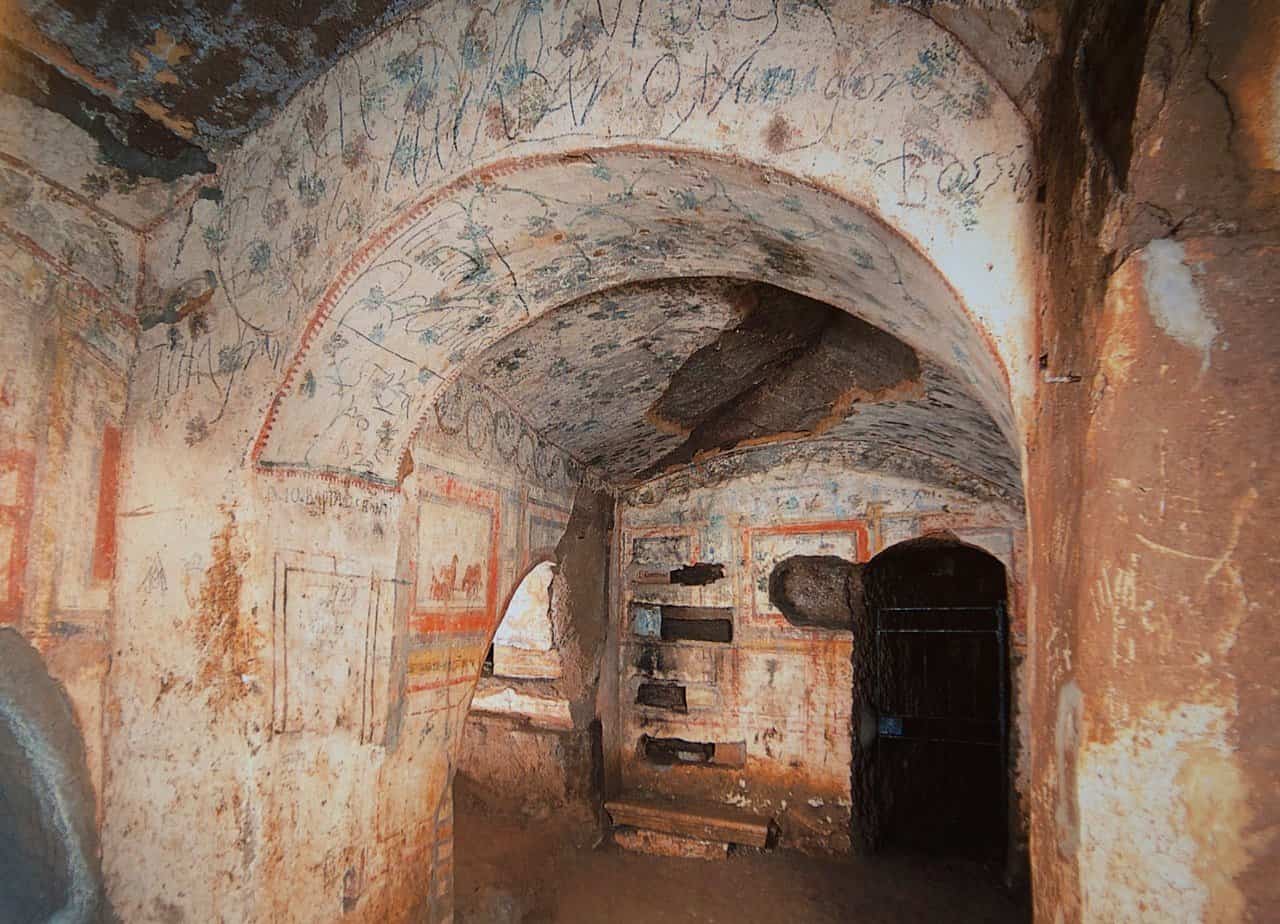 The Catacombs of St Domitilla, Rome.
By the late fourth and early fifth centuries, the great teachers of the Church spoke of this reverence as an established part of Christian life. In the bodies of the martyrs, Christians honoured the wounds they had received for Christ. Even their dust held the seed of eternity: the promise that these bodies, given in love for the Lord, would rise again.
St John Chrysostom expressed this reverence through a striking comparison. An emperor’s crown shines with precious stones; the bodies of the martyrs bear the wounds they received for Christ. Those wounds, he wrote, make them more precious and worthy of honour than any imperial crown.
In the eighth century, St John of Damascus explained the theological foundations of this veneration. In the twentieth, St Justin Popović of Serbia returned to the same theme. Across the centuries, the Church has recognised in the saints’ remains something far more significant than a memorial to the past.
3. The martyrs bear witness to the resurrection
The martyrs’ wounds were precious to the Church because they testified to a faith stronger than the fear of death.
The word martyr comes from the Greek word for a witness. By accepting suffering rather than denying Christ, the martyrs bore witness to Him as their Saviour: to His Resurrection and to His promise that the dead would rise. They trusted that death could not bring their life in Him to an end. Beyond it lay the fullness of life with God, when He would be “all in all” (1 Corinthians 15:28).
Their testimony was costly. They surrendered their earthly lives because they believed that communion with Christ was worth more than anything death could take from them. Their courage gave visible expression to the hope on which the whole Church stands: “If Christ is not risen, your faith is futile” (1 Corinthians 15:17).
This same faith lies at the heart of the Eucharist. Through the prayer of the Church and the action of the Holy Spirit, the bread and wine become the Body and Blood of Christ—the very Lord who suffered, rose from the dead and lives for ever. His humanity is inseparably united to His divinity; in Communion, He gives us a share in His life.
How fitting, then, that the relics of the martyrs should be present at the altar. Through their relics, those who gave their lives in the hope of the resurrection are bodily present where the Church gathers to receive the risen Lord. Their remains bear witness to the life He gives us and which we await in its fullness.
4. The body is made for eternal life
Relics are the bodily remains of people whom God has glorified. But why should a person’s body matter after death?
For Christians, the body is an essential part of who we are. It is not a disposable covering for the soul, or a prison from which the spirit must escape. God’s purpose embraces the whole person.
The Incarnation makes this unmistakably clear. The Son of God truly became human. He took flesh, suffered death and rose bodily from the tomb.
The Gospels emphasise the reality of His risen body. He eats in the presence of His disciples and invites them to touch Him: “Behold My hands and My feet, that it is I Myself. Handle Me and see, for a spirit does not have flesh and bones as you see I have” (Luke 24:39).
God’s purpose for our bodies, too, is eternal life. Yet the reality of death seems to stand in the way of that promise.
Christianity understands death—the separation of soul and body—as a tragedy bound up with humanity’s estrangement from God through the Fall. It was never the fulfilment of God’s purpose for us. Through the Incarnation, the death on the Cross and the Resurrection of the Son of God, death’s dominion has been broken.
All the dead will rise, and soul and body will be reunited. For those who live in communion with Christ, this is the hope of sharing fully in His eternal life. The saints already live in that communion, even as they await, with the whole Church, the resurrection of the body.
Their relics remind us that God’s purpose for the body reaches beyond the grave.
5. Holiness embraces body and soul
If the body is destined for eternity, and God Himself has truly become man, reverence for the bodies of His saints follows naturally. Holiness touches the whole person.
St Justin Popović explains that holiness embraces both soul and body. As a person grows in communion with God, both are filled with the grace of the Holy Spirit. The saints’ bodies become vessels of the same grace that sanctifies their souls. This participation in God’s life is what Orthodox theology calls deification: we remain human, while sharing by grace in the life of God.
In venerating their relics, the Church honours temples of the living God. His grace does not abandon them at death. God continues to work through them, granting healing and other miracles according to His wisdom and love.
St Paul asks the Christians of Corinth: “Do you not know that you are the temple of God and that the Spirit of God dwells in you?” (1 Corinthians 3:16). The Church continues to honour the saints’ remains as such temples, even after death has taken away the breath of life. It does so in the hope that these bodies will rise again.
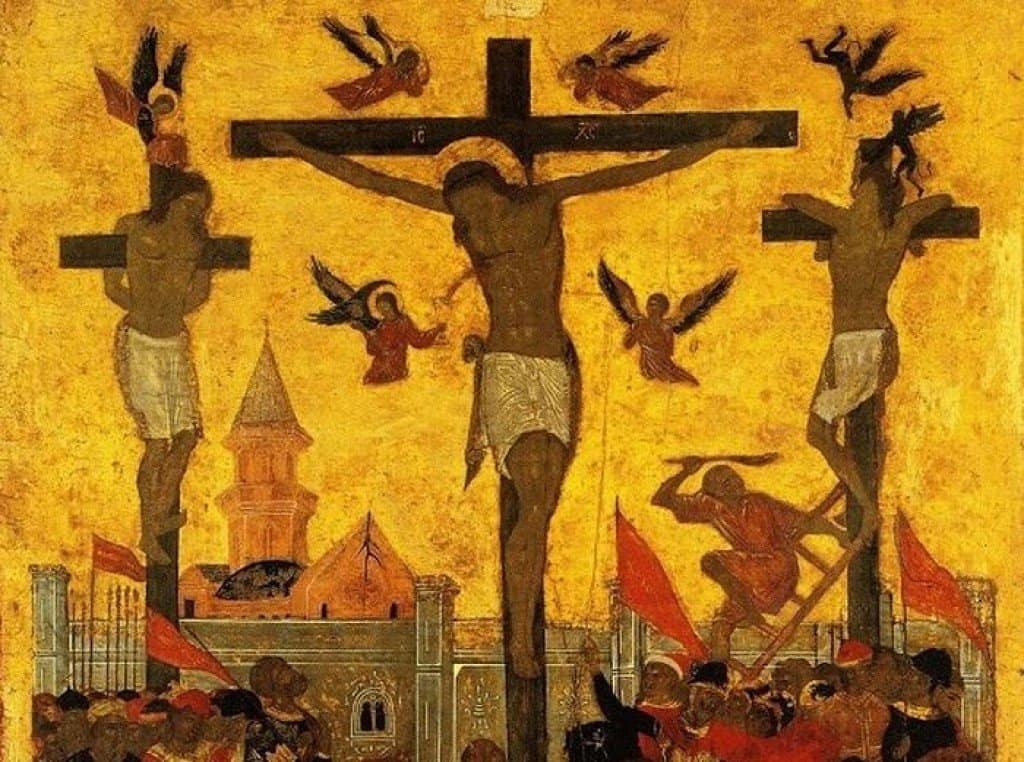
Crucifixion of our Lord Jesus Christ icon
St John of Damascus makes the connection with Christ’s victory explicit. Since the Lord who is Life itself entered into death, those who have fallen asleep in faith and in the hope of resurrection cannot be spoken of as though death had the final claim upon them.
“He is not the God of the dead but of the living, for all live to Him,” Christ declares (Luke 20:38).
The Church therefore includes both those still living on earth and those who have passed through death. Our communion in Christ reaches beyond the grave. When we ask the saints to pray for us, we turn to people who are alive in God and whose love for others has not ended. The veneration of their relics expresses that same communion in a tangible way.
As the theologian Fr Alexander Schmemann explained, Christianity transforms our understanding of death by placing God at the centre. The departed need no longer be imagined as threatening inhabitants of a shadowy other world. We speak of them as having fallen asleep: they await the resurrection and remain dear to us and to God.
6. Incorruption is not the measure of holiness
There is a persistent assumption that a saint’s body must remain intact after death. Some people also expect it to give off a sweet fragrance or exude myrrh, a fragrant liquid associated with certain relics.
The Bolsheviks exploited such expectations in their campaign against relics, which began in 1918. Officials entered churches and monasteries, forced open the reliquaries containing the saints’ remains and displayed their contents. The intention was to discredit the Church by showing that the bodies it honoured had undergone decomposition.
But the Church’s veneration of relics does not depend on their preservation. The bodies of some saints have remained remarkably intact; the remains of others have decayed, been burned or been scattered. Their holiness is not measured by the condition of their bones.
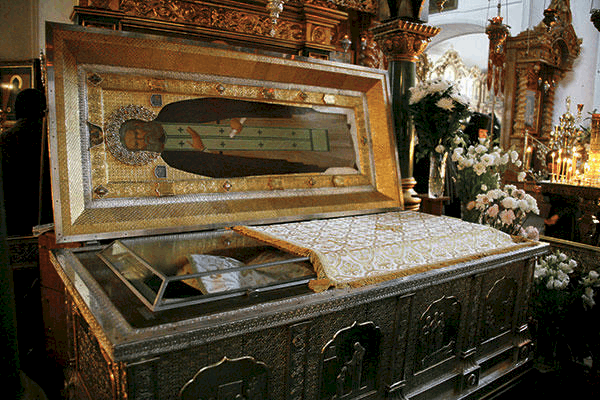 The relics of St Seraphim of Sarov.
Incorruption—the preservation of a body from ordinary decay—requires discernment. It is not, by itself, sufficient grounds for recognizing someone as a saint. Neither preservation nor decay, taken alone, tells us a person’s standing before God.
In recognizing a saint, the Church looks to the holiness of that person’s life, the witness of those who knew them, the prayerful veneration of the faithful and the signs of God’s action through their intercession. The preservation of a body may form part of that testimony, but it cannot replace it.
Our hope rests in Christ, whose Flesh did not see corruption (Acts 2:31) and whose Resurrection has conquered death. The saints share in His victory by grace, whether their earthly remains are preserved whole or survive only as a handful of bones.
7. Veneration calls us to faith in God
The distinction between veneration and worship is essential. The Seventh Ecumenical Council distinguished the honour shown to holy things from the worship that belongs to God alone.
We already understand something of this distinction in ordinary life. We honour our parents, cherish those we love and owe respect to every person made in God’s image. We can offer such honour wholeheartedly while reserving worship for God alone.
When Christians venerate relics, they honour the saint whose remains lie before them: someone alive in Christ, a dwelling place of His grace. They ask that saint to intercede with the Lord. Their hope rests in God.
Yet religious practice can be distorted. Relics have sometimes been treated as talismans, as though they possessed a power that could be used independently of God. The demand for such objects has also encouraged fraud. Claims about the identity and provenance of particular relics require discernment; reverence does not oblige us to accept every claim uncritically.
Such abuses betray the meaning of veneration. They discredit the deception, without disproving the existence of genuine relics or the miracles God works through them.
God is the source of every healing granted through relics. In approaching them, we turn towards Him in faith.
This helps put the outward circumstances into perspective. One person may travel to Bari to venerate the relics of St Nicholas; another may pray before a small particle of his relics in a parish church close to home. Someone may be able to kiss the shrine of St Sergius of Radonezh; someone else may have to stand at a distance. Nearness to God cannot be measured by the length of a pilgrimage or by whether we manage to reach the reliquary.
The Gospels show people approaching Christ in very different ways. The woman who had suffered from bleeding longed to touch even the hem of His garment (Matthew 9:20–22). The centurion whose servant was ill asked Him to speak the word, believing that He could heal without entering his house (Luke 7:6–7). Christ answered them both. In each case, what mattered was their trust in Him.
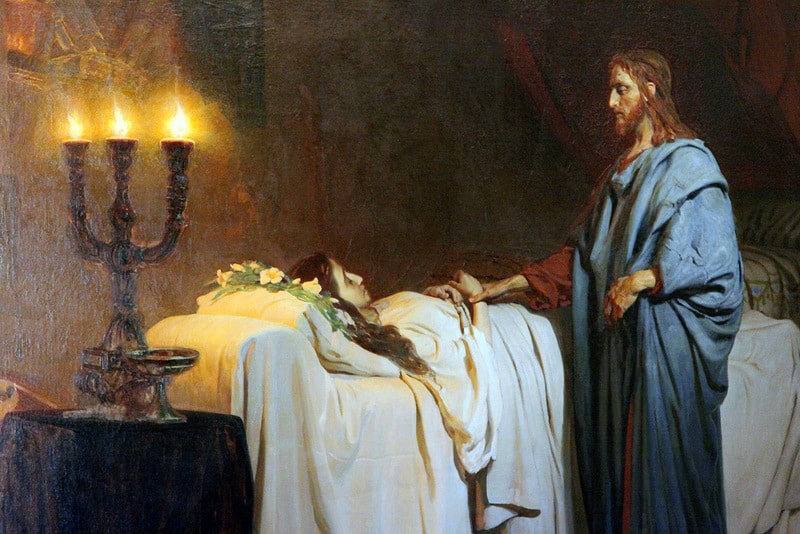 The Raising of Jairus’s Daughter, by Ilya Repin
If we place our confidence in a relic’s supposed “energy”, or imagine that hours of queuing and the act of touching a shrine must secure the result we want, we have lost sight of that trust. Faith does not give us control over God’s gifts. It brings us before Him in hope, ready to receive His mercy in the way He knows is best.
The veneration of relics gives concrete expression to what Christians profess: that the departed are alive in God; that Christ has opened the way into His Kingdom; and that His saving work embraces our bodies as well as our souls.
This is why the Church has treasured the remains of the saints from its earliest centuries. It honours them as temples of the Holy Spirit, through which God may continue to answer prayer. Our prayer involves our bodies as well as our thoughts. To stand beside a saint’s tomb, to bow, to touch the shrine and to speak a few words there can help us express a love and trust that words alone do not always convey.
The Resurrection gives these gestures their meaning. God will raise the dead, and the separation of soul and body will end. The saints, already alive in Him, will share in His glory in the fullness of their humanity.
Their relics, and the works of mercy God performs through them, offer us a foretaste of that promise. Before the remains of a saint, Christians look towards the life of the world to come.
Translated by the Catalogue of Good Deeds
Source: https://foma.ru/zachem-verujushhie-poklonjajutsja-mertvecam-otvechaem-na-vozmushhennyj-vopros-o-pochitanii-moshhej.html
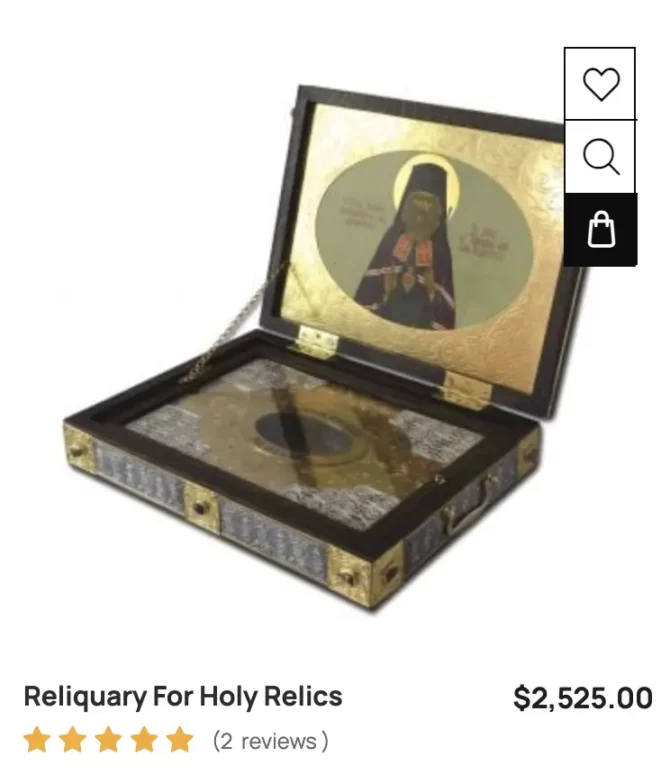
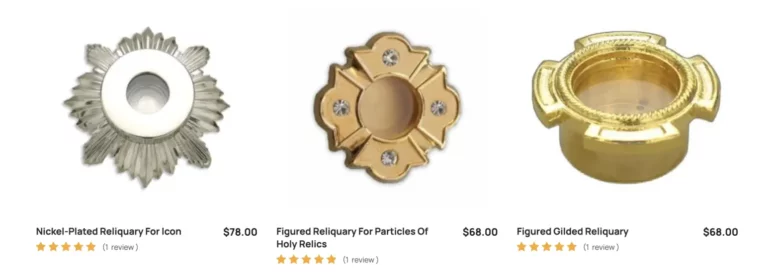
Explore Orthodox reliquaries and relic boxes made in our monastery workshops

Beautiful article. Full of evangelical content. Goes a long way to piercing the mysteries of Orthodox piety and faith.
Glory to God!!