

Many people today feel that they are living in “apocalyptic times”. News headlines speak of climate catastrophe, war, pandemics and economic collapse. The word apocalypse is used for everything from zombie films to stock market crashes. No wonder so many people hear it and instinctively think of fear, chaos and the end of the world.
Yet when the Church speaks of the Apocalypse, She means something very different. In the language of the New Testament, apokalypsis does not mean “total destruction”, but “unveiling” or “revelation”. The last book of the Bible is literally called “The Apocalypse of Jesus Christ” (Revelation 1:1) because it unveils Who He is and what the world looks like in the light of His victory.
From the perspective of the Orthodox Church, the “End” is not simply the point where everything stops. It is the moment when the curtain is finally drawn back and Christ is revealed openly as King and Bridegroom. The true meaning of apocalypse is not terror for its own sake, but the revelation of the Kingdom of God, the judgement of evil, and the beginning of a new creation in Him.
So, is “apocalypse” a “positive” word then?
For many modern people, “apocalypse” immediately suggests scenes of destruction. Popular culture has trained us to expect burning cities, collapsing planets and desperate survivors fighting for the last resources. In that setting, apocalypse is entirely negative: something to fear and avoid.
In the Christian tradition, however, the word has a much deeper and more hopeful meaning. The Apocalypse is not primarily about the end of the physical universe, but about the revelation of Jesus Christ in glory and the final unveiling of the truth. It is the moment when Christ, Who is already reigning at the right hand of the Father, is made manifest to all. For those who love Him, it is not a threat, but the fulfilment of the deepest longing.
At the same time, the Apocalypse is also a moment of judgement. When the light is switched on in a dark room, it reveals not only the beauty that was hidden but also the dirt and dust. In the same way, the coming of Christ exposes both the holiness and the sin that were previously concealed. This is why the Church speaks of the Last Judgement with both awe and hope: it is fearful for evil, yet joyful for those who repent and cling to Christ.
The last book of the Bible ends not with despair, but with a prayer of desire: “Even so, come, Lord Jesus” (Revelation 22:20). For the Church, the apocalypse is the final revelation of the Bridegroom, the completion of the Divine plan, and the beginning of the never-ending wedding feast of the Kingdom. In this sense, “apocalypse” is a profoundly positive word: it names the moment when Christ’s love and victory are fully revealed, and God is “all in all” (1 Corinthians 15:28).
Why is the Book of Revelation so hard to understand?
Many Christians, even devout ones, are wary of the Book of Revelation. They begin reading, encounter strange visions of beasts, trumpets, bowls and plagues, and quickly feel lost. Why is this book so difficult to understand?
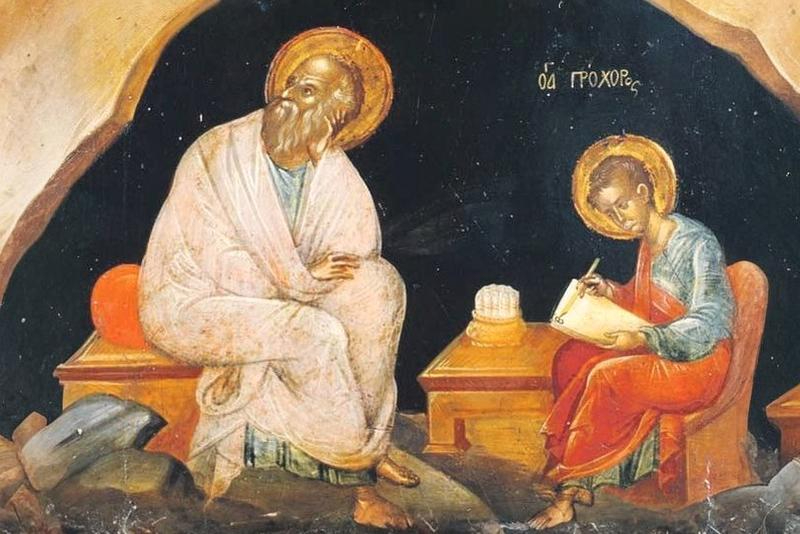
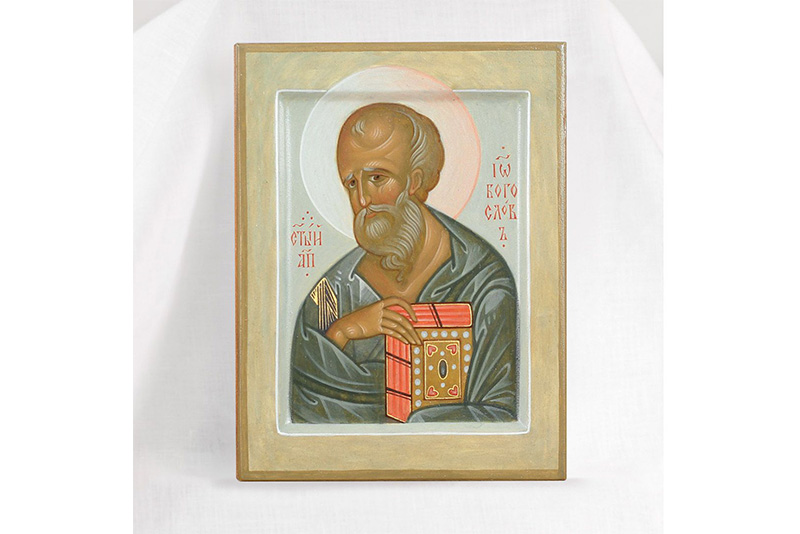
One important reason is that Revelation belongs to a particular biblical “genre” often called apocalyptic literature. This style is rich in symbols, numbers and images. It uses visions and dramatic scenes to express spiritual truths that cannot be captured by simple, everyday language. St. John, the author of the Apocalypse, did not invent these symbols from nowhere. He writes as someone grounded in the Old Testament. His visions echo the prophets Isaiah, Ezekiel and Daniel, the Exodus story, and the Psalms. To understand Revelation, we must constantly look back to these earlier Scriptures.
A second reason for confusion is a common mistake: many readers try to treat the book as a strict, detailed timetable of future events. They search for direct one-to-one connections between every symbol and a particular war, political leader or technological development. This approach easily leads to anxiety and endless speculation. In the Orthodox tradition, Revelation is not read as a series of newspaper headlines predicted in advance, but as a spiritual vision of the whole of history in the light of eternity. The same patterns of persecution, compromise, repentance and victory can be seen in many different ages, including our own.
For this reason, the Church urges us to read Revelation with humility and within Her living Tradition. We are not left to guess on our own. Holy Fathers such as St. Andrew of Caesarea have commented on this book, helping us to avoid extremes and errors. Above all, the Apocalypse is a book of worship: much of it shows the heavenly Liturgy, with angels and saints praising God. When we approach it not as a puzzle to solve, but as a call to repentance, faith and adoration, it becomes less terrifying and more life-giving.
What are the 7 signs of revelation?
People often search for “the 7 signs of Revelation”, hoping to find a simple list that explains the entire book. In reality, the Apocalypse does not offer one official list of seven “signs”. Instead, it is structured around several groups of seven: seven Churches, seven seals, seven trumpets, seven bowls. For the sake of clarity, we can speak about seven key visions that reveal the meaning of the book and help us understand the true meaning of apocalypse.
- The Seven Candlesticks: the Church on earth
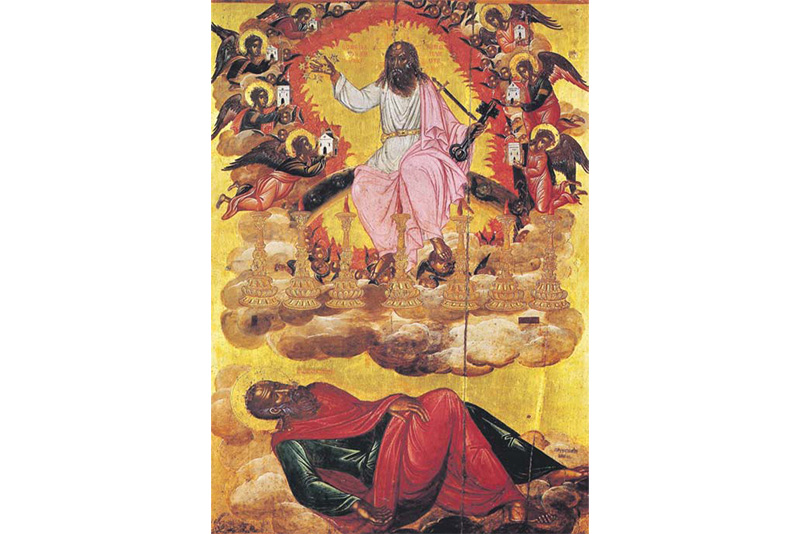
At the beginning of the book, Christ appears to St John in glory, walking among seven golden lampstands (Revelation 1–3). These represent seven historical Churches in Asia Minor, but also the entire Church in every age. Christ knows each community personally: He praises their faithfulness, warns against drifting into the moral and spiritual compromises of the surrounding culture, and calls them to repentance. The first “sign of Revelation” is that the Lord is present in the midst of His Church, not far away. - The Throne Room: God in control
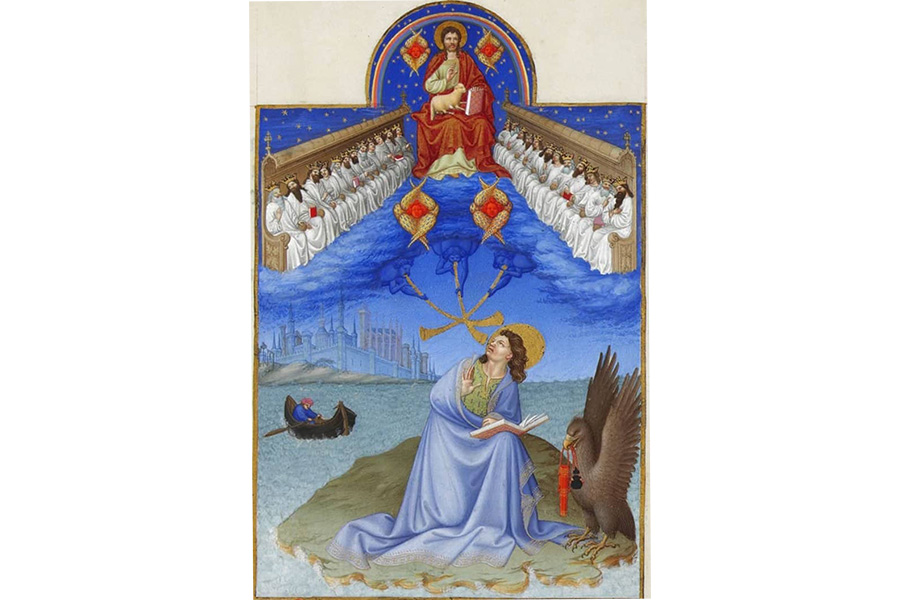
St John is then taken up to see a heavenly throne (Revelation 4–5). Around it stand angels and elders, singing without ceasing. In the hand of the One seated on the throne is a sealed scroll, which only the Lamb can open. This vision shows that, behind all the apparent chaos of history, there is a throne that does not move. God has not abandoned the world; He reigns. Our earthly worship in church is a participation in this heavenly Liturgy. - The Seven Seals: the suffering of history
As the Lamb opens the seals of the scroll (Revelation 6–8), war, famine, persecution and disaster appear. These are not merely predictions of one particular period, but a truthful picture of life in a fallen world. Human sin, injustice and rebellion against God bring suffering. Yet the seals are opened by the Lamb, which means that even in these dark events, God’s providence is still at work, calling the world to repentance. - The Woman and the Dragon: the spiritual battle
In Revelation 12 we meet a Woman “clothed with the sun”, pursued by a great red Dragon. This Woman has been understood as the people of God, and in a special way as the Mother of God and the Church. The Dragon is the devil, enraged by the coming of Christ into the world. This vision reveals that behind visible conflicts there is an invisible spiritual war. The faithful are not abandoned: God protects the Woman, even when the Dragon rages. - The Beasts: the corruption of power
From the sea and from the earth arise monstrous beasts (Revelation 13), which receive power from the Dragon. They represent political and religious authorities that become inhuman when they reject God and demand absolute loyalty. Every age has known such powers. Revelation warns us not to worship any earthly system, leader or ideology in place of God, no matter how impressive it may appear. - The Lamb: the Sacrifice that conquers
At the heart of all these visions stands “a Lamb as though it had been slain” (Revelation 5:6). The Lamb is Christ, Who was crucified and is risen. He conquers not by force, but by His self-emptying love on the Cross. The saints, too, overcome “by the blood of the Lamb and by the word of their testimony” (Revelation 12:11). The true meaning of apocalypse is revealed here: victory through the Cross, not through violence. - The New Jerusalem: the final restoration
The final vision of Revelation is not of annihilation, but of renewal (Revelation 21–22). St John sees “a new heaven and a new earth” and “the holy city, New Jerusalem, coming down out of heaven from God, prepared as a bride adorned for Her husband”. God dwells with His people; death, sorrow and pain are no more. This is the last and greatest “sign”: the ultimate purpose of history is communion, not destruction; a wedding feast, not a wasteland.
What are the four horsemen of the apocalypse?
Among the most famous images in the Book of Revelation are the four horsemen of the apocalypse. They appear as the first four of the seven seals are opened (Revelation 6:1–8) and have captured the imagination of believers and non-believers alike.
The first horseman rides a white horse and carries a bow. Interpretations differ, but he is often associated with conquering power or deceptive victory. The second, on a red horse, brings war and bloodshed, taking peace from the earth. The third rides a black horse and holds a pair of scales, pointing to famine, economic collapse and injustice. The fourth horseman rides a pale, sickly horse; his name is Death, and Hades follows with him, representing mortality, plague and the fragility of human life.
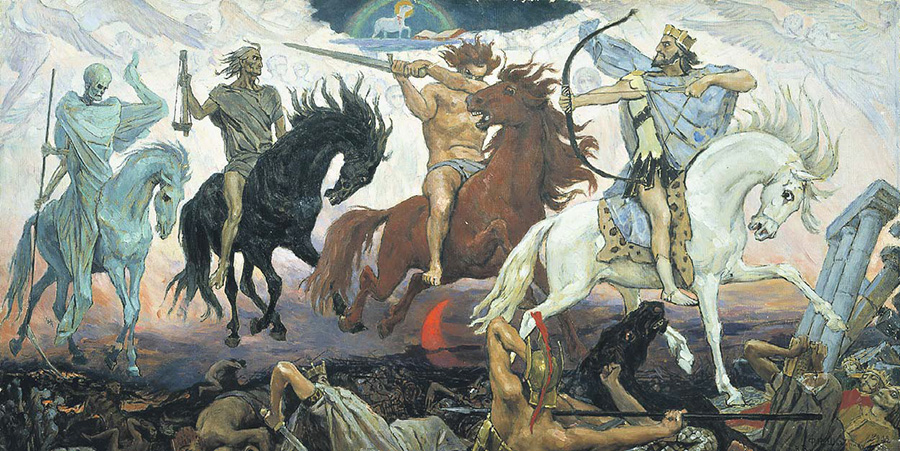
These horsemen are not simply four isolated events at the very end of history. They describe forces that we already see at work in the world: the lust for domination, the reality of war, the injustice of hunger and poverty, and the ever-present shadow of death. The Christian response is not to panic or to try to calculate exact dates, but to live in repentance and faith, taking refuge in Christ. He is the One Who opens the seals; nothing is outside His knowledge and permission. We are called to resist violence, to share with those in need, to care for the suffering and to place our hope in His Resurrection, which has already overcome death from within.
A word of hope
When we look past the frightening images and popular distortions, the true meaning of apocalypse is the unveiling of Christ and His Kingdom. The Book of Revelation shows us that history is not drifting without purpose. The Lamb has triumphed; evil will be judged; creation will be renewed. In every age of anxiety, Christians are invited to live not in fear, but in repentance, watchfulness and hope, praying with the Church: “Come, Lord Jesus.” Viewed through the light of faith, the Apocalypse is not a script for disaster, but the unveiling of Christ’s final victory and the promise that no darkness will have the last word.