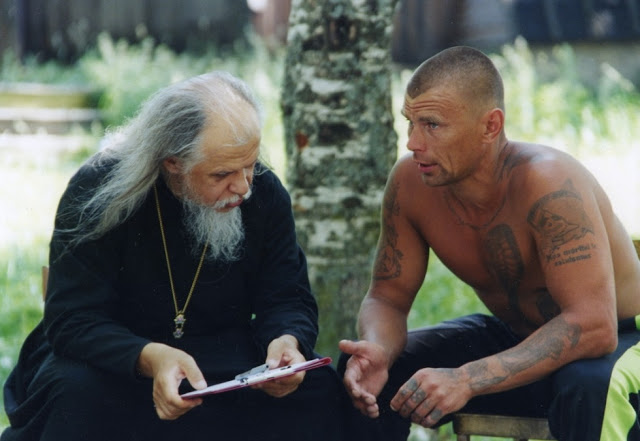




An article published some time ago by a Russian Orthodox priest, Fr. George Maximov, titled “The Biggest Mistake in Premarital Relations,” served as the inspiration for this reflection. The pastoral analysis it offers, while directed at a specific domestic audience, raises universal questions that resonate deeply in the West.
In the United States and Europe, living together before marriage is no longer a fringe choice; it is the statistical norm. The prevailing cultural wisdom suggests this is a pragmatic, necessary step—a “test-drive” for compatibility. In fact, a majority of Americans (between 50-65%) believe that cohabiting improves a couple’s chances of a successful marriage.
For Christians—be they Orthodox, Catholic, or Protestant—this creates a profound tension. Is the Church’s ancient teaching on chastity and marriage simply outdated, or does it contain a truth that our modern “pragmatism” has missed?
This is not an article intended to shame or condemn. It is a sincere attempt to explore this question, motivated by a desire to share a perspective that is both ancient and, as we will see, strikingly modern. It is a warning, offered in love, for those who are genuinely seeking a truth that leads to lasting joy, not temporary convenience.
The core of Fr. George’s argument, and the argument of the Church, is not just that cohabitation is a “sin,” but that it is a failed foundation for the very thing it claims to build. And today, Western sociology is beginning to prove that the ancient Patristic wisdom was right all along.
1. The “Test-Drive” Myth: What Western Sociology Is Discovering
For decades, sociologists have noted a “cohabitation effect”: a correlation between living together before marriage and a higher risk of divorce. For years, this was debated. Many argued it was a “selection effect”—meaning, the kinds of people who cohabited were simply less traditional and more prone to divorce anyway.
However, cutting-edge research has revealed a far more profound and specific danger.
The work of Dr. Scott Stanley and Dr. Galena Rhoades at the University of Denver has identified what they call the “pre-engagement cohabitation effect”. Their 2023 study, published by the Institute for Family Studies, is staggering. Analyzing marriages from 2010-2019, they found:
- Couples who lived together before getting engaged had a divorce rate of 34%.
- Couples who only moved in after engagement (or after marriage) had a divorce rate of 23%.
This means the “test-drive” group—those who cohabit before a formal commitment—are at a 48% higher risk of divorce.
The reason for this is a powerful concept they call “Sliding vs. Deciding”.
- Deciding: A couple makes a conscious, deliberate choice. They get engaged. They get married.
- Sliding: A couple “slides” into the next stage without a deliberate choice. Moving in together is the classic “slide.” It often happens not out of commitment, but for convenience or financial reasons.
The “slide” creates what sociologists call “inertia”. Once you share a lease, a pet, and a bed, breaking up becomes much harder. This inertia can “push” a couple into a marriage that they might not have chosen otherwise. The “test-drive” doesn’t help you filter out a bad match; it often traps you with one.
This sociological data serves as a stark, secular confirmation of a deep spiritual truth.
2. The Christian Projection: Why “Official” Marriage?
This brings us to a foundational question: Why does the Church insist on “official,” publicly registered marriage as the only projection of the union God blessed at creation?
The answer is that, from its very inception, marriage was never a private affair.
When God institutes marriage in Genesis, He says, “Therefore a man shall leave his father and his mother and cleave to his wife, and they shall become one flesh” (Gen. 2:24). In our modern, romantic-focused lens, we focus only on the “one flesh” part. But the first two actions are the prerequisites:
- “Leaving”: This was a public, social, and economic act. It meant publicly leaving one household to form a new one.
- “Cleaving” (or “being joined”): This is not just an emotion. The Hebrew word, dabaq, implies a formal, binding, permanent bond.
This public, binding act is what theology calls a Covenant, and it is profoundly different from a modern “contract”.
|
Covenant |
Contract |
|---|---|
|
Public & Witnessed |
Private Agreement |
|
Lifelong, Permanent |
Conditional, Temporary |
|
Based on a Vow/Oath |
Based on Mutual Benefit |
|
Secured by God & Community |
Secured by Law |
Cohabitation, at its very best, is a private contract. Marriage is a public covenant. When Christ attended the wedding at Cana, He wasn’t blessing a private arrangement; He was blessing a public wedding feast. His first miracle was to transform the “water” of a natural, social institution into the “wine” of a divine, sacramental reality.
3. “Honorable” vs. “Legal”: Cohabitation and Hebrews 13:4
This leads to the practical, modern question: What about forms of cohabitation that are legally recognized? Many Western European countries have registered partnerships or civil unions (like the French PACS) that grant most of the legal rights of marriage. If it’s registered, what’s the difference? And how does this square with the biblical command, “Let marriage be held in honor (timios) among all” (Heb. 13:4)?
The Greek word timios does not just mean “honorable”; it means “precious,” “costly,” “valuable”. The command is to treat marriage as a precious jewel, to distinguish it from what is common.
- Unregistered Cohabitation: This fails the test immediately. It is, by design, not public and not a binding covenant. It holds the “exit door” open.
- Registered Partnerships (PACS, etc.): This is the more subtle challenge. The key difference is their intent. These legal instruments were explicitly designed to be “marriage-lite”. Their primary feature is not permanence, but ease of dissolution. They are, by definition, dissolvable contracts, not lifelong covenants.
To “honor” marriage as timios (precious) means to protect its uniqueness. When the state, or even individuals, equate a “marriage-lite” contract with the lifelong, sacred Covenant, they are not honoring marriage. They are dishonoring it by treating the precious jewel and the common gravel as one and the same.
The state, by “legalizing” cohabitation as an equivalent to marriage, is not protecting the institution; it is actively diluting and destroying its timios—its precious, unique, and sacred public witness.
4. The Bright Line: Where is the Grin of Sin?
This brings us to the most vital question: Where, exactly, does the line between a sacred union and the sin of fornication lie? Is it in the heart (our personal intent) or in the institution (a piece of paper from the state or Church)?
The Orthodox Patristic tradition is unambiguously clear. This is not a gray area.
- St. Basil the Great (4th Century), in his 26th Canon, states it plainly: “Fornication is not marriage, and not even the beginning of marriage”.
- St. John Chrysostom (4th Century) is even more direct: “Fornication is not preparation for marriage, but a state opposite to it”.
Why such a hard line? Because for the Apostles and Church Fathers, marriage is not just a social contract. It is a “great mystery” (mysterion), an Icon of the union between Christ and His Church (Eph. 5:32).
An icon must be true. The union of Christ and the Church is:
- Public (He acknowledged His Bride before the world).
- Covenantal (Sealed with His own Blood).
- Sacrificial (He “gave Himself up for her”).
- Permanent (“I am with you always”).
Cohabitation is a false icon. It is a lie about God. It takes the physical act of “one flesh” and divorces it from the public, sacrificial, permanent covenant. It presents a false image of a “Christ” who “slides” into a relationship with His Church, “test-drives” her for convenience, and reserves the right to leave.
This is why it is a grave sin. It’s not about breaking a rule; it’s about distorting the very image of Christ’s love.
The line, therefore, is not “in the heart.” In Orthodox theology, this is a false dichotomy. We are a faith of Incarnation. A “faith in the heart” that refuses the outward act of Baptism is no faith at all. Likewise, a “love in the heart” that refuses the outward, public, covenantal act of Marriage is not agape (sacrificial love). It is something else.
5. Pastoral Wisdom: From Excuses to Truth
This brings us back to Fr. George’s pastoral insights, which so perfectly expose this gap between intention and action.
The “Perfume Tester” Analogy: Fr. George uses a powerful, if stark, analogy: in “testing” yourself, you become a “perfume tester”—something everyone tries, but no one wants to buy; they buy the sealed bottle. This may sound harsh, but it is precisely what the University of Denver sociologists found. The couple that “slides” into a “test” is 48% more likely to be “returned” (i.e., get divorced) than the couple that remains “sealed” until the public commitment.
The “It’s Just a Paper” Excuse: The most common excuse Fr. George hears is, “We have love. The stamp in a passport is just a piece of paper”. His pastoral reply is sharp and true: “If it’s ‘just a paper’ that means nothing, why are you so stubbornly refusing to get it? Your very refusal proves it does mean something. It means you are keeping your options open and that you see this person as a temporary variant”.
This exchange reveals the truth. The refusal of the “institution” is not proof of a superior “heart-love”; it is proof that the love is not yet covenantal.
The Bishop’s Test: Fr. George shares a final, profound pastoral story. A young couple, living together, came to a bishop, insisting, “We have such love! We can’t live without each other! We just can’t marry yet.” The wise bishop replied, “Excellent. Prove this great love. Live as brother and sister, without sexual relations, until you can marry.”
Fr. George notes, “They ran away from each other within a week.”
What they had was not love. It was what the Fathers call “lecherous madness”—an addiction to a passion that they mistook for love. When the “drug” of sin was removed, the relationship collapsed.
This is the ultimate test. True love, the kind a marriage is built on, is not tested by sexual compatibility. It is tested by sacrifice, patience, and chastity.
The House Built Upon the Rock
The world, in its supposed wisdom, tells us to “slide”. It offers a pragmatic path that, according to the best modern data, is a high-risk trap. It encourages a “test-drive” that is statistically more likely to end in a crash.
The Church, in Her ancient wisdom, calls us to “decide”. She calls us to a path that seems “hard” but is, in fact, the only one built on a rock-solid foundation.
The choice is not between an old rule and a new freedom. It is the choice between an “inertia” that leads to instability and an “honor” that builds a precious, lifelong Covenant. It is the choice between the “water” of a temporary arrangement and the “wine” of a sacramental, grace-filled life.