


How the Mother of God Turned a Woman Back from the Edge
In the first year of my priesthood—this was in 1991—I regarded the fourth Saturday of Great Lent rather simply. It seemed to me a pious tradition, established by the ancient Fathers: a day on which we turn to the Mother of God and ask Her help to meet the Resurrection of Christ worthily.
And how could it be otherwise? Is She not “the fervent helper of the Christian race,” “the purification of the whole world,” “the opening of the gates of paradise”? We call upon Her everywhere—at home, on the road, in every need—and in church we honour Her at every service.
To support this understanding, I would even recall an incident from my own parish. A certain local “theologian” once declared aloud that we ought not to say, “Most Holy Mother of God, save us,” since God alone saves.
And then our quiet, almost unnoticed church helper—who rarely spoke at all—answered him:
“Tell me, my dear—do you remember when you were a little boy and a goose chased you? You ran and hid behind your mother’s skirt, crying, ‘Mum, save me!’ I remember—you were a red-haired one. That is how we turn to Her: we run to Her and cry, ‘Mother of God, help us.’”
I was quite certain, then, that I understood the meaning of this Lenten Saturday, and of the whole day of praise offered to the Mother of God.
That certainty was gently undone in the course of a single conversation.
It happened the following year, just before Great Lent. I brought five of my parishioners to Optina Pustyn Monastery—the monastery where I myself had spent nearly a year, and which had played a decisive part in my becoming a priest.
After the evening service and supper, we were invited by the monastery’s dean, Abbot Melchisedek, to speak together. He asked about our life, our parish—and then, quite unexpectedly, he turned to my parishioners and said:
“Tell me—how has the Mother of God helped you?”
I was taken aback. What could they possibly say? I even feared the conversation would turn into a monologue.
I was mistaken.
One after another, they began to speak—almost interrupting each other.
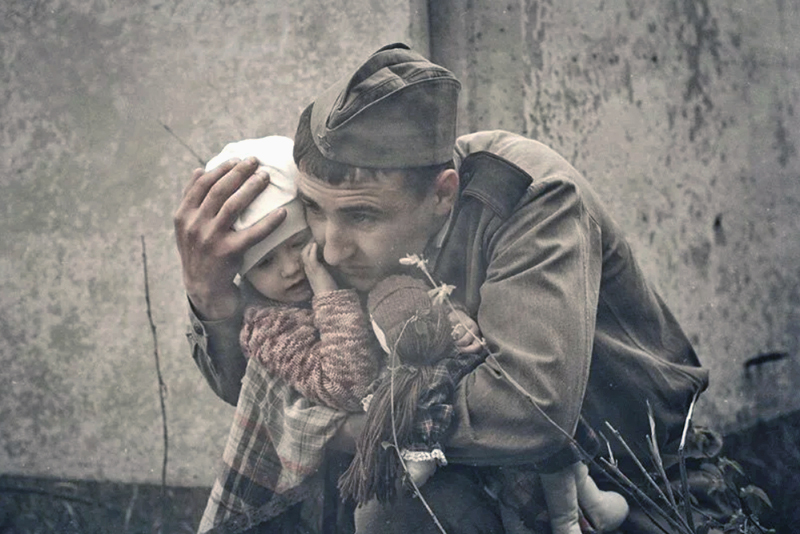
One woman told us how, after losing two loved ones in her still young family, she could no longer bear the grief. In despair, she ran to the river, determined to end her life and put an end to her suffering.
She had already decided. She stood at the edge—one more moment and she would have stepped forward.
But suddenly someone took her by the shoulder and said:
“Who will you leave your children with?”
She turned back.
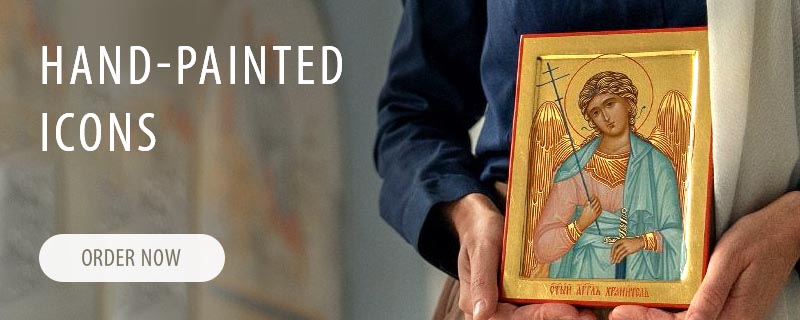
When she returned home, she recognised that woman—in an icon of the Mother of God. It was a simple icon, not especially remarkable. But it was She who had stopped her.
Another parishioner spoke of her son. After a mining accident, he had lost his leg and fallen into heavy drinking. She prayed to the Most Pure Mother of God for him, and was advised to go on pilgrimage and ask for Her help.
She went—and the Mother of God helped.
Her son came to his senses, found work he could manage, and his family was preserved.
Then old Ivan spoke—may his memory be eternal—a Cossack from a nearby village. At the last moment, he had asked to join our pilgrimage.
He told us how, during the war, he always carried with him an icon of the Mother of God of the Don, fixing it before him in the trench.
“If it were not for Her,” he said simply, “I would not be speaking with you now.”
There were other stories. And the last one brought me to tears.
It turned out that, in 1990, these same parishioners had travelled several times to the diocesan authorities, asking for a priest for their newly forming parish. Each time they were refused—not because anyone was unwilling, but because there were simply no priests. In those years, there were only two seminaries in the entire Soviet Union, and more than two thousand parishes had opened.
There was no one to send.
So they resolved to go to a functioning church in the city and serve several molebens to the Mother of God, asking Her to send them a priest.
They prayed.
And three weeks after my ordination—having barely begun to learn what priestly service meant—I was sent to them.
Only then did I begin to understand what this day of praise truly is.
And why the Church sings:
Rejoice, You through whom Christ’s miracles begin;
rejoice, You who are the fulfilment of His commandments.
Translated by the Catalogue of Good Deeds
Source: https://foma.ru/a-detishek-na-kogo-ostavish-kak-bogorodicza-ostanovila-zhenshhinu-na-krayu-gibeli.html