




The name of Judas has become a byword. Even those who have never read the Gospel know who he is: the one who betrayed Jesus Christ for thirty pieces of silver—and ended his life in despair.
Yet there was another apostle who also failed the Saviour—Peter, who denied Him. Peter remained alive; more than that, the Lord forgave him and made him one of the foremost Apostles.
What, then, is the essential difference between these two disciples? Could Judas also have been forgiven?
He could have—and perhaps he even knew it.
After all, he must have heard how Peter once asked Christ: “Lord, how often shall my brother sin against me, and I forgive him? Up to seven times?” And he heard the answer: “I do not say to you, up to seven times, but up to seventy times seven” (Matt. 18:21–22)—that is, without limit.
For three years Judas had been with Jesus. He shared in the life of the apostles, witnessed the miracles, listened to the parables and teachings… Yet after committing his betrayal, he did not allow himself even to think that the Lord might forgive him.
Why?
What the Betrayal Was
Let us first recall what exactly Judas did.
A few days after the Lord’s solemn entry into Jerusalem, Jesus told His disciples: “You know that after two days is the Passover, and the Son of Man will be delivered up to be crucified” (Matt. 26:2). At that very time, the chief priests and elders had gathered to decide how to put Him to death.
Judas came to them of his own accord and asked: “What will you give me if I deliver Him to you?” They agreed on thirty pieces of silver (Matt. 26:15).
Soon an opportunity arose. After the Mystical Supper, Christ went with His disciples to the Garden of Gethsemane. Judas led a band of soldiers there and gave them a sign: “Whomever I kiss, He is the one; seize Him.”
And immediately he went up to Jesus and said, “Greetings, Rabbi!” and kissed Him.
Jesus said to him: “Friend, why have you come?” (Matt. 26:48–50)
In the Gospel of Luke, the moment is even more piercing:
“Judas, are you betraying the Son of Man with a kiss?” (Luke 22:48)
Christ knew all that was happening. Judas deceived no one.
How Judas Came to This
Judas’ betrayal was not sudden—it was deliberate.
He had already arranged everything in advance. And yet Christ gave him more than one chance to turn back. At the Mystical Supper, He said plainly: “Truly I say to you, one of you will betray Me” (Matt. 26:21). He even warned him: “It would have been better for that man if he had not been born” (Matt. 26:24).

The Betrayal of Judas. Ivan Aivazovsky
Still, Judas did not stop. When Christ said to him, “What you are going to do, do quickly” (John 13:27), this was, as it were, a final moment given for repentance. But Judas went out—and carried out what he had resolved to do.
What led him to such hardness of heart?
The Gospel gives a simple and sobering detail: Judas was a thief. He kept the common purse and would take from what was put into it (John 12:6). The love of money had taken root in him.
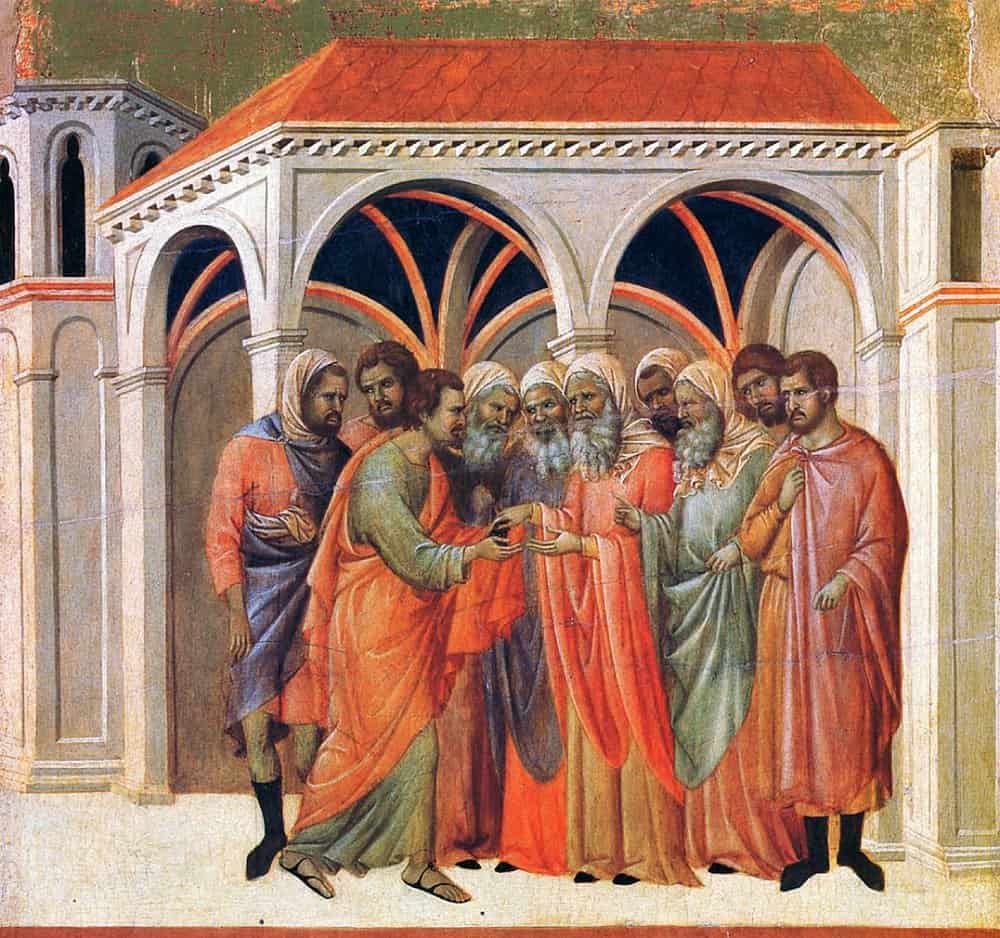
Pact of Judas. Duccio di Buoninsegna
Using this passion, as Blessed Theophylact of Ohrid explains, the devil gradually gained power over Judas. This passion distanced him from Christ and from the other disciples, breeding secrecy and mistrust.
In the end, he became deaf to every call to repentance.
Most terrible of all, this final turning away happened during the Mystical Supper itself, when Judas partook of the same bread as the other apostles. The Gospel says: “After the morsel, Satan entered into him” (John 13:27).
Did Judas Repent?
The Gospel tells us that he did—yet not in the way that leads to life.
Judas came to the temple and said: “I have sinned by betraying innocent blood” (Matt. 27:4). He threw down the thirty pieces of silver.
His conscience had awakened. As Saint John Chrysostom explains, Judas was not utterly hardened—he understood that he had committed a grievous sin. But this awareness did not lead him to God.
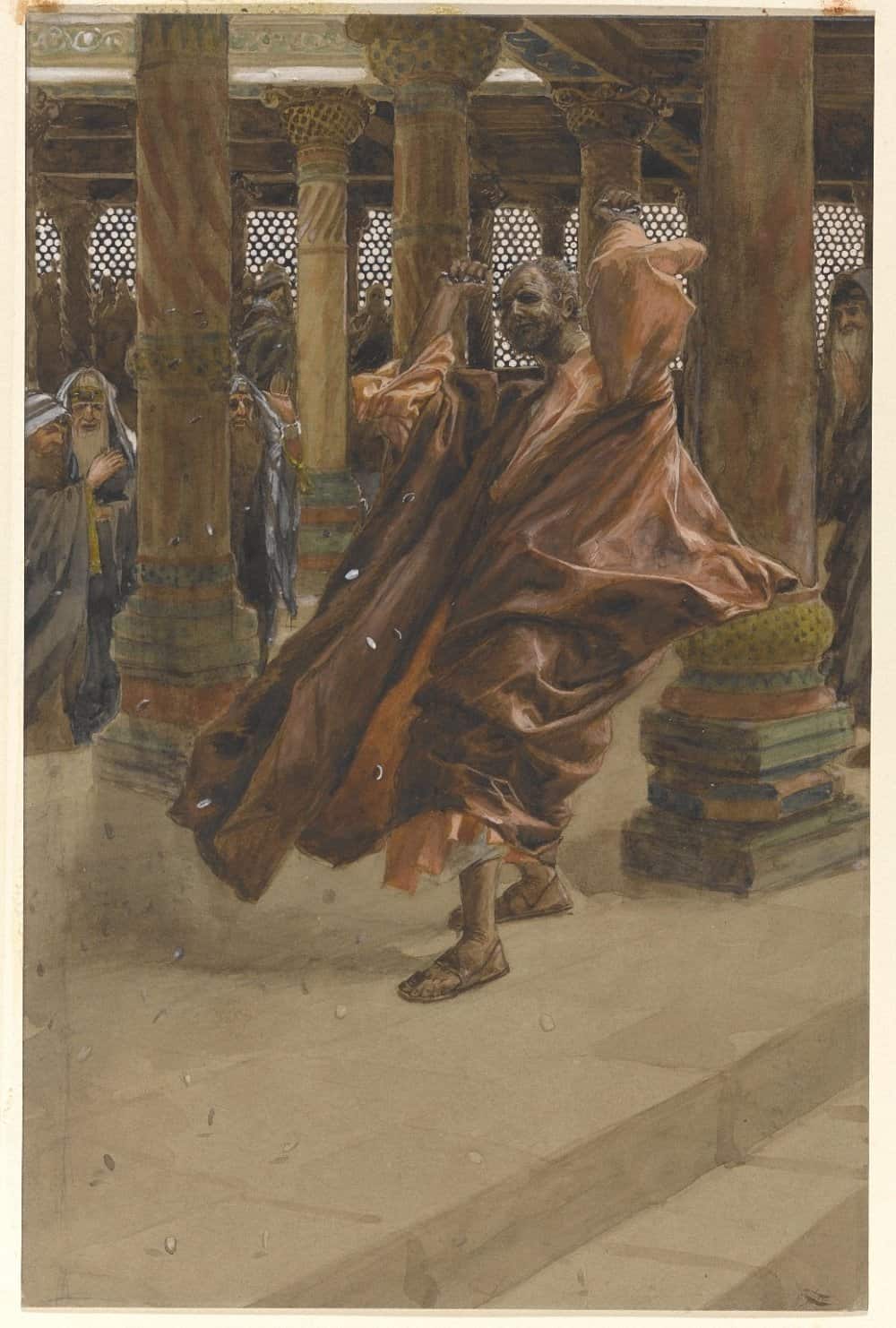
Judas Returns the Money (Judas rend l’argent) – James Tissot
Such is always the way of sin: first it blinds a person, and then, when there seems no way back, it begins to torment him with the awareness of guilt.
Judas felt remorse—but he did not truly repent.
He remained alone, face to face with himself and with the stern demands of the law. To ask forgiveness from Christ now seemed impossible. He had followed the Lord for three years, yet it was as though he had not heard a single word about mercy, repentance, or the coming Resurrection.
He turned not to God, but inward—towards himself.
As Saint Justin Popović writes, “to repent before oneself is not repentance; for a man cannot free himself from sin, nor forgive himself. This authority belongs to God alone.”
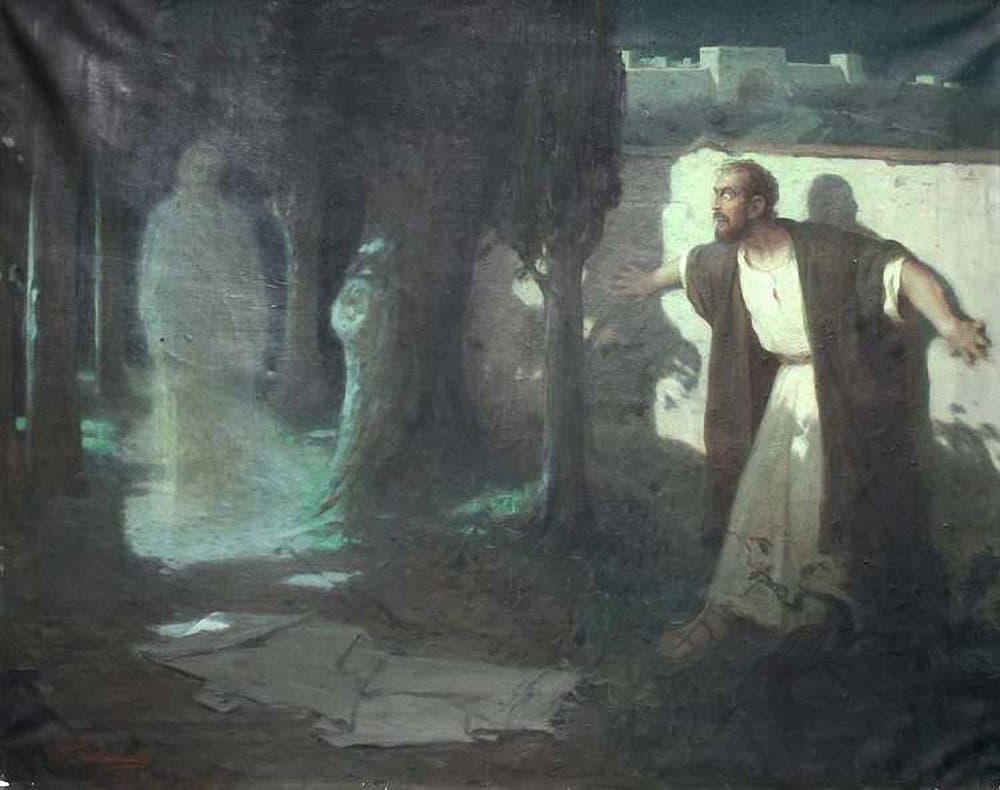
Jesus Appearing to Judas. Unknown artist
A State Without Hope
In this way, even while still alive, Judas entered into a state akin to hell—a condition of utter isolation and despair.
Burdened and suffocated by the awareness of his guilt, he found himself without hope, as though in a space without air. Is it not striking that he ended his life by hanging?
Could it have been otherwise?
Yes. And this becomes clear when we turn to the story of Peter.
Peter: Weakness and Return
When Christ was arrested, Peter followed Him at a distance and entered the courtyard of the high priest. He did not know what to do, yet he could not leave his Teacher.
There, three times, he denied Him.
At that moment the rooster crowed. And Peter remembered the Lord’s words: “Before the rooster crows, you will deny Me three times” (Matt. 26:34).
He went out—and wept bitterly.

Peter’s denial. Carl Bloch
Peter’s fall was not premeditated. It came from sudden fear and human weakness. Only hours before, he had declared: “Even if I must die with You, I will not deny You” (Matt. 26:35). He loved Christ sincerely—and did not cease to love Him, even in his fall.
As Saint John Chrysostom explains, the Lord permitted this moment of weakness so that Peter would no longer rely on himself.
But the crucial thing is this: Peter did not remain in despair.
He wept—and he returned.
He went back to the other disciples. What else could he do? Christ had been taken away, yet Peter still had nowhere else to go. Once he had said: “Lord, to whom shall we go? You have the words of eternal life” (John 6:68). And even now, that remained true.
After the Resurrection, when Christ appeared to the disciples by the sea, Peter was the first to throw himself into the water to reach Him.
And the Lord restored him.
Three times Peter had denied Him—and three times Christ asked: “Do you love Me?” (John 21:15–17).
And Peter answered with the only thing he had left:
“Lord, You know that I love You.”
Remorse and Repentance
No matter how great Judas’ sin was, true repentance remained possible for him.
But Peter, having repented, hastened to return—to Christ, and to the community of those who belonged to Him. Together with them, he encountered the risen Lord.

St. Peter Penitent. Guido Reni
Judas, on the other hand, withdrew into himself. Having lost trust and fallen into despair, he took his own life—cutting himself off from his final hope.
What Does This Mean for Us?
The fearful words of Christ—“It would have been better for that man if he had not been born” (Matt. 26:24)—were fulfilled in Judas. Yet they need not have been.
We remember how the prophet Jonah proclaimed the destruction of Nineveh—yet the people repented, changed their lives, and the Lord showed mercy.
Judas felt remorse, but he did not repent. He lacked love—and faith: love for Christ, and faith in Christ as God.
Peter, by contrast, loved Christ sincerely. He fell through weakness, but he repented, returned, and was transformed. From that time on, he remained faithful to Christ even unto death, becoming a fearless preacher of the Gospel and a foundation stone of the Church.
As the Lord said to him:
“You are Peter, and on this rock I will build My Church, and the gates of hell shall not prevail against it” (Matt. 16:18).
In the end, the difference between Judas and Peter lies not in the gravity of their fall, but in this: one turned inward in despair, while the other returned to Christ in hope.
Translated by the Catalogue of Good Deeds
Source: https://foma.ru/mog-li-iuda-poluchit-proshhenie-kak-petr-kotoryj-otreksja.html




What are the boundaries ( are there any?) of the Mercy of the Father? Irrespective of imperfect repentance, would the Lord be thwarted? What does “ finally” mean… what awful but also practical fear the legacy of Judas urges upon the Church.
Thank you for this fascinating article about the guilt and shame of Judas Iscariot and how it differs from the betrayal of Simon Peter.
You have helped to clarify things for me.
I have been intrigued by the Judas figure…