




Few phrases are more fashionable today than “love yourself.” We encounter it everywhere—in books, podcasts, social media posts, and countless well-meant pieces of advice. Still, these words leave many believers feeling a subtle sense of hesitation. Do they belong to the Gospel’s vision of man, or do they point somewhere else entirely?
The question is not as simple as it first appears. It touches on a deeper divergence between the Christian understanding of the human person and many modern ways of thinking about happiness, fulfilment, and inner peace.
At first glance, Scripture seems to say very little about “self-love” in the sense in which the phrase is commonly used today. Christ commands us to love God with all our heart, soul, mind, and strength, and to love our neighbour as ourselves. Yet He does not set before us a separate commandment to cultivate love for ourselves.
Some have therefore concluded that the commandment to “love your neighbour as yourself” implies a prior task: learning to love oneself properly. The reasoning sounds persuasive, but it raises a question—does Christ actually present it in this way?
When the Lord speaks of loving our neighbour as ourselves, He is pointing to something already present in human nature. Most people instinctively seek their own good. We protect ourselves from harm, care for our needs, and pursue what we believe will bring us life. Christ takes this natural movement and measures our love for others by it.
A similar teaching appears elsewhere in the Gospel: “Whatever you wish that others would do to you, do also to them” (Matthew 7:12). The emphasis is not on cultivating self-regard first, but on extending outward the care and attention we already habitually give to ourselves.
Yet this leaves a deeper question open. If Christianity does not centre on “self-love” as such, how are we to understand our own worth before God?
To answer this, we must begin not with ourselves, but with God.
Christianity looks at every human person from a different horizon than that of contemporary culture. Our value does not rest on achievement, appearance, social position, or inner confidence. It rests on something deeper and more unshakable.
Man is created in the image and likeness of God. This is not a poetic metaphor, but a statement about the very structure of human existence. We are not accidental formations of matter or passing arrangements of desire. We are called into being by God, and capable of communion with Him.
The Gospel reveals this truth in its fullest depth. God does not merely create man and leave him to himself. He enters into human life. Christ assumes our nature, suffers, dies, and rises again for the life of the world. Every human person is therefore held within a love that precedes all awareness and surpasses all measure.
From this perspective, it becomes impossible to regard oneself as worthless in an absolute sense. To do so would be to forget what God has spoken and done concerning man. We bear His image. We are known to Him. We are not abandoned.
And yet the Gospel does not stop at declaring our dignity. It also reveals our calling.
We are not created merely to remain as we are, nor simply to affirm ourselves as we currently find ourselves. We are called into communion with God, into transformation, into a life that becomes more fully transparent to His presence.
This is where the Christian vision quietly parts ways with many contemporary assumptions.
Modern speech about self-acceptance often treats it as the goal: a point at which a person finally makes peace with himself as he is. Christianity, however, understands the recognition of our God-given worth not as a conclusion, but as a beginning.
Because God loves us, we do not fall into despair.
Because God loves us, we are not left unchanged.
At this point, a question naturally arises.
If God loves us and calls us into communion with Himself, why does Christianity speak so insistently about repentance?
In everyday understanding, repentance is often associated with shame or inner reproach. It can appear as a turning away from oneself, a fixation on failure, or a refusal to accept oneself as one is.
But in the life of the Church, repentance has a very different meaning.
Repentance begins not with self-rejection, but with awakening.
A person does not repent because he has ceased to value his life. He repents because he has begun to glimpse that his life is greater than the way he has been living it. Sin is not only wrongdoing; it is whatever narrows the heart and obscures the image of God within us.
In this sense, repentance is not despair, but movement. It is the first step of return.
A person who believes himself to be worthless has little strength to change. Despair immobilises. But a person who knows—even dimly—that he is loved by God can begin to face himself honestly without fear.
For this reason, repentance is not opposed to human dignity. It flows from it. We struggle against sin precisely because our life matters. We seek healing because we believe healing is possible.
The lives of the saints show this pattern repeatedly. Some turned to God from lives marked by violence or pride; others from lives shaped by passion or unbelief. Yet in every case, repentance is not presented as self-destruction, but as return—return to life, return to truth, return to God.
The Lord does not reduce a person to his failures. He does not ignore sin, but neither does He allow sin to become the final definition of the person. He sees not only what we are, but what we may become in Him.
Guilt looks backwards and remains there.
Repentance looks backwards only long enough to turn and begin walking forward.
Christian self-understanding therefore holds together two truths that are often separated.
We are deeply valued by God.
And we are called to change.
From here, questions naturally arise concerning everyday life.
How are we to live this out in practice? How do we respond to difficult relationships, injustice, or demands placed upon us by others? Where is the boundary between patience and passivity, between forgiveness and enabling harm?
Christianity does not answer these questions with fixed formulas. The same outward action may be life-giving in one situation and harmful in another. What matters is not only what is done, but the spirit in which it is done.
For this reason, the Church has always insisted on discernment: prayer, guidance, humility, and honest attention to the particular reality of each person’s life.
One person remains silent out of patience; another out of fear. One forgives out of love; another out of weakness. One endures hardship as a form of offering; another as a form of avoidance. The outward form may be similar, yet the inner reality differs profoundly.
Christian life is therefore neither a pursuit of suffering for its own sake, nor a pursuit of comfort as the highest good.
The question is not simply whether something is difficult or easy, painful or pleasant. The deeper question is whether it leads us towards greater love, truthfulness, freedom from self-centredness, and communion with God.
At times, love will require endurance. At times, it will require firmness. At times, it will require withdrawal. And at times, it will require patient perseverance in places where escape might seem easier.
The saints do not follow identical paths. Some remain within trials; others step away from them. What unites them is not external similarity, but inner orientation toward Christ.
So what, finally, does it mean to love oneself as a Christian?
It does not mean placing oneself at the centre of life. Nor does it mean affirming every thought or impulse as good. And it certainly does not mean living in constant self-satisfaction.
But neither does it mean contempt for oneself, or a refusal to acknowledge the goodness of being alive.
Christian self-love begins with gratitude.
Gratitude that life is given.
Gratitude that we are known by God.
Gratitude that Christ has entered into our human condition and opened a path of healing.
From this gratitude arises a quiet reverence for one’s own soul—not as something to be indulged, but as something entrusted.
We care for it because it is not our possession alone. We repent because we believe it can be healed. We struggle because we believe transformation is real. We seek holiness not as self-improvement, but as participation in life with God.
And so the Christian path can appear paradoxical.
A person may forgive where others would insist on retaliation. He may endure where others would leave. He may renounce comfort where others would choose security. Not because he despises himself, but because he believes his life has a meaning that reaches beyond comfort alone.
Yet none of these things arise from self-hatred.
They arise from hope.
The deepest question is not simply whether we feel at peace with ourselves, but whether we are willing to see our lives in the light of God’s calling.
The Gospel teaches that every human life possesses eternal significance. God not only accepts us where we are; He calls us onward. He opens before us a path that leads from brokenness to healing, from fear to freedom, from selfishness to love, from sin to holiness.
Perhaps this is where the deepest difference lies.
Much of the modern conversation about self-love treats acceptance as the destination. The goal is to arrive at a place where one can finally say, “This is who I am, and I am at peace with it.”
Christianity sees something beyond that horizon.
It teaches us to receive our life with gratitude, not because we have already become everything we ought to be, but because God has not finished His work in us.
To recognize our worth in His eyes is not the end of the journey.
It is the moment the journey truly begins.
It is the first step on the narrow path that leads, by God’s grace, to the person God created us to be.
Translated by the Catalogue of Good Deeds
Source: https://foma.ru/chto-takoe-ljubit-sebja-i-s-chem-jeto-edjat.html.
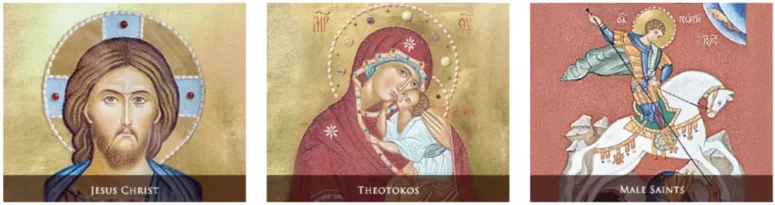
Our monastery masters create unique, never-fading semiprecious stone icons, a true treasure of sacred art.




Amen.
Beautiful and very helpful, thank you.
Wonderful encouragement and correct focus. Thank you! 🙏