



What the Fourth Sunday of Great Lent Reveals to Us
On the fourth Sunday of Great Lent, the Orthodox Church commemorates Saint John of the Ladder. Though he lived many centuries ago, his teaching continues to guide the Church’s understanding of the spiritual life. The focus of his life and writings remains as relevant today as it was in his own time.
The details of his life are simple. Born in Constantinople, he was well-educated before entering the monastic life at the age of sixteen on Mount Sinai. There, he lived in obedience to his spiritual father, Abba Martyrius. After the elder’s death, Saint John withdrew into solitude, and, only after many years, was called to serve as abbot of the Monastery of Saint Catherine on Sinai. His leadership was so spiritually fruitful that even in his lifetime, he earned the title of “the new Moses.”
Saint John’s life was one of prayer and asceticism. Before his blessed repose, he once again retreated into the desert, where he peacefully passed into the Lord’s hands. The precise year of his death remains uncertain, but it is believed to have occurred sometime in the sixth or seventh century.
Though no relics of the saint remain, his memory endures—and what a rich memory it is.
The Church’s observance of this saint on the fourth Sunday of Great Lent came about gradually, only being established in the fourteenth century. This late recognition speaks volumes—his renown as a great ascetic and spiritual teacher had not diminished, and his witness to the faithful remains as powerful as ever. This day was purposefully placed on a Sunday, allowing the Church to honor him with the full Divine Liturgy—something that would not have been possible had his feast fallen on a weekday during Lent. In this way, Saint John’s commemoration is given special emphasis within the Lenten season.
One detail in his life, recorded in the Church’s liturgical tradition, stands out. Saint John was not merely an extraordinary ascetic—he exemplified moderation even in his asceticism. He did not impose excessive fasts upon himself, but instead humbly adhered to the Church’s rule, eating only what was permitted, yet with temperance. He did not completely reject sleep (unlike some other ascetics, such as Saint Silouan the Athonite, who remained awake at all times), but slept only enough to maintain both physical health and mental clarity.
“His whole life was one of continuous prayer and immeasurable love for God,” the Church tells us.
This, perhaps, is the secret behind Saint John’s lasting influence. It is also what every Christian is called to: unceasing prayer and love for God. This is the essence of the Great Lenten discipline—not merely restricting food (which can, in fact, be both delicious and nourishing), but learning to humble oneself in obedience to the Church’s wisdom. The discipline of Lent teaches us to pray earnestly and to give our lives fully to God.
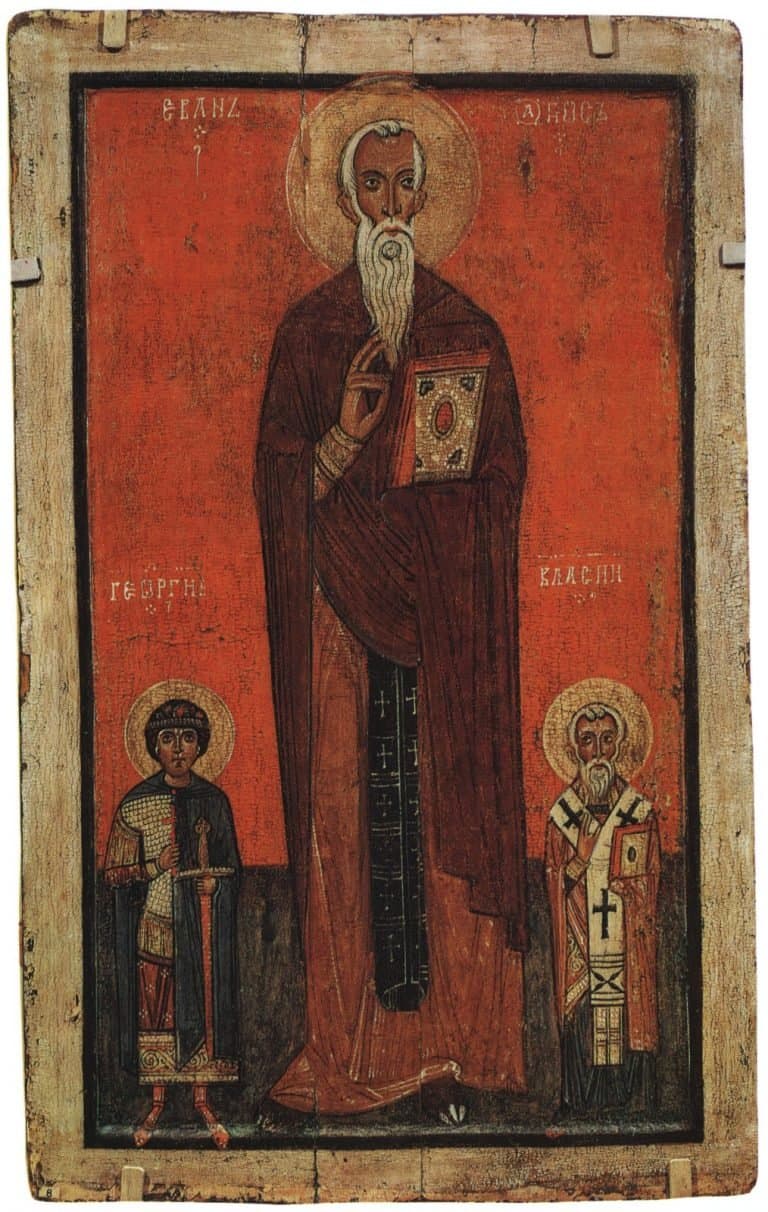
“John Climacus, George and Blasius” Second half of the 13th century, Novgorod
The Ladder of Priorities
Saint John’s greatest legacy, of course, is his work The Ladder of Divine Ascent. It is sometimes described as a classic of spiritual literature—but in truth it is not a monument to be admired. It is a guide to be followed.
This is evident even in the Church’s practice. It is the only non-biblical, non-liturgical text appointed to be read during the services. This alone suggests that it is not meant for monks alone, but for all who seek to live a Christian life.
The Ladder describes thirty steps of ascent to God: a gradual freeing from the passions and a growth in virtue. Yet what is striking is how it begins. The first steps do not concern obvious moral failings such as lying or pride, nor even familiar ascetic struggles like overeating or sloth. Instead, they speak of something more radical: a turning away from worldly attachments, a loosening of one’s hold on everything that seems central to earthly life.
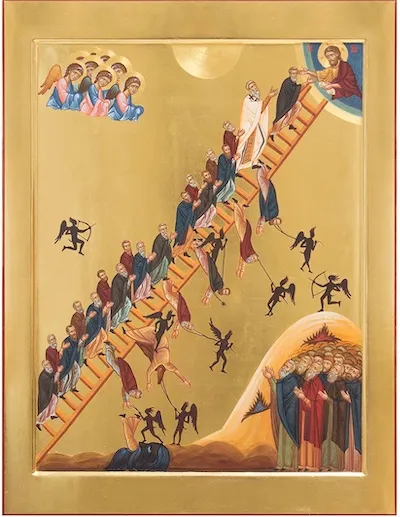
Discover hand-written non-fading icon of the Ladder of Divine Ascent
At first glance, this language sounds unmistakably monastic—detachment, renunciation, leaving behind what binds us to the world. And yet, if we look more closely, we see that Saint John is pointing to something universal.
The beginning of the spiritual life is this: to recognize that we belong not only to this passing world, but to eternity. It is to turn inward, to attend to one’s relationship with God, and to place Him first.
Saint Augustine expressed it simply: “If God is first, everything else falls into its proper place.” The Ladder begins precisely here—with the call to order one’s life accordingly.
This does not mean rejecting our responsibilities or relationships. A superficial reading might suggest that, but the Gospel itself speaks in the same language of priority. A man leaves his father and mother and cleaves to his wife—not because his parents cease to matter, but because a new center is established.
So too in the spiritual life. Love for God does not abolish other loves—it orders them. Service to God does not negate human bonds—it gives them their true place.
And it is precisely here that the experience of monastic life becomes especially illuminating.
Recognizing the Monk Within
This leads us to an important question: What is a monk? And how does he differ from a layperson?
Is it simply that a monk doesn’t marry? But every married person once lived outside of marriage. Is it because a monk prays more? Yet all Christians are called to unceasing prayer.
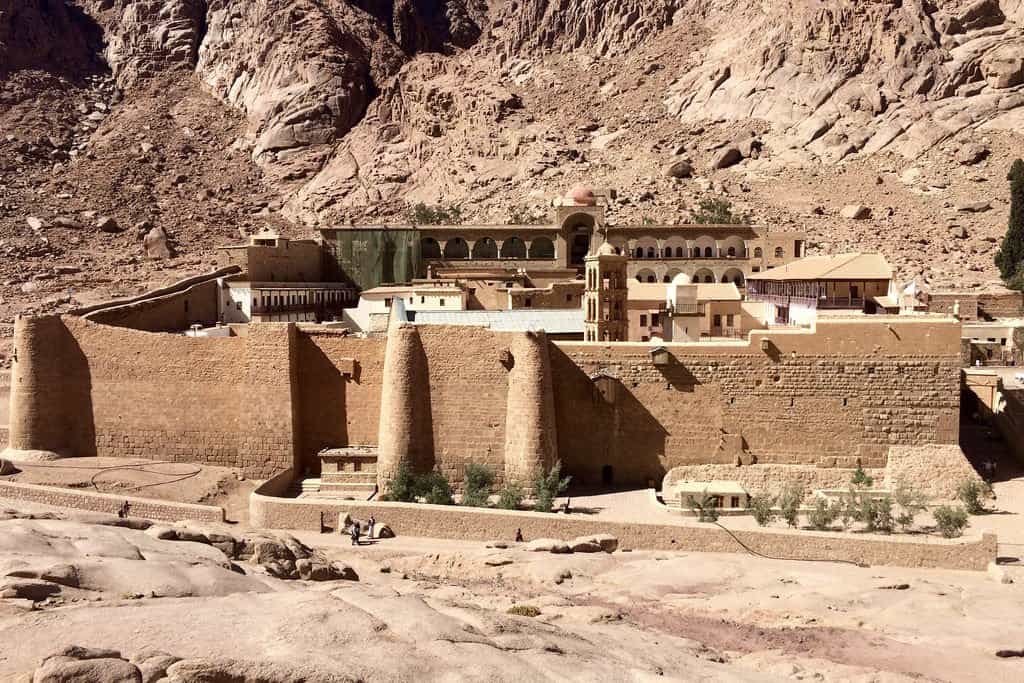
Seif Sallam
The distinction is this: a monk is one who wholly dedicates himself to God and the Church. Likewise, a married person, in entering into the sacrament of marriage, dedicates himself entirely to his spouse. In both cases, the call is to a life of total commitment, with no reservations.
As Saint John puts it, “For monks, the angels are their light, but for all people, the monastic life is a light.” Monasticism is not an exception—it is a kind of model, an ideal to which all Christians are called to aspire.
Few are called to embrace this life in practice, but the desire for it, especially in youth, can shape our spiritual journey. This desire for the monastic ideal is not wasted, even if one later marries or enters ordinary life. It teaches a person the value of living with purpose, of placing God first in all things. Those who pass through this period, even briefly, will carry these ideals forward into their marriages, families, and work.
In the end, monasticism is not meant to be an isolated life but a guide for us all. Even though monastic life today is more open to the world than in Saint John’s time—more involved in education, mission, and social work—the core challenge remains the same. Those who truly wish to serve God must still renounce the pleasures of the world. But today, unlike in the past, they do so without the external protections of desert life or monastery walls.
Today, the world is at our doorstep. Yet the ladder of ascent remains: from renouncing the world to cultivating the highest virtues of faith, hope, and love.
Translated by the Catalogue of Good Deeds
Source: https://foma.ru/svyatoy-ioann-lestvichnik-lestnitsa-prioritetov.html