

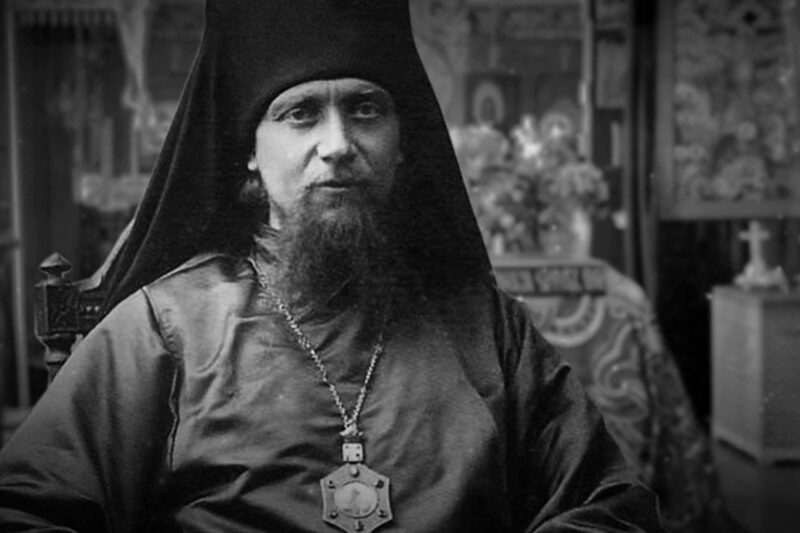

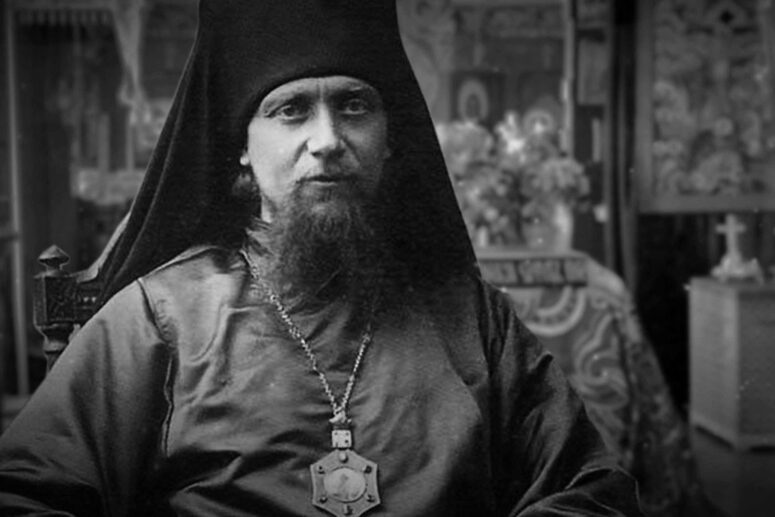
In May of 1935, immediately following the opening of the Moscow Metro, an extraordinary religious procession took place in Stalin’s Moscow. Bishop Athanasius (Sakharov) of Kovrov traveled along the city’s newly inaugurated—and at the time, sole—metro line from Sokolniki to Park Kultury station, carrying an icon depicting All Saints of the Russian Land. Throughout the journey, he read prayers consecrating this modern mode of urban transportation. While today such an act might seem innocuous, under Stalin’s regime it could easily have cost him his life.
The Feast of All Saints Who Shone Forth in the Russian Land
Every year, the Orthodox Church celebrates the memory of All Saints who Shone Forth in the Russian Land on the second Sunday after Pentecost.
This special commemoration first appeared in the church calendar in the 16th century through the initiative of the renowned Metropolitan Macarius (a significant hierarch who oversaw the canonization of numerous Russian saints). However, the tradition did not immediately take hold. The turmoil of the subsequent “Time of Troubles” and later the reforms of Patriarch Nikon disrupted the continuity of Russian church traditions, preventing this feast from firmly establishing itself in the liturgical calendar.
The Local Council of 1917–1918 sought to restore this important tradition. Amid renewed civil strife and growing political unrest, the intercessions of the saints of the Russian land were more needed than ever. The Council resolved to reintroduce the feast into the church calendar, and Bishop Athanasius (Sakharov) was tasked with composing a new liturgical service for this occasion.
Drawing inspiration partly from the original 16th-century texts, Bishop Athanasius nonetheless used only a few of the older hymns. Ultimately, he composed the majority of the service anew, reflecting the spiritual challenges and experiences of his own time.
Progress was slow due to external circumstances. Bishop Athanasius endured many years of imprisonment and exile. Summarizing 33 years of his episcopacy, he noted:
“During 33 years as a bishop, I spent 33 months performing diocesan duties, 32 months at liberty yet inactive, 76 months in exile, and 254 months imprisoned or engaged in harsh forced labor.”
He finally completed the liturgical service for the Russian saints in 1953, and continued to revise and expand it until his death in 1962.
The revised and completed version of Bishop Athanasius’ service was first printed in the May Menaion (the liturgical service book dedicated to saints commemorated in May) in 1987. Though later updates were made—mainly adding the names of newly recognized saints—the changes were relatively minor. In the year 2000, Bishop Athanasius himself became a figure commemorated within the service he had written, when he was glorified among the New Martyrs and Confessors of Russia, thus joining the Synaxis of All Saints Who Shone Forth in the Russian Land.
The Service for All Saints Who Shone Forth in the Russian Land
The liturgical text composed by Bishop Athanasius is an extraordinary spiritual creation—what one might call a “verbal icon” of the suffering Russian Church of the twentieth century. Written during a time of fierce persecution, the service gives voice to the faithful’s cry for help, their reverence for the saints, and their hope in divine mercy.
One of the most powerful hymns of the service, chanted during the Litany, is a heartfelt appeal from the persecuted earthly Church to her heavenly protectors—the saints of Russia. It speaks with the urgency and sorrow of a people driven from their homes and wandering in desolation:
Tone 5, in the melody of “Rejoice”:
Come, our heavenly intercessors, to us who seek your merciful visitation. Deliver us from the threats of tormentors and the fierce fury of the unbelievers, by whom we are persecuted as captives and left exposed—wandering often from place to place, lost in caves and upon mountains.
Therefore, have mercy, O most praiseworthy ones, grant us relief, calm the storm, and extinguish the wrath directed against us, praying to God, Who through you bestows great mercy upon our land.
Alongside such laments are hymns of exultation, in which the Russian Church is called to rejoice in the heavenly glory of her saints. A sticheron traditionally known by its opening words, “O Land of Russia,” proclaims:
O Holy Land of Russia, adorn your spiritual home,
where the vast company of saints glorify the divine gathering.
O Russian Church, rejoice and exult—for your children now stand before the Throne of the Ruler in glory, celebrating with joy.
O assembly of Russian saints, heavenly host, intercede with the Lord for your earthly homeland and all who honor you in love.
O new dwelling of the Euphrasius, chosen inheritance—Holy Rus’, guard the Orthodox faith; it is your foundation and strength.
Such stichera form the emotional and theological heart of the service, weaving together the memory of the saints with the lived suffering of the Church. They reveal a vision in which the saints do not belong merely to the past, but actively intercede in the present.
At the conclusion of Great Vespers, other hymns of remarkable beauty and spiritual depth are heard—some composed by Metropolitan Sergius (Stragorodsky), others by Monk Gregory, the original sixteenth-century author of the first service to Russian saints.
Interestingly, the hymns in this service mention only a small fraction of the known saints of Russia. Merely listing all their names would take many hours. In some Orthodox churches, the Synodicon of Russian Saints—a lengthy commemorative roll—is still read aloud on this feast day, testifying to the immense spiritual legacy of the Russian land.
The Icon of All Saints of the Russian Land by Nun Juliana (Sokolova)
Maria Nikolaevna Sokolova, known in monasticism as Nun Juliana, began painting the icon of the Synaxis of All Saints Who Shone Forth in the Russian Land in the 1930s, at the blessing of Hieroconfessor Athanasius (Sakharov). In her meticulous preparation for this sacred image, the iconographer carefully studied the lives of each saint depicted, consulting various hagiographic sources to accurately represent their traditional iconographic likeness.
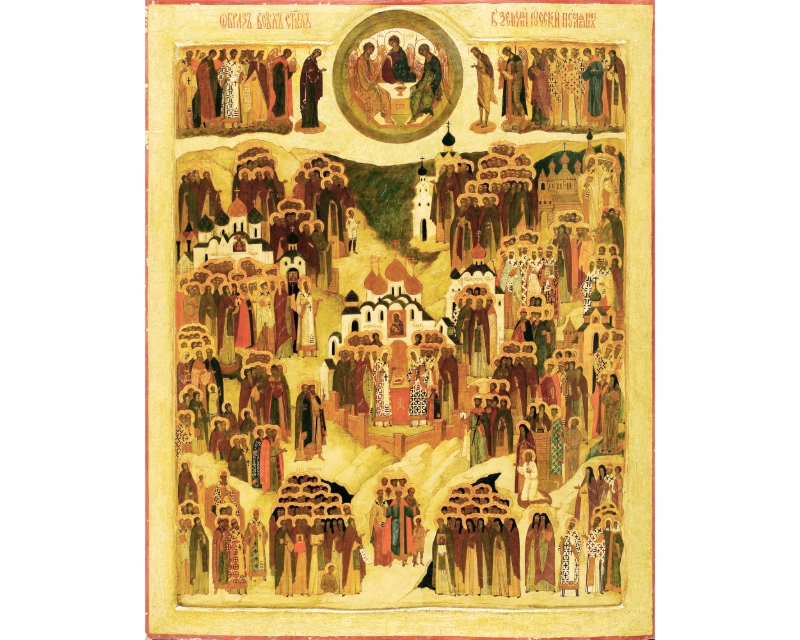
Bishop Athanasius provided a detailed explanation of the icon’s concept. The cities of Kiev and Moscow prominently feature in the composition—Kiev, as the cradle and foundation of Russian Orthodoxy, and Moscow, as its spiritual heart. Central to the icon is the Dormition Cathedral of the Moscow Kremlin, revered as a chief sanctuary. Also depicted are three revered icons of the Mother of God, deeply associated with Russia—the Vladimir, Kazan, and Novgorod “Znamenie” icons—accompanied by numerous Russian saints.
The icon, completed by Nun Juliana in 1934, is presently kept in the vestry of the Holy Trinity–St. Sergius Lavra. Of course, it was physically impossible to portray all Russian saints on a single panel, even excluding the New Martyrs; thus, the icon is best understood as a symbolic representation, a profound image of holiness, rather than a literal depiction of every saint of Russia.
Translated by The Catalogue of Good Deeds
Source: https://foma.ru/35-let-na-sluzhbe-russkim-svyatyim.html
God protect and bless Holy Orthodox Russia.
When I was chrismated Orthodox, my priest (Fr. George Lagodich) gave me an icon of All Saints of the Russian land, among which my name saint Feodor (of Rostov). In our parish (Saint Nicholas, Montreal, Quebec, Canada), this icon is a larger copy of my chrismation icon, so I feel more linked with our community. The story of bishop Athanasius in Moscow metro is an extraordinary example of courage and duty. Difficult to imagine such behaviour today in our so-called «democratic» countries !
What a glorious history.
Is this icon available in the catalog?
Dear John! Unfortunately, this icon is not yet presented in our Catalogue, but you can order a painted or a printed icon on wood from us. Please contact us at st.elisabeth.shop@gmail.com.
We can also offer you to order a printed icon of Synaxis of the New Martyrs of Russia in our Catalogue https://catalog.obitel-minsk.com/132-cb-sobor-novomuchenikov-rossijskih.html.