


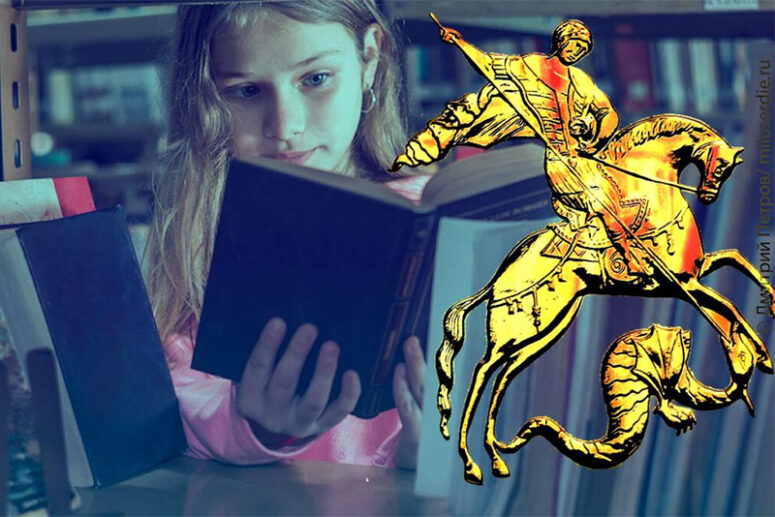
What can we truly know about the men and women who lived more than a thousand years ago and are now numbered among the saints? The further we are from the time of their earthly lives, the more their stories—handed down through generations—take on the patterns and embellishments of hagiographical tradition. Their lives are often adorned with recurring formulas and motifs that may, at first glance, strike the modern reader as overly stylized or even implausible.
The question then arises: how can we discern the historical truth from these legendary elements? How do we find our way through the tapestry of sacred biography to the living soul of the saint?
It’s difficult to find a believer today who has not, at some point, wrestled with these questions. Sooner or later, we all encounter something in the life of a saint that challenges our modern sensibilities—events that strain credibility, details that appear to conflict with historical records or reason, or narratives that seem too uniform, even formulaic, to be real.
And yet, the problem is not with the saints themselves, but with how we approach their stories.
Why Read the Lives of the Saints?
It is often said that the saints are given to us as examples to follow in our journey with Christ. And yet, there are saints whose lives are so radically unlike our own that imitation seems impossible—holy fools, for instance, who defied all social norms and embraced suffering with unsettling abandon.
What, then, can we take from such lives?
Only one thing—and it is everything: their love for God. But such love cannot be learned by imitation; it is a gift, a flame kindled in the heart through encounter.
Many of us are familiar with the words of Metropolitan Anthony of Sourozh: “No one can come to faith in God unless they have seen the light of eternal life in the eyes of another person.” It is for this light that we turn to the lives of the saints.
We come to these sacred accounts not merely for instruction or inspiration, but to behold the mystery of the human person transformed by divine grace—to witness the life of a real man or woman who once walked this earth and who, by God’s mercy, now lives in His presence.
To read a saint’s life is to approach the living icon of someone who has become one with Christ. And this encounter is not confined to the past. The saints are not distant figures preserved in literature—they are alive in the Church, alive in the Spirit, and still, to this day, they reveal themselves to those who seek them.
How Do We Know About the Saints?
What can we truly know about the lives of those who lived so many centuries ago? Take, for example, the martyrs of the early Church. In rare cases, the events of their arrest, imprisonment, torture, death, and burial were witnessed and recorded by fellow Christians—eyewitnesses moved by love and reverence. These accounts, though few, carry the breath of authenticity.
But even such precious testimonies have come to us through a long and fragile chain: handwritten copies, later retellings, necessary edits. And these are the exceptions. Often, all that remains is a name—perhaps just a simple line in the Church calendar: “He suffered for Christ in the third century.”
As we move forward in time, the volume of written accounts increases, including autobiographical writings by saints themselves. Yet even then, the tradition of sacred biography continued to grow in a particular direction: shaping the narrative through the language and imagery of holiness, using the patterns that had come to define the hagiographical genre. Over time, this led to the development of a distinctive style—one that often draws on symbolic language and recurring motifs. To the modern eye, these can sometimes resemble fiction.
The question then naturally returns: how do we tell the difference? Where is the line between historical truth and literary form?
The Saints Are Still With Us
The first and most essential truth we must affirm is this:
The saints of the Church are not mythical figures or symbolic ideals—they are real people.
They are not characters crafted by hagiographers, nor imagined projections of pious hopes. They truly lived. They truly struggled. And they truly attained holiness.
Even those saints whose lives were never recorded—those whose memory survives only as a name in the Church calendar—are fully alive in the Church. Their names are still spoken at the Liturgy. Their intercession is still sought in prayer. They are living members of the Body of Christ, and because they live in Him, they are able, even now, to enter into our lives in mysterious ways.
There have been many instances when a saint, whose memory had long faded from common awareness, reemerged with unmistakable clarity—making himself known through a vision, a relic, or some quiet but powerful act of divine intervention. In some lives of saints, we even find accounts of such “returns”—when the saint, appearing in a dream or revealing the location of their relics, revives the bond between themselves and the faithful.
But we, too, can restore that bond. Sometimes, quite unexpectedly, a person will feel moved to pray to a saint they know little or nothing about—and that prayer becomes the beginning of a living relationship. And when that prayer rises not just from an individual heart but from within the gathered worship of the Church, it becomes a powerful act of spiritual communion.
I remember the early 1990s, when we had just begun to restore the Church of the Life-Giving Trinity in Troitskoye-Golenishchevo, newly returned to the hands of the faithful. One of the side chapels had originally been dedicated, centuries ago, to the holy martyr Agapius and the seven who suffered with him. Their life was scarcely known—just a short account, with no information about local veneration.
Yet our rector, Fr. Sergius Pravdolubov, decided to serve an all-night vigil on the eve of their commemoration. What followed was something none of us could have anticipated: the service became charged with a sense of the miraculous—an overwhelming spiritual presence filled the church. It was as though the martyrs, long unremembered in any liturgical gathering, had come forth in response.
That particular intensity never returned in quite the same way. But from that moment on, a living bond had been reestablished. An icon was painted in their honor. Their names began to be given at baptisms. An altar was consecrated in their chapel. The saints had made themselves known—and we, in turn, had responded.
The Symbolic Language of Miracles
So then, the saints are not literary inventions, but real human beings transfigured by grace. Yet this leaves us with another challenge: how do we read their lives when the language used is steeped in stylized piety, where the person seems obscured by layers of devotional ornamentation?
The life of a saint is meant to offer us a genuine encounter with holiness—a vision of a human being who has become godlike through communion with Christ. In this sense, a saint’s life is like a verbal icon: not a photograph of historical detail, but a sacred image shaped by spiritual insight.
Just as some icons are masterful and radiant, while others are simple or even clumsy, so too the literary quality of hagiographies varies. And just as iconography has changed through the centuries—from place to place, from periods of flourishing to times of decline—so has the style of hagiographical writing. The way the lives of saints were told, edited, expanded, or abridged has always reflected the sensibilities and spiritual needs of a particular age.
And yet, much like we can distinguish an icon from a portrait or a painting, we can also learn to read hagiography as its own sacred form—not expecting it to conform to modern historical or biographical conventions, but to speak its truth in the language of symbol and genre.
When a hagiographer was separated from the saint by many generations, and when little factual detail had been preserved in the community’s memory, the resulting “verbal icon” often took the form of a stylized sketch. Genre-specific features and legendary motifs served to locate the saint within a spiritual landscape—not to mislead, but to reveal a deeper truth.
These narrative techniques function like the symbolic background of an icon—gold-leaf skies, stylized mountains, delicate patterns—signifiers of divine presence. What might seem to us as excessive or embellished in the lives of saints—the abundance of miracles, for instance—is not fiction, but sacred symbolism. It gestures toward realities too profound for plain prose.
A symbol, after all, is where the earthly and the heavenly meet—where what is visible reveals what is invisible.
So when we read of ancient saints emerging unharmed from boiling pitch, or of shattered bones mysteriously restored overnight, or of idols collapsing at the sound of a single prayer—we need not torture ourselves with the question of whether these things “really happened” in the historical sense.
Sometimes, they did—literally.
But even when the details are symbolic rather than factual, the spiritual reality they express is absolutely true: the victory of faith, the power of prayer, the nearness of Christ, and the unshakable peace that flows from union with Him.
Saint Perpetua: A Martyr’s Vision

In many accounts of martyrdom, we find not only external events—arrest, trial, and execution—but also vivid inner experiences: symbolic visions of spiritual combat, glimpses of the unseen realm behind the outward suffering.
One such account stands out for its uniqueness and authenticity: the Passion of Saint Perpetua, a North African noblewoman martyred in the arena of Carthage on March 7, 203. What makes her story so extraordinary is that it comes, in part, from her own hand. While in prison, Perpetua kept a diary in Latin, recording her dreams and reflections. On the eve of her death, she described a vision that revealed the true nature of her impending trial—not merely a contest with wild beasts, but a confrontation with the powers of darkness:
“I saw a great crowd watching me. And because I knew that I was condemned to fight with the beasts, I marveled that none were sent against me.
Then an ill-favored Egyptian came out, with his supporters, to fight me. I was stripped, and I became a man. My helpers began to rub me with oil, as is done for combat…
Then a man of immense size appeared, towering higher than the amphitheatre. He held a green branch with golden apples and said: ‘If she conquers this Egyptian, she shall receive this branch.’
So we began to fight. He tried to trip me, but I struck his face with my heels. Then I was lifted into the air and began to strike him as though I were not touching the ground.
At last, joining my hands as if striking with a sword, I struck his head and he fell. The crowd shouted, and my helpers began to sing.
I approached the great man and received the branch. He kissed me and said, ‘Peace be with you, daughter.’ And I walked in triumph toward the Gate of Life.
Then I awoke, and I understood that my real struggle would not be with beasts, but with the devil. Yet I knew I would prevail.”
Her companions later completed the narrative with an eyewitness account of her death. Yes, wild beasts were unleashed, and no Egyptian opponent stood in the arena. And yet, everything she saw in her vision came to pass. The external battle was but the shadow of the deeper struggle—and the deeper victory.
“I understood that I would not be fighting the beasts, but the devil. Yet I knew I would be victorious.”
Eighteen centuries later, Perpetua’s witness still speaks with astonishing clarity and power. Her diary does not belong to the realm of legend. It is a raw and luminous testimony from a real human soul. Her words are not ornament, but fire.
I have returned to her life many times—too little known, even among Christians—and each time my heart is pierced anew. Perpetua: a noblewoman of twenty-two, a young mother still nursing her infant, awaiting trial and death in a dark Roman prison. And Perpetua: transfigured in her vision, striking down the enemy with divine strength, radiant with peace as she steps through the Gate of Life.
Both are fully real. Both are truly her.
The Hidden Depth of Every Soul
It goes without saying that the details of Saint Perpetua’s martyrdom are not mere ornament. Her life and her testimony draw us into the heart of Christian reality. And yet, her story also reveals something deeper—something true not only of saints, but of every human being created in the image of God.
Each person is a mystery.
Even those who do not bear the visible marks of sanctity are veiled in a hidden depth known fully only to God. As the Apostle Paul writes:
“For who among men knows the thoughts of a man except the spirit of the man which is in him?” (1 Corinthians 2:11)
Time and again, the Church has seen this mystery unfold in the most unexpected ways. A person lives quietly among others, unnoticed, unremarkable—and then, suddenly, as if a veil were lifted, the truth becomes clear: a saint has been living in our midst. Sometimes this revelation comes during their lifetime. Sometimes at the moment of death. Sometimes long after.
A familiar face, once perceived in ordinary light, is now illumined with an inner radiance. What we thought we knew gives way to something deeper: the likeness—the image of the person as they are known to God.
And this, too, is why the saints’ lives can never be reduced to lists of pious deeds or moral accomplishments. The reality of the Spirit cannot be captured by logical analysis. One might describe a saint as someone who prayed fervently, fasted strictly, loved deeply—and all of this would be true. But to someone without the lived experience of divine love, such descriptions may feel distant or empty.
The best lives of the saints do not simply tell us what the saint did—they reveal who the saint was. They allow the unrepeatable light of the person to shine through.
And sometimes, that light reaches us not through text or history, but through an inexplicable moment of grace—a mysterious encounter with the saint in our own lives.
Saint Nicholas: A Living Presence
It often happens that the saints come to us before we ever come to them.
This is certainly true of one of the most beloved saints in the Orthodox world—Saint Nicholas the Wonderworker. For centuries, he has been venerated by millions, invoked in prayer, and experienced as a near and tender protector. And yet, modern scholarship has shown that the earliest full-length life of Saint Nicholas blends together elements from the lives of three different saints who shared the same name.
From a historian’s standpoint, this might raise questions. Where does one figure end and another begin? Which stories belong to which Nicholas?
But these questions, while not unimportant for academic study, do not touch the heart of the matter.
Because the Saint Nicholas we know—the Nicholas who is called upon in danger, who appears in dreams, who intervenes in the lives of the faithful across cultures and continents—is not a literary collage. He is not a composite figure stitched together from borrowed legends. He is a radiant and personal reality.
He helps the poor, consoles the grieving, rescues those in peril. He comes close, even when we do not understand him. He is not simply remembered—he is known.
And if the texts describing him have gathered stories from different sources along the way, this does not diminish his reality. It only reminds us that holiness transcends documentation. Saints are not bound by the accuracy of their biographies. They are known by their presence, their love, their unceasing intercession in the life of the Church.
Love Is the Key
To read the lives of the saints in a way that truly speaks to us, we need more than intellect—we need love.
The saints cannot be understood by critical distance alone. They are not subjects for analysis, but persons to be encountered. And as with any relationship, true understanding begins not with suspicion, but with love. Unless we approach with an open heart—unless we are willing to trust—we will not perceive the witness of the Spirit shining through their lives.
Love searches for the beloved; it desires to know more. But it also comes from the beloved, as a gift. Sometimes that first spark is lit the moment we open a saint’s life—an unmistakable sense of connection, recognition, even friendship. Other times, it begins with a vivid article, a story passed on by a friend, or a book that stirs something deep within us.
And sometimes, it is the saint’s love that finds us first.
A glance at an icon. A name that suddenly comes to mind. A phrase that strikes the heart with unexplainable force. A quiet, insistent prompting to learn more. These are not accidents. They are gifts—signs of the saints’ own desire to reach us. For, as Scripture tells us,
“God is love, and he who abides in love abides in God, and God in him” (1 John 4:16).
The saints dwell in God—and from that dwelling, they pour out their love upon us.
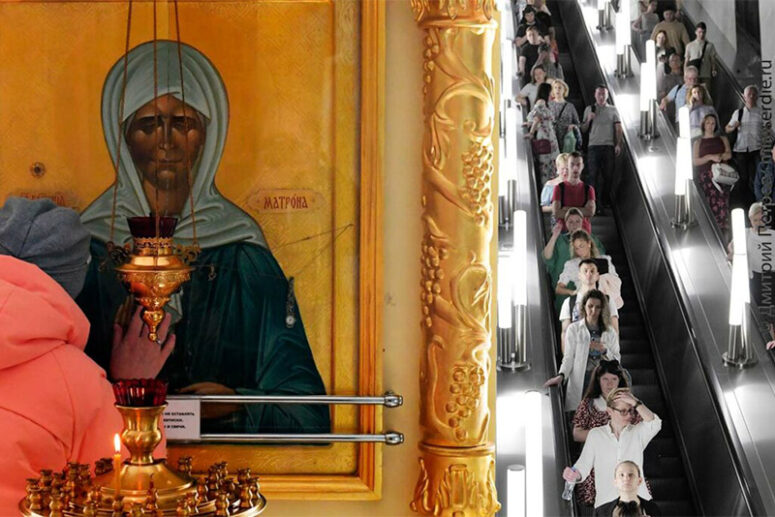
I remember a time when I had already grown to love many saints. But Saint Matrona of Moscow—though honored and loved by so many—remained distant to me. I had read a book about her, and for some reason, her story did not resonate. Others around me shared this sense of reserve. And yet I knew this was my own shortcoming, not hers.
So I began to speak to her silently in passing, whenever I walked by her icon in church:
“Matronushka, forgive me. I know I should honor you more deeply, but I don’t yet know how. You see my heart, you know I struggle to love. But you—you know how to love. Help me.”
And not long after, the answer came—not in words, but in a flood of grace. Everywhere I went, for days, I saw her icon: in offices, waiting rooms, even in official institutions. Her presence surrounded me.
At the time, I was directing the newly established Department of Children’s Literature at the Patriarchal publishing house. I had no manuscripts, no publishing projects in hand. And then, seemingly out of nowhere, a nearly completed children’s story about Saint Matrona found its way to me, accompanied by the author and illustrator. It felt like a gift sent directly from her.
That story became the beginning of a deep friendship: the author became one of my closest collaborators, and together with the illustrator, we went on to publish several beautiful books. At every step, I felt her presence, her intercession, her kindness. And in time, my heart opened—and I came to love her in return. Only then did I reread her life with new eyes and begin to glimpse the mystery of her person.
When the Soul Is Surrounded by Darkness
Often it is a fleeting encounter—a phrase, a gesture, a glimpse of an icon—that awakens in us a love for a saint. But once that love has begun, we should not let it fade. We should nourish it. Love naturally seeks knowledge: we want to know the one we love more deeply.
Search. Read. Listen. Today, the treasury of the saints is more accessible than ever. We can find articles, books, recordings, reflections—words that illuminate their lives and reveal their unique beauty. The more we learn, the more familiar they become. And then, the legendary elements or historical inconsistencies that once confused us no longer disturb our peace. The saints, who are God’s friends, become our friends too.
Let us not deprive ourselves of that joy—especially in the hard seasons of life.
Saint Barsanuphius of Optina once wrote:
“It is a sad thing: the lives of the saints are printed, some even buy them, but most people never read them. And yet how much benefit could be drawn from that reading! There we would find answers to many of our questions. They would teach us how to find our way out of difficult situations—how to stand firm when darkness wraps the soul from every side, and it seems as though even God has abandoned us.”
But God has not abandoned us.
He has given us His saints—lights in the night, companions in sorrow, intercessors in our weakness. Their lives are not merely stories of the past. They are doorways into the living mystery of the Church, where Christ is present, and where His friends stand watch over us still.
Let us open their lives not just with our eyes, but with our hearts. Let us seek their company with love. For they are alive in God—and they are near.
Translated by The Catalogue of Good Deeds
Source: https://www.miloserdie.ru/article/kak-chitat-zhitiya-svyatyh-chtoby-za-anahronizmami-i-legendarnostyu-ne-propustit-glavnoe/