
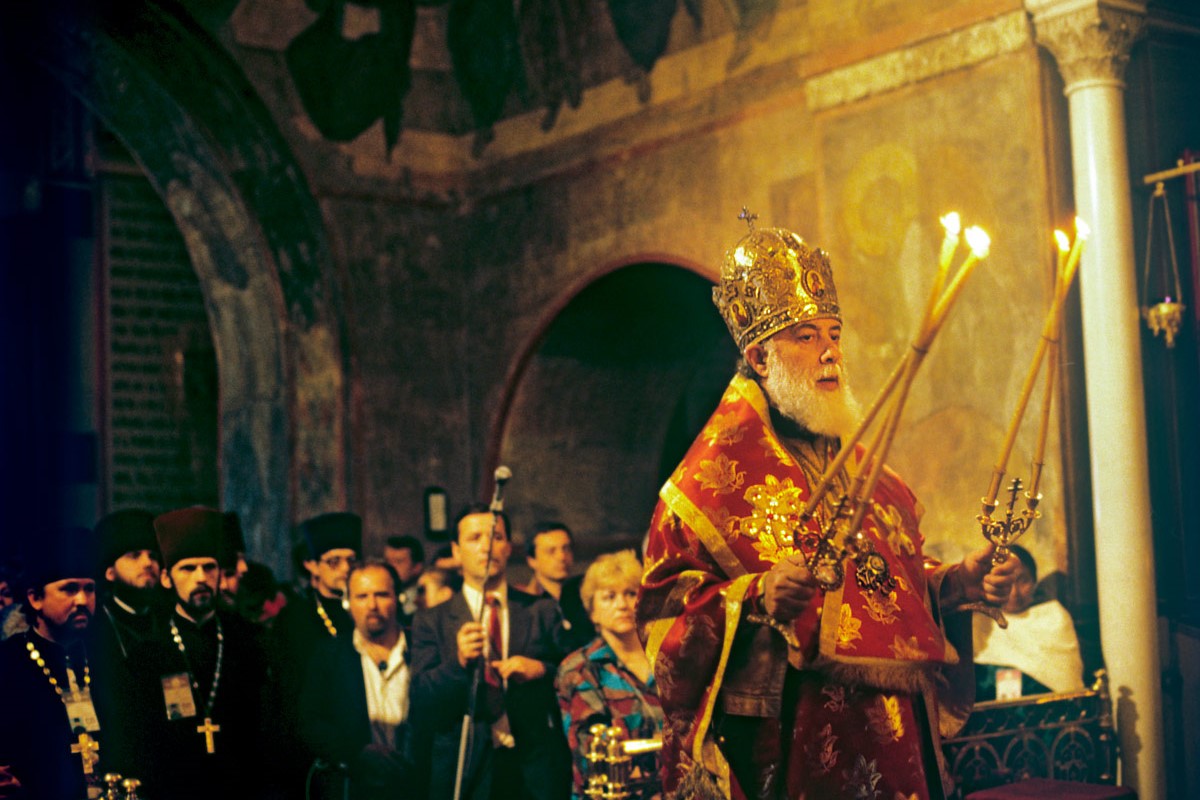

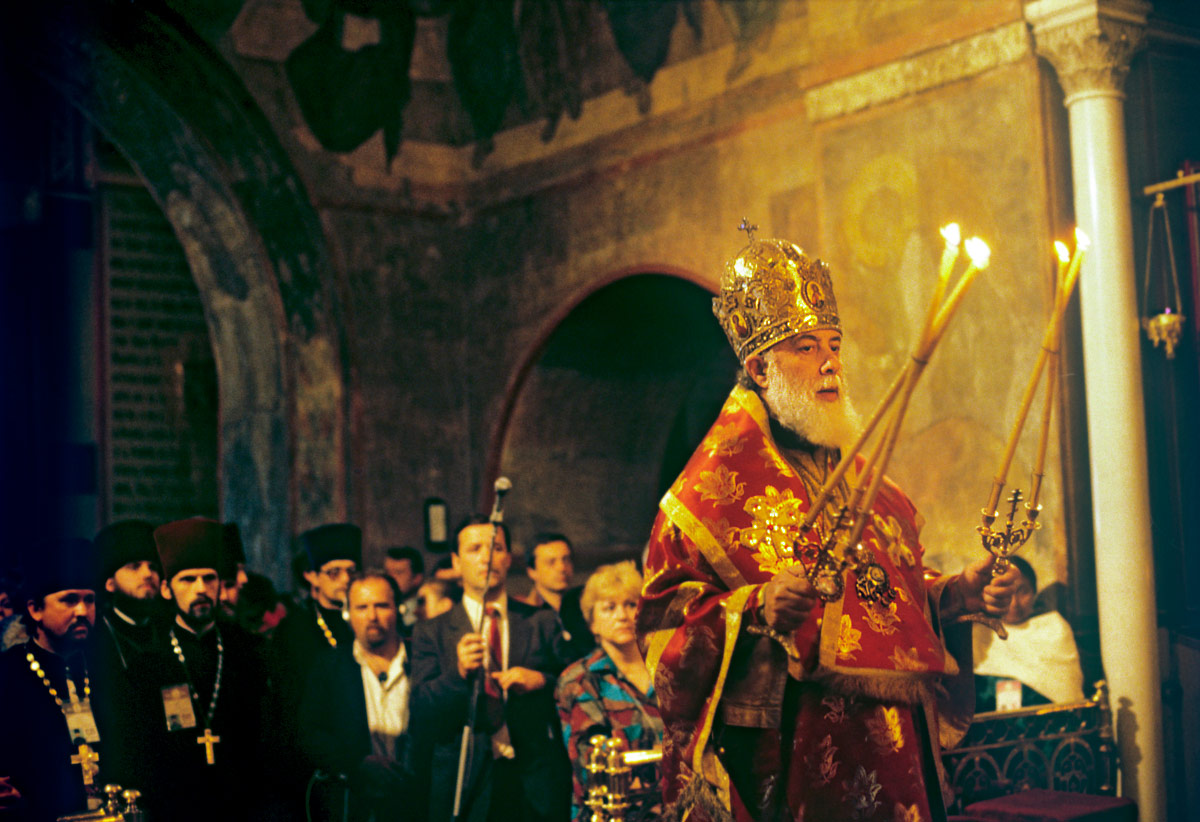
Patriarch of All Georgia Ilia II at the Divine Liturgy in the Dormition Cathedral, marking the 1000th anniversary of the Baptism of Rus’. Photo: Yury Kaver / RIA Novosti, 1 May 1988
On 25 April 2026, the Georgian Church kept the fortieth day since the repose of Ilia II—a shepherd who, for nearly half a century, guided his people through years of upheaval, hardship, and renewal. Elected in 1977, during the final decades of Soviet rule, he witnessed the Church’s rebirth in a newly independent Georgia and became one of the most trusted and widely loved figures in the country.
His influence extended far beyond the walls of the Church. Even those distant from faith spoke of him with reverence. By the end of his life, he had become godfather to tens of thousands of children—an extraordinary sign of the love and trust placed in him by the people.
What was he like as a person? Film scholar Ana Pachuashvili, who spent most of her life in Georgia, shares her memories of a man she came to know from childhood—not as a distant figure, but as someone woven into the fabric of her family’s life.
“As if he were one of us”
I was born in Georgia. My father—now Metropolitan Nicholas (Pachuashvili)—spent nearly forty years serving alongside Patriarch Ilia II, which is as long as I have been alive. Not a day passed in our home without his name being mentioned: we spoke about him, recalled his words, discussed his Sunday sermons.
In a sense, His Holiness was always part of our family. From my earliest years, it felt as though I had known him all my life.
One unquestioned authority
Even my grandparents, who at the time were not believers, spoke of the Patriarch with deep respect. He was revered even by those far from the Church.
I remember once, when I had just begun organising pilgrimages, being sent to negotiate with the head of a travel agency. He treated me rudely, smoked in my face, and spoke dismissively about religion and the Church. And yet—when it came to the Patriarch, everything changed.
“For me, he is one of the greatest authorities in life,” the man said. “When I see him on television, I kiss the screen.”
This was no exaggeration. People sensed in him a life of holiness.
Toys, fruit, and small joys
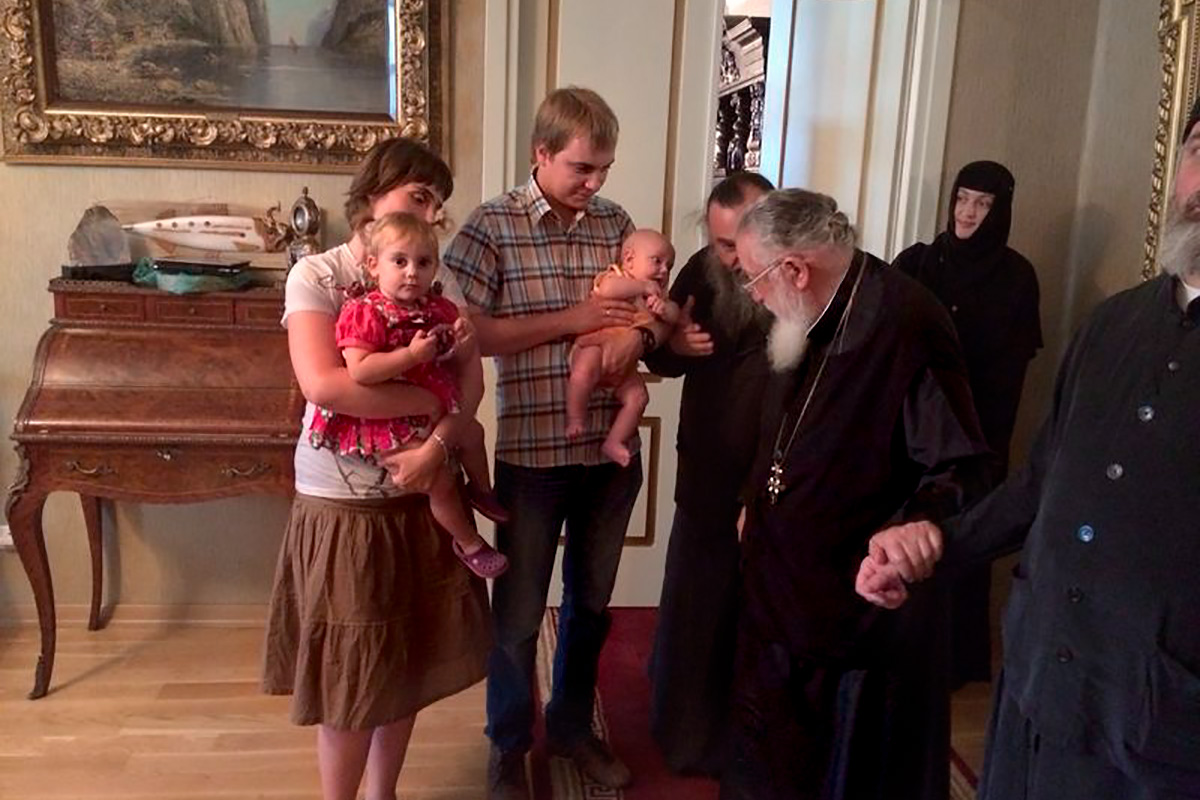
Ana and Kirill with their firstborn children, Nino and Ephrem, together with Patriarch Ilia II, 2014
The Patriarch loved to bring joy to others. On feast days he would bless chocolates and distribute them, and my father would bring them home, saying they were from the Patriarch. Sometimes he would send fruit—especially precious in the difficult years of the 1990s.
When my grandmother was tonsured a nun, she visited him the same day, and he gave her a beautiful cross and prayer rope, which she treasured dearly.
As a child, I often attended services at the Sioni Cathedral in Tbilisi, where the Patriarch served. At some point during the vigil, a bag of toys would appear beside him, and he would distribute them to children along with the anointing. He seemed to rejoice even more than we did.
Once I received a little doll, which we kept at home for many years.
When anger dissolved
When my aunt and four of her friends entered a monastery, their parents—who were not believers—set out together to confront the Patriarch. My own grandparents were among them, and they went in a very agitated state.
But when they returned, everything had changed. They spoke of him with deep respect and peace. They no longer insisted that their daughters come home. The Patriarch had calmed them.
A fatherly blessing
In Georgia, it became customary to listen to the Patriarch’s New Year address. Few paid much attention to the president—but everyone listened to him.
He always blessed the celebration of the New Year. Even during the Nativity fast, when fish is normally not eaten after 25 December, he would give a special blessing: “Celebrate the New Year with fish—let there be joy for the people.”
Forgiveness from the Patriarch
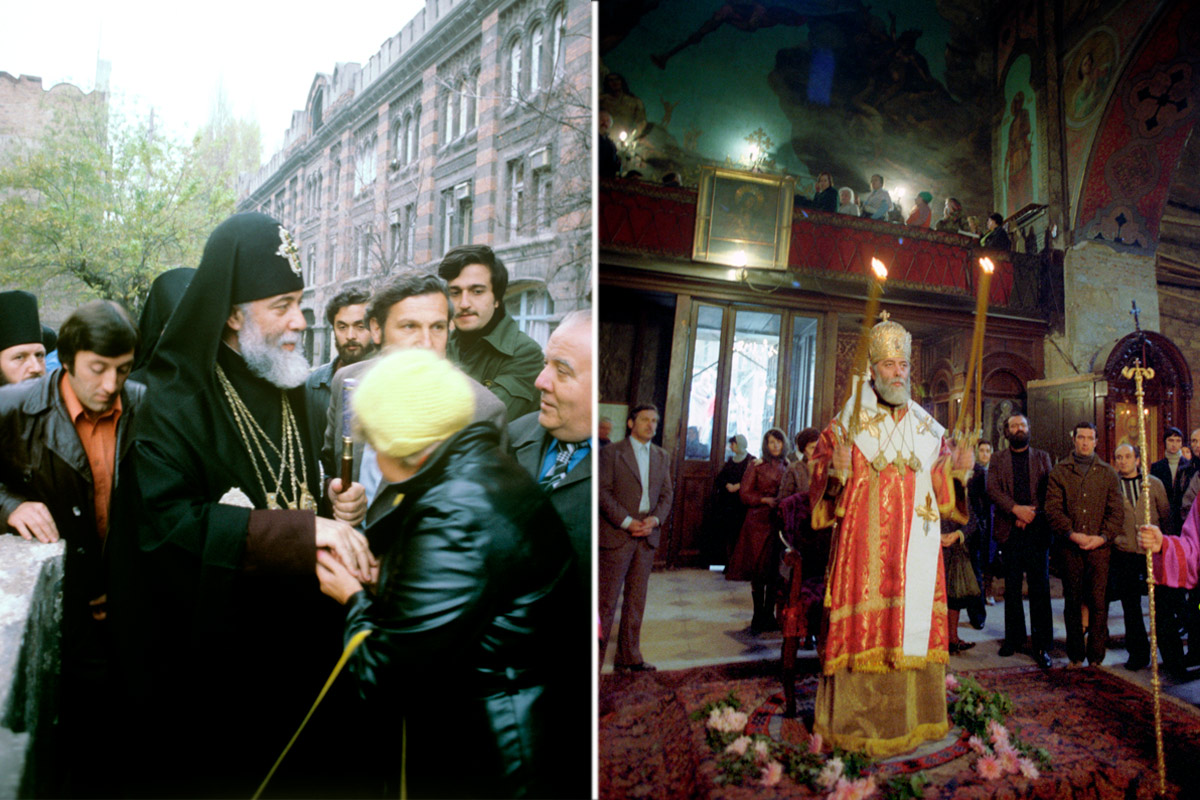
Patriarch of All Georgia Ilia II, Archbishop of Mtskheta and Tbilisi, on a street in Mtskheta. Right: Patriarch Ilia II during a service at the Sioni Cathedral in Tbilisi. Photo: V. Chistyakov / RIA Novosti, 1 April 1981
For many years, Forgiveness Sunday in Sioni Cathedral was something unforgettable. It was difficult to find a place in the church that day, but people came from everywhere.
After the appointed prayers, the Patriarch would step onto the ambo, make a full prostration to the ground before everyone, and ask forgiveness.
The impression this left was profound. To begin Great Lent after such a moment was something entirely different. Wherever we might be, we always tried to return to Tbilisi for that service.
He also blessed people to ask forgiveness from their parents in the same way—on their knees, with a prostration. And we did so.
Living mercy
With the Patriarch’s blessing, parish groups of mercy were formed—volunteers who identified those in need and visited them regularly.
When I was three or four, my parents were assigned to care for a bedridden woman named Aniko. Once a week, we visited her, brought food, washed and cared for her. My parents took me along, and I remember how she would recite poems to me.
This was how mercy became something living and tangible.
A nation in procession
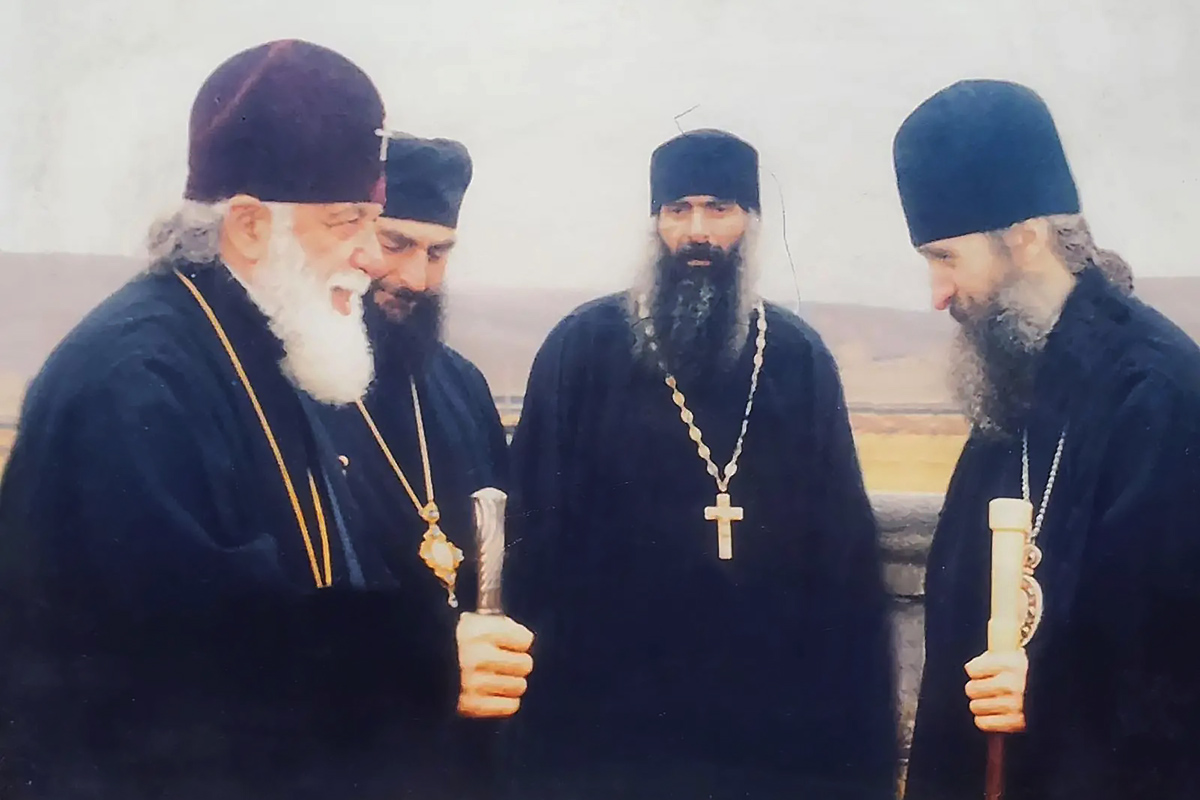
Ilia II (left), 2001
In 2000, to mark the two-thousandth anniversary of the Nativity of Christ, the Patriarch revived the ancient Georgian tradition of Alilo—a great Christmas procession through the streets.
After the night service on 7 January, people gathered and walked through central Tbilisi. Children dressed as angels led the procession; others wore traditional clothing or represented the Magi and shepherds. There were even animals—oxen and sheep—brought from villages at the Patriarch’s request.
The procession was filled with hymns, including the Georgian carol “Alilo.” Since then, it has become an annual tradition.
Restoring bonds
After the construction of the Holy Trinity Cathedral (Sameba), the Patriarch began inviting entire family clans to gather for a particular Sunday service.
He would speak briefly about the family, bless them, and encourage them to rediscover their unity. Each family would choose a patron icon.
When our family gathered, the Vladimir Icon of the Mother of God was chosen. Relatives came from all over Georgia—many meeting for the first time. After the service, we shared a meal and remained in contact afterwards.
It was a simple yet powerful way of restoring broken ties.
Walking in the steps of Saint Nino
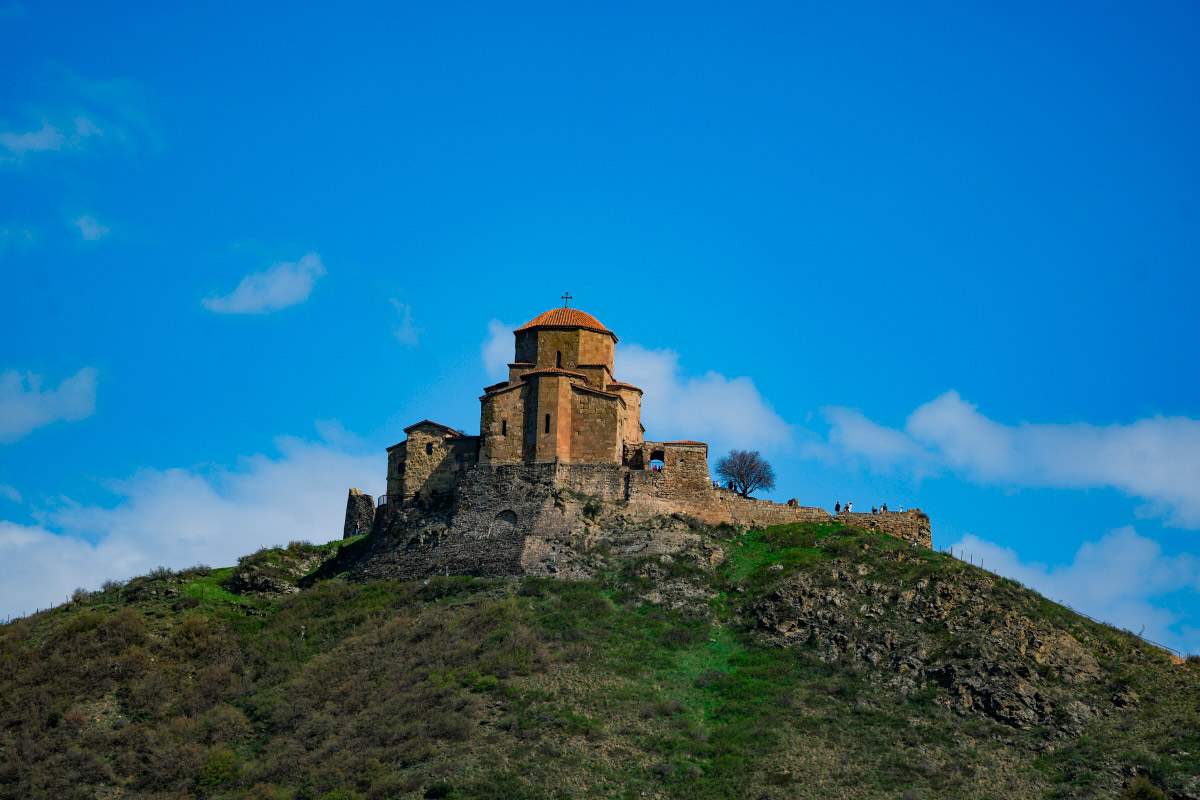
The Jvari Monastery and Church (early 7th century), situated on a mountaintop at the confluence of the Kura and Aragvi rivers near Mtskheta—traditionally held to be the place where Saint Nino erected the Cross. Photo: Alexander Vilf / RIA Novosti, 3 April 2026
One of the great joys of my childhood was the annual pilgrimage retracing the path of Saint Nino.
Beginning on 1 June—the day commemorating her entry into Georgia—the pilgrims would walk for forty days from Lake Paravani to Mtskheta, following the route described in her life. The journey concluded on 12 July, at the feast associated with Svetitskhoveli.
Even in 1989, when Georgia was shaken by political unrest and the tragic events in Tbilisi that year, the first pilgrimage went ahead. The Patriarch himself often joined it.
When I was thirteen, I was allowed to take part—it was the greatest birthday gift I could imagine. At the end of the journey, the Patriarch welcomed us personally, blessed us, and gave each pilgrim a small gift—a cross, a prayer rope, a book.
Prayer shared across a nation
The Patriarch also encouraged a nationwide rhythm of prayer, inspired by the words of the Psalmist: “Seven times a day I praise Thee.”
Special prayer books were printed, with prayers to be read every three hours—at 6:00, 9:00, 12:00, 15:00, 18:00, 21:00, and midnight. Those unable to read could listen on the Patriarchate’s radio station, which he had also established.
At these hours, the whole country was united in prayer.
Fifty thousand godchildren
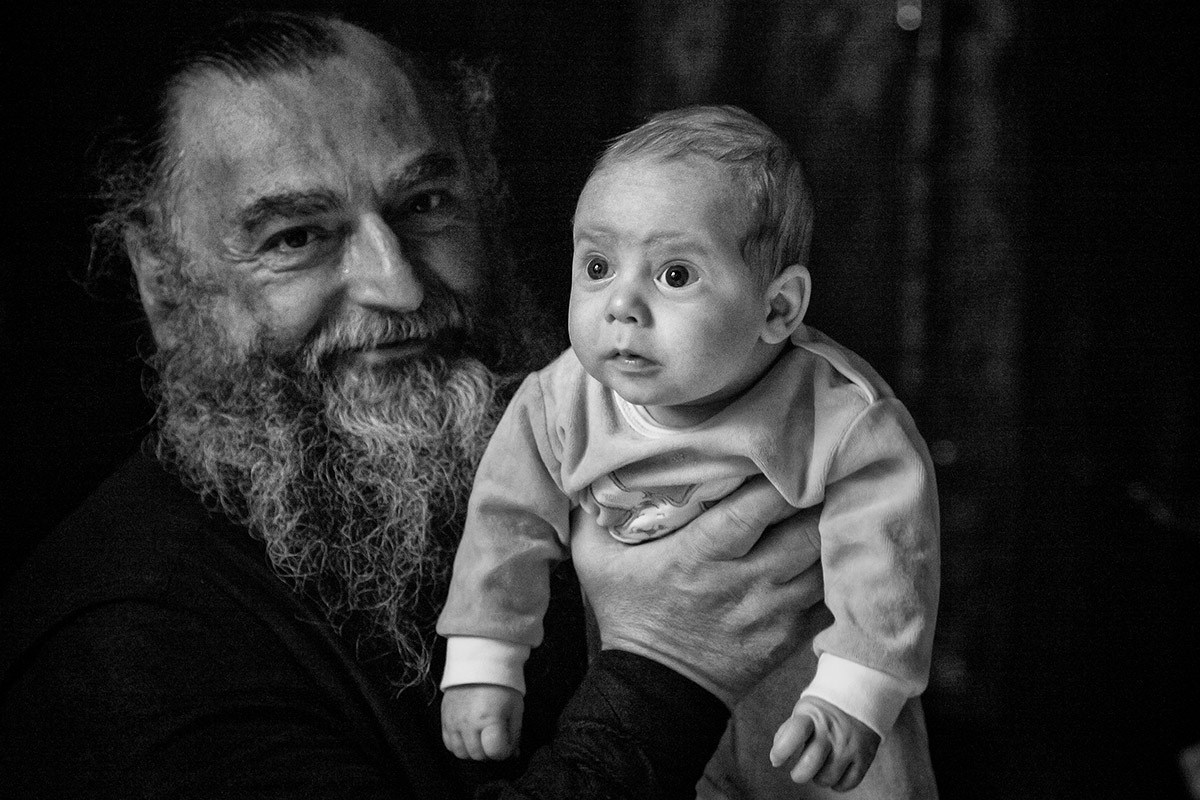
Alexander, one of the Patriarch’s godchildren, in the arms of his grandfather, Metropolitan Nicholas
About a decade ago, Georgia faced a serious demographic decline. In response, the Patriarch announced that he would become godfather to every third and subsequent child in a family, if the parents wished.
This became a powerful encouragement for many families. I personally know several who decided to have more children for this very reason—to have such a prayerful protector in their family.
Twice a year, large baptismal services were held. Later, gatherings were organised where the Patriarch would personally bless his godchildren—thousands at a time.
By the end of his life, there were around 50,000 of them.
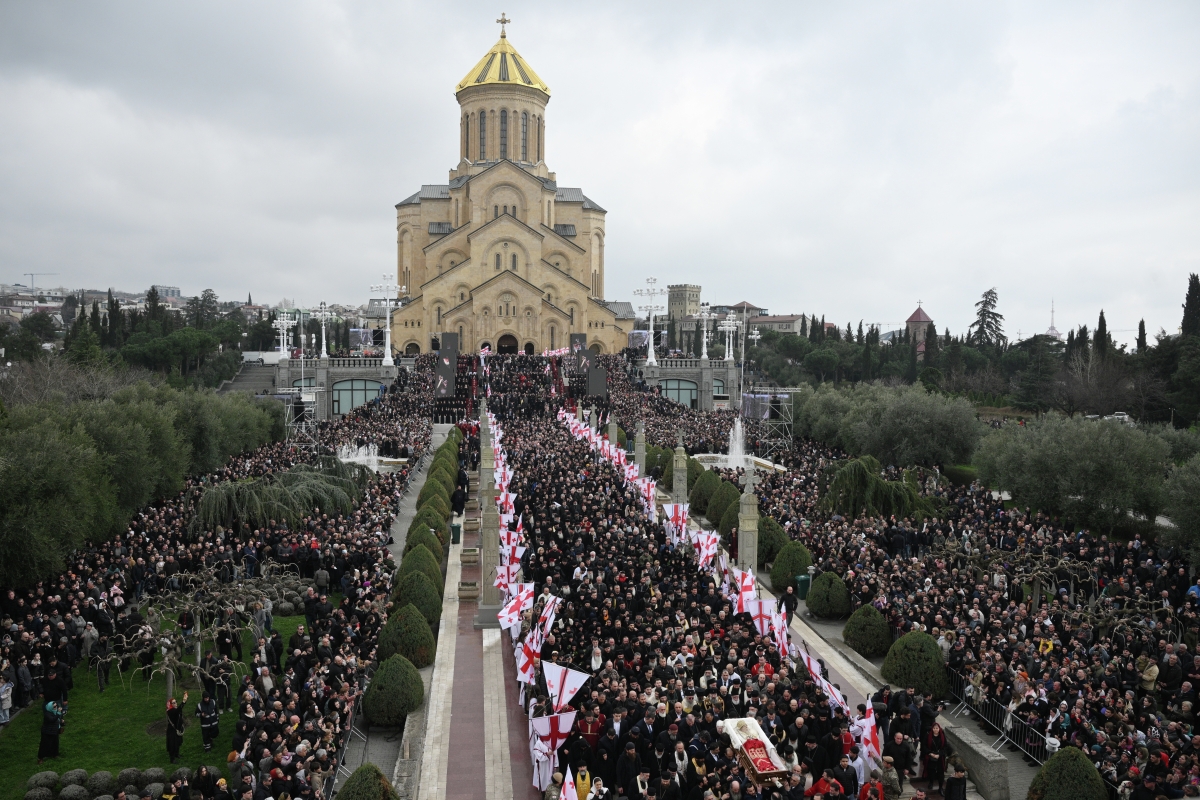
It was deeply moving to see many of these children and their families bring white roses to his funeral.
When a shepherd intervened
Countless people were helped—and even saved—by the Patriarch.
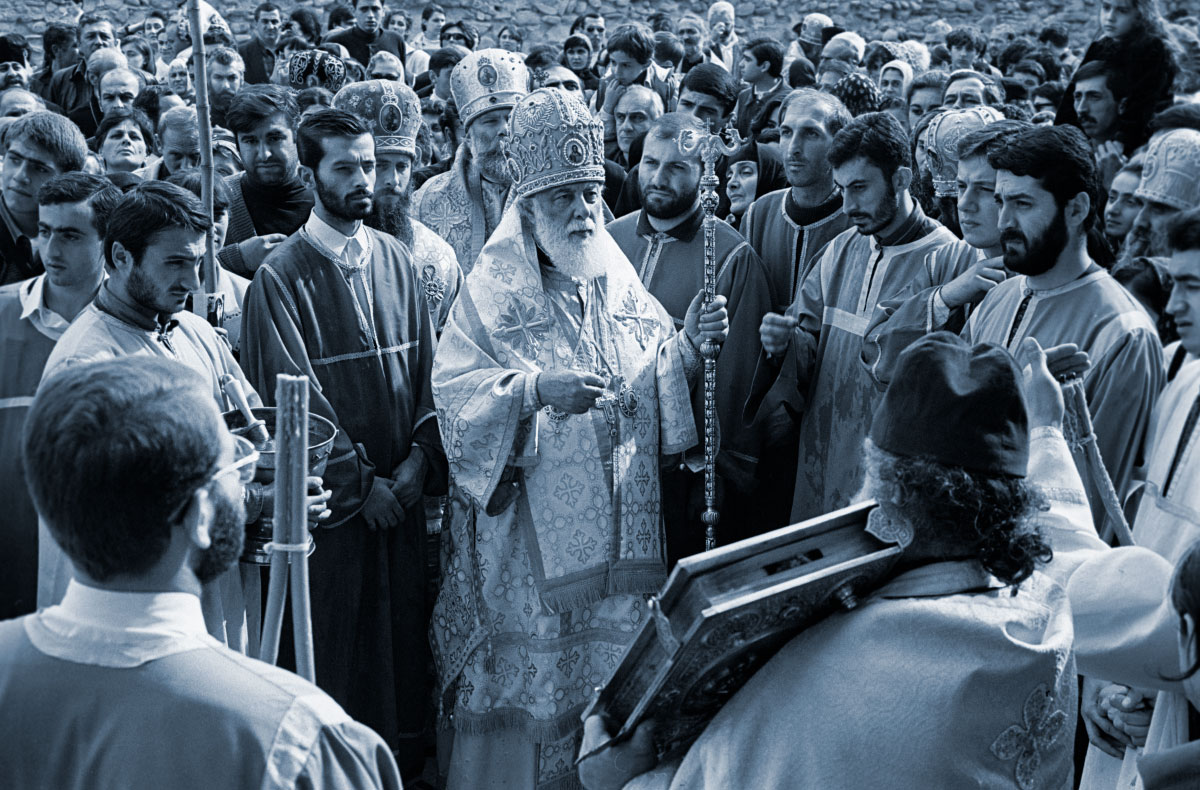
Patriarch of All Georgia Ilia II among the faithful during Mtskhetoba–Svetitskhovloba, one of the principal feasts of the Georgian Church.
Photo: David Rukhkyan / RIA Novosti, 14 October 1995
In the 1980s, a tragic fire broke out in Tbilisi. A young couple had stepped out briefly, leaving their two children at home. In their absence, the house caught fire, and both children perished.
The parents were devastated—not only by grief, but by a crushing sense of guilt. In their despair, they began to consider taking their own lives.
As soon as the Patriarch learned of what had happened, he went to them at once. He spoke with them at length, then brought them to the Patriarchate and gave them a place to stay.
Only later did they confess that, on that very day, they had resolved to end their lives. His visit had changed everything.
In time, they remained close to the Church, serving near the Patriarch.
A refuge in distress
Another time, a young mother was turned out of her home with her infant child. With nowhere else to go, she made her way to the Patriarchate. Her son, as it happened, bore the same name and surname as the Patriarch in the world—Irakli Shiolashvili.
She asked to see him, but he was occupied. Even so, the sisters received her without hesitation, gave her food, and helped her care for the child.
When the Patriarch was free, he spoke with her at length and even telephoned her husband and mother-in-law, asking them to come—but they refused.
The next morning, he arranged for her to be given a place to live and covered her expenses until her situation stabilised.
A blessing that shaped a life
The Patriarch also touched my own life in a very personal way.
When I was considering marriage, my father was uncertain and advised us to wait. Following the counsel of his spiritual father, he decided to ask the Patriarch.
When he heard my future husband’s surname—Chernorizov—he smiled. The name itself comes from chernorizets, an old Slavonic word for a monk, literally “one clad in black.” The Patriarch, who had a deep love for monastic life, immediately responded:
“A good name—let them marry.”
With that, my father’s doubts were resolved, and we received his blessing.
I thank God that my life unfolded in this way. The Patriarch was an extraordinary man—truly a father for all of Georgia.
May the Merciful Lord grant rest to His faithful servant in the dwellings of the righteous, and may his memory be eternal.
Translated by the Catalogue of Good Deeds
Source: https://www.miloserdie.ru/article/horoshaya-familiya-pust-zhenyatsya-kak-gruzinskij-patriarh-iliya-ii-dal-blagoslovenie-na-brak-krestil-syna-i-sdelal-mnogo-horoshego-dlya-vseh-gruzin/