

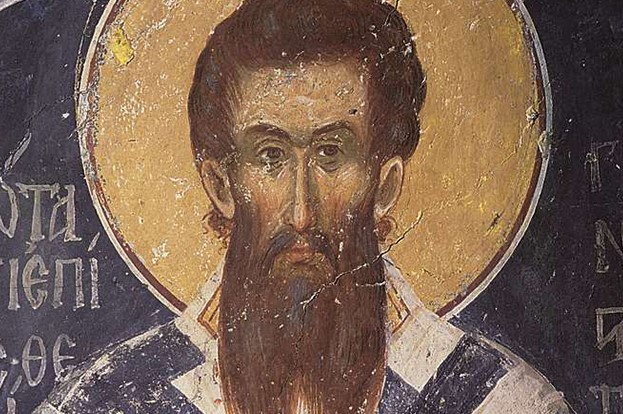

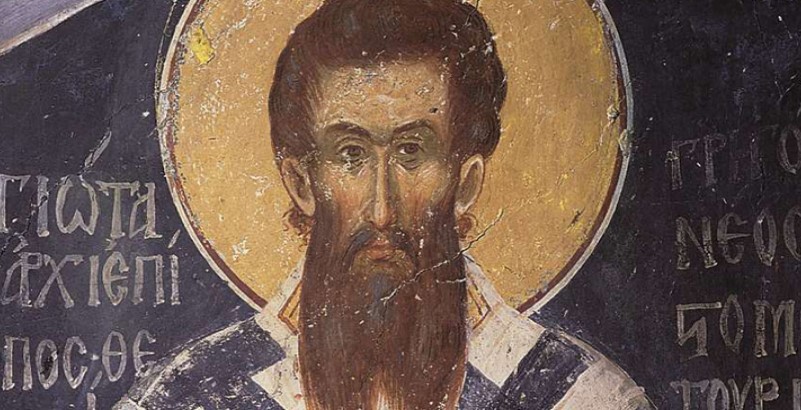
The Church dedicates the second Sunday of Great Lent to St Gregory Palamas. This commemoration recalls a fundamental truth that he defended in the fourteenth century: although God in His Essence remains beyond human comprehension, He truly makes Himself known and shares His life with us through His divine grace.
In the theological language of the Orthodox Church, this grace is described as the uncreated Energies of God. The word uncreated is important. It means that the grace given to us is not something created by God or something separate from Him, but God Himself as He freely acts and reveals Himself to the world. His inner Essence remains inaccessible, yet His living presence can truly be experienced and shared.
Within this truth lies the purpose of human life. Seraphim of Sarov expressed this simply: “The true aim of the Christian life is the acquisition of the Holy Spirit.” By this he did not mean possessing the Spirit as an object, but learning to live in the grace and presence of God.
But what does this mean in practice? What is this grace of which the saints speak, and how does it enter the life of a human being?
To approach this question, we must begin where the Bible itself begins—with the mystery of creation.
At the very beginning of Scripture we read that “the Spirit of God was moving over the face of the waters” (Gen. 1:2). The Hebrew verb used here (meraḥefet) is also used elsewhere in the Bible to describe a bird hovering over its young (Deut. 32:11). Because of this, many of the Fathers saw in these words the image of a bird brooding over its nest, warming the eggs so that life may awaken within them. In the same way, the Holy Spirit gives life to creation and sustains it.
From the first moment of its existence, the world lives by this life-giving action of God. The stars shine, the earth brings forth plants, living creatures are born and grow—all because creation continually receives the gift of life from the Spirit of God.
Yet this life within creation is not eternal in itself. Everything that exists in time is subject to change and decay. Plants wither, living beings die, and the elements of the world pass from one form to another. Such is the law of created existence: what begins in time also comes to an end within time.
But the biblical story does not speak only of the earth. Scripture also speaks of heaven. To understand the place of man within creation, we may imagine two realms—heaven and earth—destined to be joined together.
The point where these two realms were meant to meet was man. In the biblical account, this role belongs to Adam. By his spiritual nature he was open to heaven, yet by his bodily nature he belonged to the earth. He was created to unite these two worlds.
According to the teaching of the Fathers, Adam was not created either mortal or immortal in the full sense. He possessed the possibility of both. Through communion with the grace of God he was called to grow into true life and to lead the whole creation into that same participation in divine life.
This calling is reflected in the command given to him in Paradise—to cultivate and guard the Garden. Humanity was meant not merely to inhabit creation, but to lead it toward its fulfilment in God.
In the Garden of Paradise there was no death. There grew the Tree of Life, through which Adam could remain in living communion with God. Yet beyond the boundaries of Paradise the created world was already subject to change and corruption. Life arose, flourished for a time, and then passed away.
Adam stood at the meeting point of these two realities. Through communion with God he was called to receive divine life and to open the way for all creation to share in it. Had he remained faithful, the grace given to him would have spread beyond Paradise and embraced the entire world.
But this calling was not fulfilled. Instead of becoming the bearer of divine life for creation, the first man fell into disobedience. Scripture describes this fall through the image of the serpent, the mysterious intruder who entered the Garden. However this happened, the result is clear: humanity turned away from the source of life.
The consequences were profound. The bond between heaven and earth was broken, and the one who had been called to unite creation with God became subject to the same corruption that marked the world outside Paradise.
Yet the story of humanity does not end there.
Into this broken history comes Christ, whom the apostle Paul calls the Second Adam (1 Cor. 15:45). Where the first Adam failed to fulfil his calling, Christ accomplishes it.
The first Adam was formed from the earth and was meant to ascend toward God, bringing the whole creation with him. Christ, however, comes from above. In Him heaven itself enters the world of man. By taking upon Himself our human nature, the Son of God unites in His own Person what had been separated—heaven and earth, the divine and the human.
Like the first Adam, Christ also passed through death. Yet death could not hold Him. What had overcome the first man proved powerless before the Second Adam. In His Resurrection, the power of death was broken.
Through Christ, the path that had been closed by the Fall is opened again. Human nature is once more united with the life of God. The communion that Adam had been called to enter now becomes possible through Christ.
For this reason the Christian life is not simply a moral improvement or a set of religious practices. It is a participation in the life that Christ Himself has restored to humanity.
How, then, does this restored communion become part of our own life?
Christ did not merely open the path to God and leave humanity to find its way alone. He established His Church, which Scripture calls His Body (Eph. 1:22–23; Col. 1:18). In the Church, the life revealed in Christ continues to be given to us.
Through the life of the Church—through prayer, the sacraments, and the whole rhythm of Christian life—we are gradually united with the grace of God. What was accomplished in Christ becomes accessible to us.
The Fathers of the Church describe this process with a word that may sound unfamiliar to some readers: theosis, or deification. By this they do not mean that a person becomes God by nature. Rather, we are called to share in the life of God through His grace.
This is the same truth expressed by the apostle Peter when he writes that we are called to become “partakers of the divine nature” (2 Pet. 1:4).
In other words, the Christian life is a journey in which a person gradually learns to live not only by the limited powers of created nature, but by the grace that God gives. This is why the Church remembers St Gregory Palamas during Great Lent. His teaching reminds us that the goal of the Christian life is not merely moral improvement, but living communion with God through His grace.
But how can a person know whether this grace has truly taken root in his life?
The Fathers often compare it to a branch that has been grafted onto a living tree. At first nothing may seem to change. Yet if the branch has truly taken hold, small signs soon appear: first tender leaves, then blossoms, and in time the fruit itself.
In a similar way, when the grace of God begins to act in the human heart, it does not always reveal itself immediately or dramatically. Often it begins quietly, with the first movements of repentance, humility, and a new attentiveness to God.
Gradually these beginnings mature into what Scripture calls the fruits of the Spirit: “love, joy, peace, patience, kindness, goodness, faithfulness, gentleness, and self-control” (Gal. 5:22–23).
Where these fruits appear, there the grace of the Holy Spirit is at work. And where the grace of God is at work, a person slowly becomes what he was created to be—alive in the life of God.
Translated by the Catalogue of Good Deeds
Source: https://pravoslavie.fm/bogoslovie/chto-takoe-blagodat-prosto-o-slozhnom/

It is written that through sin death entered the WORLD, not just the Garden of Eden.