



Saint Seraphim of Sarov was the first saint canonised in the twentieth century. That fact itself carries a spiritual hint, a sign pointing to something vital for us.
The last century was perhaps the most paradoxical, complex, and turbulent in history. In certain ways it recalls the Renaissance—an age of breathtaking achievements in science and art, shadowed by monstrous eruptions of cruelty, treachery, and hatred—only multiplied a hundredfold.

The twentieth century also brought a new phenomenon, often called in political thought “the age of the masses”: the moment when an impersonal collective—no longer shaped by older social and cultural hierarchies—became the main actor in public life. Multitudes of persons were dissolved into an amorphous mass, easily steered, while leaders—political, cultural, social—were not guardians of tradition or ideas so much as figures fluent in the language of the crowd, adept at pandering to its instincts, fears, and desires.
For the “modern” person—child of this age of the masses—it is very easy to lose oneself. To the state and to society he is a statistic, faceless and nameless. In a system that prizes function over personhood, with its unrepeatable inner world, he is entirely interchangeable. Fashion, slogans, and mass media turn his gaze outward and frustrate inner recollection. And for all his involvement in countless groups and activities, he tastes a deep loneliness and inner emptiness that he does not know how to fill.
This is alienation from one’s own self, and it inevitably erodes our sense of dignity. One ceases to feel that one’s life is unique, precious, called to something greater. What remains is a spiritual crisis with the psychological wounds that follow. It is no accident that depression has become one of the most prevalent afflictions of the modern age.
What, then, has Saint Seraphim to do with all this?
Precisely here his person, his deeds, and his words speak with striking force. There was a profound peace about him, born of an unbroken communion with God. People felt in his presence a palpable holiness. He was single-heartedly focused on what he never ceased to teach those who came to him: acquiring the Spirit of peace. And, above all, there was his famous greeting: “My joy, Christ is Risen!” Why “above all”? Because—at least as I hear it—those words are not merely kind and cordial (though he was unfailingly both); they proclaim the unrepeatable worth of every person.
Saint Seraphim addressed this greeting to everyone alike: humble pilgrims and high officials, believers and seekers, children and the elderly. He said it always—not only at Pascha—and not as a quaint or original turn of phrase, but sincerely, as though opening to each person the spiritual world in which he himself dwelt and drawing them into his grace-filled experience.
His “my joy” is a true spiritual message. The elder received each person as one sent by God, as the very image of God—and so he rejoiced in every visitor. In his greeting one can almost hear: “You are not some random, unwanted passer-by. You are the image of God; He cares for you; He has brought you to me—and it is my joy to do His will in serving you.”
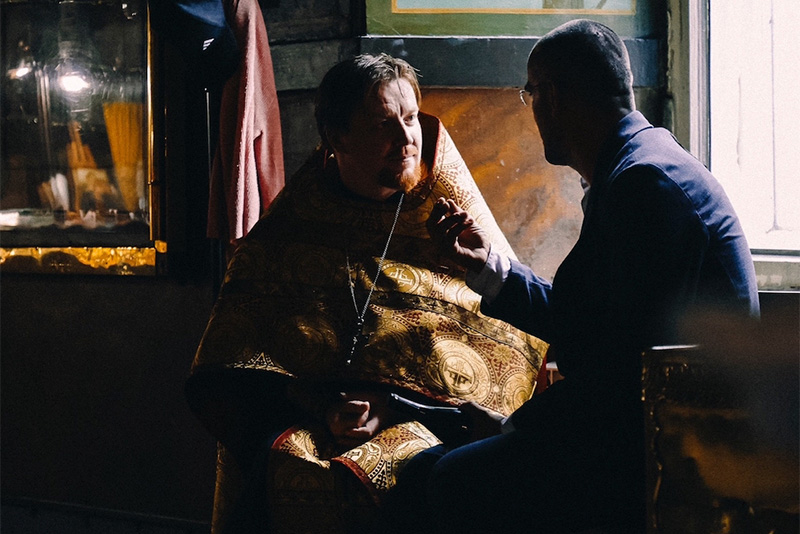
He did not address a person’s function or social standing, but the heart—the image of God within. When someone calls you “my joy,” and especially when that someone is Saint Seraphim, something within awakens, rises to life again. Not only a warm feeling, but a remembrance of your true self: that you are not a mere cog in a machine, not simply a product of the system or a mirror of others’ expectations. You are greeted as one who bears worth and meaning. You are received not out of courtesy, but with a grateful readiness to be at your side.
And the second half of the greeting—“Christ is Risen!”—confirms and seals that message. With the Paschal proclamation the saint reminds each person: “You are God’s beloved creature. For you Christ died and rose again. Even if you wander in darkness now, God has not ceased to believe in you.”
On Saint Seraphim’s day, as we ask his prayers, it is good to remember who we truly are and to what we are called. It is good to ponder the supreme sacrifice of the Son of God and the victory over sin and death marked by His Resurrection. To do this, simply imagine Saint Seraphim addressing his unique greeting to you personally—that you are his joy, and that for you Christ suffered and rose.
Then try to pass that grace along. How? Begin with an inward readiness to receive the other person—especially the one who, for whatever reason, feels unwelcome to you at the moment—not as an irritating obstacle on the way to your favourite programme, but as one sent to you by God. Entrust yourself to His Providence, and speak words to your neighbour that spring not from annoyance but from a genuine faith that every person bears the image of God and therefore is worthy of love.
Translated by the Catalogue of Good Deeds
Source: https://foma.ru/kakie-smysly-zaklyucheny-v-privetstvii-prepodobnogo-serafima-i-v-chem-ego-aktualnost-segodnya.html

Wonderful. My joy, Christ is risen!