


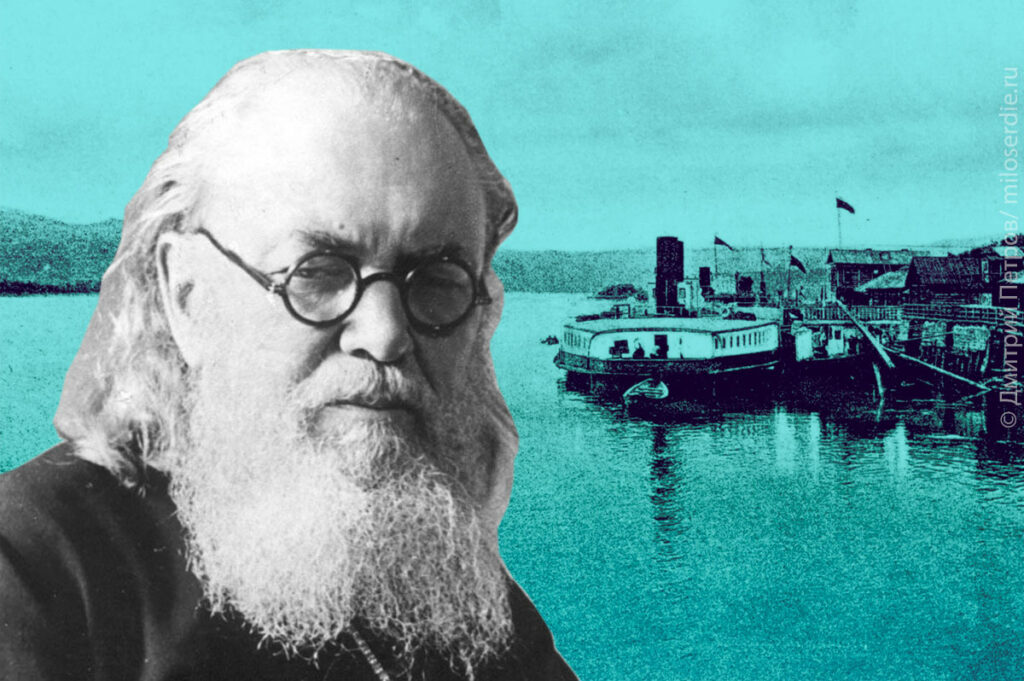
A surgeon who spent his life relieving pain once wrote that he had come to love suffering. His letters and recollections help us understand what he meant—and reveal a saint who knew fear, impatience and discouragement as well as extraordinary courage.
“I came to love suffering, which so wonderfully cleanses the soul.”
Writing to his son Mikhail in 1943, St Luke of Crimea was trying to reassure him. Mikhail feared that his father’s preaching would bring further persecution. His concern was understandable: imprisonment, interrogation and exile had already taken a heavy toll on the bishop and his family.
Yet these are unsettling words. We can understand someone enduring suffering, or learning to accept what cannot be changed. But loving it?
The man who wrote them was a surgeon. He had devoted years to treating the sick, operating on the wounded and finding ways to relieve their pain. He knew suffering too intimately to speak of it lightly.
Protodeacon Vasily Marushchak, his biographer, suggests reading these words in the light of his life—and, above all, his relationship with Christ. St Luke himself was clear that suffering was never an end in itself.
A saint who wanted to be free
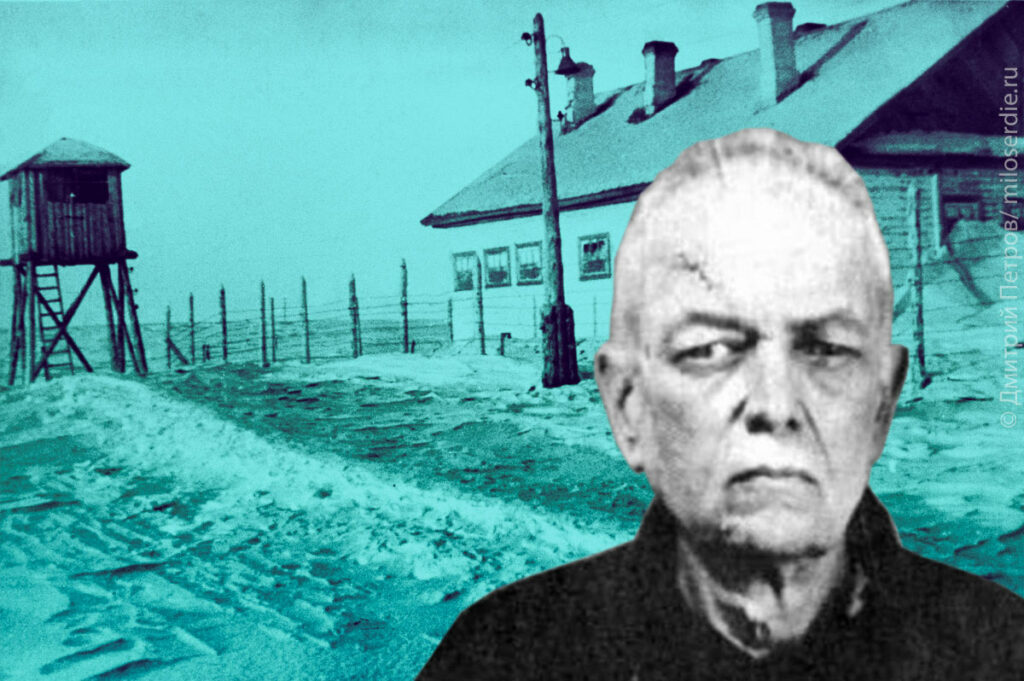
Fr Vasily has studied the records of St Luke’s interrogations. They describe prolonged questioning without sleep, physical exhaustion and a hunger strike. Under extreme pressure, the bishop signed false accusations against himself, then repudiated them.
He resisted mistreatment. He protested. He wanted to be released.
His autobiography is equally frank about his anxiety and disappointment, and the times when his patience failed him. He does not pretend that the strength to endure was always his to command.
During his first Siberian exile, he was ordered to leave Turukhansk for an even more remote settlement in the Arctic north. He was given scarcely any time to prepare. The journey along the frozen Yenisei was bitterly cold; fellow exiles helped him with money and a fur blanket.
It was on this journey that he experienced Christ’s presence with particular clarity. He recalled sensing the Lord beside him, sustaining and strengthening him.
For Fr Vasily, this is essential to understanding the later letter. St Luke remembered the cruelty and the cold, but also the presence of Christ, who had helped him bear them. That help became part of what he could offer others through his preaching and pastoral care.
Fr Vasily describes such encounters as deeply mysterious. He understands St Luke’s gratitude as a response to the nearness of God he had experienced in his suffering. Explaining that experience is much harder than bearing witness to it.
Waiting for the last boat
St Luke’s recollections of Turukhansk show that trust did not come without a struggle.
One summer, he became convinced that his release was approaching. Even when recalling the experience years later, he expressed himself cautiously:
“In the middle of the summer—I do not remember exactly in what form—I received what seemed to me a prediction from God that I would soon return from exile in Turukhansk.”
He waited eagerly. Weeks passed, and nothing changed.
Discouraged, he went into the sanctuary of the church and prayed before an icon of Christ. Looking back, he acknowledged that his prayer had contained resentment at the delay. Then, he recalled, he saw Christ’s face in the icon turn away from him.
Overwhelmed, he left the sanctuary. In the adjoining church he noticed the Epistle book—the volume containing the readings from Acts and the apostolic letters—and opened it. He could not later remember the passage he read, but he never forgot its effect. It exposed his impatience while renewing his hope. When he returned to the icon, he saw Christ looking upon him once more with kindness.
He tells the story as someone who had needed reassurance and received it. Even after all he had endured, waiting could still be painfully difficult.
As the end of his sentence approached, his anxiety returned. Boats were bringing other exiles down the Yenisei, ready for the journey back to Krasnoyarsk. Men whose sentences had ended alongside his were receiving their papers. He heard nothing.
At last, the final steamer of the season arrived. It would leave the following morning. He did not know that an order had been issued to detain him for another year.
That morning he began reading Matins, the morning service, as usual. Outside, the steamer was preparing to depart.
The first long whistle sounded.
He was reading the Psalter when the words of Psalm 31 struck him with an unexpected force:
“I will instruct thee and teach thee in the way which thou shalt go: I will guide thee with Mine eye. Be ye not as the horse, or as the mule, which have no understanding…”*
He received them as words addressed to him personally. His agitation subsided.
“And suddenly a deep peace came into my troubled soul… The steamer sounded its third whistle and slowly pulled away. I watched it with a quiet, joyful smile until it disappeared from sight.”
He could let it go. His future no longer seemed to depend entirely on that departing boat.
Three months later, a small ulcer on his leg, surrounded by inflamed skin, provided medical grounds for his transfer to Krasnoyarsk. St Luke understood this unexpected development as God’s answer. The journey he had longed to make would become possible, though not at the moment or in the manner he had imagined.
* Psalm 31:8–9 in the Septuagint numbering used in Orthodox worship; Psalm 32:8–9 in most Western Bibles.
The courage to care
In another letter to Mikhail, St Luke reflected on a change he had noticed in himself:
“My recent sufferings in prison have profoundly changed me. I have become remarkably patient, gentle and peaceable; my former sharpness has quite disappeared…”
He was speaking of something he had discovered in his own life: through those years, he had grown gentler towards others. His frank account of the struggle leaves room for readers whose own sorrow is still unresolved.
In Science and Religion, St Luke connected the willingness to suffer with the courage to resist evil and to make sacrifices for others. What mattered was the good for which a person was willing to endure hardship.
His medical work gave that conviction a practical expression. He continued to treat people through the upheavals of his life, and during the Second World War he operated on wounded soldiers. The bishop who spoke of the spiritual fruit of suffering was also the doctor who worked to relieve it.
Fr Vasily cautions against trying to reduce our relationship with God to a formula. Grace cannot be earned by enduring a certain amount of pain. Each person’s relationship with God is unique, and much remains hidden from us.
The Book of Job allows that mystery to remain. Job asks why he suffers. His anguish is not resolved by the explanations offered by his friends, and God’s answer does not supply the chain of causes he has been seeking. Job is brought into an encounter that exceeds what he can understand.
Christians bring these unanswered questions to the Son of God, who entered human suffering Himself. He knows rejection, anguish and death. When St Luke speaks of finding Him beside him on the frozen river, it is this crucified and risen Lord whom he recognises.
Following the crucified and risen Lord
Love for Christ also deepens concern for others. St Paul gives an extraordinary expression to that love when he speaks of wishing himself accursed and cut off from Christ for the sake of his own people (Romans 9:3). His words convey the depth of his longing for their salvation.
In Holy Communion, we receive the crucified and risen Christ. Sharing in His life draws us towards His love—a love that serves, forgives and remains faithful even when it is costly. The hope of the Resurrection does not require us to deny the pain of the Cross.
St Luke preached about this in a sermon for Great Friday in 1946. He pictured Christ bearing His Cross, followed by the martyrs and then by countless ordinary Christians, each carrying a cross of their own. Across the centuries, the procession continued towards the Kingdom of Heaven.
He invited his listeners to join them, praying that Christ would give them the grace they needed along that difficult road and the assurance of His victory: “Be of good cheer; I have overcome the world” (John 16:33).
The preacher himself had further trials ahead. His sight was failing. In time he would become completely blind, and the surgeon would have to live without the work that had occupied so much of his life.
Still serving
St Luke remained Archbishop of Simferopol and Crimea until his death. Even after losing his sight, he continued to celebrate the services and attend to the needs of his diocese.
These were difficult years for the Church. The renewed anti-religious campaign under Nikita Khrushchev brought widespread closures and increasing interference in parish life. In 1961, the Kyiv Caves Lavra was closed again.
That same year, changes imposed on parish administration removed priests from responsibility for financial and administrative affairs, placing those powers in lay bodies vulnerable to state control. St Luke was among the bishops who protested. He recognised how easily such arrangements could be used to undermine the life of a parish.
The man who had learned patience in prison had not ceased to oppose injustice.
He celebrated his last Divine Liturgy at Christmas in 1961 and delivered his last sermon on Forgiveness Sunday. His secretary, Yevgenia Pavlovna Leikfeld, recorded the simplicity of his final hours:
“He did not grumble or complain. He gave no instructions. He left us in the morning, at a quarter to seven.”
He died on 11 June 1961, which that year was the Sunday of All Saints of Russia. Despite the authorities’ efforts to restrict the funeral procession, crowds came to accompany their bishop to his grave.
The Church honours him as a confessor: a man who suffered for Christ and remained faithful to Him. In the Russian Orthodox calendar, his commemoration falls on 29 May, corresponding to 11 June on the civil calendar.
A saint within reach
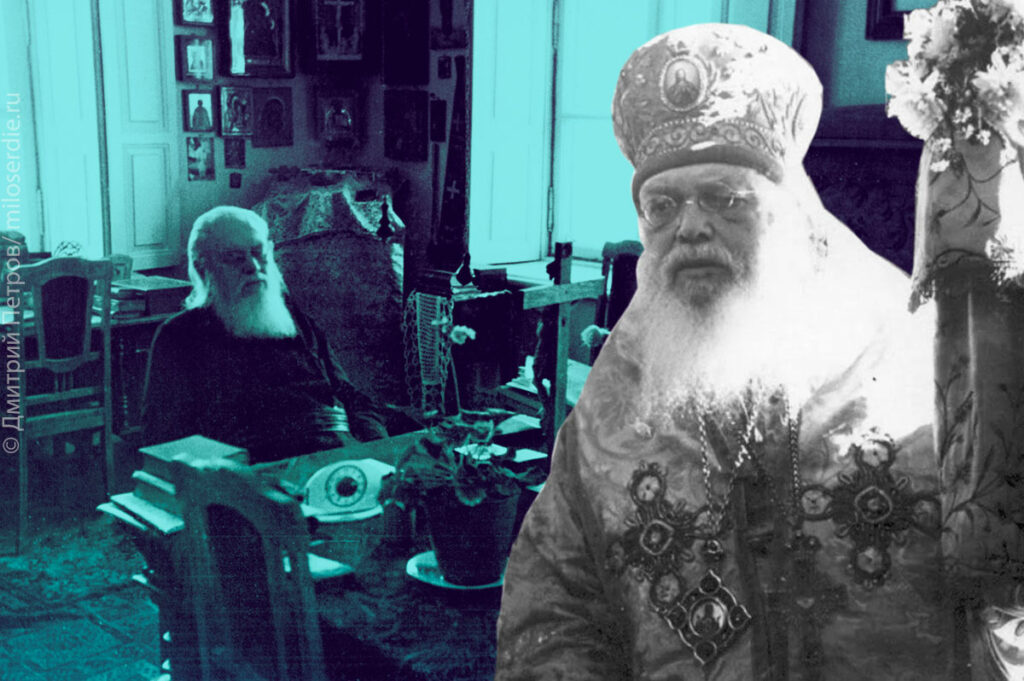
The affection evident at his funeral continues in the prayers of those who seek his intercession. When interviewed in 2023, Fr Vasily had served for decades at Holy Trinity Cathedral in Simferopol, where the saint’s relics rest. He spoke of the many accounts he had heard of help received through St Luke’s prayers, including testimonies from doctors.
He also recalled something the convent’s abbess had told him. Before Pascha (Easter), when a priest was changing the vestments on the relics, she had been present when they noticed that the body had shifted and the slippers were partly off the feet. Fr Vasily understood this as a sign of the saint’s continuing care for those who turn to him in prayer.
In May that year, Fr Vasily attended a conference in Tashkent marking the centenary of St Luke’s consecration as a bishop. One observation made there stayed with him: people spoke of how much they were helped by St Luke’s descriptions of his own weakness. His honesty made him approachable. Here was someone who knew discouragement and uncertainty, yet found strength to continue.
St Luke’s openness about these trials helps us draw closer to him. He feared missing the last steamer, wept before an icon and longed for comfort. His witness encourages us to seek Christ’s help in the struggles of our own lives.
Towards the end of their conversation, the interviewer asked Fr Vasily whether he had learnt anything sensationally new at the conference.
Fr Vasily answered with a hope for his own life:
“As far as I am concerned, what would be sensationally new is if I began to serve God and people as St Luke did.”
Translated by the Catalogue of Good Deeds
Source: https://www.miloserdie.ru/article/nado-li-lyubit-stradanie/