
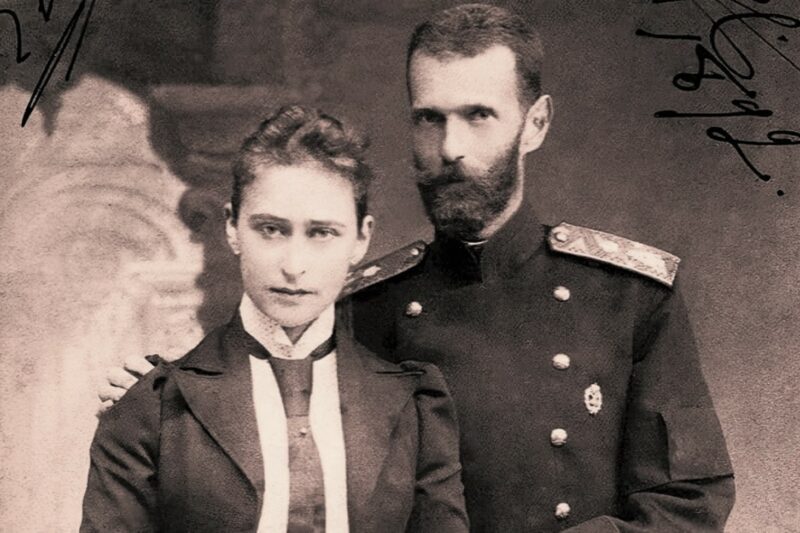
Before she founded the Martha and Mary Convent and gave her life as a martyr, St Elisabeth spent more than twenty years beside Grand Duke Sergei Alexandrovich. Their marriage—shaped by affection, loss, faith and service—formed an important part of the path that led her towards complete self-offering.
Before the Convent
On 17 July, the Church commemorates the Holy Royal Passion-Bearers: Emperor Nicholas II, Empress Alexandra and their five children. The following day, 18 July, She honours the New Martyrs Grand Duchess Elisabeth, Nun Barbara (Yakovleva) and those killed with them near Alapaevsk.
These consecutive commemorations are joined by more than the tragedy that overtook the Romanov family. Empress Alexandra and Grand Duchess Elisabeth were sisters, and their lives unfolded side by side through marriage, conversion to Orthodoxy and the gathering turmoil of early twentieth-century Russia. Yet the elder sister followed a path distinctly her own.
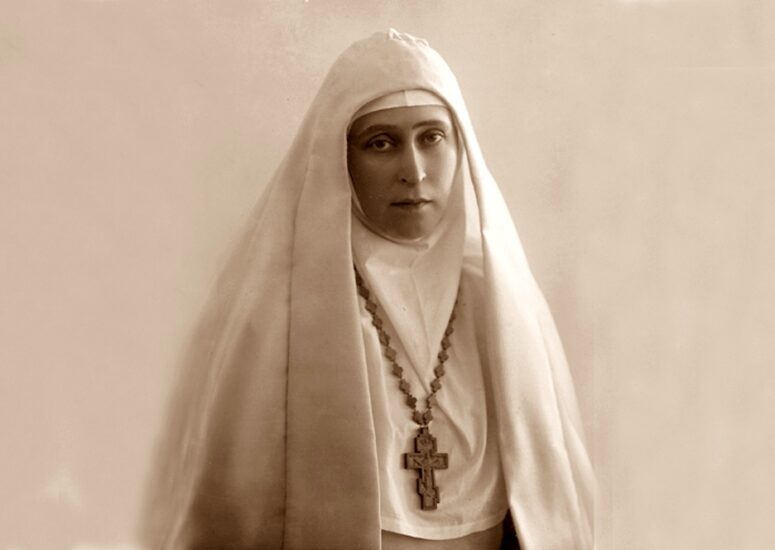
St Elisabeth is remembered above all as the widowed grand duchess who visited her husband’s assassin in prison, founded the Martha and Mary Convent of Mercy in Moscow and ultimately shared the fate of the New Martyrs of Russia. In icons she appears in the white veil of her community, holding a cross or a model of the convent church. It is easy to imagine that her true life began only after she left the imperial court behind.
By then, however, Elisabeth was forty years old. She had spent more than two decades as the wife of Grand Duke Sergei Alexandrovich. During those years she had made Russia her home, entered the Orthodox Church and become deeply involved in charitable service. She had also known the sorrow of childlessness, the demands of public life and the responsibilities of caring for children who were not her own.
Her marriage was therefore more than a prelude to the vocation for which she is now venerated. It was one of the places in which that vocation gradually took shape.
Sergei Alexandrovich is a far less familiar figure. Where Elisabeth inspires almost immediate sympathy, her husband has often been remembered through his political office, his stern manner and the controversies of his age. Neither an idealised defence nor a catalogue of old accusations can bring us much closer to the man she knew.
What emerges more clearly is a man of deep but reserved religious conviction, strongly conscious of duty and intensely attached to his wife. Their marriage was not a sentimental romance untouched by difficulty, nor was it the empty dynastic arrangement it has sometimes been imagined to be. It united two very different temperaments and led them through affection, disappointment and an increasingly shared life of Christian service.
It also helped prepare Elisabeth for a sacrifice that neither of them could yet foresee.
Two Lives Acquainted with Loss
Both Sergei and Elisabeth had known bereavement before they began their life together.
Sergei was the fifth son of Emperor Alexander II and Empress Maria Alexandrovna. From childhood he was serious, introspective and deeply attached to his mother, whose own life was overshadowed by illness and unhappiness within her marriage. Her death in 1880 was a profound blow. Less than a year later, Alexander II was assassinated by a revolutionary bomb in St Petersburg.
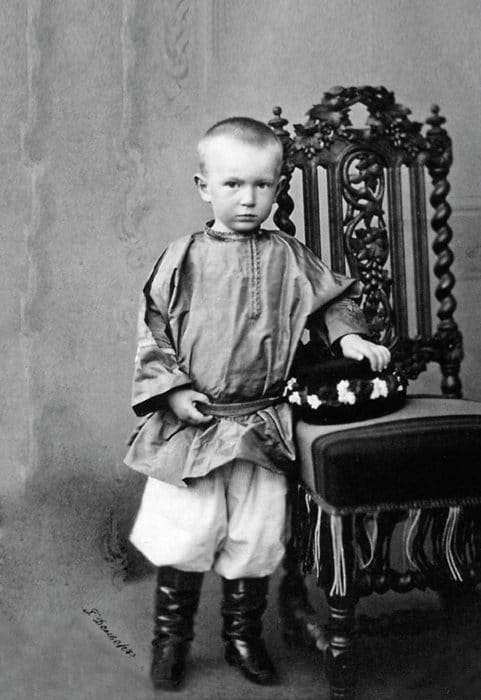
These losses intensified qualities already present in Sergei. He readily withdrew into himself and subjected his own actions to severe scrutiny. Formal and self-controlled in company, he was not a man who easily revealed vulnerability. His religious life, however, was neither ornamental nor confined to the ceremonies expected of a member of the imperial family. Faith had occupied a central place in his life from childhood and remained the measure by which he understood both privilege and duty.
Elisabeth, too, had grown up within a royal household acquainted with sorrow. She was born in Darmstadt, the daughter of Grand Duke Ludwig IV of Hesse and Princess Alice, the second daughter of Queen Victoria. Her mother sought to give her children an upbringing that combined simplicity with a strong sense of responsibility towards others. Princess Alice visited hospitals, supported nursing initiatives and taught her daughters that rank did not release them from direct service to those in need.
Elisabeth lost her mother while still in her early teens. The experience did not turn her into the ethereal, perpetually serene figure sometimes suggested by later devotional portraits. Within the family she was remembered as strong-willed, observant and capable of firmly holding to her own judgement. Her beauty was widely admired, but beneath her social grace lay practical intelligence and considerable strength of character.
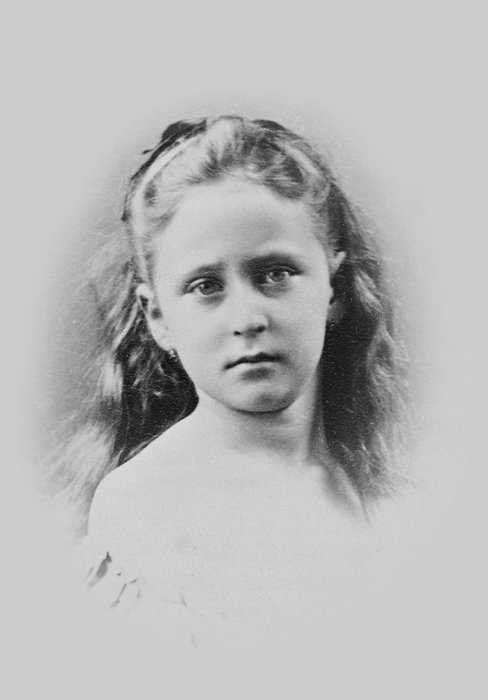
The young woman who came to Russia was not yet the St Elisabeth known to the Church. She was lively, affectionate and at home in the society into which she had been born. Her religious convictions were sincere, but she remained attached to the Lutheran faith of her family and had no intention of changing it merely because she was marrying a Russian grand duke.
Sergei, for his part, was not the untroubled prince of a courtly romance. He was a private and sometimes difficult man, already shaped by grief, discipline and a faith he took with unusual seriousness.
Their marriage would ask much of them both.
A Marriage of Contrasting Temperaments
Sergei and Elisabeth had known one another through their closely connected families long before marriage was discussed. Their courtship nevertheless included uncertainty on both sides. Elisabeth was among the most admired young women of Europe, but she was not being sent to Russia as the passive object of a dynastic arrangement. She hesitated before accepting Sergei, and the decision was ultimately her own.
They married in St Petersburg in June 1884. Elisabeth was nineteen; Sergei was twenty-seven. After the ceremonies of the imperial capital, they spent their first weeks together at Ilyinskoye, Sergei’s country estate outside Moscow. It would become one of the places most closely associated with their married life—a retreat from court, though never entirely from the duties attached to their position.
Their temperaments differed sharply. Elisabeth possessed warmth, social ease and a natural ability to draw attention without appearing to seek it. Sergei was reserved, exacting and uncomfortable with emotional display. He could be abrupt, even with those closest to him, while Elisabeth was more ready to express affection and delight.
One of their nieces later remembered that Sergei sometimes spoke to his wife with the severity of a schoolmaster. Elisabeth would flush and protest, “But, Serge…”, as though she had been caught in some small mistake. The recollection does not suggest a marriage without friction. Yet the same witness also remembered his admiration for Elisabeth and the pride with which he spoke of her when she was absent.
Others noticed the same contrast. In public, Sergei could appear distant and forbidding; in private, he delighted in giving Elisabeth small presents and spoke of her with gratitude. A relative and close friend recalled that he continually thanked God for the happiness of his marriage.
Elisabeth’s own letters leave little doubt about her attachment to him. She called Sergei “a true angel of kindness” and defended him ardently when members of her family questioned either her life in Russia or her movement towards the Orthodox faith. “Let people cry out against me,” she wrote to her brother, “but never say a word against my Serge.”
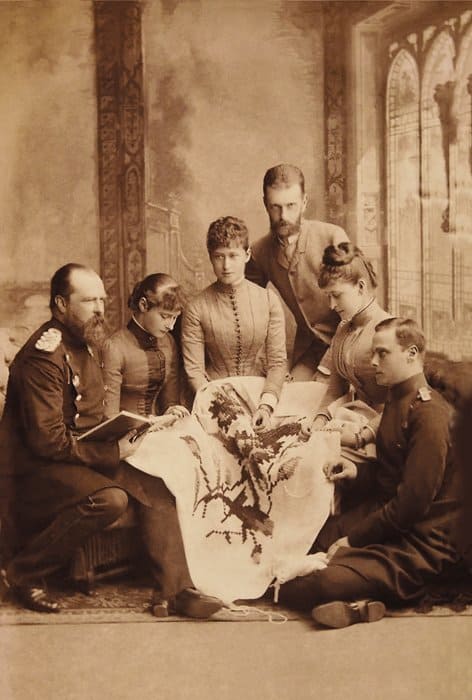
Such words need not be turned into proof that their relationship was flawless. Sergei’s sternness was real, as was the difference in age and experience between them. At the beginning of their marriage, he assumed much of the responsibility for introducing Elisabeth to Russian language, history and customs. He shared with her the places he loved, travelled with her in Europe and, most importantly, opened before her the religious world that stood at the centre of his own life.
Yet it would be misleading to present Elisabeth simply as his pupil. She possessed a strong conscience and an independent will. What she received from Sergei she considered for herself, accepting some things gradually and making others wholly her own. Their marriage did not erase their differences; it became the setting in which those differences were tested and, over time, brought into a deeper unity.
Years later, on an anniversary of their wedding, Sergei recorded a simple scene from their life: he had begun the morning in church, while Elisabeth was working at a depot organised to provide clothing and medical supplies for soldiers. His entry ended with a question of astonished gratitude: “Lord, why have You granted me such happiness?”
The happiness he described was no longer merely that of two young people enjoying the seclusion of a country estate. It had become inseparable from worship, responsibility and work undertaken for others.
A Home Without Children
Sergei and Elisabeth had no children of their own. The reasons remain uncertain, and the surviving evidence does not allow later observers to speak confidently about the most private aspect of their marriage.
It has sometimes been described as a deliberately celibate or “white” marriage. At other times, that description has been fiercely rejected. Neither conclusion is necessary to understand their life together. What can be seen more clearly is that their childlessness was not simply the fulfilment of a shared wish to avoid parenthood.
Sergei’s surviving words express a deep longing for children. “How I should like to have children!” he wrote. “There would be no greater paradise on earth for me than to have children of my own.” His brother, Emperor Alexander III, likewise wrote with regret that Sergei and Elisabeth were unable to have them.
The absence of children was therefore among the sorrows of their marriage. Yet parenthood entered their lives through a tragedy within Sergei’s family.
In 1891, Sergei’s younger brother, Grand Duke Paul Alexandrovich, and his wife, Alexandra, were staying at Ilyinskoye when she unexpectedly went into premature labour. Their son Dmitri was born gravely weak, and his mother died several days later. The newborn child was not expected to survive.
During those precarious days, Sergei took an active part in caring for him. The grand duke who appeared so formal in public spent anxious hours beside his tiny nephew. Dmitri survived, and Sergei later recorded the ordinary milestones of the child’s growth: his first tooth, his first word and his first step.
Such details reveal him more convincingly than any attempt to defend his character through sweeping claims. The severe and self-contained grand duke could watch closely over a vulnerable child and find significance in each small sign of life.
Dmitri and his elder sister Maria initially remained close to their father, but spent long periods with Sergei and Elisabeth. When Grand Duke Paul later contracted a marriage without the emperor’s permission and was required to live abroad, his brother and sister-in-law assumed formal responsibility for the children.
This did not create an uncomplicated family. Maria’s later recollections suggest that Sergei’s strictness could inspire genuine fear, while Elisabeth’s position as aunt and guardian did not erase the children’s attachment to their father. Nor could the arrival of a nephew and niece simply remove the pain of the couple’s own childlessness.
Nevertheless, their home was transformed by the presence of children. Sergei, who had longed to be a father, became responsible for their upbringing. Elisabeth, still finding her place within Russia and the imperial family, was entrusted with lives beyond her own. Together they encountered not an imagined parenthood, but its daily demands: illness, education, discipline, anxiety and affection.
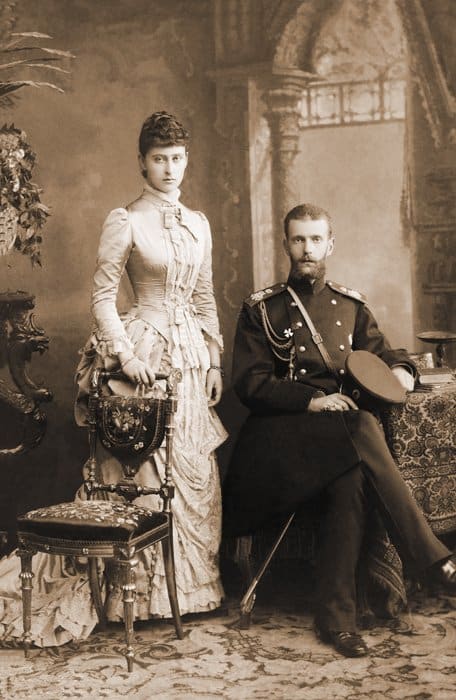
Their marriage remained childless, but it was not untouched by parenthood. The children they had hoped to receive in one form were eventually entrusted to them in another.
A Faith Freely Chosen
When Elisabeth married Sergei, she did not become Orthodox.
Unlike a woman marrying the heir to the throne, she was under no dynastic obligation to leave the Lutheran faith in which she had been raised. She entered Russian court life as a Protestant and remained one for several years. Sergei, whose own life was deeply rooted in the worship and sacramental life of the Orthodox Church, hoped that one day they might share the same faith. Yet Elisabeth repeatedly insisted that he did not attempt to force her decision.
This distinction mattered greatly to her. Conversion undertaken for appearances, family harmony or political convenience would have been a betrayal of conscience. Sergei could introduce her to Orthodoxy, answer her questions and allow her to see what the Church meant in his own life. He could not make the choice for her.
Elisabeth gradually became acquainted with Russian worship not as an abstract system of belief, but as a living world. She attended services, listened to the chant and prayers, observed the rhythm of the feasts and fasts, and watched the seriousness with which her husband approached confession and Holy Communion. Sergei’s faith was demanding and personal. It shaped his use of time, his understanding of duty and the way he endured both responsibility and suffering.
His influence upon Elisabeth therefore lay less in persuasion than in witness.
Their visit to the Holy Land in 1888 was especially important. They travelled there for the consecration of the church of St Mary Magdalene in Gethsemane, built in memory of Sergei’s mother, Empress Maria Alexandrovna. Elisabeth was still a Protestant, yet the pilgrimage brought her into close contact with places she had known from the Gospel since childhood. Jerusalem was no longer a distant biblical setting. It became a landscape through which Christ Himself had walked, suffered and risen.
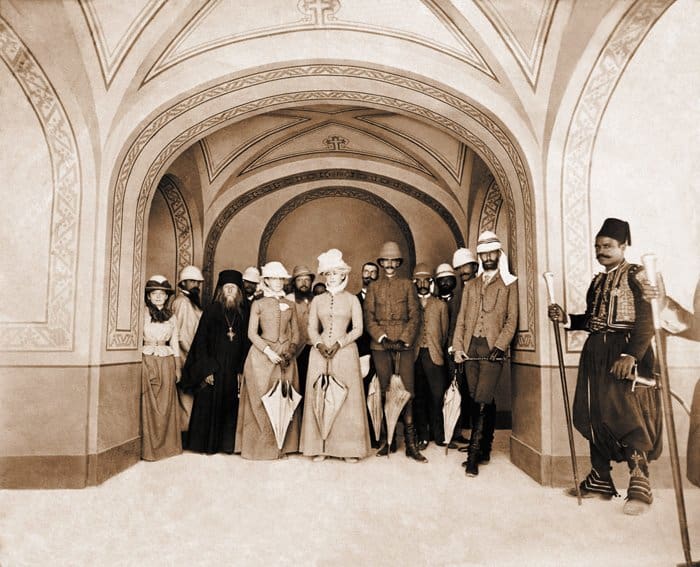
The church in Gethsemane would later acquire a significance neither of them could have foreseen. Many years after her martyrdom, Elisabeth’s relics would be laid to rest there. During that first pilgrimage, however, she was still discerning where she herself belonged.
Her decision was not sudden. She read, prayed and watched. She also understood that the step would cause pain within her family, particularly to her father. For Elisabeth, becoming Orthodox meant more than adopting the religion of her husband’s country. It required her to ask whether the Church in which Sergei worshipped was also the Church in which she herself could stand before God without division.
In a letter to her father, she explained that she could no longer remain Protestant merely in outward form while inwardly praying and believing as her husband did. She had not reached this conclusion lightly. She had thought, read and prayed, asking God to show her the right path. What she now desired was not simply domestic unity, but the fullness of a faith she had come to recognise as true.
Above all, she longed to receive the Holy Mysteries together with Sergei.
This desire reveals the deepest meaning of her decision. She was not seeking only to share his religious identity or remove a difference within their household. She wished to stand beside him at the same chalice. Their marriage had brought her close to Orthodoxy, but her reception into the Church was ultimately directed towards communion with Christ.
Sergei had waited for this moment, yet Elisabeth remembered that he had never used her love for him as a means of pressure. Writing to her brother, she described how easily he might have appealed to her affection in order to obtain what he desired, and how carefully he had refrained from doing so. His restraint allowed her eventual decision to remain wholly her own.
In 1891, seven years after their marriage, Elisabeth was received into the Orthodox Church. She took the patronymic Feodorovna in honour of the Feodorovskaya Icon of the Mother of God, traditionally associated with the Romanov dynasty. From then on, husband and wife could share fully in the sacramental life that had always stood at the centre of Sergei’s existence.
Their unity in faith did not dissolve the differences between them. Elisabeth remained herself: strong-willed, practical and capable of independent judgement. Orthodoxy did not turn her into a passive reflection of her husband. Rather, the faith she had first encountered through him took root in her own conscience and began to bear fruit in ways that would eventually extend far beyond the life they shared.
It would be equally misleading to say that Sergei made Elisabeth a saint. Holiness is not transmitted from one spouse to another, nor can one human being determine the spiritual vocation of another. Yet their marriage gave Elisabeth a particular setting in which her faith could deepen. Through Sergei she came to know the worship of the Russian Church, the Holy Land and a vision of duty inseparable from service before God.
What began as his hope that they might one day receive Holy Communion together became something larger. Their shared faith gradually became the foundation of their shared work.
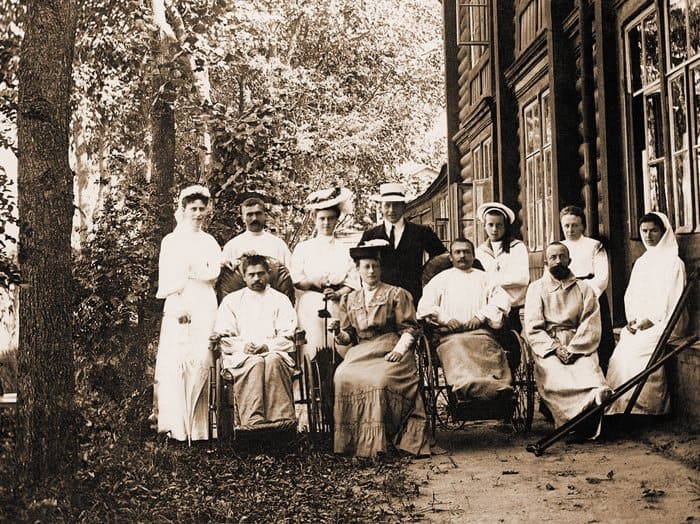
Faith Made Visible in Service
For Sergei and Elisabeth, faith was never intended to remain within the privacy of prayer or the ceremonial life of the court. Their position brought public obligations, but both increasingly understood those obligations in Christian terms: privilege was inseparable from responsibility, and responsibility required concrete service.
One of the causes closest to Sergei was the work of the Imperial Orthodox Palestine Society. He became closely involved in its efforts to assist Orthodox pilgrims travelling to the Holy Land and to support churches, schools and hospices there. At a time when such journeys were difficult and often beyond the means of ordinary believers, the Society sought to make pilgrimage safer and more accessible.
Sergei’s attachment to the Holy Land was not merely institutional. He travelled there more than once and took a personal interest in the churches and practical arrangements intended for pilgrims. The church of St Mary Magdalene in Gethsemane was among the most visible fruits of this work.
For Elisabeth, the Holy Land became part of her own spiritual journey. She first encountered it beside her husband, before she had entered the Orthodox Church. Much later, after revolution and martyrdom had carried her far beyond the world she had known, her relics would be brought back to the same church. What began as one of Sergei’s most cherished undertakings would thus become inseparably connected with her memory.
Their service was not confined to distant places. At Ilyinskoye, where they had spent some of the happiest and most private periods of their marriage, requests for assistance continued to reach them. People sought help with employment, education, medical needs and the care of orphans. Some appeals were modest and personal; others required organisation and substantial resources.
The couple did not respond to every need in the same way, nor could their charity escape all the conventions of their rank. Yet the surviving picture is not one of ceremonial patronage alone. They took an interest in individual cases and were prepared to turn their own household and property towards practical use.
During an outbreak of cholera in central Russia, a temporary medical station was opened at Ilyinskoye. Local people could be examined there, receive urgent treatment and, when necessary, remain in isolation. For several months, an imperial estate became a place where peasants in danger of serious illness could obtain care close to home.

This small institution reveals something essential about the form their service was beginning to take. It joined resources with organisation, and concern with practical action. Elisabeth possessed a particular gift for such work. She could see not only that help was needed, but also how people, supplies and responsibilities should be arranged so that help would actually reach those for whom it was intended.
That ability became increasingly evident in Moscow.
When Sergei was appointed governor-general in 1891, the couple left the comparative seclusion they valued and entered a far more demanding public life. Elisabeth wrote with some apprehension that they would have to abandon the comfort of their former routine and assume responsibilities neither of them had sought. Their new position placed them at the head of numerous charitable, educational and cultural initiatives, while also exposing them more fully to public scrutiny.
Sergei supported a wide range of ecclesiastical, historical and cultural institutions. He was closely involved in the development of the Museum of Fine Arts in Moscow and gave his patronage to organisations concerned with education, archaeology, music and the preservation of Russia’s religious and historical inheritance. Such work reflected his conviction that public service was not limited to administration. A city’s life was also shaped by what it preserved, taught and made accessible to future generations.
For Elisabeth, Moscow became a vast field of practical charity. She visited hospitals, supported institutions caring for the poor and gradually acquired experience in organising relief on a large scale. Her manner could remain formal, and she did not cultivate an appearance of easy familiarity. Yet reserve did not mean indifference. She paid attention to petitions, followed individual cases and expected those entrusted with charitable work to carry it out conscientiously.
Her upbringing had prepared her for this. Princess Alice had taught her daughters that compassion should take visible form: the sick must be visited, institutions properly run and good intentions translated into sustained labour. In Russia, that inheritance was joined to the Orthodox understanding of mercy as service offered to Christ in one’s neighbour.
The couple’s charitable work therefore grew from more than social expectation. Sergei’s sense of duty and Elisabeth’s practical intelligence increasingly converged. He brought seriousness, institutional responsibility and a strong vision of service before God. She brought energy, attentiveness and an unusual ability to organise people around a task.
Their differences remained. Sergei was drawn to structure, tradition and the responsibilities of office; Elisabeth moved increasingly towards direct contact with suffering. Yet these were not opposing paths. For many years they formed part of one shared life.
This became especially clear during times of national crisis. When war created urgent need among soldiers and their families, Elisabeth helped organise depots where clothing was sewn, bandages prepared, parcels assembled and mobile churches equipped. The work demanded far more than the lending of a celebrated name. Supplies had to be obtained, volunteers directed and countless details supervised.
Sergei’s anniversary diary entry—beginning his morning in church while Elisabeth was already at work in one of these depots—captures the pattern their marriage had acquired. Prayer and labour did not compete with one another. Each gave meaning to the other.
The charitable institutions of their married life were not yet the Martha and Mary Convent. Elisabeth still occupied the world of the imperial court, and much of her work remained shaped by the possibilities and limitations of her rank. Yet she was learning lessons that would later prove decisive: that mercy requires discipline; that care for the suffering cannot depend on passing emotion; and that Christian love must be given a durable form if it is to remain present when enthusiasm fades.
Duty Without Ease
Sergei’s service differed in character from Elisabeth’s. She increasingly sought direct contact with those in need; he was more at home within institutions, established forms and clearly defined responsibilities. He understood service primarily as duty: the faithful fulfilment of the office, inheritance and authority entrusted to a person by God.
This outlook was deeply rooted in his Orthodox faith, but it was also shaped by his upbringing as a son of the emperor. Sergei did not question the hierarchical world into which he had been born. He believed that authority imposed obligations and that those who possessed it would answer for the way they used it. His manner of serving was therefore disciplined, formal and often impersonal.
The same qualities that made him conscientious could also make him rigid. He valued order, precision and obedience, and expected others to take duty as seriously as he did. Those who encountered only his official manner could easily find him cold or arrogant. He did little to soften that impression. Reserve was not merely a mask worn in public; it was part of his nature.
Yet it concealed more than indifference.
Sergei suffered from poor health for much of his life. A chronic and painful condition affected his spine and joints, obliging him to wear a supporting corset beneath his clothes. The unusually straight posture that many interpreted as pride was therefore at least partly a physical necessity. He also relied upon hot baths and other treatments to ease recurring pain.
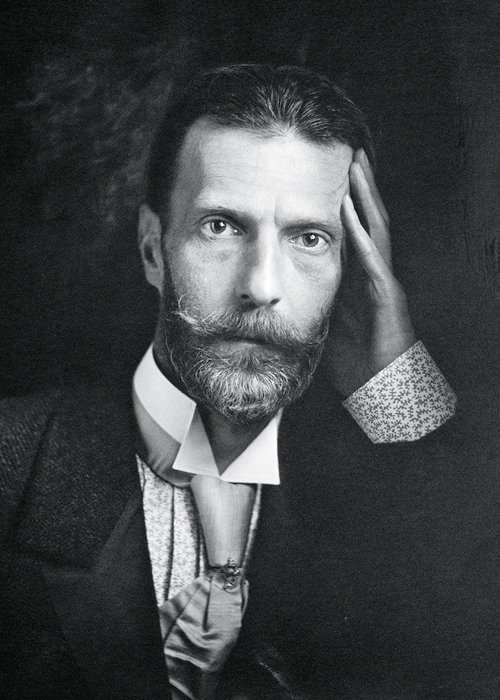
He rarely spoke openly of this suffering. Public life demanded appearance, discipline and self-command, and he seems to have regarded illness as something to be borne privately. Elisabeth was among the few who understood how much effort ordinary duties could cost him. In letters to relatives, she mentioned periods of severe pain and the treatments without which he could scarcely manage.
Knowledge of his illness does not resolve every criticism of his conduct, nor should physical suffering be used to transform every harshness into hidden virtue. It does, however, complicate the familiar image of a grand duke standing stiffly apart from others through simple hauteur. The body that appeared so rigid was a body held upright through pain.
His inward life was marked by a similar severity. Sergei examined himself closely and was troubled by his inability to possess the ease and light-heartedness he saw in others of his age and rank. In one diary entry, he wondered why he felt everything so deeply and why he could not be as carefree as the fashionable young men around him. He was conscious of appearing older than his years, overly serious and incapable of entering naturally into their pleasures.
This seriousness drew him repeatedly towards the Church. His diaries commonly began or ended with brief prayers for mercy and blessing. He attended services frequently and approached Holy Communion far more often than was customary among many laypeople of his time. Ecclesiastical history, worship and the material life of the Church were not peripheral interests to him. He studied them carefully and took personal responsibility for matters another patron might have left entirely to advisers.
His work in the Holy Land reveals this combination of piety and administrative attention. Sergei was concerned not only with prominent churches and public ceremonies, but also with the practical conditions faced by pilgrims: where they would stay, how they would travel and how Russian ecclesiastical institutions could be sustained. He approached such matters with the same seriousness he brought to cultural and historical organisations in Moscow.
There was genuine generosity in this labour, though it remained the generosity of a man accustomed to directing from above. Sergei was not naturally drawn towards emotional intimacy with strangers. His service proceeded through responsibility, structure and perseverance rather than warmth of manner.
Within the family, however, a more vulnerable figure appeared. His longing for children, his anxious care for the infant Dmitri and his attention to the smallest stages of the boy’s growth reveal a tenderness that public life rarely allowed others to see. His affection for Elisabeth was likewise easier to perceive in absence than in company. He could correct her sharply when she stood before him, yet speak of her with admiration when she was elsewhere.
This contrast could be difficult for those closest to him. Love that remains largely unspoken may be sincere, but it does not cease to be demanding. Elisabeth’s loyalty should not prevent us from recognising that life beside so reserved and exacting a man required patience. At the same time, his reserve did not prevent her from recognising the kindness beneath it. She knew both the severity visible to others and the hidden cost of the life he led.
For more than twenty years, their distinct ways of serving remained joined within one household. Then, in the violence of 1905, that shared life was suddenly broken.
A Death Met with Forgiveness
By the beginning of 1905, Russia was entering a period of deep political unrest. Sergei had resigned as governor-general of Moscow, though he remained commander of the Moscow Military District. Threats against his life were no longer abstract, and he knew that revolutionaries had marked him as a target.
On 17 February 1905—4 February according to the Old Calendar then used in Russia—he left the Kremlin in his carriage. Near the Nikolsky Gate, Ivan Kalyaev, a member of the Socialist Revolutionary Combat Organisation, threw a bomb at close range.
Sergei was killed instantly.
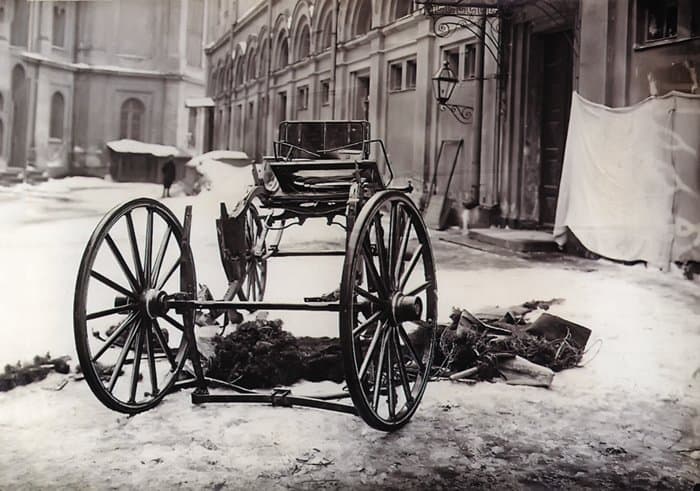
The article need not dwell upon the physical horror of his death. What matters is the abruptness with which more than twenty years of married life came to an end. Elisabeth came to the scene and faced, without preparation, the violent death of the man beside whom her adult life had taken shape.
Those around her were struck by her composure. This should not be mistaken for absence of grief. Elisabeth had lost not merely an imperial relative or public official, but her husband, companion and closest connection to the life she had built in Russia. Her self-command was the discipline of a woman who had long learned to place duty before public emotion.
In the days that followed, prayer became the form through which she endured what had happened. She kept vigil for Sergei and received those who came to mourn him. Yet her response did not remain within the boundaries of private bereavement.
Several days after the assassination, Elisabeth visited Kalyaev in prison.
The meeting has often been retold with dramatic dialogue whose precise form is difficult to establish. Its essential character, however, is clear. She came not to excuse the crime or pretend that justice no longer mattered. She came as a Christian widow to the man who had killed her husband and called him to repentance.
She spoke to him of forgiveness and urged him to recognise the spiritual meaning of what he had done. According to later accounts, she brought him a Gospel and an icon. Kalyaev listened but did not accept her appeal in the way she had hoped. He continued to justify the assassination as a political act.
Elisabeth’s visit is sometimes described as though forgiveness had cost her nothing, arising naturally from an almost otherworldly gentleness. The truth is more demanding. She went to the prison because she had been wounded, not because she stood above suffering. Forgiveness did not erase the murder, release her from grief or make the assassin innocent. It meant refusing to allow hatred to become the final bond between them.
Her action was therefore neither sentimental nor passive. She desired that the man who had taken Sergei’s life should not also lose his soul.
This was consistent with the faith that had grown during her marriage. Sergei had introduced her to a life centred upon the Mysteries of the Church; she had made that faith her own. Now she was required to live its most difficult command: to pray for an enemy while the loss he had inflicted was still immediate.
She also appealed for mercy on Kalyaev’s behalf. Her effort did not prevent his execution, but it revealed the direction in which her life was already moving. Elisabeth could no longer be satisfied merely with grief honoured by ceremony. She sought a Christian response that would reach beyond the closed circle of loss and retaliation.
The assassination ended their shared earthly life. It did not erase what had been formed within it.
The Life That Continued
After Sergei’s death, Elisabeth assumed responsibility for matters he had left unfinished and remained attentive to institutions they had supported together. Her first impulse was not to abandon their former life as though it had been empty, but to preserve what she believed had been valuable within it.
At the same time, something fundamental had changed.
The structures of court life, public patronage and imperial responsibility could no longer contain the vocation taking shape within her. The works of mercy in which she had long participated now appeared to demand a more complete personal offering. The woman who had organised hospitals, depots and charitable societies began to ask how she herself might live among those she served.
This was not an immediate transformation from grand duchess to foundress. Grief had to be endured, responsibilities settled and a new form of life discerned. Yet the movement was already present: from supporting charitable work to sharing it directly; from giving resources to giving herself; from service shaped by rank to service shaped by the Gospel.
Elisabeth gradually withdrew from much of the social world that had surrounded her. She sold or distributed many of her jewels and possessions, using the proceeds to establish a new community in Moscow. In 1909, the Martha and Mary Convent of Mercy formally began its work.
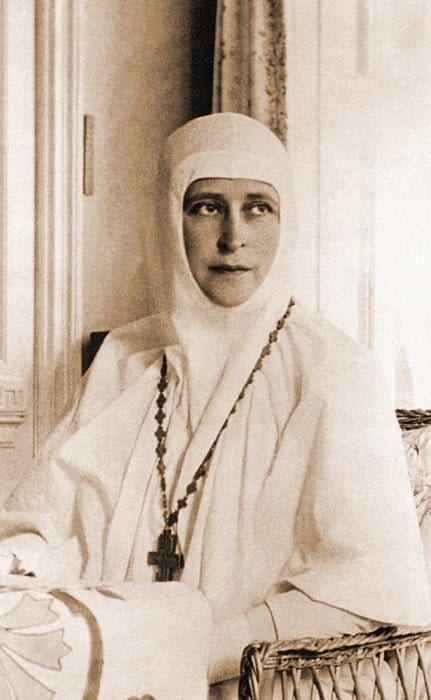
The name expressed the balance she sought. Martha and Mary, the sisters of Lazarus, represented active service and attentive prayer—not two rival callings, but two dimensions of one Christian life. The sisters cared for the sick and poor, visited homes, assisted abandoned children and offered practical help to those whom ordinary institutions often failed to reach. At the heart of this work stood the Divine Liturgy, the daily offices and a life ordered towards Christ.
Elisabeth did not simply reproduce the charitable institutions of her married years. The new community demanded something more direct and more radical. She exchanged the visible privileges of a grand duchess for a disciplined life of prayer, labour and personal contact with suffering. Yet the administrative gifts she had developed earlier remained indispensable. The convent required careful organisation, medical expertise, financial discipline and the ability to bring different people into sustained service.
Her earlier life was not discarded; it was transfigured.
The strength of will noticed in Elisabeth from childhood now enabled her to establish and guide a demanding community. The practical skill cultivated through years of charitable work gave structure to compassion. The Orthodox faith she had freely embraced during her marriage became the foundation of a life offered without reserve.
Sergei had not created this vocation, and his death alone did not produce it. The seeds had been present long before: in her mother’s example, in Elisabeth’s own character, in her gradual entry into Orthodox life and in the years she and Sergei had spent serving together.
Bereavement changed the conditions in which those seeds could grow. The world they had shared was broken open, and Elisabeth was left to answer God without the support, duties and limitations that marriage had once given her.
She did not answer by retreating from life. She entered more deeply into its suffering.
Faithful to the End
The Revolution of 1917 swept away the public world in which Elisabeth had spent most of her adult life. The imperial family fell, institutions connected with it were dismantled, and the Church entered a period of growing persecution. Yet Elisabeth refused opportunities to leave Russia.
The country in which she had once arrived as a young German princess had long since become her home. More importantly, the sisters of the Martha and Mary Convent and the people they served had been entrusted to her. She would not abandon them merely because remaining had become dangerous.
Life at the convent continued for as long as circumstances allowed. The sisters prayed, cared for the sick and gave assistance to those impoverished by war and upheaval. Elisabeth sought to preserve peace within the community, resisting both panic and bitterness. The political order around them was collapsing, but their Christian calling had not changed.
In the spring of 1918, Elisabeth was arrested. She was taken first from Moscow to Perm, then to Yekaterinburg and finally to Alapaevsk. Nun Barbara (Yakovleva), one of the sisters of the convent, chose to remain with her.
Even in captivity, Elisabeth continued to think of the community she had left behind. Her letters urged the sisters to remain united, to place their trust in God and to continue the life of prayer and mercy they had begun together. She did not know whether she would return. What concerned her was that fear should not destroy the spiritual bond between them.
Her imprisonment brought her once more into the company of members of the Romanov family. Yet little remained of the splendour traditionally associated with their name. Rank could offer no protection. Elisabeth now shared the uncertainty and humiliation endured by countless others in revolutionary Russia.
The sequence of events the Church commemorates each July then unfolded with terrible speed.
During the night of 16–17 July 1918—3–4 July according to the Old Calendar—Emperor Nicholas II, Empress Alexandra and their children were killed in Yekaterinburg. On the following night, 17–18 July—4–5 July Old Style—Elisabeth, Nun Barbara (Yakovleva) and their fellow prisoners were taken from Alapaevsk to an abandoned mine outside the town and put to death.
The Church remembers Elisabeth not simply because she suffered a violent death, but because her final suffering completed the direction of her life. She had once approached the man who murdered her husband and called him to repentance. She had then given her wealth, abilities and strength to the service of those in need. In captivity, stripped of position, property and freedom, she possessed only what could not be taken from her: faith in Christ and love for those beside her.
Accounts of her final hours preserve the same image that had gradually emerged throughout her life—not a fragile figure sheltered from hardship, but a woman able to remain attentive to others while suffering herself. The strength once expressed through organisation and public service had become endurance, prayer and steadfastness.
The young princess who had hesitated before leaving Darmstadt, the grand duchess who had slowly found her way into the Orthodox Church, the childless wife who had cared for children entrusted to her, and the widow who had forgiven her husband’s assassin were not separate Elisabeths. Each stage had prepared the next.
From Moscow to Gethsemane
After the bodies of the Alapaevsk martyrs were recovered, the upheavals of the Civil War made a settled burial impossible. The remains of Elisabeth and Nun Barbara (Yakovleva) were carried eastwards through Siberia and China, and from there towards the Holy Land.
In 1921, they were laid to rest in the church of St Mary Magdalene in Gethsemane. The place brings the story of Elisabeth and Sergei to an unexpected completion.
Sergei had helped build the church in memory of his mother. He had brought Elisabeth there during their pilgrimage to the Holy Land, while she was still seeking to understand the Orthodox faith. She could not then have known that the church would one day receive her relics, or that Christians from many countries would come there to ask her prayers.
The building associated with Sergei’s filial love thus became the resting place of the wife who survived him, continued their shared service and followed Christ to martyrdom.
This does not mean that Elisabeth’s later vocation should be reduced to her marriage. The Martha and Mary Convent was her own response to God, and martyrdom was the final seal upon a life freely offered. Sergei could neither have designed nor foreseen that path.
Yet neither should the twenty years they spent together be treated as a courtly interval from which the saint eventually escaped.
Within their marriage, Elisabeth made Russia her home. She encountered Orthodoxy through the life of someone she loved, then embraced it through the free judgement of her own conscience. She learned to unite prayer with disciplined service, to carry responsibility for others and to give practical form to compassion. After Sergei’s death, these gifts did not disappear. They were purified, deepened and offered more completely.
His influence upon her was real, though not absolute. Her love for him was profound, though their marriage was not without difference or sorrow. What they shared became one part of the providential formation through which Elisabeth grew into the saint the Church now venerates.
Two Consecutive Commemorations
On 17 July, the Church keeps the memory of the Holy Royal Passion-Bearers. On 18 July, She commemorates St Elisabeth, Nun Barbara (Yakovleva) and the other martyrs of Alapaevsk.
The two observances follow the historical sequence of their deaths, but they also reveal the close ties that had joined their lives. Elisabeth was the elder sister of Empress Alexandra, the aunt of the imperial children and a member of the same family now overtaken by persecution. Their earthly paths ended on consecutive nights.
Yet the Church does not preserve their memory merely as the tragic conclusion of a dynasty. She honours the witness borne by particular people when all earthly security was taken from them.
In St Elisabeth, that witness had been formed over many years. It appeared in her willingness to follow conscience into the Orthodox Church; in her care for children, the sick and the poor; in her forgiveness of the man who killed her husband; and finally in her refusal to abandon those entrusted to her when danger approached.
Before the white veil of the Martha and Mary Convent, there had been the wedding crown. Before her complete renunciation, there had been a shared home, common labour and a marriage sustained through affection, difference and loss.
That marriage was not the whole of St Elisabeth’s path. It was, however, one of the places in which God prepared her to offer Him everything.
Translated by the Catalogue of Good Deeds
Source: https://foma.ru/elizaveta-fedorovna-i-sergey-aleksandrovich-romanovyi.html