

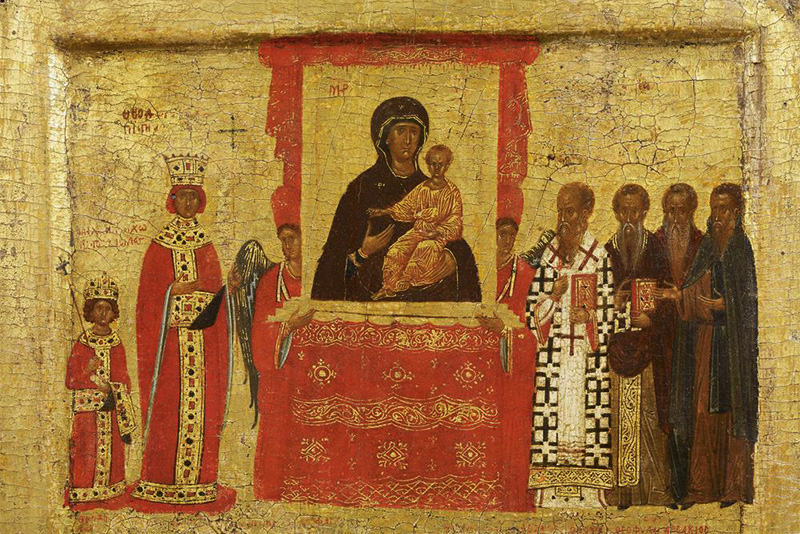
Every year, on the Sunday nearest to 29 July, the Church commemorates the Holy Fathers of the first six Ecumenical Councils. Over four centuries, from the fourth to the seventh, these Councils defended the Orthodox faith against destructive heresies and gave the Church a common confession. This often raises a fair question: if there were seven Ecumenical Councils, why does this mid-summer celebration honour only six? Where, then, are the Fathers of the Seventh?
The answer is twofold: historical and theological.
I. Historical Context: A Long Road to Recognition
By the ninth century the Church had already formed the liturgical celebration of the Fathers of the six Ecumenical Councils, and hymns praising their work were in use. Although the Seventh Council met in 787, it did not immediately enjoy universal recognition on a par with the first six. Only after the Local Council of Constantinople in 879–880 was the Seventh formally received as Ecumenical and integrated into the Church’s life. By then, the established feast of the Six Councils was already in place.
II. Theological Meaning: Dogma and the Image of Dogma
The feast of the Fathers of the Six Councils gathers, in one celebration, the core dogmatic teaching of the Church. Among the truths these Councils confessed and defended are:
- Christ is truly God and truly Man.
- The Holy Trinity is consubstantial and indivisible.
- The Holy Spirit is truly God.
- The Most Holy Theotokos is truly the Mother of God.
- In Christ the divine and human natures exist “without confusion, without change, without division, without separation.”
- Christ possesses two wills, divine and human, in perfect harmony.
The Seventh Ecumenical Council had a different emphasis. It did not define a new foundation of the faith concerning the Trinity or the God-manhood of Christ; rather, it affirmed the veneration of icons and addressed matters of ecclesial discipline. For this reason, the Fathers of the Seventh Council are commemorated on a separate day: the Sunday nearest to 24 October, the date marking the end of the Council’s sessions. This distinct commemoration does not diminish the Council’s importance; it simply reflects its particular focus.

One Faith, Seven Councils
In addition to these observances, there is also a feast that honours the Fathers of all seven Ecumenical Councils together, kept annually on 31 May. In this way the Church bears witness that all seven Councils are equal in dignity and inseparably linked. The six Councils provide the dogmatic framework of the faith; the seventh gives its image, the confession of that same faith in holy icons.
Translated by the Catalogue of Good Deeds
Source: https://foma.ru/kuda-ischezli-uchastniki-vii-vselenskogo-sobora.html



Thanks for this explaination.