


Saints are often imagined as ascetics in the desert or fiery preachers on street corners. They are rarely pictured as high-ranking Roman officials—yet such was Demetrius of Thessaloniki, a Proconsul of Greece and a vital cog in the imperial machine. Born to a noble family (his father had also been proconsul), Demetrius was part of the Roman elite. He won appointment not from some distant bureaucrat but from Emperor Galerius himself, one of the four rulers of the newly reformed Tetrarchy. And in 306 AD, that same imperial system which he served would brutally execute him. This is the central paradox of Demetrius’s martyrdom. It wasn’t the result of a random mob or a tragic misunderstanding—it was a calculated state execution of a man whom the empire had famously honored and promoted. Why would Rome turn on its own?
To understand why, we must look at Emperor Diocletian and the empire he was trying to save. Diocletian was neither madman nor fool, but a ruthlessly efficient politician—a skilled administrator who inherited an empire in crisis. The Crisis of the Third Century had left Rome fractured and aflame, and his reign was a desperate but ingenious attempt to restore the state’s strength and majesty. He knew military and economic reforms alone would not be enough. The vast empire needed a unifying soul, a spiritual cement to bind its lifeless machinery together. For Diocletian, that cement was the Pax Deorum, the “Peace of the Gods.” The survival of the state, he believed, depended on unified public worship of the traditional Olympian gods. The Emperor himself, as Pontifex Maximus (high priest), stood as the guarantor of this supposed divine contract. To refuse a sacrifice to the gods wasn’t just a private matter of conscience—it was treason against the Roman order.

Yet this very policy planted the seeds of conflict with the rapidly growing Christian Church. For nearly two decades, Diocletian had been surprisingly tolerant of Christians in high places. They served in his army, his government, even in his palace. But as the Church’s numbers and faith grew, it developed its own hierarchy and a passionate network of charity that spanned the empire. To Roman eyes, this looked dangerously like a ‘state within the state.’ The Church wasn’t plotting rebellion, but it boldly declared that its faith was the only true faith, directly challenging the Emperor’s religious authority. A Christian official’s ultimate allegiance was not to Caesar in Rome, but to Christ in heaven. For a reformer like Diocletian, this was an existential threat. The Empire now harbored a higher loyalty, an invisible Kingdom that transcended the ancient imperial structure. Reluctantly but inexorably, Diocletian was drawn into a confrontation with the Church.
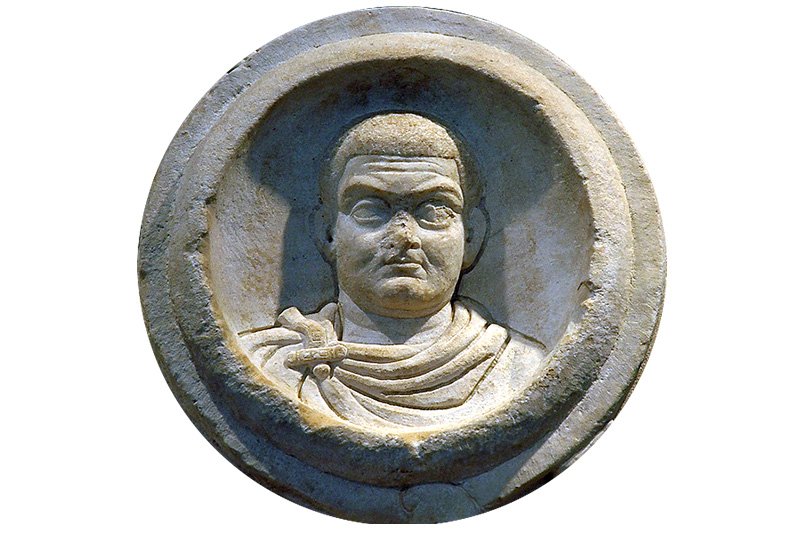
These imperial tensions soon became intensely personal in Thessaloniki, the city where Demetrius held office. Diocletian’s appointed caesar in the East was his own son-in-law, Galerius. While Diocletian could be pragmatic, Galerius was a zealot. Contemporary accounts describe him as possessed of a brutality “unknown to the Romans.” He nursed a violent hatred of Christianity—reportedly, even before any official edict, he wanted to burn all Christians alive. And yet, in a dramatic irony, it was Galerius who had personally elevated Demetrius, a known Christian, to high office. How could a devoted Christian thrive under the empire’s most anti-Christian ruler? Perhaps Galerius was simply too preoccupied with his military campaigns (for years he was off fighting the Persians) to scrutinize Demetrius’s faith. But once the Persian war was over, Galerius’s attention returned home—and any ambiguity about loyalties was about to vanish. By 306, the Great Persecution launched by Diocletian and Galerius was in full force. The emperor was coming to Thessaloniki in triumph, and every official would now be required to prove his loyalty and piety to the old gods. Demetrius, the Christian proconsul, knew that his moment of truth had arrived.
Galerius’s arrival was not just a routine visit; it was a grand imperial show of force. Fresh from victory, he expected Thessaloniki to erupt in celebration of the gods and of himself. The city obliged with lavish festivals, sacrifices, and gladiatorial games. But Demetrius understood the true purpose of these festivities: they were a test of faith and loyalty. In an empire defined by the divine mandate of its rulers, public ritual was the surest way to separate the truly loyal from the suspect. And Demetrius had already made his choice. Anticipating what was to come, he quietly gave away his wealth to the poor and prepared his soul not for a gala banquet, but for martyrdom.
The climax of the celebration was a grand exhibition in the arena featuring Lyaeus, Galerius’s champion gladiator. Lyaeus was touted as unbeatable and beloved by the Caesar—a living symbol of imperial invincibility and the favor of the old gods. It was at this moment that Demetrius, Rome’s loyal official, made his final and most daring move. He didn’t raise an army or start a riot; instead, he turned his faith into action in a startling way. Demetrius sought out a young Christian named Nestor and gave him a blessing to challenge the imperial champion. Empowered by the saintly proconsul’s blessing, Nestor entered the arena to face the giant. In a scene reminiscent of David and Goliath, the slight young Christian, armed with the power of the Cross, miraculously defeated Lyaeus – hurling him off the platform and onto the soldiers’ spears below. The crowd gasped. The symbolism was devastating: before the eyes of the entire city, a youth armed only with faith in Christ had toppled the invincible fighter of Caesar. The Church’s “state within the state” was hidden no longer – it had declared its power in the emperor’s own arena.
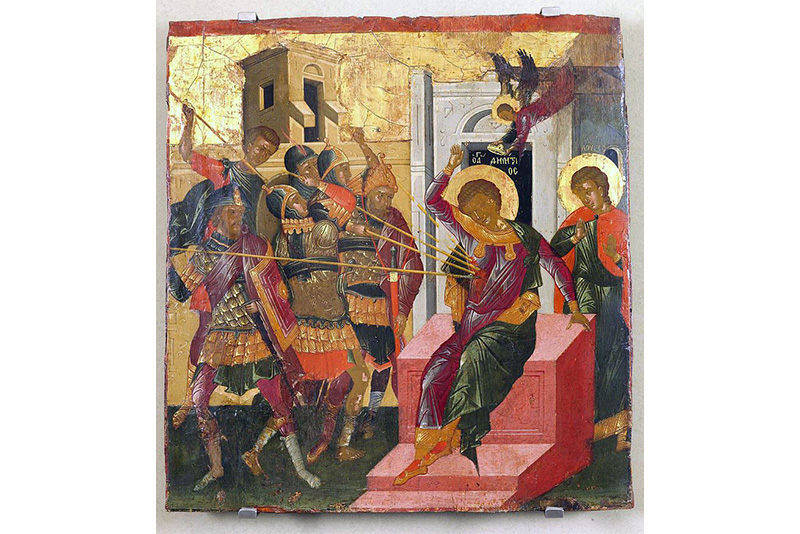
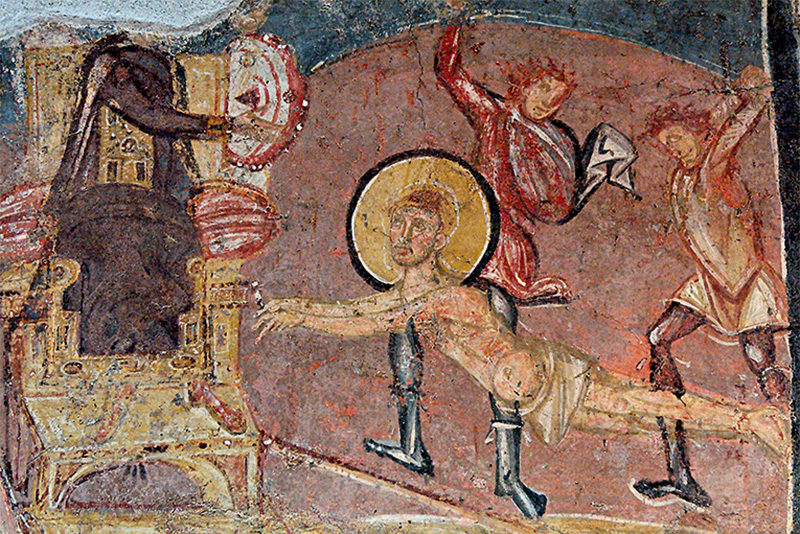
Galerius erupted in fury. This was more than an embarrassment; in his eyes it was open insurrection. He ordered Nestor executed on the spot. But he knew the real architect of this outrage was Demetrius. The next morning, soldiers seized the proconsul and threw him into a cell. In that prison, Demetrius met a fate he must have expected: he was speared to death by his own guards on the emperor’s orders. Rome had killed one of its highest-ranking officials. Why? Because Demetrius had committed a spectacular act of defiance. He wasn’t executed for privately whispering prayers to Christ; he died as a courageous confessor who refused to bow to the imperial idols. By using his office to proclaim that his ultimate allegiance was to Christ above Caesar, Demetrius proved Diocletian’s deepest fear true. As the Apostle Peter boldly told the authorities, “We must obey God rather than men” (Acts 5:29) – and Demetrius lived and died by that creed. In his final act, he exposed the Church’s hidden kingdom and declared it to be the true Kingdom, one not of this world. Rome’s man had become God’s servant, and for that, Rome spilled his blood.
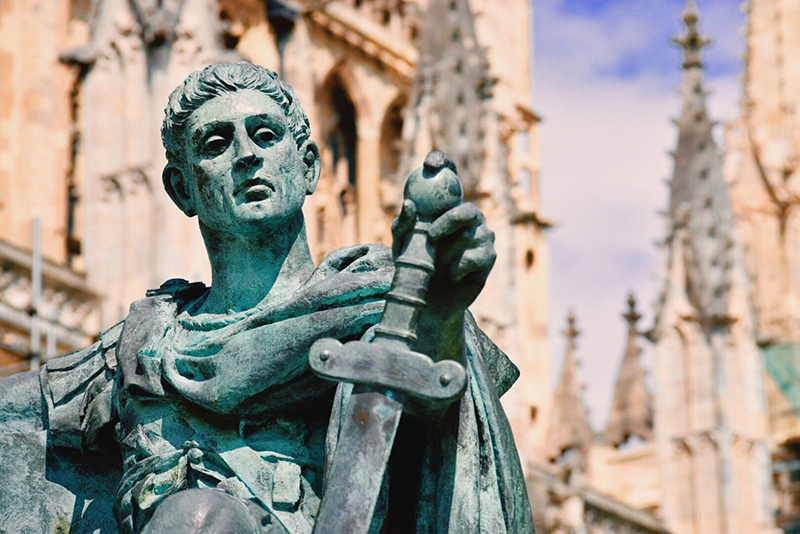
History, however, would not end the story there. Diocletian and Galerius’s great persecution turned out to be a catastrophic failure. It aimed to stamp out the Church and shore up the old gods, but succeeded only in creating a new generation of Christian heroes. Within a few years, the tide had turned: the Emperor Constantine embraced the Cross, and Christianity was on its way to becoming the very “cement” of the Empire that Diocletian had sought. As one early Christian writer famously observed, “the blood of the martyrs is the seed of the Church.” The more the empire killed, the more the faith grew. And in this transformed Empire, the story of Demetrius took on a profound new meaning. The Roman official executed as a rebel was immediately honored as a martyr – and soon revered as a saint. Far from being a disgrace, his fate was seen as a victory. His transformation from proconsul to heavenly patron was not a contradiction at all, but the fulfillment of who he truly was in God’s eyes.
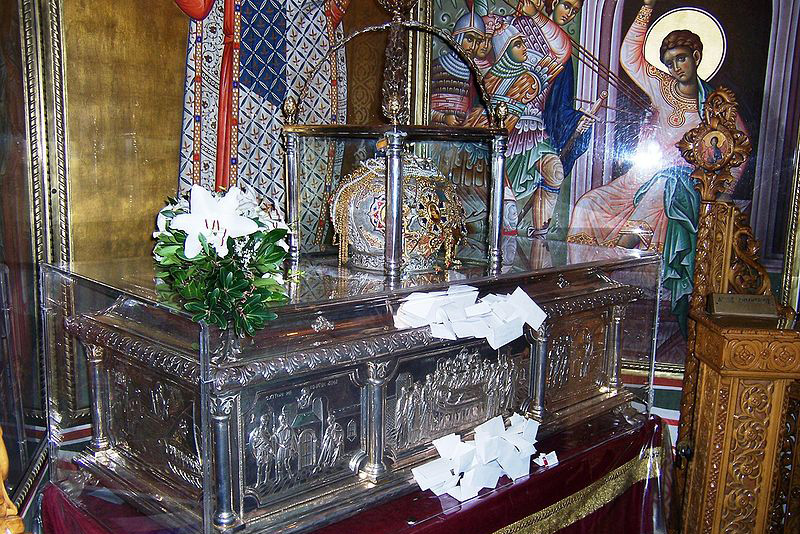
In the decades and centuries that followed, Christians began to celebrate Demetrius as a model of the soldier-saint. Martyrs like him were hailed not as defeated victims but as ultimate victors in Christ. Demetrius had faced down the empire’s earthly power and won an eternal crown. The Church lauded him as a true miles Christi — a soldier of Christ — whose battlefield had been the arena and whose weapon had been faith. His martyrdom was not an act of surrender, but the final triumphant battle in a war for souls. Moreover, because Demetrius had literally been the city’s defender in life, it seemed only natural to believers that he would continue defending Thessaloniki in death. He quickly became known as the city’s heavenly protector — its patron saint and celestial shield. A magnificent basilica was built over his tomb in the late 5th century, at the heart of Thessaloniki. This was more than a memorial shrine; it stood like a fortress of prayer, a headquarters on earth for the city’s guardian in heaven. Pilgrims came from far and wide to honor the martyr, and many stories spread of miracles attributed to his intercession. Western Christians might see a parallel here with figures like Saint George or Saint Martin of Tours — men who, like Demetrius, were Roman soldiers or officials who became renowned Christian saints. In all these cases, the courage that made them heroes was transfigured by faith. The highest courage was not just prowess in battle, but knowing what one fights for – and being willing to die for it. Galerius had demanded loyalty to an earthly throne and enforced it with the sword; Demetrius had given his loyalty to a heavenly king and sealed it with his blood. In the end, the martyr’s story became a powerful reflection on the nature of true loyalty and true power. The empire wielded death, but the saints conquered through death.
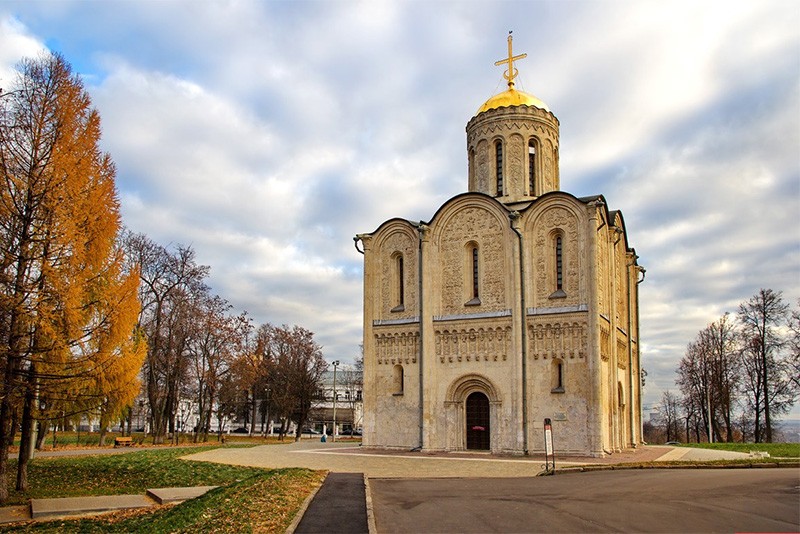
Centuries later and hundreds of miles away, the legacy of St. Demetrius would inspire another people. His memory crossed beyond the boundaries of the Roman world into the Slavic lands of the north. In the early medieval realm of Kyivan Rus’ (the ancestor of today’s Russia and Ukraine), Demetrius became one of the most beloved saints. Remarkably, he was known to the Slavs even before their official conversion to Christianity – traders and travelers from Byzantium had carried his legend far and wide. Once the Slavic nations embraced the Christian faith, his veneration spread rapidly among them. He became what some chronicles call a “prince’s saint,” a heavenly patron for rulers and warriors. The grand princes identified with this Roman soldier-saint who defended his city and faith unto death. In the 12th century, Grand Prince Vsevolod of Vladimir, nicknamed “Big Nest,” took the baptismal name Dmitri (Demetrius) in honor of the saint. He built the magnificent St. Demetrius Cathedral in the city of Vladimir – a crown jewel of medieval Russian architecture that still stands today, covered in stone carvings that celebrate the saint. A century later, as the Rus’ principalities grappled with the onslaught of the Mongol-Tatar invasions, the figure of St. Demetrius was invoked as a protector of the entire land. Princes went into battle carrying his icon, praying for the kind of faith and courage that had inspired young Nestor in the arena. This legacy was cemented by yet another prince bearing his name: Dmitri Donskoy of Moscow.

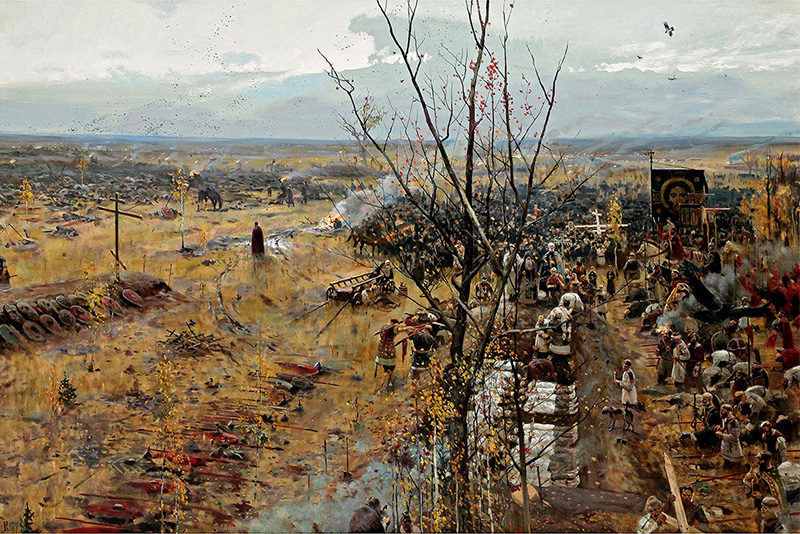
In 1380, after Prince Dmitri won the pivotal Battle of Kulikovo – the first major victory in the struggle to free Rus’ from Mongol domination – he established a special day of remembrance tied to St. Demetrius. He decreed that the Saturday before the saint’s feast day each October would be Demetrius Saturday, dedicated to prayerful commemoration of all warriors who had fallen in battle. The Russian Orthodox Church honors this memorial to this day as a time to remember not only departed soldiers, but all departed ancestors. In this way, Saint Demetrius became more than a Thessalonian hero; he became the eternal patron of a people’s memory, a symbol of a nation’s deep respect for those who gave their lives for their homeland.
Demetrius’s journey—from trusted Roman official to glorified martyr and protector—offers a timeless witness to Christians everywhere. His life illustrates the paradox of dual citizenship: he served Caesar faithfully, but served God above all. When the two came into conflict, he did not hesitate to “obey God rather than men.” In death, he achieved a victory that no earthly office or title could ever grant. The Empire that once condemned him eventually came to honor what he stood for, and far-off nations came to claim him as their own heavenly patron. Warmly venerated in East and West alike, Saint Demetrius of Thessaloniki leaves us with a profound lesson about loyalty, courage, and the power of faith. His story reminds us that true greatness is not measured by imperial favor or military might, but by fidelity to the truth—unto death, and beyond.
Translated by the Catalogue of Good Deeds
Sources: https://foma.ru/dimitrij-solunskij-za-chto-rimskaja-vlast-ubila-chinovnika-kotorogo-sama-zhe-i-naznachila.html
https://foma.ru/dimitrij-solunskij-samyj-russkij-iz-grecheskih-svyatyh.html
Fidelity to the truth- unto death and beyond…….the leading star for us all.! The words bore tears to my eyes today! GOD bless you all and thank you for all the truly inspirational material you send us around the world!! Love from Gro Maria in Sweden!