



The question, “How many good deeds are needed to be saved?” has echoed through Christian thought for centuries. The Gospels urge us to perform good deeds, declaring that “faith without works is dead” and that “a man is justified by works, and not by faith only.” But what exactly constitutes a good deed in the context of salvation? And how should we approach the matter of quantity versus quality? This reflection aims to explore those questions—not to offer a numerical answer, but to illuminate the spiritual essence of what makes a deed “good.”
Defining “Good Deeds”
Before we ask how many, we must ask what kind. What do we mean when we speak of “good deeds”? Are we talking about almsgiving? A kind word? Helping a neighbor? Preaching the Gospel? If we consult the tradition of the Church, we find that a good deed is not confined to external acts of mercy. The holy fathers teach that any action, word, or thought aligned with the will of God can be a good deed. This includes visible works of charity, but also invisible labors—repentance, prayer, patience, humility. What matters is not only the act itself, but also the purity of heart and intention behind it.
As Fr. Alexander Elchaninov once wrote with sorrowful clarity, we often perform “pseudo-virtues”—deeds that appear good but are disfigured by vanity or self-satisfaction. These distorted offerings cloud our vision of the soul’s true condition and obstruct repentance. Thus, even what seems like a good deed must be cleansed by humility and self-examination.
Three Perspectives on the Question
When we ask how many good deeds are needed for salvation, several answers present themselves. Each finds some support in the spiritual tradition, and each is worth exploring.
Perspective 1: A Single, Defining Act
There is the case of Peter the tax collector, a cruel and stingy man who lived in the 6th century. One evening, a beggar repeatedly pestered him for bread. Irritated, Peter hurled a loaf at him in anger. Later, when Peter fell gravely ill, he saw a vision: two scales, on one side his sins, heaped high; on the other, nothing—until an angel finally said, “He has done nothing good… except perhaps this loaf of bread.” The bread was placed on the scale—and it tipped the balance.
Even a single act—however imperfect—can have profound weight in the eyes of God. Yet the vision concluded with a divine exhortation: “Go, and add to this.” Peter recovered, repented, and spent the rest of his life doing good. So while one deed may open the door, it should not be our stopping point.
Perspective 2: Salvation Through Grace and Repentance Alone
Consider the repentant thief crucified beside Christ. Unlike Peter, he had no time for good deeds. Yet with one cry—“Remember me, O Lord”—he became the first to enter Paradise. This teaches that salvation is not earned by an accumulation of acts. A single moment of sincere repentance may suffice.
But here, too, caution is warranted. One may be tempted to postpone repentance: “I’ll live as I wish, and repent at the end like the thief.” Yet there’s no guarantee such a moment will be granted—or that the heart will soften when it comes. One man, having faced a life-threatening danger, later confessed that in that hour, he felt no burning repentance, no tears—only paralysis. His heart, once hardened, did not suddenly melt. The grace to repent is not always given on demand.
Perspective 3: The Insufficiency of Any Number of Deeds
Then there is Saint Sisoy the Great, who spent sixty years in ascetic struggle in the desert. At his death, when the angels came to receive him, he pleaded, “Give me more time for repentance!” His disciples, astonished, replied, “But Abba, you have no need of repentance!” And he answered, “Truly, I do not know if I have even begun to repent.”
If such a saint, radiant in holiness, felt unworthy before God, how much more should we? This perspective highlights that the path to salvation is not transactional. It is a journey of unceasing humility and transformation—a drawing near to God that never feels complete in this life.
Beyond the Numbers: The Essence of Good Deeds
What, then, are we to take from these three perspectives? A single act, even imperfect, may be of great spiritual value. Salvation can be granted apart from outward works, through sincere repentance. Yet the example of Saint Sisoy reveals that the spiritual life is not about checking off deeds, but about the state of the soul and its continual turning toward God.
Ultimately, the question “How many good deeds are needed to be saved?” may miss the mark. Good deeds are not a currency to be stockpiled or weighed like coins. They are the fruit of a heart aligned with Christ. They reflect transformation, not transaction.
And yet, we must not neglect them. As Fr. Diodor (Larionov), a patrologist and theologian, explains: “Good deeds are the first stage of Christian life. Their goal is to purify the soul from the passions and to cultivate interior virtues—especially mercy. From mercy comes love, and from love, the whole spiritual edifice is built.” In this sense, good deeds are not optional—they are the training ground of the soul.
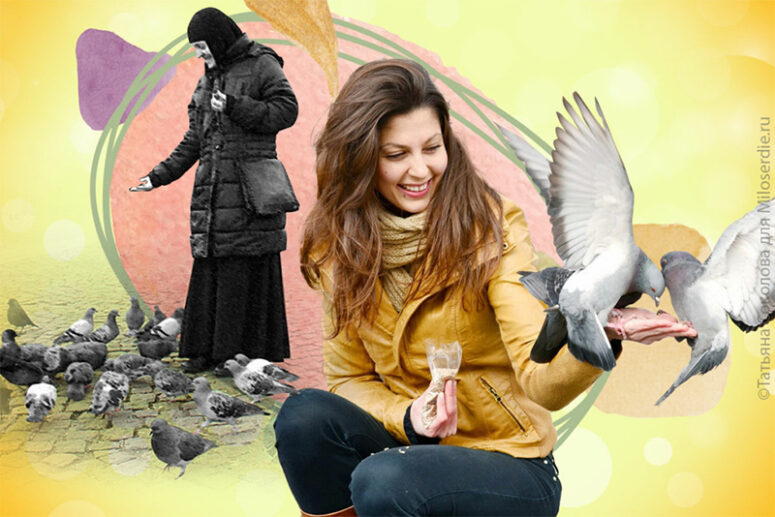
But what counts as a “good deed”? If we define it narrowly as external acts of almsgiving, we might wonder how someone like Saint Sisoy, living in the desert, could perform any. And yet, the saints teach that a good deed is any word, thought, or act in harmony with the law of God. Thus, even in solitude, one may do good unceasingly through prayer, vigilance, humility, and spiritual warfare.
Indeed, Saint Gregory Palamas taught that all Christians—not just monks—are called to the inward labor of the heart, especially through the Jesus Prayer: “Lord Jesus Christ, Son of God, have mercy on me, a sinner.” He exhorted the faithful to keep this prayer always on their lips and in their hearts, whether working or resting. External acts—“feeding,” “clothing”—are necessary, but so too is this continual inner orientation toward God.
Are such spiritual disciplines only for monks? Fr. Diodor answers: “There are no separate commandments for monastics and for laypeople. The call to holiness is one and the same.” History confirms this: the Church has glorified not only hermits and ascetics, but kings and rulers, merchants and peasants—laypeople who reached the same spiritual heights.
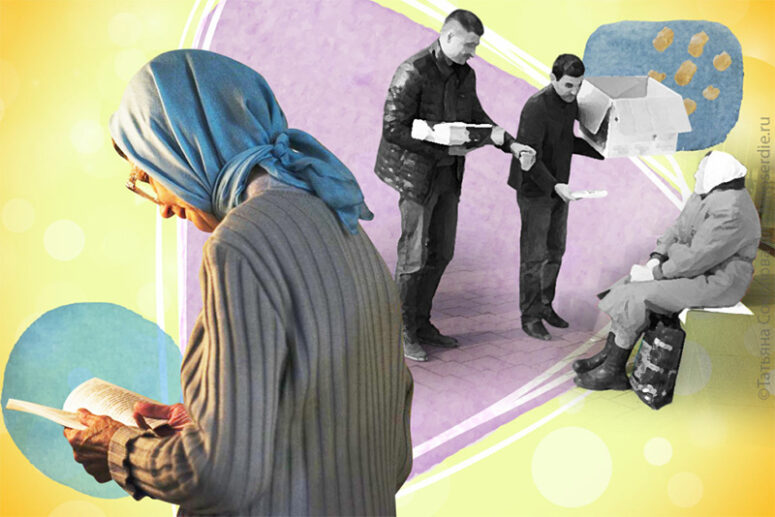
Yes, monks may be unable to give alms, since they own nothing. And laypeople, immersed in worldly cares, may struggle with solitude and watchfulness. But the Church, in her wisdom, shows that each has a path. If a layperson cannot keep vigil like a monk, he can serve the poor. And if a monk cannot give alms, he can offer tears and prayer. As Saint Basil the Great wrote, almsgiving is the chief virtue of the laity, just as watchfulness is the monastic’s strength.
The Communion of Salvation
A final question remains: does the pursuit of personal salvation risk becoming selfish? Might we, in striving for our own purification, forget our neighbor?
The answer lies in the interconnectedness of all souls. As Saint Arsenia (Sebryakova) wrote, “Every sin—even those committed in secret—darkens the heart, weakens it, and afflicts others.” Conversely, every step we take toward inner healing brings light not only to ourselves, but to those around us. If I battle anger by praying the Psalms, who benefits first? My family. If I soften my heart through the Jesus Prayer, who is blessed next? My coworkers, my neighbors—those nearest to me.
We do not ascend alone. Our transformation becomes a gift to others.
So, How Many?

And so we return to the original question: How many good deeds must one perform to be saved? Can we find a formula, a number, a threshold?
The answer depends on what we mean by “salvation.” Is it merely obtaining a private place in heaven? Or is it union with God, who dwells only in hearts made pure and humble?
As Fr. Diodor reminds us: “The goal of Christian life is union with God, who acts only in those hearts that are cleansed and directed toward Him. When God enters the heart, the soul is transformed—and that is salvation.”
In that light, the question “how many?” dissolves. Good deeds are not a metric. They are a way of life—a mode of being, shaped by love.
He who has learned to love—through acts both visible and hidden—has acquired God. And in Him, he finds salvation.
Translated by The Catalogue of Good Deeds
Source: https://www.miloserdie.ru/article/skolko-nuzhno-sdelat-dobryh-del-chtoby-spastis/

Thankyou for this article. I was greatly encouraged.