
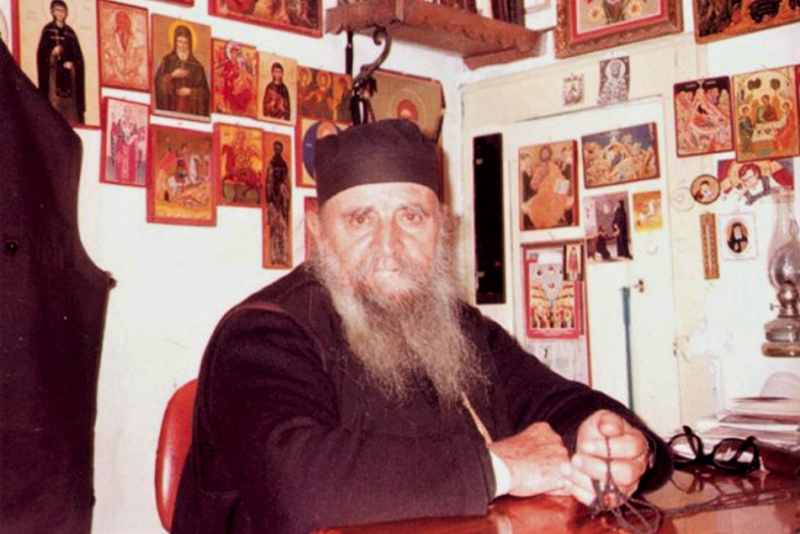

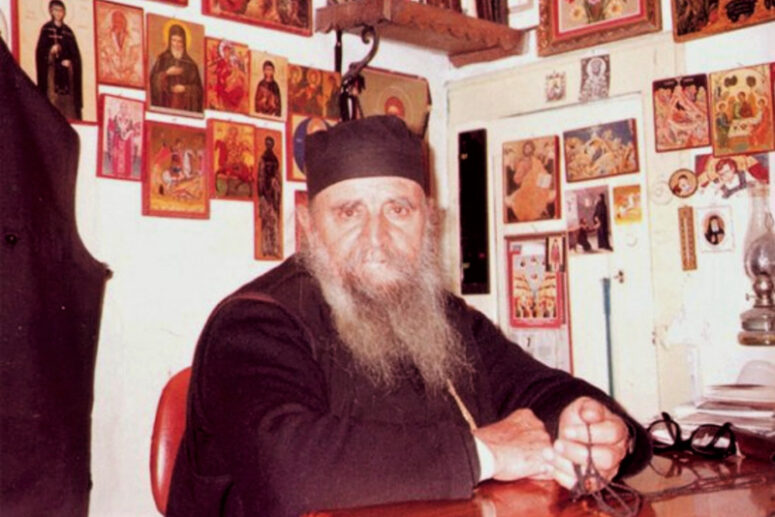
What is the most powerful way to teach others a life pleasing to God? By example.
This is how the spirit of eldership has been handed down from generation to generation—on Mount Athos, in Russia, and throughout the Orthodox world. It was in this same living tradition that Saint Joseph the Hesychast, in less than nine years, formed the monk Charalambos into a vessel of divine grace—one who would, in turn, pass on that same spirit to his own spiritual children.
To this day, the Athonite fathers remember the greatness of Elder Charalambos’s humility, obedience, and love for others. We invite you now to glimpse the radiant beauty of his life, and to draw near to the grace that shaped it.
The Path to Monasticism
Little is known about the early life of Elder Charalambos. He was born in 1910 into a devout Greek family. The pivotal moment in his journey toward monasticism came during the Second World War, when Greece was under Bulgarian occupation. He and several fellow villagers were captured and faced imminent execution. In that desperate hour, the young man turned to Saint George the Trophy-Bearer with a vow:
“Holy Great-Martyr George, save me, and I will become a monk!”
That very evening, the saint appeared to him in a wondrous vision and delivered them all from death. From that moment, he resolved to dedicate his life to Christ. Though he chose not to marry, he did not enter monastic life right away. He remained in the world for some time, supporting his countrymen until peace was restored.
In 1950, he made his way to the Holy Mountain and went directly to Elder Arsenios—his uncle and godfather—who was then living in the caves of Little Saint Anne’s Skete alongside Elder Joseph the Hesychast. With the eyes of spiritual discernment, Elder Joseph immediately recognised that the newcomer was destined for the monastic path.
“Either you stay here now and become a monk,” he said, “or you will never return.”
The young man tried to object, saying he had unfinished matters in the world, but the elder simply repeated:
“You need nothing. Either you stay—or you do not.”
Thus began the young man’s ascetic journey on the Holy Mountain. A year later, he was tonsured a monk, and in time ordained to the holy priesthood.
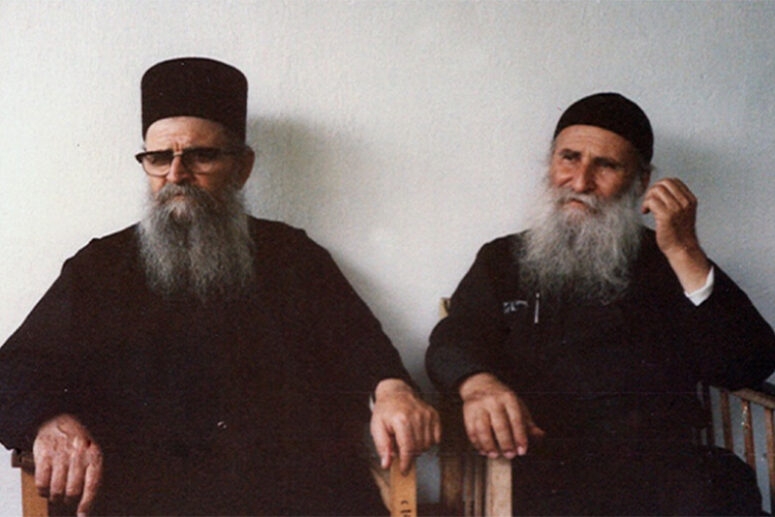
Obedience under Elder Joseph the Hesychast
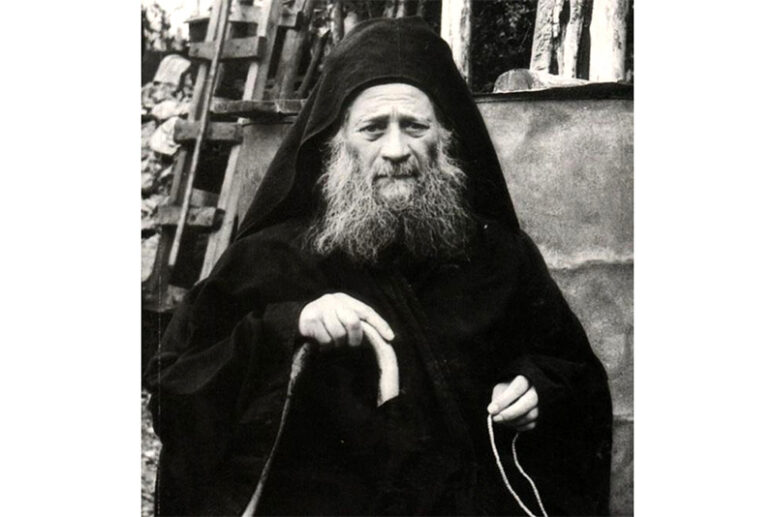
From his very first year on the Holy Mountain, Father Charalambos became a disciple of Elder Joseph the Hesychast—one of the most renowned ascetics of the twentieth century. Yet before Elder Joseph would even consider his request to become a disciple, the novice had to complete three thousand earth-low bows. Such was the entrance requirement to this demanding school of the spirit.
Life under Elder Joseph was severe but filled with grace. The path of obedience was tested at every step. One vivid example from those early years reveals the intensity of this spiritual discipline.
Once, Father Charalambos was tormented by a severe toothache. He endured it as long as he could, but when the pain became unbearable, he asked Elder Joseph for a blessing to have the tooth extracted. The blessing was granted—but with one condition: he must return to the monastery before sunset that same day.
He set out at once, hoping to catch the return trip on the same boat that had brought him to the dentist. But upon examination, the doctor said extraction would be dangerous due to acute inflammation. He advised treating the infection first and waiting a day.
“If we pull it now, the pain will be extreme,” the dentist warned.
Yet Father Charalambos was determined to fulfil his obedience. He agreed to immediate extraction, although the procedure was agonising and prolonged. Despite his robust health and spiritual resolve, he nearly fainted more than once. But once it was done, he dragged himself to the port—only to find the boat already gone.
Undeterred, he set off on foot, navigating steep and rocky trails in darkness, risking his life with every step. Only after midnight, completely exhausted, did he reach the monastery. He knocked on the elder’s door.
“Who’s there?” came the voice from within.
“Father, it’s me, your disciple Charalambos. I’ve returned to the monastery as you blessed.”
“Go away,” the elder replied. “I do not know you. If you were my Charalambos, you would have been back before nightfall.”
The young monk fell to his knees and wept outside the door. Then, the elder opened it—his own face wet with tears—and embraced him. The floor of the cell was soaked from the elder’s weeping.
“My child,” Elder Joseph said, “from the moment you left the monastery, I have remained on my knees, praying with tears for your safe return.”
The elder had known all along what was happening to his disciple.
The monk who treated Father Charalambos preserved the extracted tooth as a sacred relic. He would later show it to others, calling it “the tooth of obedience.”
Spiritual Lessons and Miracles through Obedience
As Father Charalambos continued to grow in obedience under Elder Joseph, his soul was gradually transfigured. Through this unwavering obedience, God began to work miracles in his life.
At times, Elder Joseph would speak to him with sternness and even apparent harshness, rebuking him without cause. These were not acts of cruelty, but lessons in humility. Though the words could pierce like arrows, Father Charalambos bore them without complaint, knowing the elder’s heart was filled with paternal love and concern for his disciples’ salvation.
He once recalled:
“One day the elder called me to himself and held me tightly in his arms, weeping profusely. From the depths of his heart, he poured out such immeasurable love upon me that my whole soul was filled with a joy beyond description. That feeling did not leave me all night. And knowing this, the elder said: ‘My child, the Lord has given you just a drop from the infinite ocean of His love. Strive, as much as you are able, to receive every trial, every humiliation, and every sorrow as a ladder to something higher—even greater than what you felt today.’”
In another instance, the elder instructed him:
“Go up to the cave above our cells and remain there until I call you back.”
Father Charalambos spent a full day and night in that cave. It was there, in solitude and obedience, that the Lord granted him the gift of unceasing prayer.
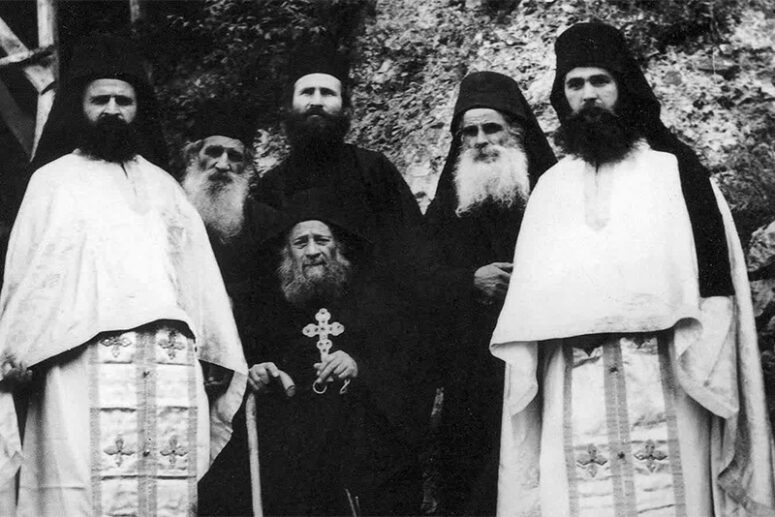
One of the most striking illustrations of his obedience occurred when a frail, elderly monk—no longer able to care for himself—was brought to their skete. He suffered from severe digestive issues, which left his cell soiled repeatedly throughout the day. Originally, another monk had promised to care for him, but soon grew weary of the task and begged Elder Joseph to let him bring the old man back to his former dwelling.
The elder declined and, instead, gave the obedience to Father Charalambos.
For someone as meticulous by nature as he was, the task was deeply humiliating. Crawling on his knees through filth to clean the floor of another’s cell tested him to the core. But he bore it with faith and perseverance, saying to himself:
“Be vigilant—this is an exam. You are serving Christ Himself. If you despise this elder, you despise the Saviour. Cry out to Him all night: ‘Lord, have mercy on me.’”
And God, who sees the heart, rewarded him. What once seemed foul and repulsive began to exude a mysterious fragrance. When he shared this wonder, Elder Joseph explained:
“The Lord has granted you this grace because you were determined to fulfil your obedience without complaint.”
Eventually, the ailing monk chose to leave the skete on his own. Elder Joseph simply said,
“Let him go. It was not his will, but God’s.”
Miracles of Strength and the Cross of Spiritual Fatherhood
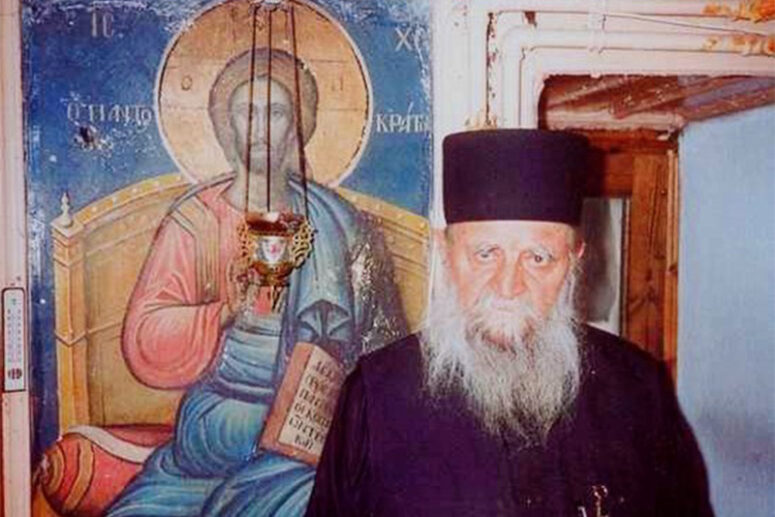
Another miracle occurred through the prayers of Elder Joseph when the brethren, exhausted after a long day of hard labour, heard a ship’s signal from the harbour. A barrel of olive oil had arrived for the monastery. But the elder, seeing how drained everyone was, hesitated to assign the task to anyone.
Then Father Charalambos stepped forward:
“I will go, Geronda.”
“Go, my child,” Elder Joseph replied, “I will be praying for you.”
Descending to the harbour, Father Charalambos hoisted the fifty-kilogram barrel onto his shoulders and began the steep climb up the narrow path to the monastery. As he pressed on, something extraordinary happened—he began to feel as though the barrel was lifting him. Step by step, he seemed to be carried by an unseen strength. He reached the monastery far more quickly than expected and without the slightest weariness.
After the repose of Elder Joseph in 1959, Father Charalambos continued his ascetic struggle at New Skete alongside Elder Arsenios, where they had relocated prior to the elder’s falling asleep in the Lord.
It was there that Father Charalambos received a vision of his spiritual father after death. Elder Joseph appeared to him, radiant with an otherworldly light, covered in medals and orders as if returning from a great battle.
“Geronda, where did you receive all these honours?” he asked.
“Christ gave them to me,” came the reply.
Over time, Father Charalambos himself became a respected spiritual guide on Mount Athos. His reputation for wisdom, humility, and discernment grew, and many sought his counsel. Among them was Elder Gabriel, one of the esteemed abbots of the Holy Mountain, who came to him with a formal proposal: to become the spiritual father of the ancient Dionysiou Monastery.
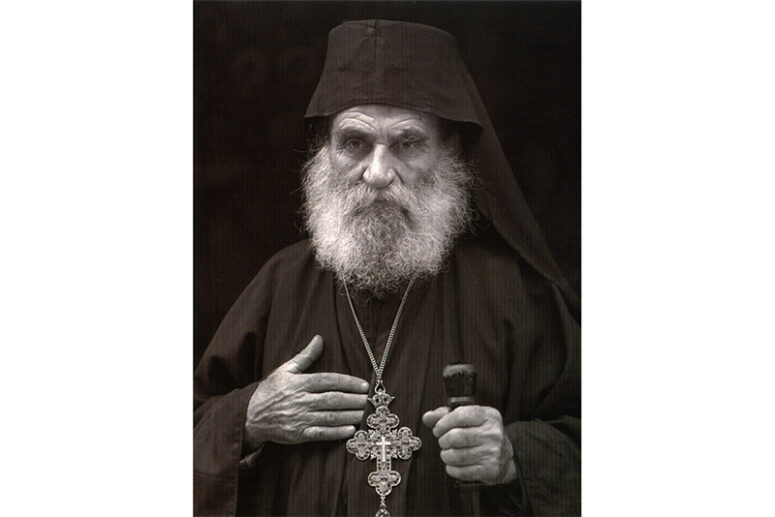
Father Charalambos firmly refused. But the wise abbot, seeing his humility, responded gently:
“Bring me your epitrachelion—I will read the prayer of absolution.”
Obediently, Father Charalambos knelt. Elder Gabriel covered his head with the epitrachelion and pronounced:
“By the grace given to me, I now appoint you, under obedience, as the spiritual father of our holy monastery.”
To this, Father Charalambos simply replied,
“Bless me, Geronda. May the will of God be done.”
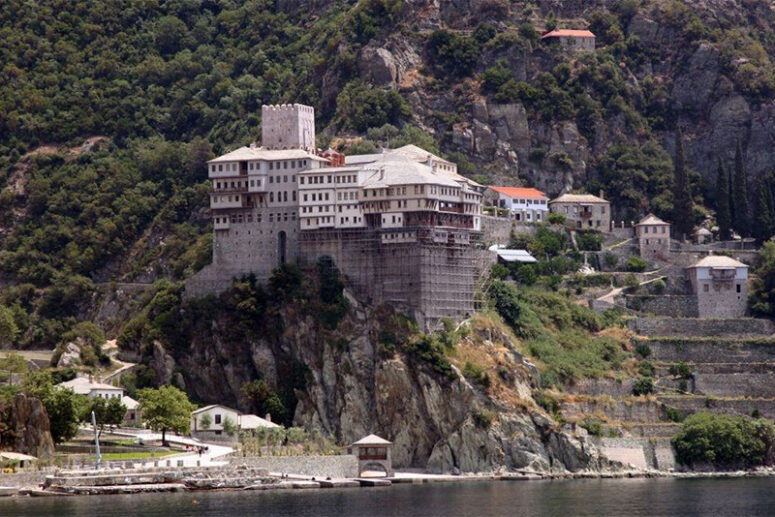
From that day forward, Father Charalambos took up residence at Dionysiou Monastery, serving faithfully as its spiritual father until his repose. From 1979 to 1989, he also bore the heavy responsibility of abbot, after which he continued his quiet, obedient life within the brotherhood.
Spiritual Counsels and Gifts of Discernment
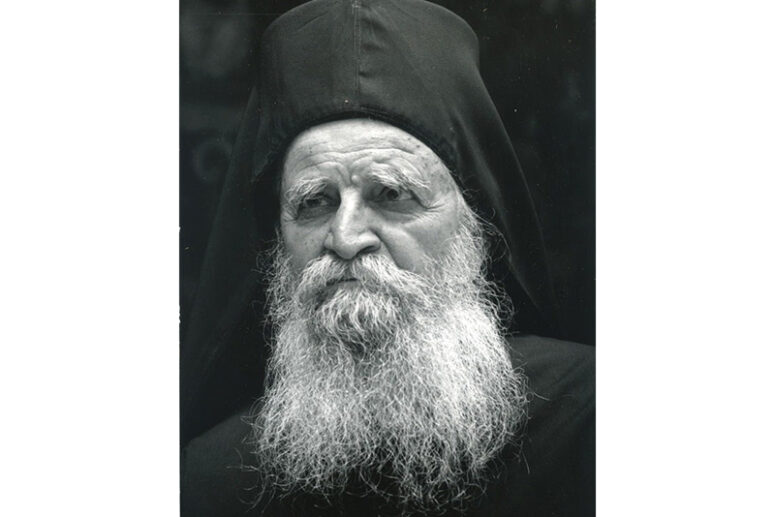
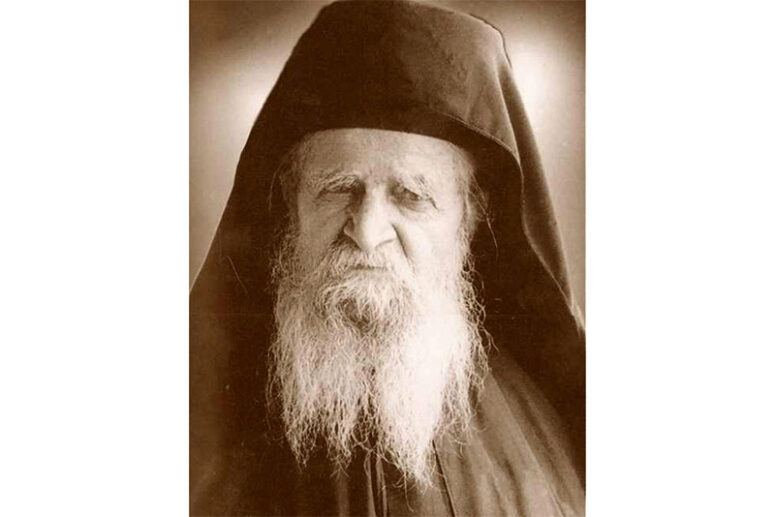
Elder Charalambos was known for his deep humility, unwavering obedience, compassion, and profound love for others. These virtues were the foundation of his spiritual life—and the reason why so many were drawn to him.
Though he had no formal education, his words were filled with the grace of the Holy Spirit. Over time, his fame spread far beyond Mount Athos, and people from all over Greece came to seek his guidance.
He was especially firm when speaking about moral issues. He called abortion a deliberate and cold-blooded murder of defenceless human beings. He likewise condemned the conscious refusal of married couples to have children, viewing such decisions as contrary to the Christian calling. He taught that all Christians should partake of the Holy Mysteries as often as possible, ideally every week. In his view, the root of many broken marriages and family crises lay in people distancing themselves from the Church and its Sacraments.
Once, a man came to the elder in great distress. His wife had grown cold toward him and was preparing to leave, taking their children with her. Elder Charalambos, discerning the hidden cause, revealed that an acquaintance of the family had resorted to sorcery in an attempt to lure the woman away.
“Geronda, is such a thing even possible? Can sorcery really bring so much harm?”
“It exists,” the elder replied. “But it only affects those who are unarmed—those who are far from the Church, who do not pray, confess, or receive Communion.”
The elder added the woman’s name to his commemoration book and instructed the husband to pray for her fervently and receive Holy Communion regularly. Soon the marriage was restored.
However, Elder Charalambos warned that praying for those who actively practice sorcery should be done with caution, as such intercessions often provoke spiritual warfare that not all are ready to endure.
“When you pray for such people,” he said, “you draw the attention of demons.”
He recounted an incident where a monk, moved by compassion, tried to pray for a man possessed by a demon. The monk was struck in the face by an invisible force and fell down in fear. Hearing the commotion, Elder Charalambos came to investigate.
“I was praying on my prayer rope, and the demon hit me,” the monk confessed.
The elder simply said, “Don’t do that again. I will pray for him instead.”
When the elder began to pray, he saw the demons appear in the form of dogs and roosters. Yet such was the strength of his prayer that they could not come near him.
He taught both monastics and laypeople the importance of the Jesus Prayer, urging them to practise it daily. To those who avoided the practice out of fear of spiritual delusion, he gave a stern warning:
“To reject the Jesus Prayer—that is the greatest delusion. Pride, self-importance, and arrogance are the true roots of deception.”
The elder was also granted spiritual visions, which he sometimes shared for the edification of others. On one occasion, a monk began to wonder whether the monks’ ascetic labours—prayers, vigils, and fasts—truly benefited anyone but themselves. These doubts troubled him deeply.
Before the monk could speak to the elder, Elder Charalambos recounted a vision he had received:
“I was standing in what looked like a great banquet hall. In front of me were doors like those of a church. The room was filled with people, waiting patiently in two long lines—one of the living, one of the departed. You were beside me, cutting large loaves that resembled prosphora and handing them to me. I was distributing pieces of bread to everyone who approached, and they received them with joy and reverence. I realised that they were all the names recorded in our diptychs.”
Understanding this, the monk realised the vision had been granted to the elder specifically for his benefit. When he later confessed his doubts, the elder told him simply:
“If you wish to help both yourself and others, strive with all your strength in obedience and prayer.”
Instructions for Clergy and Monastics
Elder Charalambos gave particular attention to guiding both clergy and monastics in their spiritual duties.
To priests, he emphasised the central importance of liturgical life.
“A priest is a mediator,” he would say. “It is his sacred obligation to lift up daily prayers and offer the Divine Liturgy for the sake of his flock.”
He insisted that clergy not neglect the daily cycle of services—Vespers, Compline, Matins—and to serve the Liturgy as frequently as possible.
To monastics, the elder gave equally firm instruction: never to seek vindication or self-justification.
“A monk is justified,” he said, “not by proving himself right, but by following the path of obedience and by enduring injustice and temptation with patience.”
Even in his old age, when he was already revered as a spiritual father by many, Elder Charalambos did not hesitate to humble himself before others. When faced with disrespect—even from brash young monks who, in their folly, sometimes spoke against him—he would respond with deep humility and a simple word:
“Forgive me.”
The Blessed Repose of Elder Charalambos
In his final years, Elder Charalambos became like a small child—utterly simple, innocent, and pure of heart. One of his spiritual children, Schema-monk Hilarion, recalled a light-hearted yet deeply moving conversation they shared not long before the elder’s repose.
“Geronda,” the monk asked, “have you worked any miracles?”
“Not yet,” the elder replied, smiling. “But just a little more time, and I will.”
Then the elder grew quiet and asked with childlike sincerity:
“Will we behold the face of the Lord?”
This, from a man who had laboured for decades in the ascetic life, revealed the depth of his humility. Despite his countless struggles, he did not consider himself worthy even to see the Lord’s countenance.
“Will we enter Paradise?” he wondered aloud.
To this, Father Hilarion offered a joyful plan:
“Listen—here’s what we’ll do. When you die, just say, ‘I don’t know anything. Take me to where my elder Joseph is.’ And when I die, I’ll say, ‘I don’t know anything. Take me to where my elder Charalambos is.’ That way, we’ll both make it to the eternal dwellings.”
The elder’s face lit up.
“Yes!” he exclaimed. “Why didn’t I think of that?”
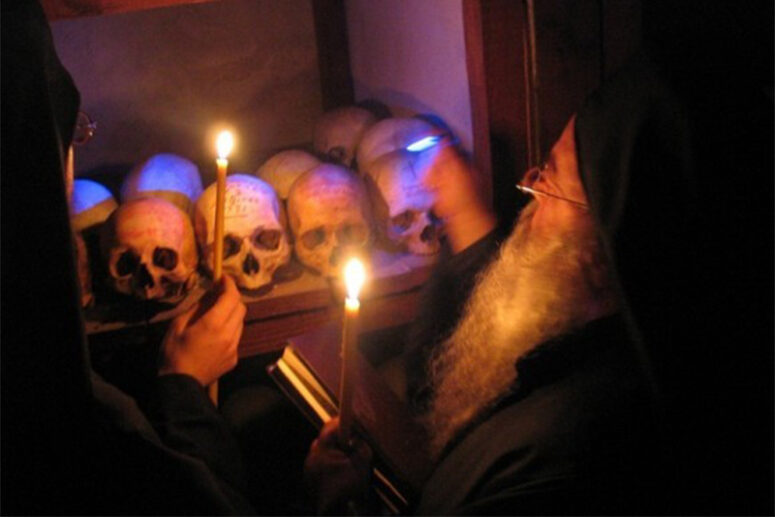
Elder Charalambos reposed peacefully on the night of January 1, 2001. Those present described how, shortly before his passing, he sat upright on his bed and seemed to gaze intently at something invisible. He entered into deep contemplation, his face radiant with joy. Then, with hands outstretched—as though to embrace someone—he exclaimed with gladness and surrendered his soul into the hands of God.
May the Lord grant rest to the soul of Archimandrite Charalambos, and through his holy prayers, may He have mercy on us.