


Sunday worship, they should encompass our entire lives: How we decorate our houses, what we listen to and watch, and what we wear on our bodies.
St. Paisios Velichkovsky, 1722–1794

Pay heed to yourself, O monk, sensibly and diligently, with a vigilant mind, as to when the demons come, by what means they catch one, and by what means they themselves are vanquished. Guard yourself with great caution, because every hour you walk in the midst of passions and nets. Everywhere the passions surround one. Everywhere are set out their traps. Pay heed lest you be attracted by the enemy into his will through passions and traps. There is a great need for us, even essential for us men of flesh, to fight with the fleshless ones—one man with ten thousand enemies. Many tears, much patience, much suffering and caution, and a thousand eyes everywhere are required, for the evil spirits rise up maliciously against us like a lion. They would destroy us if we did not have the Lord with us. They have been very skilled in the art of catching men for more than seven thousand years. Without sleep, food, and rest, constantly, every hour, and by all means, they seek our perdition with every trick and with great effort. Having turned out to be powerless in one way, they think up something else. They start one thing, and contemplate yet another. And they roar about everywhere looking where they might find doors to enter and from where they might begin the battle, and, as it were, trick us into doing evil. Do you not know with whom you battle? How legions of invisible enemies surround you, and every one of them wages his own battle? They sound numberless voices, and desire to swallow up your soul. Should you not be cautious? Is it possible that having drunk your fill and given yourself over to sleep, lying down and constantly consoling yourself, that you can with all this receive salvation?
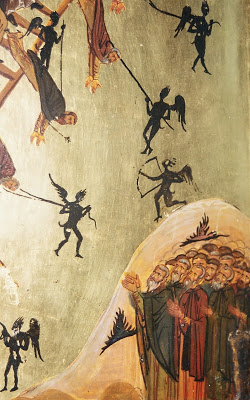
Thus the demons cast us into every passion. They compel us to fall to every sin, and we are tangled in every net. By nets I mean the first thought of desires and various foul thoughts through which we bind ourselves with every passion, and fall into every sin. This is the door of demons and passions, by which they enter into us and rob our spiritual treasury. Immoderate sleep, laziness, eating not at the proper time are a cause of the entrance of demons. And having come, they first of all knock on the doors of the heart secretly, like thieves. They introduce a thought, and they notice whether there is a watchman or not, that is, they see if the thought will be received or not. If it will be received, then they begin to cause passion and arouse us to it, and they steal our spiritual treasure. If they find a watchman at the doors of the heart who is accustomed to belittle and banish their suggestions, if one turns away in mind from the first mental impulse and has one’s mind deaf and dumb to their barking and directed towards the depths of the heart and so does not at all agree with them, then to such a one they cannot do any evil, since his mind is sober. Then they begin to scheme and place various nets to catch us in passion, for example: forgetfulness, anger, foolishness, self-love, pride, love of glory, love of pleasure, overeating, gluttony, fornication, unmercifulness, anger, remembrance of wrongs, blasphemy, sorrow, brazenness, vainglory, much speaking, despondency, fearfulness, sleep, laziness, heaviness, fright, jealousy, envy, hatred, hypocrisy, deception, murmuring, unbelief, disobedience, covetousness, love of things, egotism, faintheartedness, duplicity, bitterness, ambition, and laughter. then they arouse a great storm of thoughts of fornication and blasphemy so that the ascetic might become frightened and despondent, or so that he might leave off his struggle and prayer. But if the enemies after raising all this cannot hold and take away from his struggle a firm soul and an unwavering soldier of Christ who, like a passion-bearer, has placed his foundation on the rock of faith, so that the rivers of sorrows do not cause him to waver, then they try to rob him by some seeming good, considering it more convenient under the appearance of good to introduce something of their own and in this way to deprive one of perfect virtue and struggle.
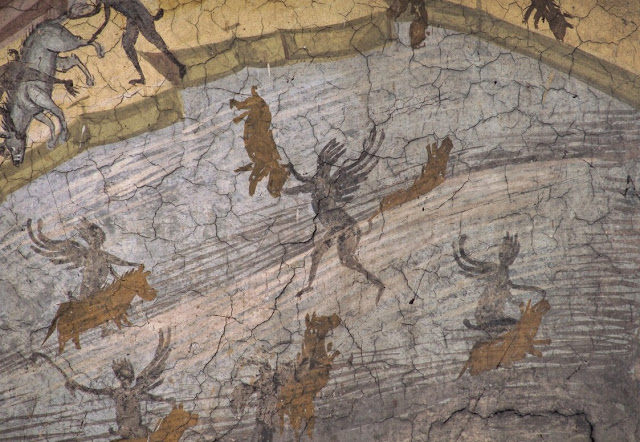
If even thus they do not conquer, then they battle by means of highmindedness. They introduce they thought that the man is holy, saying to him secretly, “How many afflictions you have endured!” The demons, like a clever hunter, when their first means turns out to be powerless, abandon it, go away, hide themselves, and pretend to be conquered. But beware, O man, pay heed, do not be lax, for they will not depart from you until the grave. But they will prepare a great sedge and will look attentively by what means they can again begin to rise up against you, for they do not rest. When the warmth of fervor grows cold in a struggler, they then secretly, having prepared some net, come again and lay them out and try to catch him. In all the paths of virtue, the devils establish their nets and hindrances when we fulfill heedfully every deed for our salvation and not out of pleasing men, or from some other idea. But if in virtue there is hidden some kind of impurity, pride, vainglory, and highmindedness, then in such a matter the devils do not hinder us, but they even inspire us, so that we might labor without benefit. The demons strive for nothing so much as by every crafty means to steal time and make it idle. In everything that the demons do, they strive to dig three pits for us. First of all, they act against us and hinder us so that there will be no good in all our acts of virtue. In the second place, they strive so that the good will not be for the sake of God.
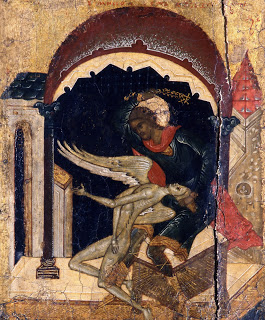 Most of all, the Divine Help cooperates with us. However, in us, as we have said previously, is the beginning of all passions, attachment, weakness, and negligence, because we do not renounce in soul and thought and do not cut off the first impulse of every passion that comes. And the demons add yet more. Seek within yourself the reason for every passion, and finding it, arm yourself and dig out its root with the sword of suffering. And if you do not uproot it, again it will push out sprouts and grow. Without this means you cannot conquer passions, come to purity, and be saved. Therefore, if we desire to be saved, we must cut off the first impulse of the thought and desire of every passion. Conquer small things so as not to fall into big ones. It is evident that God allows one to be overthrown in battle by the demons or some stubborn passion because of our pride and highmindedness, when one considers himself to be holy, or strong, and trusts in himself, and exalts himself above those who are weak. Let such a one acknowledge his own infirmity, acknowledge the Help of God, and be enlightened. Let him understand that without God’s Help he can do nothing, and thus he will humble his thought. Or again, this is allowed as a chastisement for sins, so that we might repent and be more experienced in struggle. Or it is allowed for the sake of crowns of victory. However, in that in which you are conquered and from which you suffer, before all other passions you must arm yourself against it and for this use all your fervor.